How to Build a Proper Fire to Season a Cast Iron Wok in a Fire Pit
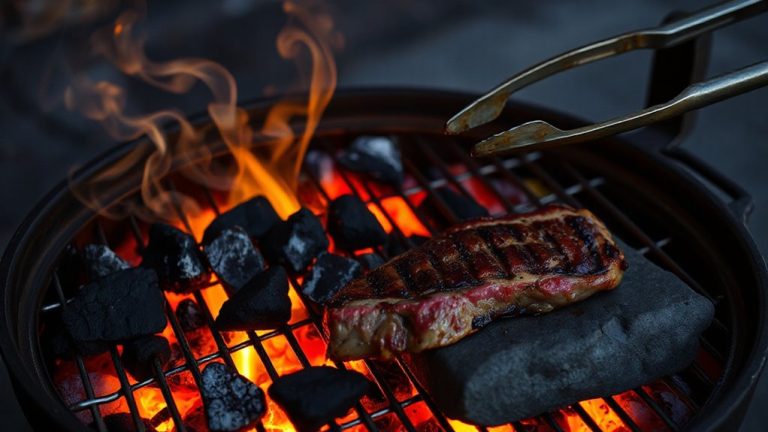
Start with a two-zone fire in your pit, using dry hardwoods like oak or hickory for steady, intense heat. Position hot coals at the center and add smaller logs around the edges to maintain even combustion. This setup gives you the radiant heat needed for proper polymerization while minimizing soot. Preheat your wok slowly, then oil it lightly with flaxseed or grapeseed when the coals glow. Turn it every 30 seconds for uniform seasoning. Cool it gradually near dying embers to avoid cracking. You’ll achieve a durable, non-stick surface with smart fire control and patience-there’s more to mastering the process where technique meets flame.
Notable Insights
- Build a two-zone fire with hot coals in the center and hardwood logs around the edges for even, intense heat.
- Use dry, seasoned hardwoods like oak or hickory to maintain steady heat and minimize smoke and creosote.
- Preheat the wok gradually over low flames to prevent thermal shock and potential cracking.
- Apply a thin layer of high-smoke-point oil when coals are glowing to ensure proper polymerization.
- Rotate the wok every 30 seconds and cool it gradually near dying embers to prevent warping and strengthen seasoning.
Build the Right Fire for Seasoning
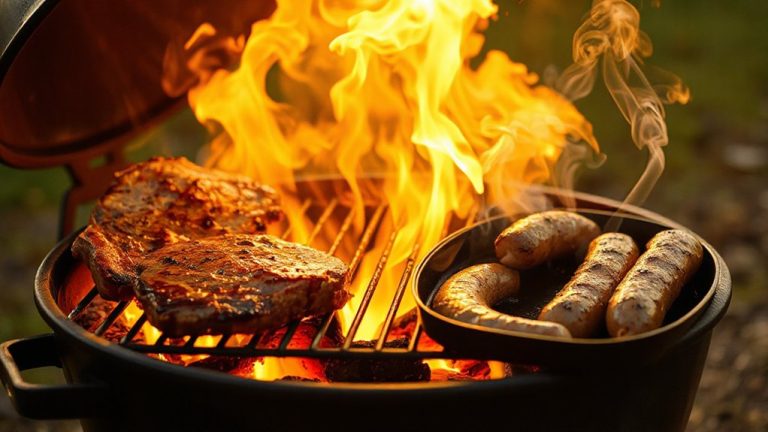
While you might be tempted to season your cast iron wok on a gentle stovetop flame, a properly built fire delivers the intense, even heat needed to polymerize oil into a durable nonstick layer. You’ll need a two-zone fire: hot coals for searing heat under the wok, with a perimeter of smaller logs to maintain consistent temperatures. Airflow control is essential-elevate the wok slightly to avoid direct flames while letting oxygen feed the burn. Too much airflow cools the fire unevenly; too little produces soot and incomplete combustion. Always keep a spray bottle and fire extinguisher nearby for fire safety. Position the fire pit in an open area, clear of overhangs and dry grass. A well-managed fire not only seasons more effectively than indoor methods but also builds long-term confidence in outdoor cooking. Trust the process-it’s reliable, scalable, and deeply effective.
Choose Dry Hardwood for Clean Heat
Dry hardwood is your best ally when it comes to generating the clean, consistent heat needed for seasoning a cast iron wok. You’ll want to choose seasoned oak, maple, or hickory-these woods burn hot and steady, essential for polymerizing oil into a durable nonstick layer. Green or softwoods like pine spit, smoke heavily, and leave creosote, which ruins seasoning and raises fire safety concerns. Your wood selection directly impacts both the effectiveness of the seasoning and your control over the fire. Hardwoods minimize flare-ups and maintain even temperatures, reducing risks and improving results. Always check for dryness-waterlogged wood sizzles, steams, and destabilizes heat. Properly seasoned logs are darker, cracked at the ends, and feel lightweight. Smart wood selection isn’t just about performance; it’s a fundamental part of fire safety and long-term wok care. For optimal results, consider purchasing from suppliers that specialize in best fire pit wood to ensure quality and consistency.
Preheat the Wok to Prevent Cracking
Because cast iron expands when heated, warming your wok gradually over a low flame helps prevent thermal shock that could lead to cracks. You’ve worked hard to source quality cookware-don’t risk damaging it with sudden temperature spikes. Cast iron retains heat superbly, but it’s vulnerable during changes. Starting over low heat allows even temperature distribution, reducing the chance of stress fractures. Any residual moisture inside the metal or seasoning layer can undergo moisture expansion when exposed to intense heat, worsening the risk. By preheating slowly, you let trapped steam escape safely. This method isn’t just cautious-it’s practical for consistent results. Think of it as acclimating the wok to its environment, much like seasoning wood before carving. A gradual warm-up guarantees durability, performance, and longevity, especially in open-fire settings where control is limited. Patience here means fewer replacements and better outdoor cooking. Using top cast iron cookware ensures better heat retention and durability during the seasoning process.
Oil the Wok Over Glowing Coals
A thin, even layer of oil applied over glowing coals does more than just prevent sticking-it kickstarts the seasoning process by polymerizing the fat into a durable, non-stick surface. You’ll want to use an oil with a high smoke point, like flaxseed or grapeseed, so it bonds properly instead of burning off. As the wok heats, the oil breaks down and forms a hard coating, but if you use too much, you’ll get carbon buildup that turns sticky and uneven. Trust me, less is more here. Spread the oil with a lint-free cloth using tongs-never your hand-and watch for thin wisps of smoke, a sign the oil is polymerizing correctly. This stage isn’t about cooking; it’s foundational. Proper oiling over glowing coals builds a reliable base layer, ensuring future sears release cleanly and cleanup stays easy. Get this step right, and your wok will perform like a seasoned pro.
Turn the Wok for Even Seasoning
Now that you’ve laid down a solid base with a properly heated coat of high-smoke-point oil, it’s time to make sure that layer sets evenly across the entire surface. Turning the wok frequently guarantees consistent exposure to heat, which is critical for polymerization. Without proper flame control, hot spots can warp the seasoning or leave weak patches. Rotate the wok every 30 seconds, using long-handled tongs or a heat-resistant glove, to distribute the heat evenly. Avoid letting one side face direct flame for too long, as this encourages ash buildup and uneven carbonization. A well-turned wok develops a uniform, glossy black patina. This method isn’t just about motion-it’s about rhythm and attention. Consistent turning mimics professional stir-fry techniques, where heat management defines success. Over time, this practice strengthens the non-stick layer and prevents degradation from localized overheating. It’s simple but effective, and essential for long-term durability.
Reapply Oil in Thin Layers
That glossy black surface you’ve built isn’t the end-it’s the foundation, and reinforcing it means going back in with oil, but this time with restraint. After the initial seasoning, you’ll need to repeat oil application, focusing on layer thickness-thin is critical. A heavy coat won’t polymerize properly and can leave a sticky residue or even peel. Use a high-smoke-point oil like flaxseed or grapeseed, and apply just enough to create a faint sheen. Wipe it down thoroughly with a lint-free cloth to guarantee even distribution and minimal buildup. Each thin layer builds durability, enhancing non-stick performance over time. Multiple light applications outperform one thick coat, creating a smoother, longer-lasting finish. Think of it as building armor, not painting. Proper layer thickness transforms your wok into a resilient cooking surface ideal for high-heat fire pit cooking, where consistent performance matters most.
Cool the Wok Gradually After Heating
Though it might be tempting to rush the process, letting your wok cool gradually after heating is essential for preserving the integrity of both the metal and the seasoning layer. Removing your wok from the fire pit and placing it directly on cold ground or in water risks thermal shock, which can warp or crack the cast iron. Instead, allow it to cool slowly by resting it near, not in, the dying embers. This exposes it to diminishing heat rather than abrupt change. The residual heat helps complete the seasoning polymerization while preventing stress fractures. You’ll notice fewer cracks and better oil adhesion over time. Skipping this step undermines your efforts-even a perfectly heated, oiled wok fails if cooled too fast. Treat cooling as part of the seasoning, not an afterthought. It’s a small investment that extends your wok’s life and performance markedly.
On a final note
You’ve built a solid fire using dry hardwood, which delivers consistent, clean heat essential for proper seasoning. Preheating prevents thermal shock, while oiling over glowing coals polymerizes the fat evenly. Turning the wok guarantees uniform coverage, and thin oil layers build a durable, non-stick surface. Cooling it gradually reduces stress. This method outperforms stovetop seasoning, offering superior heat control and even results ideal for outdoor cooking and serious BBQ prep.