How to Add Fresh Charcoal Mid-Cook Without Spiking the Temperature
Use pre-lit briquettes instead of raw chunks to avoid sudden temperature spikes. Light them in a chimney for 15–20 minutes until ashed over, then nestle them gently into the existing coal bed. This guarantees a smoother heat transfer and minimizes thermal shock. Pair this with steady airflow control-slightly restrict the bottom vents first, then reopen gradually. A reliable grill thermometer helps you adjust before things get out of range. Choose consistent, quality charcoal to maintain clean combustion, and you’ll keep your cook steady and predictable-especially vital when tackling long sessions or sensitive proteins. There’s more to mastering heat management than just fuel placement.
Notable Insights
- Pre-light fresh charcoal before adding to ensure a smooth temperature transition.
- Use a chimney starter to ignite new coals evenly and safely.
- Add pre-lit coals gradually to the existing bed to prevent thermal shock.
- Slightly close bottom vents before adding coals, then reopen slowly to manage airflow.
- Avoid dumping raw charcoal directly onto the fire to prevent sudden temperature spikes.
Choose the Right Charcoal for a Stable Burn
Quality charcoal matters more than most realize-it’s the foundation of a steady, predictable fire. When adding fresh coals mid-cook, your choice directly affects temperature control. Not all charcoal types are created equal: lump charcoal burns hotter and faster, offering less consistency, while briquettes provide a uniform burn rate ideal for long sessions. You’ll want briquettes if you’re smoking brisket or maintaining a grill for hours-their compressed design guarantees slower, more even combustion. Mesquite or hickory-infused briquettes add flavor without drastically altering burn characteristics. A stable burn rate prevents sudden heat surges when introducing new coals. Cheap or irregular charcoal types often contain fillers, leading to unpredictable results and frustrating flare-ups. Choosing the right charcoal isn’t just preference-it’s a performance decision. Invest in quality, and you’ll see better heat retention, fewer adjustments, and more control throughout the cook. For reliable performance, consider one of the top picks for best charcoal based on expert testing and user reviews.
Pre-Light Charcoal to Prevent Temperature Spikes
Even though you might be tempted to toss fresh charcoal directly onto the fire, doing so risks a sharp temperature spike that can ruin delicate meats and disrupt airflow. Instead, pre-lighting guarantees smoother heat acclimation, maintaining a stable cooking environment. Use a chimney starter for reliable charcoal ignition-this method heats the coals evenly, minimizing raw spots and reducing startup time. Once lit, let the coals burn until they’re lightly ashed over, which usually takes 15–20 minutes. This brief period allows thermal stabilization before introduction to the main fire. Unlike cold-add methods, pre-lighting prevents oxygen starvation and erratic burn patterns. It requires a bit more planning, but the payoff is consistent grill performance. For long cooks, especially with temperature-sensitive dishes, this step isn’t just helpful-it’s essential. Pre-lighting is a small effort that preserves flavor development and promotes even cooking from edge to center. A well-chosen charcoal chimney can make this process faster and more efficient.
Add Fresh Charcoal Mid-Cook Without Shocking the Grill
You’ve already lit your charcoal ahead of time to avoid sudden temperature swings, and that sets the stage for steady heat management-now it’s time to keep that momentum going when adding more fuel mid-cook. Use proven charcoal layering techniques: place the pre-lit coals gently on top of or mixed within the existing bed, promoting gradual heat transfer instead of abrupt surges. Avoid dumping large quantities at once-this overwhelms the fire and risks shocking the grill. Pair this with smart airflow management tips: slightly restrict the bottom vents before adding charcoal, then reopen them gradually to regulate oxygen flow and prevent runaway temperatures. This balanced approach maintains cooking conditions ideal for long smokes or searing. Proper layering and airflow control don’t just sustain heat-they guarantee predictable performance, minimizing variables that compromise food quality. Master these, and you’ll extend cook times smoothly without thermal drama. For optimal results, consider upgrading to one of the best charcoal grill smokers designed for superior heat retention and airflow control.
Use a Grill Thermometer to Monitor Heat Stability
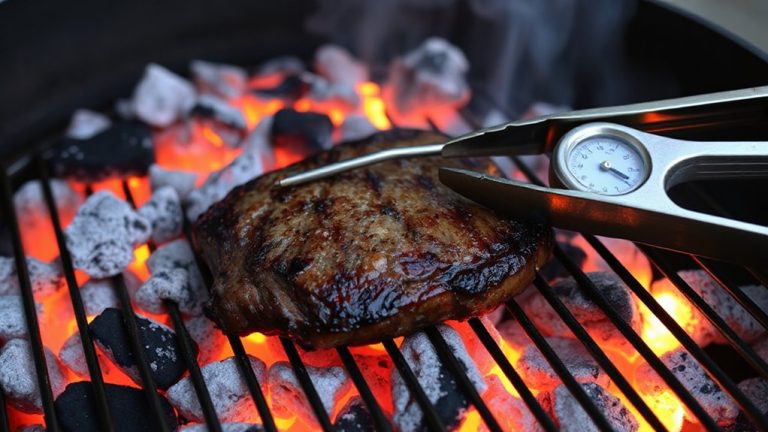
A reliable grill thermometer acts as your command center for heat control, giving you real-time feedback so you don’t have to guess when temperatures drift. You’ll see exactly how adding fresh charcoal affects your cooking environment, letting you adjust airflow control before things go south. Without it, you’re just hoping for even heat distribution, which rarely happens on its own. Placement matters-position the probe away from direct flame zones to get an accurate chamber reading. Good models offer dual sensors, so you monitor both ambient temperature and food doneness. Units with wireless connectivity let you keep tabs without hovering, which is especially useful during long smokes. You’ll notice fluctuations before they ruin your cook, giving you time to tweak vents or reposition coals. Ultimately, consistent heat stability isn’t luck-it’s measurement. A quality thermometer isn’t an accessory; it’s essential gear for anyone serious about controlled, predictable barbecue results.
Avoid Common Mistakes When Replenishing Charcoal
When adding fresh charcoal during a cook, dumping new coals directly onto the fire or mixing them in haphazardly can trigger sudden temperature spikes that wreck low-and-slow cooks. Instead, pre-light your charcoal and prioritize consistency in charcoal quality to guarantee steady burns. Poor-quality coals ignite unevenly and disrupt airflow control, leading to unpredictable results. Use a separate chimney starter to bring new coals up to temperature before transferring them to the grill. This method preserves the cooking environment and avoids thermal shock. Always monitor airflow control-adjust dampers gradually after adding fuel to stabilize oxygen levels.
| Mistake | Consequence | Solution |
|---|---|---|
| Dumping raw coals | Temperature spike | Pre-light in chimney |
| Ignoring charcoal quality | Inconsistent burn | Use reputable brands |
| Overloading at once | Oxygen surge | Add incrementally |
| Neglecting airflow control | Fluctuating temps | Adjust dampers slowly |
| Mixing brands | Unpredictable output | Stick to one type |
On a final note
You’ll maintain steady heat by pre-lighting charcoal before adding it, ensuring a seamless burn without sudden spikes. Using quality lump or briquettes matters-consistent density supports stable airflow and temperature control. Always monitor with a reliable grill thermometer, placing fresh coals gently along the edge to avoid disrupting the cooking zone. Avoid dumping cold charcoal directly onto hot coals; that thermal shock destabilizes the environment. Smart replenishment preserves cook quality and efficiency.