How to Properly Spatchcock Poultry for Even Grilling and Faster Cooking
To spatchcock poultry properly, start by removing the backbone with sharp shears while the bird’s breast faces down, then flatten it by pressing firmly on the breastbone. This guarantees even contact with the grill, cuts cooking time nearly in half, and promotes crispy skin and juicy meat. Season generously under and over the skin, then grill skin-side down over medium-high heat with the lid closed for best results-this technique outperforms whole roasting in control and flavor. You’ll soon discover smarter ways to maximize texture and efficiency.
Notable Insights
- Remove the backbone with sharp poultry shears to flatten the bird for even heat distribution.
- Press down firmly on the breastbone to flatten the bird fully and ensure consistent grill contact.
- Use a dry brine or seasoning blend under and over the skin to enhance flavor and crispiness.
- Preheat the grill to 375°F–400°F and cook skin-side down first for optimal searing and fat rendering.
- Maintain grill lid closure and use hardwood or charcoal to promote even cooking and smoky flavor.
What Is Spatchcocking and Why It’s Great for Grilling
Spatchcocking-also known as butterflying-means removing the backbone from a whole chicken or other poultry so it can lay flat when cooked, and it’s a game-changer if you’re aiming for even, efficient grilling. Though the historical origins are a bit murky, the technique has long been used in European kitchens to speed up cooking and improve heat distribution. By laying the bird flat, you reduce thickness, allowing both breast and thighs to cook evenly-no more dry meat or underdone legs. The culinary benefits are clear: faster cooking times, crispier skin, and better searing over direct heat make it ideal for BBQ. You get consistent doneness without flipping, and it fits neatly on most grills. It’s not just practical-it’s smarter cooking. Whether you’re feeding a crowd or mastering weeknight meals, spatchcocking delivers reliable results with minimal fuss, making it a top-tier choice for serious outdoor cooks.
Grab These Tools to Spatchcock Like a Pro
You’ll need just a few reliable tools to spatchcock poultry efficiently, and having the right ones on hand makes all the difference in speed and safety. Sharp poultry shears are essential-they cut cleanly through backbone joints without splintering bone, saving time and reducing mess. Look for shears with curved blades and a grippy, ergonomic handle for better control. A sturdy cutting board with a juice groove helps contain fluids and protects your countertop. While a chef’s knife can work in a pinch, poultry shears offer far more precision and safety. Once flattened, the bird cooks faster and lies flat on the grill, improving heat distribution for evenly seared skin and juicy meat. Tongs and oven mitts are also smart additions, especially when transferring hot poultry. Proper tools don’t just make prep easier-they elevate grilling performance, turning a simple technique into a consistently reliable barbecue win. For outdoor grilling setups, consider a portable tailgating heater to maintain warmth and comfort during cooler game-day conditions.
Spatchcock Your Chicken or Turkey in 6 Steps
Cuting the backbone out of a whole chicken or turkey takes just a few minutes but transforms how it cooks on the grill. Start by flipping the bird breast-side down, then use sturdy kitchen shears to cut along both sides of the spine. Remove the backbone entirely. Flip the bird over and press down firmly on the breastbone to flatten it-this guarantees even contact with the cooking surface. Properly spatchcocked poultry benefits greatly from dry brining; it enhances flavor and promotes crispier skin. Once prepped, place it skin-side up over indirect heat to prevent scorching while allowing thorough, efficient cooking. This method reduces grilling time markedly compared to roasting whole birds intact. The flattened shape exposes more surface area evenly, minimizing hot spots. You’ll achieve consistent doneness across both white and dark meat, a key advantage when cooking over indirect heat. A stovetop smoker can be used to add rich, smoky flavor during indoor cooking when outdoor grilling isn’t an option.
Season for Juicy, Flavorful Results
Now that the bird’s flattened and ready, seasoning becomes your best tool for building deep, layered flavor and guaranteeing juicy results. You’ve got two solid paths: dry rubs or wet marinades. For moisture retention and tenderness, consider marinade options like buttermilk, citrus-olive oil blends, or yogurt-based mixtures-acidic components help break down proteins, allowing better flavor penetration. If you’re short on time, skip marinating and go straight for bold herb blends rubbed under and over the skin. Classic combinations-rosemary, thyme, sage, garlic-stick to the surface and infuse the meat as it cooks. Apply generously, especially in the crevices, to guarantee even coverage. Proper seasoning doesn’t just add taste; it enhances texture and helps retain juiciness during high-heat exposure. Whether you marinate for hours or use an aromatic herb blend at the last minute, both methods outperform basic salt-and-pepper when flavor depth and succulence matter. For reliable flavor enhancement, consider trying one of the best grilling seasonings recommended in expert buying guides.
Grill Your Spatchcocked Bird for Crispy Skin
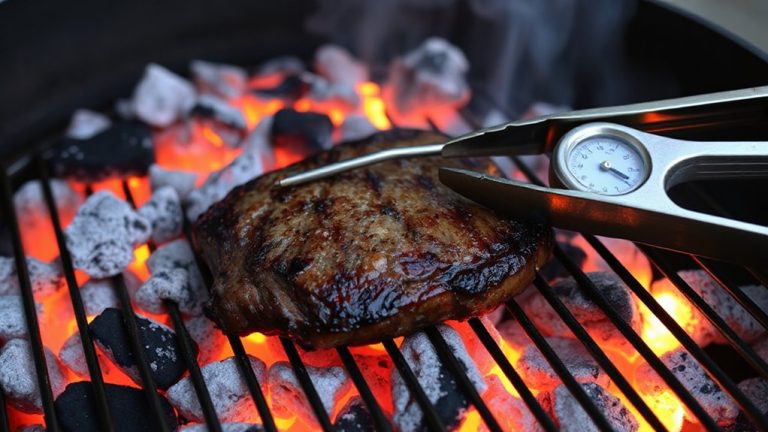
Because the spatchcocked bird lies flat, it makes direct contact with the grill grates, which promotes even cooking and maximizes surface exposure for crisp, golden skin. You’ll want to preheat your grill to medium-high-around 375°F to 400°F-for best searing. Place the bird skin-side down first; this direct heat renders the fat slowly, giving you that coveted crispy skin without burning. Flip halfway through only if necessary, but most of the time, leaving it undisturbed guarantees consistent even browning. A well-oiled grate prevents sticking and preserves the skin’s integrity. Grill with the lid closed to trap heat, mimicking an oven’s convection while adding smoky depth. For best results, use hardwood or charcoal-propane works, but lacks the flavor depth. Patience pays: crispness peaks when the skin isn’t rushed.
Avoid These Common Spatchcocking Mistakes
While spatchcocking can transform your poultry into a juicy, evenly cooked centerpiece with crisp, golden skin, a few missteps during preparation can undermine even the most carefully managed grill session. Improper knife handling often leads to jagged cuts or injury-use sturdy kitchen shears and apply steady, even pressure along the backbone. If you’re using a knife, guarantee it’s sharp; dull blades slip easily and increase risk. Uneven backbone removal distorts the bird’s shape, causing inconsistent flattening and unstable grilling. Always cut parallel to the spine for symmetry, removing the entire backbone in one smooth motion. Pressing the breastbone down too hard before fully detaching the spine can also warp the structure, leading to uneven heat exposure. Avoid these errors, and your bird will lie flat, cook faster, and develop that ideal crispy skin across the entire surface. Precision here pays off in both safety and performance.
On a final note
You’ve now mastered spatchcocking-a reliable technique that flattens poultry for even, efficient grilling. It exposes more surface area, crisping the skin while protecting the breast from drying out. With proper tools and attention to detail, you’ll cut cooking time substantially and gain better temperature control. Avoid common errors like uneven cuts or poor seasoning distribution. When executed well, spatchcocking delivers consistent, flavorful results ideal for weeknight dinners or weekend BBQs, making it a must-have skill for serious outdoor cooks.