Essential Tools and Gear Needed for Traditional Open Pit Cooking
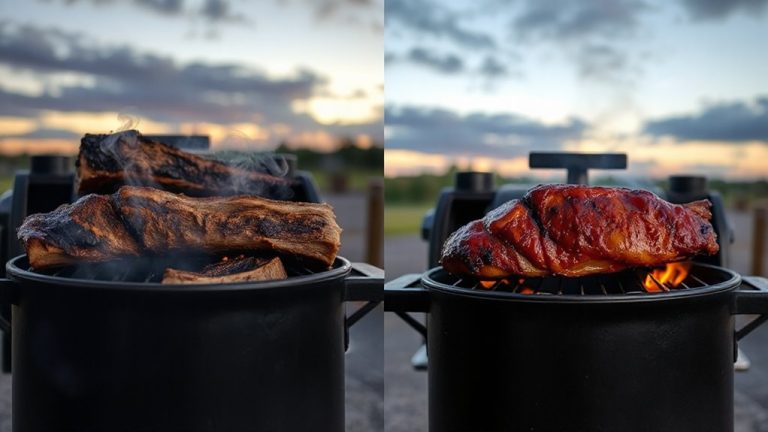
You’ll need a sturdy fire pit lined with brick or steel, set safely away from vegetation. Use a cast iron or stainless steel grate for even heat, and control flames with a chimney starter and hardwood℗s like oak. Equip yourself with tongs, a fire poker, and a spark screen for safety. Wear leather gloves and long sleeves for protection. A well-built setup guarantees consistent results-there’s more to mastering outdoor cooking than just heat.
Notable Insights
- Use a chimney starter for quick, chemical-free fire ignition and consistent heat buildup.
- Equip a cast iron or stainless steel grill grate for even heat distribution and durability.
- Keep a grill rake and sturdy tongs for adjusting logs and managing active flames safely.
- Install a mesh spark screen to contain embers, especially in windy outdoor conditions.
- Wear leather gloves, long natural-fiber sleeves, and closed-toe shoes to protect against heat and sparks.
Build a Safe Fire Pit for Cooking Outdoors
While you might be keen to get cooking right away, building a safe fire pit is essential for both performance and peace of mind when grilling or roasting outdoors. Proper fire placement keeps flames stable and reduces risks-always position your pit at least ten feet from structures, trees, or dry grass. Choose a level, well-drained spot to prevent shifting or runoff issues. A ring of stones or a metal collar helps contain sparks, but don’t rely on it alone. Pit lining with fire-rated brick or steel enhances durability and heat retention, protecting the soil beneath and improving efficiency over time. Unlined pits erode quickly and can smolder underground, creating hazards. You’ll get cleaner burns and better temperature control with a lined structure. Though a basic坑 works short-term, investing in thoughtful fire placement and quality pit lining guarantees safer, more consistent cooking. Maintenance becomes easier, too. For those seeking versatility, consider a fire pit with grill combo that integrates cooking functionality directly into the design.
Choose the Right Grate for Even Heat
A well-chosen cooking grate makes all the difference in achieving consistent results over an open pit, so don’t overlook its role in heat distribution and usability. You’ll want to take into account grate materials carefully-cast iron holds heat well and offers superior heat distribution, but it’s heavy and prone to rust if not maintained. Stainless steel is lighter and resists corrosion, though it may develop hot spots. Wrought iron strikes a balance, providing decent heat retention and durability without excessive weight. The spacing of the bars matters too; too wide and small items fall through, too narrow and airflow suffers, affecting how evenly your food cooks. A grate with a slight slope helps with grease management, while adjustable heights let you control cooking intensity. Choose one that suits your typical meals and fuels, and clean it regularly to preserve performance. For top-performing options, consider checking out the best grill grates based on expert testing and user reviews.
Start and Control Your Cooking Fire
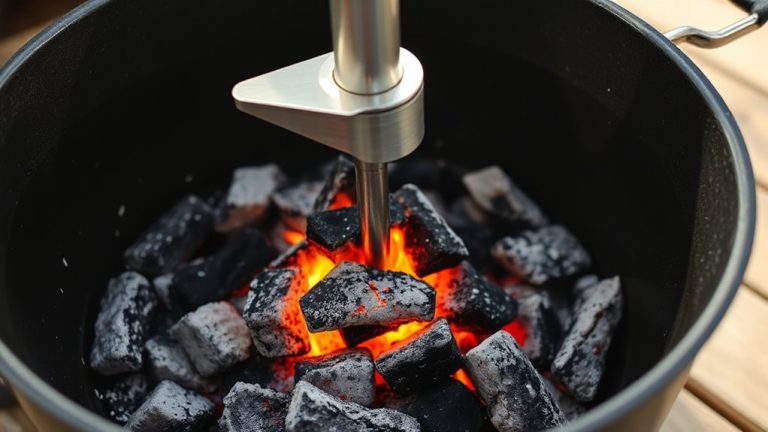
Even when you’ve got the perfect pit and grate, your cook stands or falls on how well you start and manage the fire, so don’t treat this step as an afterthought. Choosing effective fire ignition methods matters-newspaper and kindling work, but a chimney starter delivers faster, more consistent results without chemical taste. Once lit, flame temperature regulation becomes critical. You’ll need to balance airflow and fuel: too much oxygen spikes heat, risking charred exteriors and raw interiors; too little kills momentum. Hardwoods like oak or hickory offer steady burns and better control than softwoods. Build your fire gradually, adding logs in stages to maintain momentum. Position coals strategically-hot zones for searing, cooler edges for slow cooking. Mastery isn’t just about heat, but timing and stability. Proper flame temperature regulation guarantees food cooks evenly, retaining moisture and texture. Reliable ignition and mindful adjustments separate decent pit cooking from exceptional. For consistent performance, consider investing in a high-quality charcoal chimney.
Use Essential Tools to Manage Flames
Fire management separates the novices from the pitmasters, and your toolkit makes all the difference. Proper flame monitoring lets you adjust heat in real time, preventing scorching or undercooking. A long-handled grill rake or fire poker helps you reposition logs and check burn rates without getting too close. Tongs and a wide ash shovel aid in ember containment, keeping stray sparks and hot coals within the pit’s boundary. Mesh spark screens work quietly but effectively, especially in windy conditions. Experienced cooks rely on these tools not just for control but for consistency across long sessions. Without them, heat fluctuates unpredictably, compromising flavor and texture. You’ll find that durable, heat-treated steel tools outperform lighter alternatives, especially when used repeatedly. These aren’t luxuries-they’re necessities that shape how well you manage the fire’s energy. Good tools mean better control, safer burns, and tastier results.
Stay Protected With Heat-Resistant Gear
Heat-resistant gear isn’t just gear-it’s your first line of defense when working inches from 600°F radiant heat and unpredictable flare-ups. Proper heat protection keeps you safe and in control, making safety measures non-negotiable. Choose gear that balances durability, flexibility, and coverage. Below are key items and their performance traits:
| Gear Type | Feature & Benefit |
|---|---|
| Leather gloves | High heat resistance, protects hands during flare-ups |
| Apron (leather/cotton blend) | Blocks sparks, reduces burn risk |
| Long sleeves (natural fibers) | Prevents skin exposure without melting |
| Closed-toe shoes | Shields feet from embers and hot tools |
| UV/heat-resistant goggles | Improves visibility near intense flames |
These tools offer essential safety measures. Invest in quality-gear wears down with repeated exposure, so inspect regularly. Your heat protection is only as strong as its weakest point, so outfit completely.
Prep Food With the Right Kitchen Tools
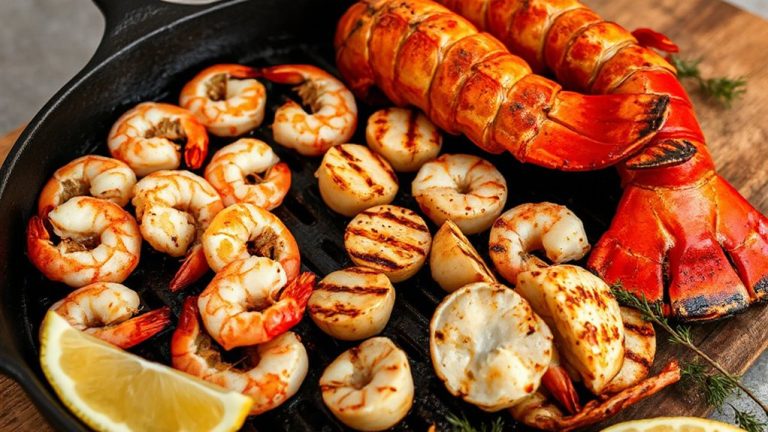
You’ve got your heat-resistant gear on and the fire under control, but now it’s time to focus on what goes into the pit. Smart food prep starts with reliable kitchen essentials-think sharp boning knives for trimming meat, durable cutting boards that won’t warp, and heavy-duty tongs for handling raw ingredients. A digital thermometer guarantees proteins are prepped to safety standards before they even hit the coals. Don’t overlook containers for marinating; food-safe plastic or glass keeps flavors intact and prevents contamination. Quality tools improve precision and efficiency, especially when working outdoors where space and resources are limited. Well-maintained equipment also reduces prep time and cross-contamination risks. While some improvise with household items, investing in purpose-built tools enhances both hygiene and performance. In open pit cooking, where timing and temperature are critical, your kitchen essentials aren’t just convenient-they’re foundational to consistent, safe, and flavorful results.
On a final note
You’ve got the basics now: a well-built fire pit, a sturdy grate, and tools that handle heat and flare-ups. With proper airflow and fire control, you’ll cook evenly and safely. Heat-resistant gloves and the right utensils make all the difference in precision and protection. Prep work matters, but so does watching how your food reacts to live flame. This setup isn’t flashy, but it’s proven-efficient, reliable, and perfect for mastering real outdoor cooking.