How Wood Chips and Logs Can Elevate Your BBQ Flavors: A Beginner’s Guide
You’ll get richer BBQ flavors by choosing the right wood-hardwoods like hickory, cherry, or oak burn clean and add distinct smoky notes. Pair strong woods with bold meats: hickory for pork, mesquite for beef. Soak chips for longer smoke, or use dry chips and chunks for quick grills. Logs deliver steady flavor for long cooks. Avoid overloading or poor airflow to prevent bitterness. The right wood choice sharpens your results-and there’s more to getting it just right.
Notable Insights
- Hardwoods like oak, hickory, and cherry burn cleaner and longer, enhancing BBQ flavor with rich, robust smoke.
- Pair wood types to food: hickory for pork, apple for poultry, mesquite for beef, to balance flavor intensity.
- Dry wood chips ignite quickly for short smokes; soaked chips produce longer, milder smoke for delicate meats.
- Wood chunks or logs provide steady, intense smoke ideal for long cooks like brisket or ribs.
- Avoid overloading wood or poor airflow to prevent bitter taste and ensure even, flavorful smoke distribution.
Unlock Bold BBQ Flavor With the Right Wood
Wood choice isn’t just an afterthought-it’s the backbone of flavor in your barbecue. Your wood selection directly shapes the taste of everything you cook, from ribs to vegetables. Hardwoods like hickory, oak, and cherry burn slower and cleaner than softwoods, giving you better control over smoke and temperature. The flavor intensity you achieve depends on the wood’s density and natural oils-darker, denser wood usually delivers a stronger, more robust smoke. Lighter woods like apple offer a subtle, slightly sweet profile, perfect when you don’t want to overpower delicate meats. Mismatched wood can overwhelm a dish or leave a bitter aftertaste, so pairing the right wood with your protein matters. Even seasoned pitmasters test different combinations to balance smoke richness without sacrificing the food’s natural character. Ultimately, mastering smoke means understanding how wood selection and flavor intensity work together. For reliable performance and consistent smoke, consider using best wood chips for smoking.
Best Wood Types (And What to Pair Them With)
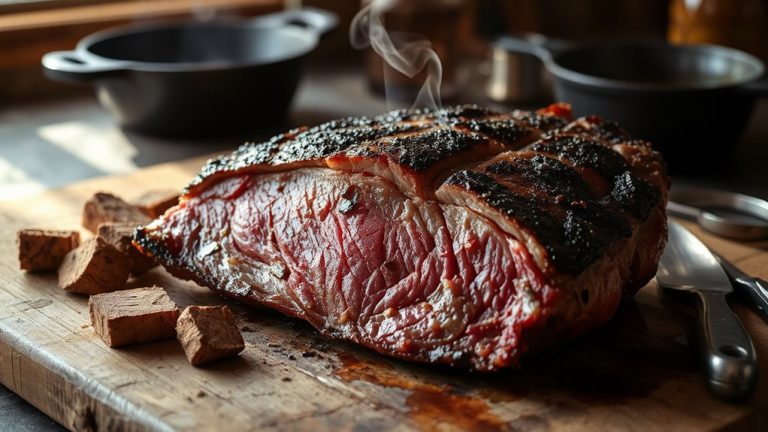
While no single wood fits every cook, knowing which types bring out the best in your proteins can make the difference between good barbecue and exceptional. Hickory offers a strong wood aroma and high flavor intensity, perfect for pork and ribs, though it can overpower delicate meats. For a milder touch, apple wood gives a subtly sweet aroma and medium flavor intensity, ideal with poultry or pork. Cherry wood delivers a rich, fruity wood aroma with a balanced flavor intensity, pairing beautifully with chicken and ham. Mesquite brings bold, earthy notes and intense flavor intensity-best suited for beef but can turn bitter if overused. Oak sits in the middle, offering consistent smoke and moderate wood aroma, making it a versatile choice for almost anything. Matching wood type to protein guarantees your food enhances-not masks-the natural flavors. For smoking prime rib, the best wood choice provides a robust yet balanced smoke, and many pitmasters favor best wood for smoking prime rib.
Soak and Load: Prep Chips the Right Way
A good number of backyard pitmasters swear by soaking wood chips before tossing them on the grill, but the truth is, it’s not always necessary-and sometimes, it can even slow things down. Soaking delays smoke production since wet chips must dry before smoldering, potentially lowering smoke intensity early in the cook. For quick grills, dry chips usually work better. If you’re after longer smoke sessions, soaking can extend burn time slightly-but don’t overdo it. Your wood selection matters more than moisture content. Here’s how common prep methods compare:
| Prep Method | Smoke Intensity & Duration |
|---|---|
| Dry chips | High intensity, shorter burn |
| Soaked chips | Moderate, longer release |
| Chunk on coal | High, sustained output |
| Mixed chips | Balanced flavor control |
Dry chips give faster, richer smoke, while soaked ones offer a slower ramp. Match your method to your wood selection and cooking timeline for best results.
Chips vs. Logs: Pick the Right One
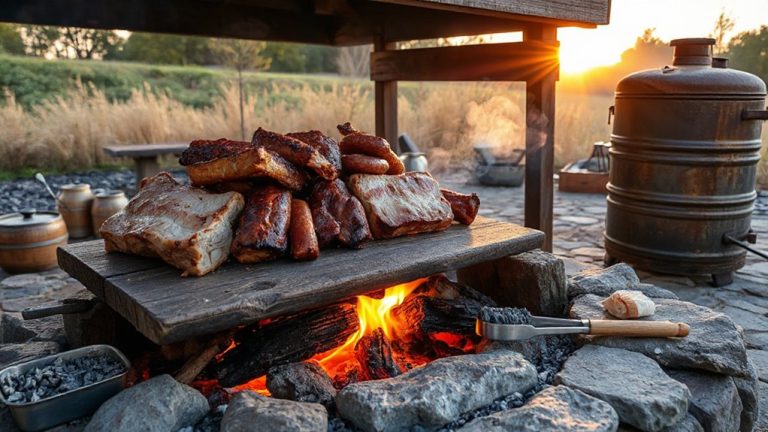
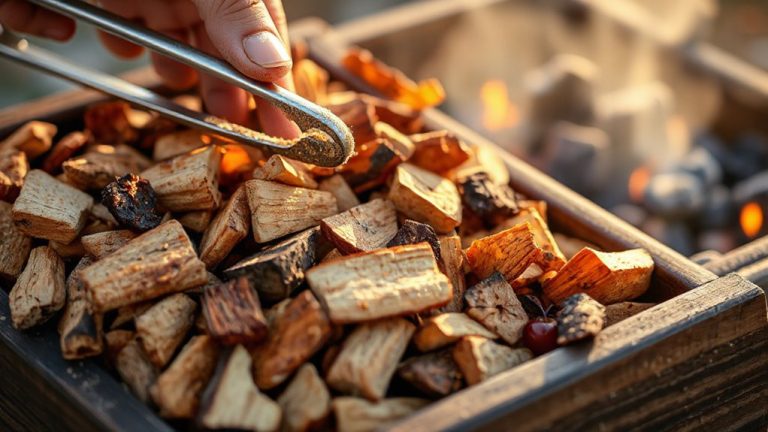
If you’re aiming for deep, authentic smoke flavor, the choice between chips and logs can make or break your cook. Chips, with their higher surface-area-to-volume ratio, ignite quickly and produce smoke fast, but they burn out fast too-ideal when you want moderate smoke intensity over a short session. They often come dry, so soaking helps manage wood moisture and prolongs smoke. Logs, though harder to ignite, deliver consistent, long-lasting smoke with greater intensity, especially in offset smokers or stick burners. Their natural wood moisture content influences burn rate and smoke quality-too wet and they smolder poorly; too dry and they flare up. For long cooks like brisket, logs are superior. For quick grilling or small smokers, chips work fine. Your cooker type, cook time, and desired smoke intensity should guide your pick-don’t assume one’s better; they’re just different tools for different jobs. For best results, consider trying different types of best smoking wood to match your meat and flavor preferences.
Don’t Ruin Your BBQ: 5 Smoking Mistakes to Skip
Smoke is supposed to enhance, not overpower - but too often, backyard cooks make mistakes that turn a promising brisket or rack of ribs into a bitter, charred disappointment. Avoiding flavor imbalance starts with wood choice and quantity; too much smoke creates acrid, unpleasant notes. Heat spikes can ruin slow cooking, leading to tough meat and inconsistent doneness. Don’t let poor technique undermine your effort.
| Mistake | Consequence | Solution |
|---|---|---|
| Overloading wood | Bitter meat, flavor imbalance | Use measured amounts |
| Poor airflow | Heat spikes, uneven smoke | Adjust vents early |
| Ignoring wood type | Mismatched flavor profiles | Match wood to meat |
Monitor temperature steadily, balance smoke output, and choose wood intentionally. Great BBQ relies on consistency, not chance. Trust process over improvisation for best results.
On a final note
You’ve seen how wood choice shapes flavor, from hickory’s bold punch to apple’s gentle sweetness. Soaking chips matters less than timing, while logs offer steady heat for long smokes. Matching wood to meat isn’t guesswork-it’s strategy. Avoiding mistakes like overloading or skipping airflow keeps results consistent. Mastering these elements elevates your BBQ from hit-or-miss to reliably impressive, turning every cook into a lesson in control and flavor balance.