How to Use a Flat Top Griddle for Breakfast Cooking Outdoors
Preheat your flat top griddle for 10–15 minutes on medium-high to guarantee even heat and prevent sticking-water droplets should dance and evaporate quickly. Choose a cold-rolled steel or cast iron model for durability and superior heat retention, especially outdoors. Zone the surface by adjusting burners, using high heat for bacon and a cooler area for eggs or pancakes. Cook eggs at 275°F–300°F on a lightly oiled surface, scraping and wiping between batches. Keep it seasoned and protected after cleaning. There’s more to mastering outdoor breakfast than just heat and timing.
Notable Insights
- Preheat your flat top griddle for 10–15 minutes on medium-high heat until water droplets dance and evaporate quickly.
- Use a cold-rolled steel or cast iron griddle for superior heat retention and durability during outdoor cooking.
- Zone the griddle surface by adjusting burner settings to create high-heat and low-heat areas for different foods.
- Cook eggs at 275°F to 300°F on a lightly oiled surface to prevent sticking and ensure even results.
- Clean the griddle while warm with a metal spatula, wipe with a cloth, then apply a light oil layer to protect it.
Preheat Your Flat Top Griddle
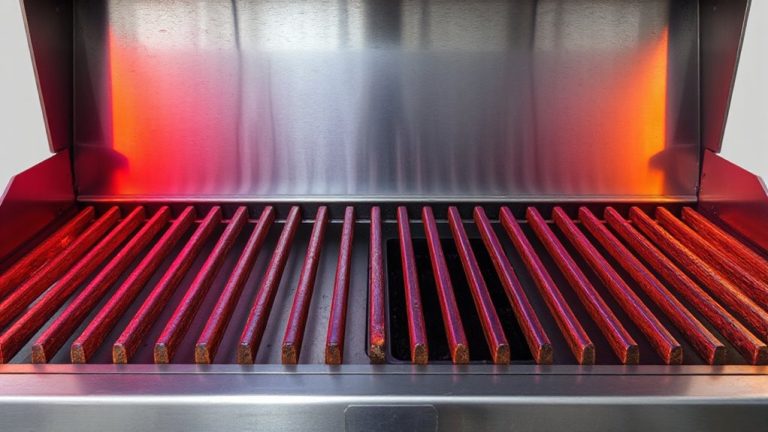
A properly preheated flat top griddle isn’t just recommended-it’s essential for peak outdoor cooking performance. You need consistent heat distribution to avoid hot spots that burn your eggs while leaving pancakes underdone. Without adequate preheating, the surface temperature won’t stabilize, leading to uneven searing and sticking. Give it 10–15 minutes on medium-high heat, depending on your fuel source. Infrared models heat faster and offer more uniform surface temperature than standard burners. You’ll know it’s ready when water droplets dance and evaporate quickly-a sign of proper thermal saturation. This step isn’t just ritual; it guarantees maximum browning and control. Skipping it compromises both texture and flavor. Even seasoned users see improved results with full preheating. Proper heat distribution supports precise cooking, whether you’re searing bacon or flipping hash browns. For serious outdoor breakfasts, patience at startup pays off in performance.
Choose the Best Griddle for Breakfast
While you might be tempted to grab any flat surface for cooking outdoors, picking the right griddle for breakfast means balancing size, material, and heat control to match your morning routine. A well-chosen model offers both griddle durability and smart portability options, ensuring it withstands frequent use and travel. Look for cold-rolled steel or cast iron surfaces-they retain heat well and resist warping. If you’re camping or tailgating, opt for a compact, lightweight design with foldable legs or a carrying case. For backyard setups, a larger, stationary model with precise burner control gives better cooking consistency. Though heavier, steel griddles often last longer and handle high heat better than aluminum. Always consider how often you’ll move it and what fuels you’ll use. A dependable griddle combines rugged construction with thoughtful design, making your outdoor breakfasts easier and more reliable over time. Based on expert testing, the best outdoor griddles deliver even heating and long-term performance across various cooking conditions.
Zone Your Griddle for Cooking
Since you’re cooking multiple breakfast items at once, dividing your griddle into cooking zones helps manage different heat requirements without crowding the surface. Setting distinct cooking sections lets you control griddle temperature more effectively-searing bacon on a high-heat zone while gently warming pancakes on a cooler area. Most flat tops respond well to this method, especially when using a surface with even heat distribution. You’ll notice better results when proteins, veggies, and starches each have their designated space. Adjusting burner settings creates these zones easily, allowing you to multitask efficiently. Think of your griddle as a stove with multiple burners-each section serving a specific purpose. This setup isn’t just convenient; it’s essential for maintaining control and consistency. Proper zoning improves cooking precision, reduces flare-ups, and keeps everything moving smoothly during outdoor breakfast prep.
Cook Eggs on a Flat Top Grill
When it comes to cooking eggs on a flat top grill, precision and surface prep make all the difference-you’ll want to start with a lightly oiled griddle warmed to medium-low, around 275°F to 300°F, to avoid scorching while ensuring even setting. Whether you’re using a cast iron griddle or a modern one with a non stick surface, heat retention and distribution are key. Cast iron offers excellent searing and durability but requires seasoning and careful cleaning. A non stick surface simplifies cleanup and prevents sticking, ideal for delicate eggs like sunny-side up or scrambled. Spread your eggs evenly, use a spatula for gentle agitation if scrambling, and monitor closely-outdoor temperatures can affect cooking times. With proper technique, you’ll get consistent results, whether feeding a family or hosting a weekend cookout. Ultimately, control and surface quality define success when cooking eggs outdoors. For outdoor enthusiasts, choosing the right equipment matters-consider a best portable griddle that balances performance, durability, and ease of transport.
Sear Bacon and Sausage
Because high heat and even contact matter most for achieving crisp bacon and juicy, well-seared sausage, your flat top griddle needs to hit 350°F to 375°F before laying down strips or links-this range renders fat efficiently without burning the outside. You’ll notice superior bacon crispness when the strips lie flat, edges curling just slightly as grease sizzles away. Flip once; don’t crowd the surface, or steam will inhibit browning. For sausage browning, use a spatula to rotate links frequently, ensuring even crust development. Preheating is key-cold metal causes sticking and uneven sear. Stainless steel or cast iron griddles hold heat best, promoting consistent results. You’re not just cooking; you’re managing thermal transfer. Watch for golden-brown patches forming on sausages and deep, reddish-brown on bacon-those are signs of proper Maillard reaction. Drain excess grease mid-cook to avoid flare-ups and maintain control. With practice, you’ll balance heat and timing for restaurant-quality sear every time. For those choosing alternatives, consider that turkey bacon varies in quality and cooking behavior, so selecting a best turkey bacon brand can make a noticeable difference in flavor and texture.
Make Fluffy Pancakes
Fluffy pancakes rise best when heat is steady and evenly distributed-something a preheated flat top griddle delivers better than most camp stoves or frying pans. You’ll want your griddle at about 375°F; too hot, and the outsides burn before the insides cook. Pancake batter consistency is key-aim for thick but pourable, like heavy cream, to trap air and create lift. Drop spoonfuls evenly across the surface, giving them space to spread slightly. Watch for bubbles forming across the surface, a sure sign the first side is nearly done. That’s when your flipping technique matters: slide a thin spatula underneath and flip with one swift, confident motion. Overhandling collapses the fluffiness, so flip only once. The second side cooks faster, browning in about 1–2 minutes. This method beats traditional pans-no hot spots, faster cooking, and better browning.
Keep Your Griddle Clean
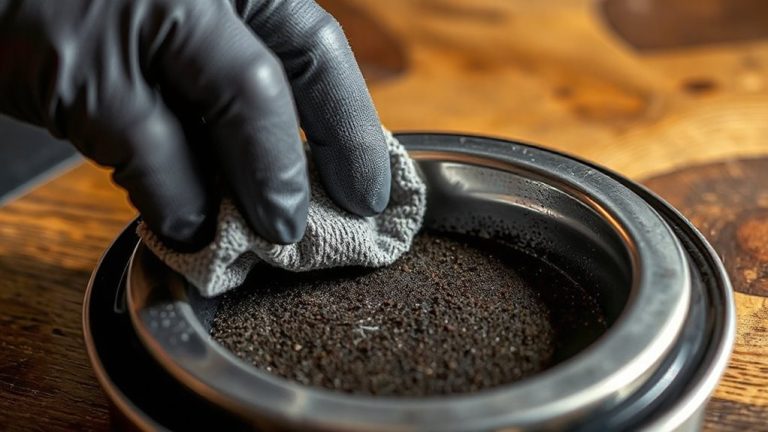
After you’ve flipped the last golden pancake and wrapped up breakfast, don’t overlook what happens next-your griddle still holds residue from the morning’s cooking, and letting it cool without attention can lead to stubborn buildup. Cleaning while it’s warm (but not scorching) guarantees debris lifts easily. Use a metal spatula and cloth to wipe it down, then apply a light oil layer for griddle seasoning and rust prevention. This simple habit maintains performance and extends your cooktop’s life. Over time, consistent care builds a natural non-stick surface, enhancing flavor and control.
| Step | Action | Benefit |
|---|---|---|
| 1 | Scrape while warm | Removes food without scrubbing |
| 2 | Wipe with cloth | Eliminates grease residue |
| 3 | Apply oil | Boosts griddle seasoning |
| 4 | Heat briefly | Sets the oil layer |
| 5 | Store covered | Guarantees rust prevention |
On a final note
You’ve got the tools and techniques to master breakfast on your flat top griddle outdoors. Preheating, zoning, and proper cleaning guarantee consistent results, whether searing bacon or flipping pancakes. A quality griddle holds heat evenly, boosting control and efficiency. With practice, you’ll appreciate how its versatility outperforms traditional grills for morning meals. It’s not just convenient-it’s a durable, high-performance choice for outdoor cooking that rewards attention to detail and maintenance.