Using Breathable Covers to Store a Gas Grill Without Trapping Condensation
You should use a breathable cover to store your gas grill because it lets moisture escape while blocking rain and UV rays. Non-breathable covers trap humidity, leading to rust on burners and grates, especially in temperature swings. A good breathable cover uses woven polyester with UV resistance and reinforced stitching, balancing airflow and protection. Just make sure to clean and cool your grill first-otherwise, you’re sealing in the very moisture you’re trying to avoid. Smart protection starts with how you cover it.
Notable Insights
- Breathable covers allow moisture vapor to escape, preventing condensation buildup during temperature changes.
- Trapped humidity under non-breathable covers promotes rust on grates, burners, and internal components.
- Choose UV-resistant, tear-durable breathable fabrics to maintain long-term protection and airflow.
- Clean and dry the grill completely before covering to minimize internal moisture and mold risk.
- Replace covers showing tears, fading, or poor fit to ensure effective condensation and weather management.
Why Condensation Ruins Gas Grills
While you might not think much of a little moisture building up under your grill cover, that condensation can cause real problems over time. Trapped humidity creates the perfect environment for rust formation on grates, burners, and internal components-especially if your grill houses steel or iron parts. Even stainless steel isn’t immune to long-term exposure. You’ll start noticing weakened structural integrity and degraded performance after just one season. Worse, dampness encourages mold growth inside corners and crevices where air doesn’t circulate, posing health concerns when you fire up for cooking. These biological contaminants aren’t easily wiped away and can taint food flavors. Unlike rain, which beads and rolls off, condensation lingers subtly, accelerating wear from within. Most standard covers trap this moisture, unknowingly promoting deterioration instead of preventing it. The damage might not show immediately, but by the time you spot it, the harm’s often already done. Choosing a cover made from breathable fabric materials can significantly reduce moisture buildup by allowing humidity to escape while still protecting against the elements.
How Breathable Covers Block Moisture
You’re probably already aware that moisture does more harm than good when it comes to grill longevity, especially after seeing how trapped condensation eats away at metal and invites mold into tight spaces. Breathable covers tackle this by allowing consistent fabric ventilation, which prevents moisture buildup while still shielding your grill from rain and debris. Their high air permeability lets humid air escape during temperature shifts, reducing the chance of internal dampness. Unlike standard vinyl covers that seal in condensation, these materials balance protection and breathability. You’ll notice less corrosion over time, especially around burners and grease trays, because water vapor doesn’t linger. This design makes a real difference in damp climates or shaded areas where airflow is limited. The cover doesn’t fight moisture by blocking everything-it manages it intelligently through controlled release. With proper fabric ventilation, your grill stays dry, clean, and ready far longer between deep cleanings. A top choice for durability and fit is the Weber grill covers line, known for its tailored design and weather-resistant, breathable fabric.
Best Features in a Breathable Grill Cover
Because not all breathable grill covers deliver the same level of protection, it’s worth focusing on features that boost durability and performance in real-world conditions. You’ll want UV resistance to prevent fabric degradation from prolonged sun exposure-this keeps the material strong and colorfast over time. Equally important is tear durability, especially if your grill sits in a spot with wind or heavy weather. Look for woven polyester or multi-layer fabrics with reinforced stitching; they handle stress points better and resist rip-spreading. A fitted design with secure straps or drawcords guarantees the cover stays in place without flapping. Breathable membranes should still block rain while allowing moisture vapor to escape, balancing protection and airflow. While some covers skimp on material quality, investing in one with solid UV resistance and tear durability pays off in longer service life and reliable performance season after season. Choosing high-quality materials for your grill cover is much like selecting the best steak for a carnivore diet, where premium options offer superior long-term satisfaction and performance.
How to Prep Your Grill for Storage
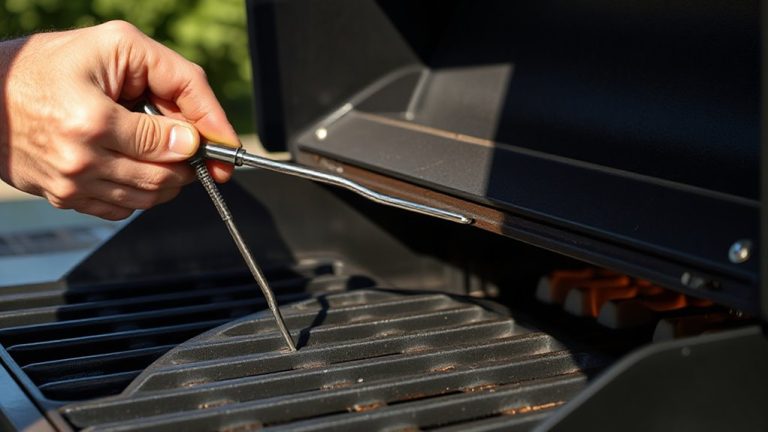
Before you settle on a breathable cover to shield your gas grill, make sure the unit itself is properly prepped for storage-this step’s often overlooked but critical for preventing long-term damage. Start with thorough grill cleaning: scrape grates, remove grease buildup from burners and drip trays, and clear debris from internal components to avoid corrosion and pest infestation. A clean grill not only performs better but also reduces fire risks when you fire it up again. Equally important is propane safety-turn off the gas supply and disconnect the tank before storage. Store the tank upright and away from heat sources or enclosed spaces to prevent leaks or pressure issues. Let the grill cool completely before covering it, even with a breathable fabric, since trapped heat can create moisture. Proper prep guarantees the cover works efficiently, protecting your investment through changing seasons.
Mistakes That Ruin Breathable Covers
While breathable grill covers are designed to fend off moisture and extend the life of your outdoor equipment, using the wrong type or maintaining it poorly can do more harm than good. You might think any cover will do, but non-breathable materials trap humidity, encouraging mold growth underneath. Even breathable fabrics fail if they’re not UV-resistant-prolonged sun exposure degrades fibers, leading to tears and reduced airflow. If you don’t clean the cover regularly, dirt and grease build up, clogging the micro-pores that allow ventilation, which defeats the whole purpose. Placing the cover over a damp or greasy grill also traps moisture, creating a breeding ground for mold. And if the fit’s too loose or too tight, wind can flap it aggressively, accelerating wear. Choosing a high-quality, breathable, UV-resistant cover matters, but so does your upkeep-otherwise, you’re just inviting UV damage and mold growth instead of preventing them.
When to Replace Your Grill Cover
You’ve taken care to pick a breathable, UV-resistant cover and kept it clean, but even the best maintenance can’t extend its life indefinitely. Over time, material degradation and usage frequency will compromise its effectiveness. Small tears, frayed seams, or faded fabric aren’t just cosmetic-they reduce weather resistance and breathability. If moisture starts pooling underneath or the cover no longer fits snugly, it’s time to replace it.
| Sign of Wear | Action Needed |
|---|---|
| Fading or brittleness | Replace due to UV damage |
| Persistent mold | Replace-cleaning won’t suffice |
| Loose fit | Upgrade to proper size |
| Visible tears | Replace to prevent moisture ingress |
High usage frequency accelerates wear, especially in extreme climates. A well-used cover lasts 2–3 years; less frequent use may extend life to 5. Monitor performance, not just appearance-function matters most.
On a final note
You’ll keep your grill in better shape by using a breathable cover-it lets moisture escape instead of trapping it. Non-breathable covers often cause more harm than good, promoting rust and corrosion. A high-quality breathable fabric resists UV damage, shrugs off mildew, and handles seasonal shifts. Pair it with proper prep, like cleaning and checking seals, and your grill stays ready for peak performance. It’s a small investment that extends life and reliability, making it essential for serious outdoor cooking.