Using a Coffee-Ancho Chile Dry Rub on Grilled Tri-Tip Roast
You’ll get a rich, complex crust by rubbing your tri-tip with finely ground dark roast coffee, ancho chile, and smoked paprika before grilling. Pat the meat dry and let it rest uncovered to guarantee better searing. Sear over medium-high heat, then move to indirect heat at 275°F–300°F, finishing near 130°F for a perfect medium-rare. Slice against the grain for maximum tenderness. Adjust heat or smoke to taste-there’s more to mastering this blend than meets the eye.
Notable Insights
- Combine finely ground dark roast coffee, ancho chile powder, brown sugar, smoked paprika, garlic, onion, salt, and pepper for a balanced, flavorful rub.
- Pat the tri-tip dry and let it rest uncovered for 30 minutes to enhance searing and rub adherence.
- Press the coffee-ancho dry rub firmly onto all sides of the tri-tip and rest 1–4 hours for optimal flavor penetration.
- Sear the tri-tip over medium-high heat, then finish on indirect heat at 275°F–300°F until it reaches 125°F–130°F internally.
- Slice the grilled tri-tip against the grain with a sharp knife to ensure maximum tenderness and even flavor distribution.
Make the Coffee-Ancho Chile Dry Rub
A bold fusion of earthy coffee and smoky ancho chile forms the backbone of this dry rub, transforming your tri-tip into a deeply flavorful grilled masterpiece. You’ll mix finely ground dark roast coffee, ancho chile powder, brown sugar, smoked paprika, garlic powder, onion powder, salt, and black pepper in a bowl-each ingredient playing a role in flavor balance. The bitterness of the coffee tempers the chile’s sweetness, while sugar enhances caramelization without overpowering. For best results, prioritize ingredient sourcing: use freshly ground coffee and high-quality ancho powder for vibrant flavor and consistent color. Pre-ground spices lose potency over time, so buying whole and grinding yourself guarantees maximum aroma and depth. This rub holds up exceptionally well under high heat, making it ideal for direct grilling. It adheres evenly, develops a rich crust, and doesn’t burn easily, proving its reliability in outdoor cooking applications where control is limited. Pairing this rub with best pellets for tri-tip ensures a harmonious blend of smoky depth and rich seasoning.
Pat and Prep the Tri-Tip for a Crispy Crust
You’ll want to start with a dry surface-pat that tri-tip thoroughly with paper towels before seasoning. Moisture is the enemy of browning, and you’re aiming for a crisp, deeply flavored crust. A properly dried exterior lets the dry brine adhere better and primes the meat for a superior sear lock-meaning you’ll seal in juices more effectively during high-heat grilling. Letting the tri-tip sit uncovered after patting helps form a light dry brine, drawing residual moisture to the surface where it evaporates. This small step makes a noticeable difference, especially when searing over direct flame. You’ll see less steam and more sizzle, a telltale sign of Maillard reaction kicking in. For best results, prep at least 30 minutes ahead. The drier the surface, the faster you’ll achieve that ideal sear lock without sticking or steaming, leading to a richer crust and juicier interior.
Apply the Rub and Let It Rest
While the meat’s surface dries, take a moment to prepare the coffee-ancho chile dry rub-its coarse blend of finely ground dark roast, smoked ancho powder, brown sugar, kosher salt, garlic, and cumin should cling evenly without clumping. You’ll want to press the rub firmly into the tri-tip, guaranteeing full coverage on all sides. Unlike a wet marinade, this dry rub doesn’t need prolonged marinade time to work; 1 to 4 hours of resting is enough. Letting it rest allows the salt to dissolve moisture temporarily, then reabsorb it, enhancing flavor penetration and seasoning depth. Skip longer rests-overnight can make the meat’s surface too damp, hindering a proper sear later. Proper resting guarantees the spices adhere well and the interior absorbs subtle smoky, earthy notes. This balance of surface seasoning and internal flavor penetration gives a layered taste that wet marinades often miss. It’s efficient, effective, and ideal for outdoor cooking precision. For best results, choose a high-quality blend by reviewing top-rated options such as the best BBQ rubs based on flavor profile and ingredient quality.
Grill the Tri-Tip to Smoky Perfection
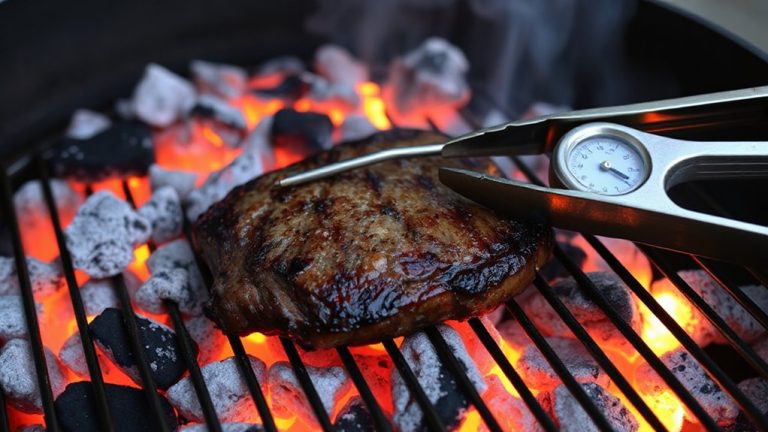
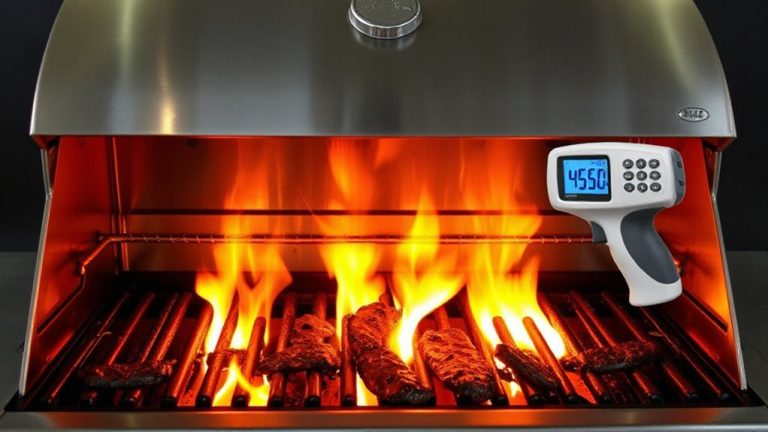
Now that your seasoned tri-tip has had time to rest and absorb the rub’s bold flavors, it’s time to bring heat into play. Set up your grill for indirect cooking, aiming for a steady 275°F to 300°F-this range delivers even doneness without scorching the crust. Fire management is key; maintain clean, consistent airflow to avoid temperature spikes. For depth of flavor, pair the coffee-ancho rub with a mix of hardwoods-oak or hickory works well, lending a balanced smokiness that doesn’t overpower. Avoid softwoods, as they can impart bitter notes. This wood selection enhances the roast’s complexity, complementing the rub’s earthy warmth. Sear the tri-tip directly over medium-high heat first, then shift it to the cooler side to finish. Monitor internal temperature closely; pulling it at 125°F to 130°F guarantees a juicy, medium-rare center once rested. For optimal smoke and temperature control, consider using a charcoal grill smoker with adjustable air vents and ample insulation.
Slice Against the Grain for Tender Results
Tenderness hinges on technique, and slicing your grilled tri-tip against the grain is non-negotiable for achieving tender, melt-in-your-mouth results. You’ll notice the muscle fibers run in long, parallel lines-cutting across them shortens those strands, making each bite easier to chew. This simple cutting technique dramatically improves meat texture, turning a potentially chewy roast into something far more enjoyable. If you slice with the grain, you’re left with long, tough fibers that resist your teeth. But when you cut against it, you’re working with the meat’s natural structure, not against it. Use a sharp carving knife and take your time-consistent, thin slices yield the best presentation and mouthfeel. Proper slicing doesn’t just enhance flavor distribution; it showcases the quality of your cook, reflecting precision and care in every serving.
Adjust the Coffee-Ancho Rub for Heat or Smoke
A well-balanced Coffee-Ancho Chile rub brings depth and complexity to grilled tri-tip, but you can easily tweak it to match your preferred level of heat or smoke. If you like a spicier kick, increase the ancho chile powder or add a pinch of cayenne-this boosts heat without overpowering the earthy coffee intensity. For a milder profile, reduce the chile and emphasize smoked paprika or cocoa powder to maintain richness. To enhance smoke balance, consider adding a touch of ground chipotle or smoked sea salt, which complements the charcoal or wood-fired notes from the grill. The coffee intensity shouldn’t dominate; it should blend smoothly with the smokiness, creating a robust base that accentuates the beef’s natural flavor. Adjusting these elements lets you tailor the rub precisely, ensuring each bite reflects your ideal harmony of heat, smoke, and depth.
On a final note
You’ve grilled tri-tip with a coffee-ancho dry rub, and the results speak for themselves-deep flavor, smoky crust, tender slices. This rub balances earthy coffee and mild heat, enhancing beef without overpowering it. Grilling over indirect heat with a sear finish delivers even doneness and texture. Slicing against the grain guarantees tenderness. The method’s reliable, the ingredients accessible, and the outcome restaurant-quality. It’s a smart, flavorful choice for weeknight dinners or weekend BBQs.