Exploring Citrus Wood Benefits When Smoking Chicken for Bright, Zesty Profiles
You’ll love how citrus wood brightens smoked chicken with clean, zesty notes that enhance without overpowering. Orange wood’s balanced burn works great for beginners, while grapefruit wood’s slow smoke suits thicker cuts. Always use properly dried wood-fresh, cured pieces under 20% moisture guarantee smooth flavor and prevent bitterness. Pair with herbs and light rubs to keep the profile fresh. Avoid green or damp wood, as it ruins the taste. You’ll find even better results when you explore pairing woods and brines.
Notable Insights
- Orange wood provides a balanced, aromatic smoke that enhances chicken with a bright, zesty flavor without overpowering.
- Grapefruit wood’s high density ensures a slow, steady burn, imparting a mellow tartness ideal for rich chicken cuts.
- Properly dried citrus wood prevents bitter smoke, preserving the fresh, lively notes that define zesty profiles.
- Blending lemon wood with milder hardwoods avoids harshness while adding a sharp, citrusy brightness to the meat.
- Matching wood intensity to chicken cuts ensures smoke complements the meat’s natural flavor with vibrant clarity.
Best Citrus Woods for Smoked Chicken
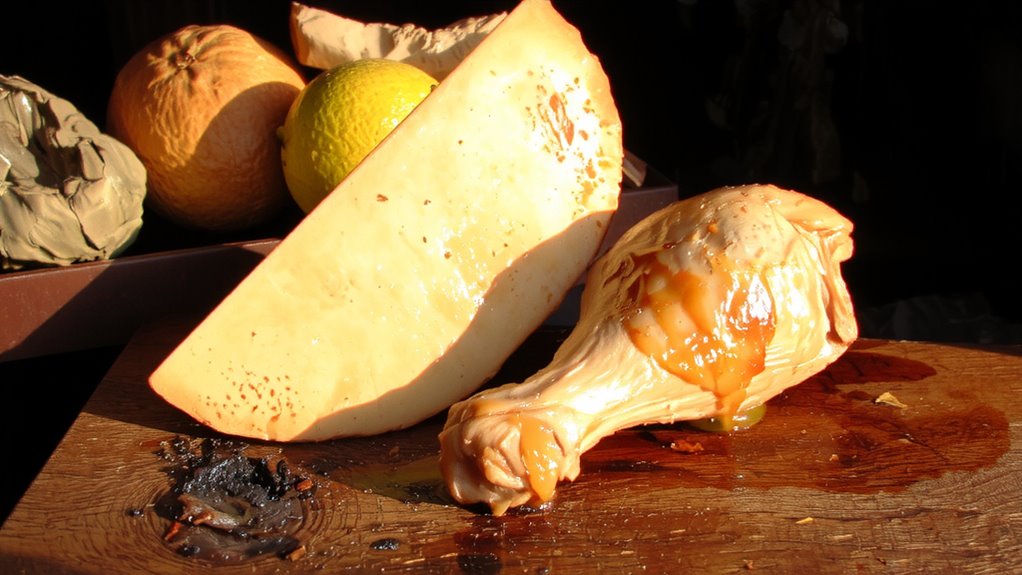
Flavor depth begins with your wood choice, and when it comes to smoking chicken, not all citrus woods deliver the same results. You’ll find orange wood offers moderate wood density, producing a balanced smoke intensity that won’t overpower poultry. It’s reliable, consistent, and especially effective in longer smokes. Lemon wood burns hotter and faster due to lower density, yielding sharper smoke intensity-best used in blends to avoid bitterness. Grapefruit wood, less common but notable, provides a slightly heavier density, translating to a slower, more controlled burn and a mellow, subtly tart smoke. When you’re after bright, zesty profiles without overwhelming the meat, orange wood stands out. It’s versatile and forgiving, making it ideal for both beginners and experienced pitmasters. For best flavor control, combine higher-density citrus woods with a touch of milder hardwood-your chicken will absorb nuanced, aromatic complexity without harshness. For optimal results, consider pairing citrus woods with best wood chips for smoking chicken to enhance both aroma and taste.
How to Dry and Prepare Citrus Wood
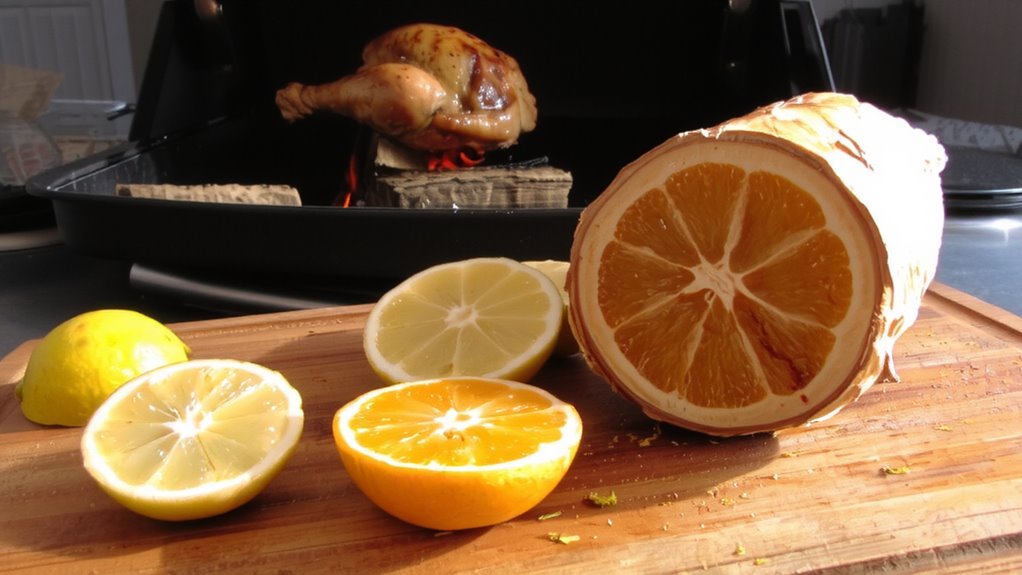
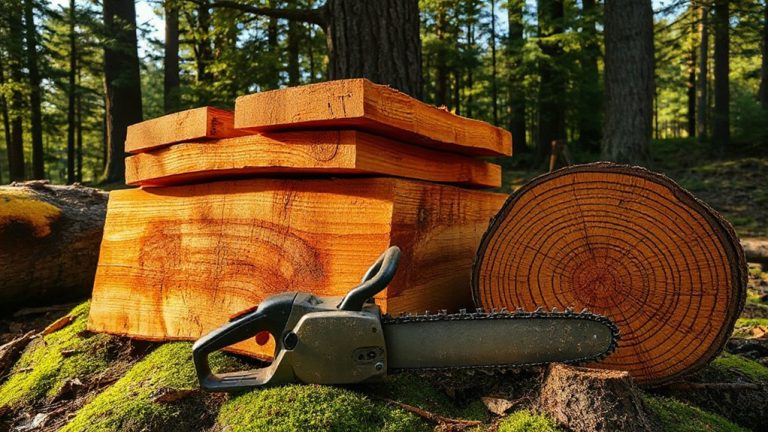
You’ve picked your citrus wood-whether it’s orange for balance, lemon for punch, or grapefruit for its slow smolder-but none of that matters if the wood isn’t properly dried. Freshly cut citrus wood holds too much moisture, leading to excessive smoke and off-flavors. Effective citrus curing methods involve stacking the wood in a dry, ventilated space, shielded from rain and ground moisture. Splitting the wood into smaller pieces accelerates drying by increasing surface area. Ideally, allow at least six months for thorough air-drying, though kiln-drying is faster if done carefully. Always perform wood moisture testing before use; a moisture meter reading below 20% guarantees clean combustion and consistent smoke production. Wet wood not only hampers flavor but also creates creosote buildup in your smoker. Properly cured citrus wood burns steadily and enhances poultry with its bright, clean profile-skip this step, and you risk overpowering the meat instead of complementing it. For best results, select wood types based on flavor profiles and smoke intensity, as outlined in a comprehensive best smoking wood guide.
Pair Chicken Cuts With Citrus Smoke
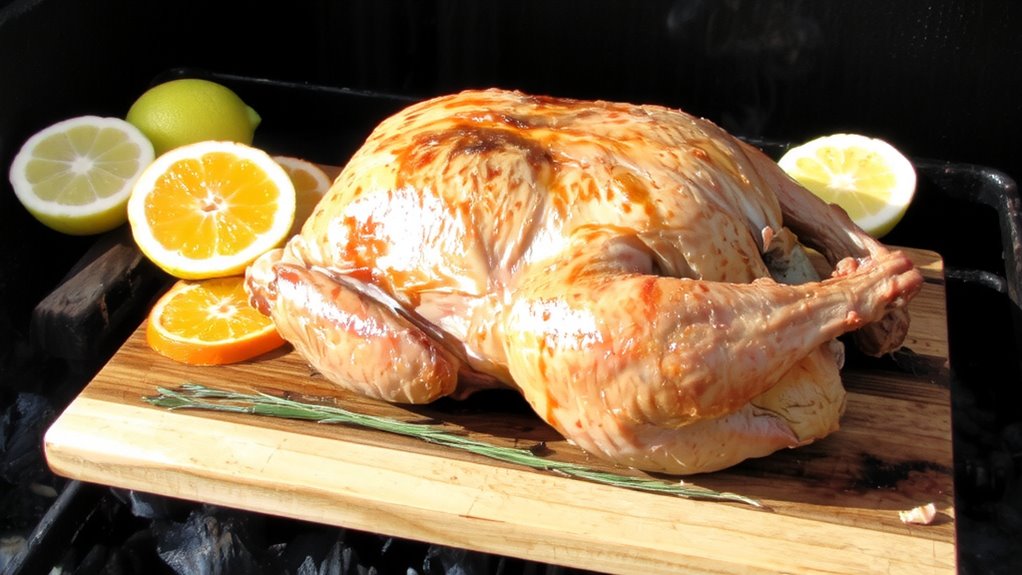
A well-chosen cut of chicken responds differently to citrus smoke depending on its fat content, thickness, and structure, so matching the right piece with the right wood makes a noticeable difference in the final result. You’ll find that wood selection directly impacts flavor pairing and overall smoke penetration. For lean cuts like chicken breasts, orange or lemon wood works well-its mild smoke infuses bright notes without overpowering. Thicker, fattier pieces like thighs or whole birds benefit from grapefruit or tangerine wood, which deliver a slightly bolder, sweeter aroma that complements richer meat. The slower burn of denser citrus woods also suits longer smokes, allowing smoke to build gradually. Avoid pairing intense woods with delicate cuts, as the flavor can become unbalanced. Thoughtful wood selection guarantees the smoke enhances, not masks, the chicken’s natural taste, making each bite a more layered, enjoyable experience. For best results, consider using hardwood smoking chunks specifically recommended for poultry in a well-ventilated smoker.
Balance Citrus Smoke With Seasonings
How do you keep citrus smoke from overpowering your chicken? You balance it with the right seasonings. Citrus wood imparts a bright, zesty profile, but without thoughtful spice pairing, the smoke can dominate. Aim for citrus harmony by using rubs with brown sugar, garlic, and paprika-these add depth without dulling the wood’s freshness. A touch of black pepper or smoked chili enhances complexity while preserving flavor equilibrium. Herbs like thyme or rosemary complement the aroma without competing. Avoid overly sweet or salty blends, as they heighten the smoke’s intensity. Apply seasonings evenly, letting them meld during a brief rest before smoking. This integration guarantees each bite delivers both savory richness and lifted citrus notes. With mindful seasoning, you’re not masking the wood-you’re guiding its character into a cohesive, flavorful experience.
Stop These Citrus Wood Mistakes
While citrus wood can elevate your smoked chicken with vibrant, clean notes, tossing it into the smoker without preparation risks a harsh or inconsistent burn. You need to prioritize citrus wood freshness-wood that’s properly dried and stored burns cleaner and imparts a more balanced flavor. Using old, damp, or moldy wood dulls the aroma and can spoil your bird. Equally important is avoiding green wood; fresh-cut pieces contain too much moisture, creating thick smoke that overwhelms rather than enhances. Instead, season the wood for at least six months to achieve ideal dryness. Hard, dry splits ignite easier and maintain steady heat, essential for even cooking. Don’t assume all citrus wood behaves the same-different varieties respond uniquely to heat, so test in small batches. Proper storage also preserves quality, keeping it shielded from rain and humidity. Smart prep turns good smoke into great, ensuring your chicken gets zesty, not acrid.
Smoke Chicken: Citrus vs. Hickory
If you’ve ever wondered whether citrus wood can stand up to hickory in a smoker, the answer depends on what you’re after-citrus delivers a bright, subtle fruitiness that pairs naturally with poultry, while hickory brings bold, bacon-like depth that can dominate a dish if overused. You’ll find citrus bark burns cooler and with lower smoke intensity, making it ideal for delicate chicken without overwhelming the meat. Hickory, in contrast, generates heavier smoke and higher heat, better suited for long smokes of beef or pork. When smoking chicken, citrus wood enhances flavor without masking it, offering a clean profile that complements herbs and marinades. While hickory’s smoke intensity can border on acrid if mismanaged, citrus wood provides consistent, gentle flavor. You’ll appreciate citrus bark’s reliability when aiming for balance, especially in shorter cooks. Neither wood is inherently better, but citrus edges ahead when subtlety matters. Choose based on flavor goals-bold or bright.
Get More Zest: Brines and Wood Combos
Why settle for good when your smoked chicken could be exceptional? You can elevate your bird with a citrus zest infusion in your brine-think lemon, orange, or grapefruit peel added to salt, sugar, and herbs. This isn’t just flavor masking; it’s brine synergy, where the acids and oils prime the meat to absorb subtle wood notes deeper. Pair that brine with citrus wood-like orange or cherry wood mixed in-and you get a brightness that cuts through richness without overpowering. Unlike heavier hardwoods, citrus wood burns clean and moderate, ideal for poultry’s delicate texture. The combo delivers balanced complexity: tangy, sweet, and subtly smoky. You’ll notice the difference at the first bite-juicier meat, layered seasoning, and a finish that lingers revitalizingly. Master this pairing, and you’re not just smoking chicken; you’re crafting flavor with intention.
On a final note
You’ll find citrus wood elevates smoked chicken with bright, zesty notes that pair perfectly with lean cuts like breasts or thighs. It burns cleanly and imparts flavor without overpowering, especially when combined with balanced brines or mild seasonings. Compared to heavy woods like hickory, citrus offers a fresher profile ideal for warm-weather BBQ. Avoid green wood or over-smoking-properly dried scraps deliver consistent results. Used wisely, citrus wood enhances nuance without sacrificing depth.