How to Season a New Cast Iron Griddle for Perfect Grilled Steaks
Wash your new cast iron griddle with warm water and a soft sponge to remove the factory coating, then dry it thoroughly over low heat. Use a high-smoke-point oil like canola or grapeseed-avoid flaxseed or olive oil-applying a thin, even layer with a lint-free cloth. Bake it upside down at 375°F for one hour, repeating this process three to five times for a smooth, non-stick surface that guarantees consistent searing. Proper seasoning enhances heat retention and flavor control, essential for perfect grilled steaks. Care after each use preserves performance, and there’s more to mastering the technique.
Notable Insights
- Wash and dry the new griddle thoroughly to remove factory coating that hinders heat transfer and seasoning.
- Use a high-smoke-point oil like canola or grapeseed to ensure effective polymerization without flavor transfer.
- Apply a thin, even layer of oil with a lint-free cloth, removing excess to prevent stickiness and uneven seasoning.
- Bake the griddle upside down at 375°F for one hour to cure the seasoning without pooling or flaking.
- Repeat seasoning 3–5 times, allowing cooling and re-oiling between cycles, to build a durable non-stick surface.
Wash and Dry Your New Griddle
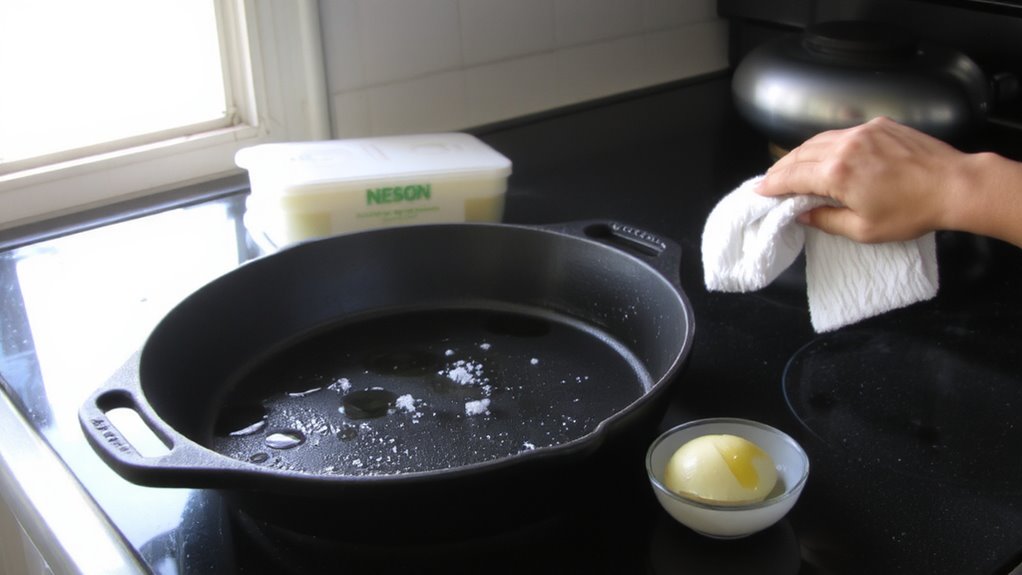
You’ll want to start by giving your new cast iron griddle a thorough wash, even though it might look clean out of the box. That factory coating isn’t seasoning-it’s a temporary protectant that can interfere with heat transfer and flavor. For the initial cleaning, use warm water and a soft sponge; avoid soap unless absolutely necessary, as it can strip the metal’s surface over time. Rinse well to remove any residue. Once clean, immediate and thorough drying is essential-any lingering moisture invites rust, compromising performance and longevity. Place the griddle on a burner over low heat for 5–10 minutes to make certain all water evaporates. This step bridges the gap between design intent and real-world use, setting a functional baseline. Proper prep enhances searing capability and heat retention, both key for outdoor cooking where consistency defines success. Skip this, and seasoning won’t adhere properly-your steaks will suffer. Choosing the right cast iron cookware can make a significant difference in grilling performance and ease of maintenance.
Pick the Best Oil for Seasoning
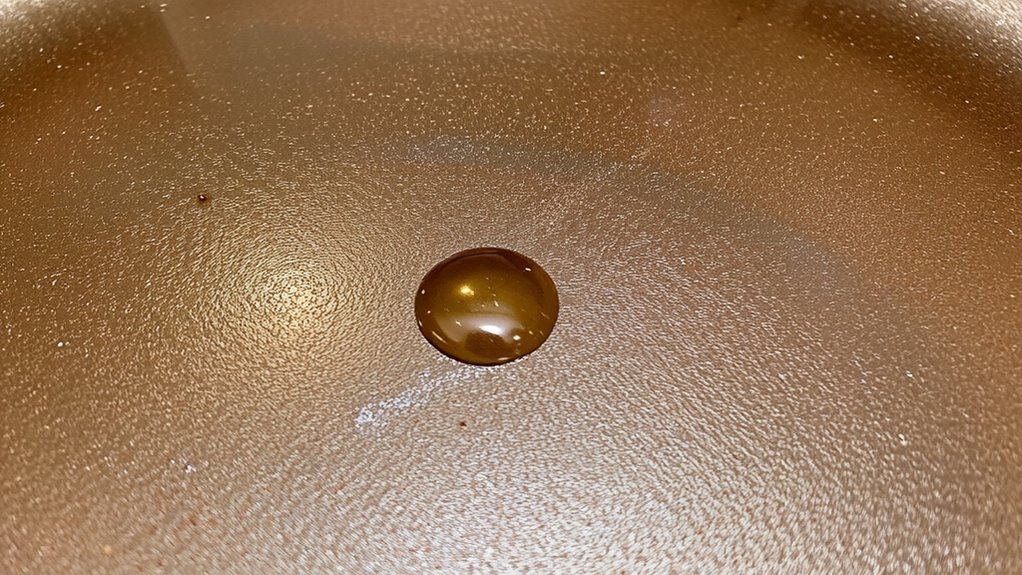
A successful seasoning starts with the right oil, and not all bottles deliver the same results when faced with high-heat cycling. You need an oil with a high smoke point-typically above 400°F-so it polymerizes instead of burning. Flaxseed oil was once popular, but it can flake over time due to its low oil smoke point variability and tendency to over-polymerize. Canola, grapeseed, and vegetable oils perform more reliably, offering stable bonds and consistent coverage. You should also consider oil flavor impact, especially if your griddle’s used for cooking steaks right after seasoning. Strong-flavored oils like olive or sesame can leave unwanted tastes. Stick with neutral, refined oils that vanish into the metal, building a slick, flavor-free foundation. You’re not just cooking; you’re crafting a durable nonstick surface built for repeat performance. Choose wisely-it shows in every sear. For best results, consider using oils recommended in a trusted grill seasoning oil guide.
Apply a Thin Layer of Oil
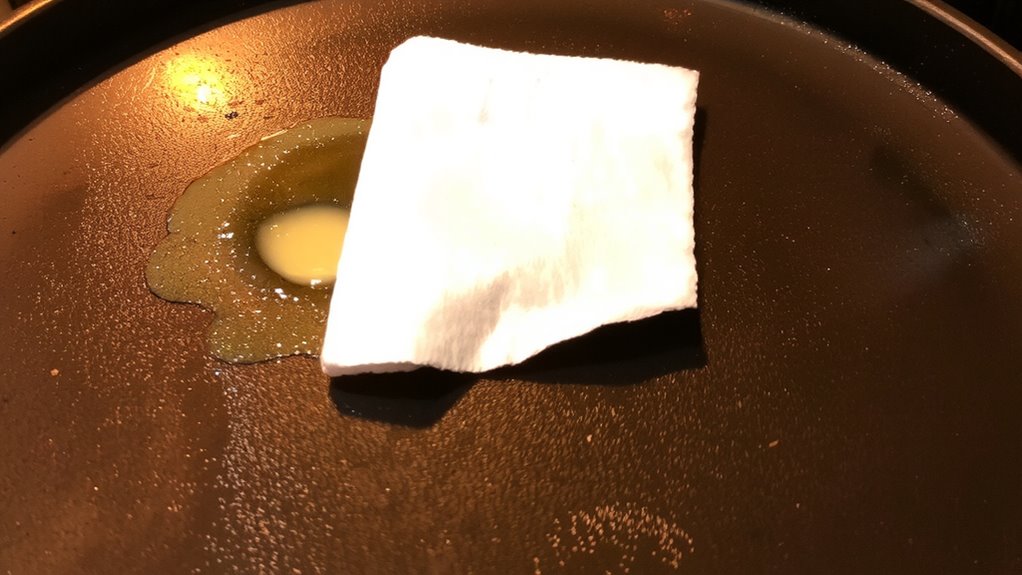
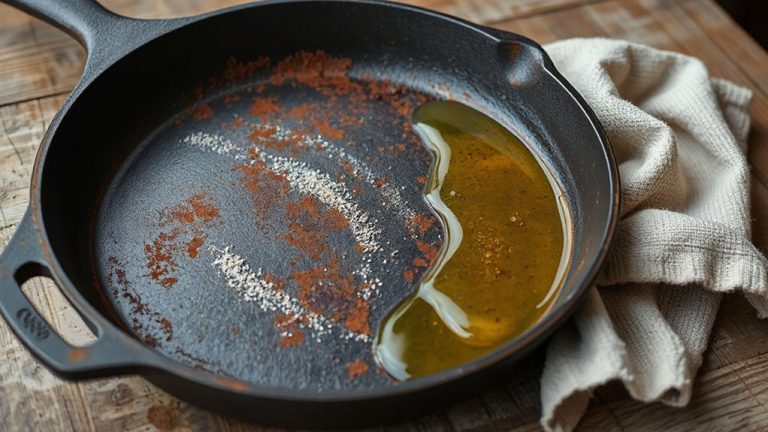
That thin layer of oil makes all the difference-too much and you’re left with a sticky, uneven finish; too little and the seasoning won’t bond properly. You want just enough to coat the surface without pooling. Use a high-smoke-point oil like flaxseed, grapeseed, or avocado-these oil types polymerize well under heat, creating a durable non-stick layer. Apply it with a lint-free cloth, wiping in thin, even motions, then go back over any shiny spots to remove excess. This step matters because the right oil types react predictably at high heat levels, transforming into a hard, protective coating. Uneven application leads to weak seasoning that flakes or rusts. Don’t rush it-take your time to guarantee uniform coverage. The performance of your griddle depends on this foundation. Proper oil distribution guarantees consistent results when searing steaks or cooking delicate items. Skimp now, and you’ll pay for it later.
Bake the Griddle to Set the Seasoning
While the oil application sets the stage, baking the griddle is where the real transformation happens, turning a simple coat of oil into a tough, non-stick surface through polymerization. You’ll need to place it upside down in the oven to prevent pooling. Set the oven temperature to 375°F-that’s hot enough to bond the oil to the metal without burning it off. The recommended baking time is one hour; any less and the layer won’t fully cure, any more and you risk flaking. Here’s what to expect during the process:
| Stage | Visual Cue | Smell Observed |
|---|---|---|
| 15 min | Light smoke | Faint oil scent |
| 30 min | Blue haze | Noticeable odor |
| 60 min | No smoke | Subtle, toasty aroma |
Stick to these specs-you’ll get a resilient, restaurant-grade finish.
Repeat to Build a Non-Stick Layer
Since one round of seasoning won’t give you the slick, durable surface you’re after, you’ll need to repeat the process to build up a strong non-stick layer. Apply a thin coat of oil, heat the griddle until it smokes, then let it cool-each cycle strengthens the polymerization process, bonding oil molecules to the iron. Multiple rounds deepen the seasoning, enhancing both non-stick performance and heat retention. Don’t rush it; three to five layers usually make a noticeable difference. You’ll see the surface darken and feel increasingly slick. This gradual buildup mimics high-end cookware finishes, essential for searing steaks without sticking or uneven cooking. Proper layering guarantees your griddle handles high-heat grilling with reliability. Repeating seasoning also fixes thin spots and prevents rust. With each application, the griddle improves, becoming more consistent and easier to manage during outdoor cooking.
Care for Your Griddle After Every Use
After you’ve finished cooking, taking a few deliberate steps to care for your cast iron griddle guarantees it stays in peak condition for the next outdoor session. Let it cool slightly, then wipe away excess food and grease with a paper towel-avoid soap, as it can compromise the seasoning. For stubborn bits, use a grill scraper or a non-metal brush with hot water. Once clean, reheat the surface briefly to dry it completely, preventing rust. While warm, apply a thin coat of vegetable oil or flaxseed oil to preserve the non-stick surface. This routine enhances griddle longevity and sustains ideal cooking performance. Skipping proper care leads to uneven heating and sticking, undermining your results. Consistent maintenance ensures even heat retention and a reliable sear, essential for grilling steaks. Over time, this practice builds a robust patina, directly improving flavor transfer and ease of use over open flames.
On a final note
You’ve now seasoned your cast iron griddle properly, setting the foundation for superior heat retention and even searing. A well-maintained griddle delivers restaurant-quality steaks with reliable non-stick performance. Regular use and proper care deepen the seasoning, enhancing flavor and durability. Unlike flimsy alternatives, cast iron excels in outdoor cooking, standing up to high heat and rugged conditions. It’s a long-term investment-practical, efficient, and unmatched for serious BBQ results.