The Importance of Properly Preheating Your Smoker Before Adding Food
You should always preheat your smoker because it stabilizes the internal temperature and prevents frustrating hot and cold spots. Skipping this step risks thermal shock, uneven cooking, and off flavors from lingering moisture or residue. Proper preheating guarantees consistent airflow and combustion, which strengthens flavor development and helps form a crisp bark. It also supports that prized smoke ring by creating the right chemical environment from the start-keep going and you’ll discover how to do it right.
Notable Insights
- Ensures consistent cooking by stabilizing temperature and preventing erratic heat swings.
- Creates even heat distribution to eliminate hot and cold spots during low-and-slow smoking.
- Burns off residues and moisture, preventing off flavors and contaminated smoke.
- Promotes better bark formation and smoke ring development through steady initial conditions.
- Protects smoker integrity by seasoning surfaces and avoiding thermal shock to metal components.
Why You Should Always Preheat Your Smoker
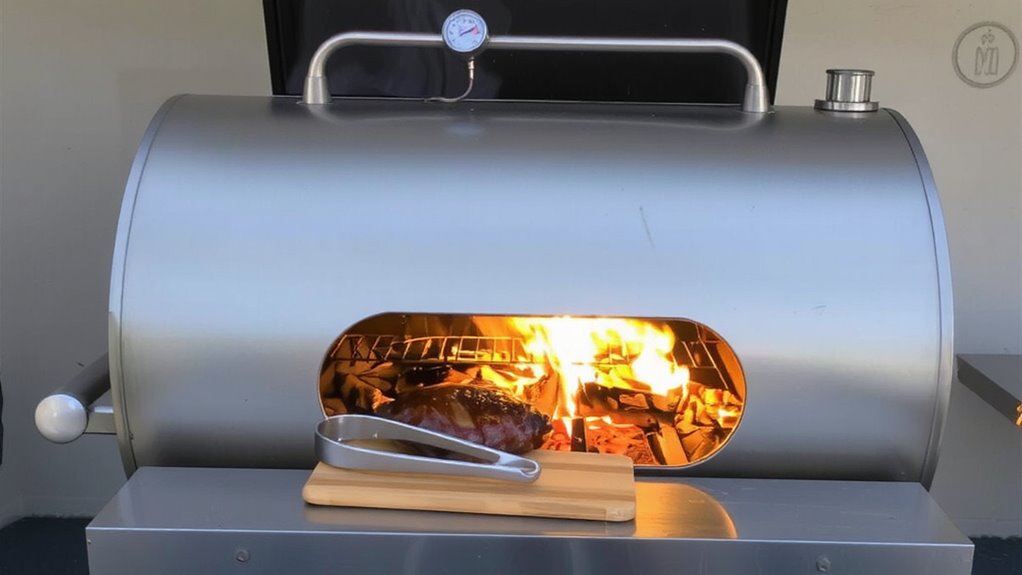
While it might be tempting to throw your brisket on right after firing up the smoker, skipping preheating does more harm than good. Proper preheating guarantees both temperature stability and effective smoker seasoning. Without it, metal surfaces heat unevenly, leading to frustrating hot spots and temperature swings that sabotage low-and-slow cooking. A well-preheated smoker stabilizes internal airflow and combustion, creating a consistent environment essential for tender, evenly smoked meats. Plus, this heat cycle strengthens the smoker seasoning-a crucial layer of polymerized oil that protects against rust and enhances flavor over time. Skipping this step risks corroding steel and diminishing flavor integrity. Think of it as warming up an engine: cold starts wear components down. Letting your smoker idle at target temp for 20–30 minutes isn’t wasted time-it’s foundational maintenance and performance prep you can’t afford to overlook.
How Preheating Prevents Off Flavors and Uneven Cooking
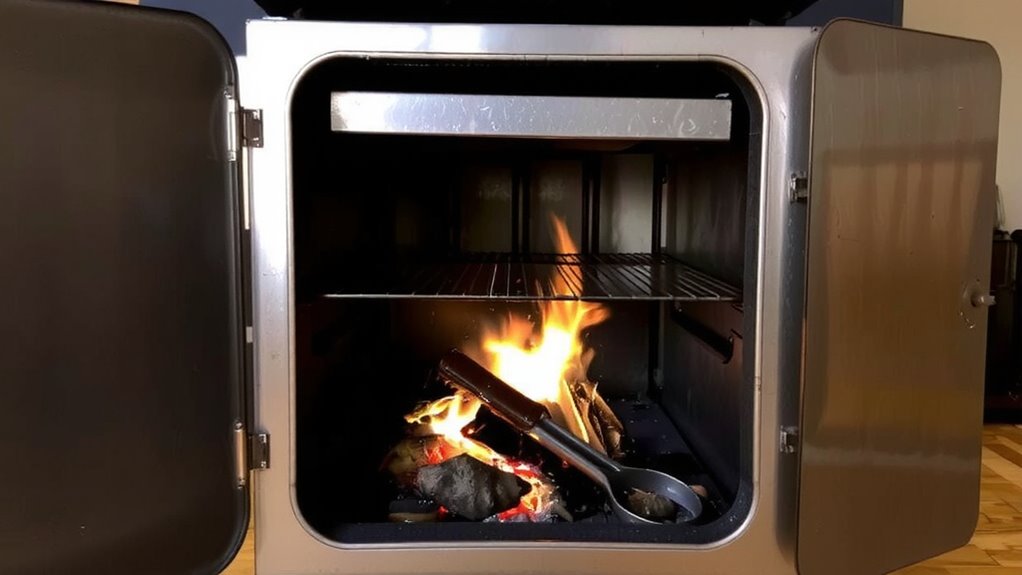
You’ve already seen how preheating stabilizes temperature and builds long-term smoker durability, but there’s another layer to the story-what happens inside the chamber when you skip that warm-up period directly impacts your food’s taste and texture. Without proper preheating, residual moisture and impurities linger, leading to off flavors during cooking. You also risk thermal shock, where sudden temperature changes stress metal components, potentially warping surfaces and disrupting consistent heat flow. That kind of instability creates hot and cold spots, resulting in unevenly cooked meat-dry in some areas, underdone in others. Proper preheating burns off contaminants and reinforces your smoker seasoning, the polymerized layer that protects the interior and enhances flavor over time. Think of it as maintenance and flavor prep in one. Skipping this step might save minutes now, but it compromises both taste and performance down the line.
How to Preheat Your Smoker for Perfect Results
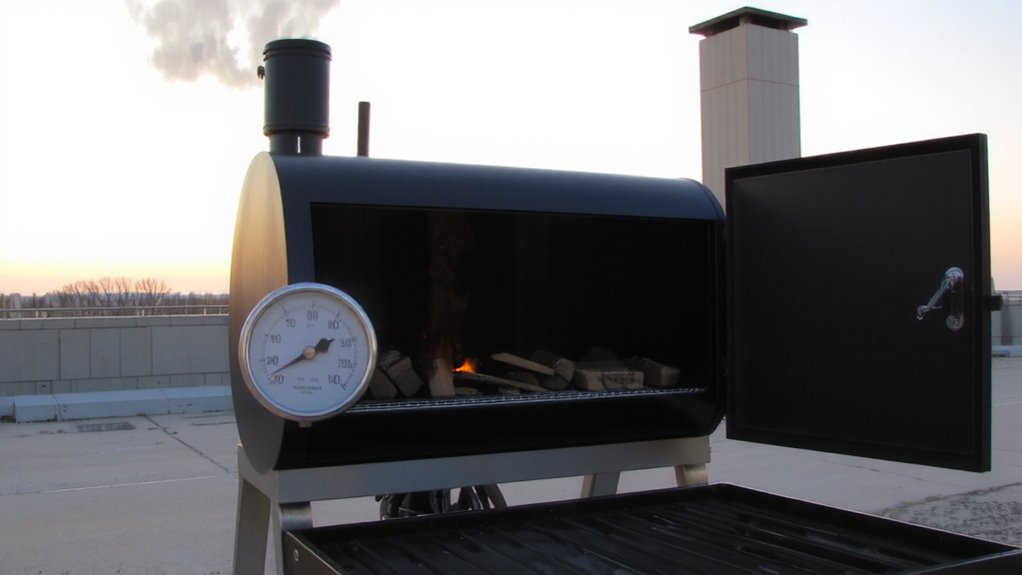
Though getting your smoker up to temperature might seem straightforward, doing it right makes all the difference in achieving consistent results and protecting your equipment. Start with smoker calibration to guarantee accuracy-many built-in thermometers are unreliable. Use an external probe to verify readings. Once lit, allow ample time for temperature stabilization; rushing leads to fluctuations that sabotage cook quality. For most smokers, 30 to 45 minutes of preheating is essential, especially in colder weather. Choosing the right model for your needs can enhance this process, so consider reviewing the best smokers for every grilling enthusiast.
| Step | Action |
|---|---|
| 1 | Check and calibrate your smoker’s thermometer |
| 2 | Light the fire and open vents for airflow |
| 3 | Wait for steady temps at your target before adding food |
Proper smoker calibration and patience during temperature stabilization set the foundation for precision in outdoor cooking.
How Preheating Builds Better Bark and Smoke Rings
Getting your smoker fully preheated isn’t just about hitting a number-it’s the foundation for developing distinct bark and a clean smoke ring, two hallmarks of well-executed barbecue. When you start with a stable, consistent temperature, the meat’s surface begins drying quickly, which strengthens bark formation. Without proper preheating, moisture lingers too long, delaying that vital sear and leaving you with a soggy crust. Temperature stability also guarantees even smoke penetration-flavor compounds in the smoke adhere better to meat when thermal conditions are predictable. Fluctuating temps create uneven cooking and patchy smoke absorption, weakening both taste and texture. A preheated smoker delivers the right environment from minute one, allowing myoglobin to react uniformly beneath the surface, which enhances that sought-after pink smoke ring. You’re not just heating metal-you’re creating ideal chemical conditions. Preheating isn’t optional; it’s what separates decent barbecue from exceptional.
5 Common Smoker Preheating Mistakes to Avoid
Unless you account for thermal inertia, your smoker’s temperature readings can deceive you early in the preheat phase, leading to premature cook starts that undermine even the best barbecue plans. A common mistake is the cold start-tossing food on too soon without letting the chamber stabilize. This shocks the meat, slows smoke development, and hampers bark formation. You also risk uneven cooking because the thermal mass hasn’t absorbed enough heat. Another issue is airflow restriction. If vents are choked during preheating, you’ll limit combustion efficiency and struggle to reach or maintain target temps. Restricted airflow causes sooty smoke, imparting bitter flavors. Always open dampers fully at first, then adjust once the smoker hits equilibrium. Seasoned pitmasters know that patience with preheating prevents these avoidable errors. Let the unit stabilize at your desired cooking temp for at least 10–15 minutes before adding food-your results will reflect the discipline.
On a final note
You’ll get more consistent results and better flavor when you properly preheat your smoker. Skipping this step risks temperature swings, uneven cooking, and off flavors from unburned fuel. A well-preheated smoker stabilizes heat, promotes smoke adhesion, and enhances bark development and smoke ring formation. Think of it as laying the foundation for control. It’s not just routine-it’s essential for performance, especially in cold or windy conditions. Preheating shows you respect the process, and it makes all the difference in the final bite.