Controlling Drafts in a Wood Grill Chimney to Regulate Burn Rate and Heat Output
You control your wood grill’s fire temperature mainly by adjusting the draft, not the fuel. Opening the vents increases oxygen, boosting combustion and heat, while restricting airflow slows the burn and lowers temps. Proper chimney function and sealed joints maintain steady draft, and balanced airflow guarantees even cooking. Crack the top and bottom vents open to start, then tweak them to hit your desired heat. Manage draft precisely to switch between searing and smoking-tight control means better results every time, and there’s more to mastering it than just airflow alone.
Notable Insights
- Adjust air vents to control oxygen flow, directly influencing burn rate and heat output in a wood grill chimney.
- Open both top and bottom vents initially for ignition, then modulate to maintain desired temperature and combustion efficiency.
- Restrict draft to reduce oxygen for low-temperature smoking, enhancing smoke flavor and slowing fuel burn.
- Fully open the damper to maximize airflow for high-heat searing, ensuring rapid, intense combustion.
- Maintain chimney integrity and insulation to sustain consistent draft and prevent heat loss or airflow disruptions.
Why Draft Controls Fire Temperature
While you might think fire temperature in a wood grill depends only on how much fuel you add, it’s actually the draft that plays the decisive role in regulating heat. When you open the air vents, more oxygen floods the firebox, increasing flame intensity and combustion efficiency. This surge doesn’t just make flames bigger-it directly amplifies heat output. Conversely, restricting the draft reduces oxygen, dampening the burn and stabilizing temperatures. Proper draft control gives you precision, letting you shift between searing highs and low-and-slow cooks. You’ll also notice better heat retention when airflow is managed well, as excessive draft can pull warm air through too quickly, wasting thermal energy. The chimney’s design amplifies this effect by creating natural suction. Mastering this balance means you’re not just burning wood-you’re directing the fire’s behavior, shaping both cooking performance and fuel economy with deliberate control.
Balance Airflow for Steady Heat
How do you keep your wood grill running at a steady temperature without constant tinkering? You balance airflow. Proper airflow control means matching your intake and exhaust so combustion stays consistent. Good chimney insulation helps maintain draft stability by keeping exhaust gases warm and rising, which pulls fresh air in at a steady rate. If your chimney loses heat, the draft weakens, leading to uneven burning and temperature swings. Pair that with smart fuel stacking-arranging logs with even spacing-and you promote clean, predictable airflow through the fuel. Tight stacks restrict oxygen, while overly loose ones let air rush through too fast. You want structure and balance. When fuel stacking and chimney insulation work together, the fire burns evenly, requiring fewer adjustments. This synergy lets you achieve steady heat with minimal effort, making long cooks more reliable and efficient.
Open and Close Vents the Right Way
One key to mastering your wood grill’s performance lies in how you manage the vents-those small but critical gateways that control airflow. Proper vent placement affects both burn rate and heat retention, so opening and closing them at the right times makes all the difference. Start with both top and bottom vents open to ignite the fire, then adjust gradually. Closing the bottom vent restricts oxygen, slowing the burn; cracking the top vent slightly stabilizes draft without losing heat. For steady cooking, balance is key-too tight and the fire suffocates, too open and you risk overheating.
| Vent Position | Airflow | Effect on Heat |
|---|---|---|
| Fully Open | High | Rapid burn, high heat |
| ¾ Open | Moderate | Balanced output |
| Half Open | Medium | Stable temperature |
| ¼ Open | Low | Reduced heat, better retention |
| Closed | None | Heat retention, fire dies |
Fix Draft Issues Fast
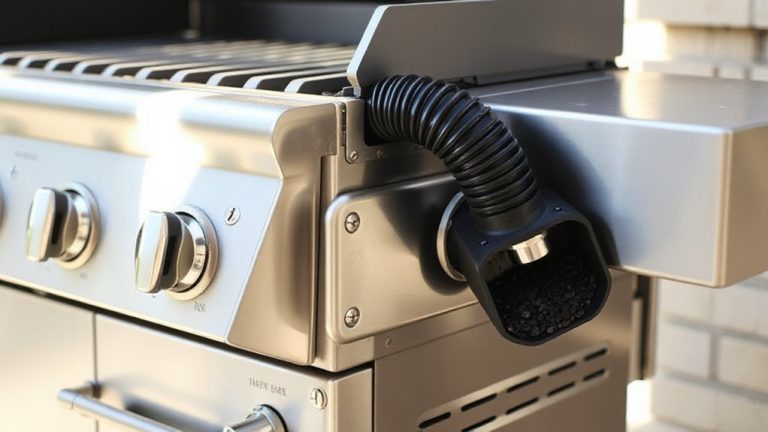
If you’ve ever struggled with uneven temperatures or a fire that won’t stay lit, chances are you’re dealing with a draft issue-something common in wood grill chimneys but easy to fix once you know where to look. Start by checking your chimney caps; a blocked or damaged cap restricts airflow and traps smoke, disrupting draft efficiency. Make sure it’s clean and properly installed to encourage steady upward flow. Next, inspect the fire bricks lining the chamber-cracked or loose bricks can create air gaps that destabilize heat retention and airflow. They’re meant to insulate and direct heat, so damaged bricks reduce performance fast. Replace any compromised bricks promptly. Also, make certain all vents and joints are sealed tight. These simple checks often resolve draft problems quickly, restoring consistent burn control and helping you maintain ideal cooking conditions without guesswork.
Set Draft for Smoke or Sear
Now that you’ve addressed any underlying draft problems and guaranteed your chimney’s structure supports proper airflow, you’re ready to use that control for specific cooking outcomes. For low-and-slow smoking, restrict the draft slightly-this reduces oxygen flow, lowers combustion temperature, and increases smoke density, giving meats that rich, flavorful coating. A well-managed restricted draft maintains steady, clean smoke without suffocating the fire. When you want high heat for a quick sear, open the damper fully. This boosts airflow, raising the burn rate and maximizing sear intensity on steaks or chops in minutes. The key is balance: too much airflow during smoking thins the smoke and risks burning fuel too fast, while too little during searing won’t reach radiant heat peaks. Mastering this shift means better control over flavor development and texture. A reliable charcoal chimney starter ensures consistent ignition and optimal airflow from the start.
On a final note
You’ve got more control over your cook than you think-mastering the vents means mastering the heat. Proper draft management balances combustion, stabilizing temperature for anything from low-and-slow smoke to a screaming sear. Uneven airflow wastes fuel and ruins consistency. When tuned right, the chimney pulls cleanly, the fire burns efficiently, and results improve predictably. It’s not magic-it’s physics, observation, and a little patience. Get it right, and your grill performs like it’s built to.