Preparing One-Pot Beef Stew Using a Dutch Oven at a Forest Campsite
Choose chuck, brisket, or short rib for your stew-they hold up well over low heat and enrich the broth with flavor and moisture. Pack ingredients in sealed, sturdy containers and bring a seasoned 6–8 quart cast iron Dutch oven for even cooking. Build a two-zone fire with hardwood embers to control temperature, searing meat first, then layering vegetables from bottom to top. Monitor heat closely, rotate the pot, and adjust seasoning gradually. You’ll find refined techniques that elevate your results just ahead.
Notable Insights
- Choose well-marbled beef cuts like chuck or short rib for tenderness and flavor during long campfire cooking.
- Pre-cut and vacuum-seal meat and pack vegetables in sturdy containers to preserve freshness and prevent damage.
- Build a two-zone campfire with hardwood embers to sear meat and simmer stew evenly.
- Use a seasoned cast iron Dutch oven with a tight-fitting lid for consistent heat and steam retention.
- Layer ingredients starting with seared beef, then vegetables, and simmer gently with periodic stirring to avoid scorching.
Pick the Best Beef for Campfire Stew
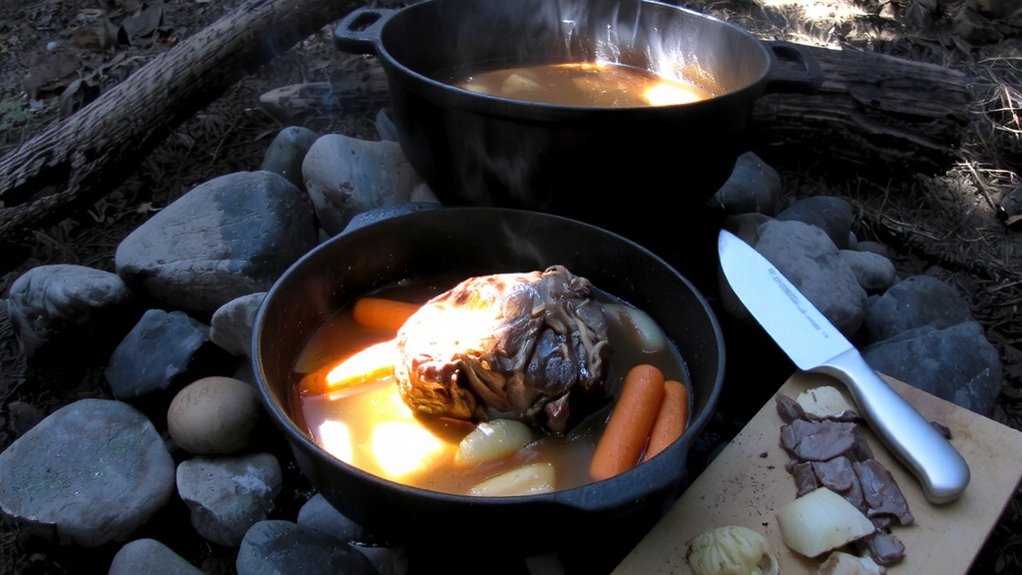
When choosing beef for a rich, hearty campfire stew, start with cuts known for tenderness and flavor under long, slow cooking-think chuck, brisket, or short rib. You’ll want a high marbling content since those fine streaks of fat melt during simmering, enriching the broth and keeping fibers moist. Lean cuts won’t hold up as well over hours of heat; they lack the internal fat needed for deep flavor and consistent texture. The cut tenderness matters, but even tougher cuts become tender when braised slowly in a Dutch oven. Chuck, in particular, balances marbling content and affordability, breaking down beautifully without disintegrating. Brisket offers intense beefiness but can be greasier if not trimmed. Short rib delivers luxurious mouthfeel, though it’s pricier. For outdoor cooking, where control is limited, these forgiving cuts guarantee reliability. Pick wisely, and your stew won’t just feed-it’ll satisfy. A reliable choice for such dishes is best BBQ beef cuts, which are ideal for slow-cooked recipes due to their rich marbling and flavor.
Pack Beef, Veggies & Dutch Oven Essentials
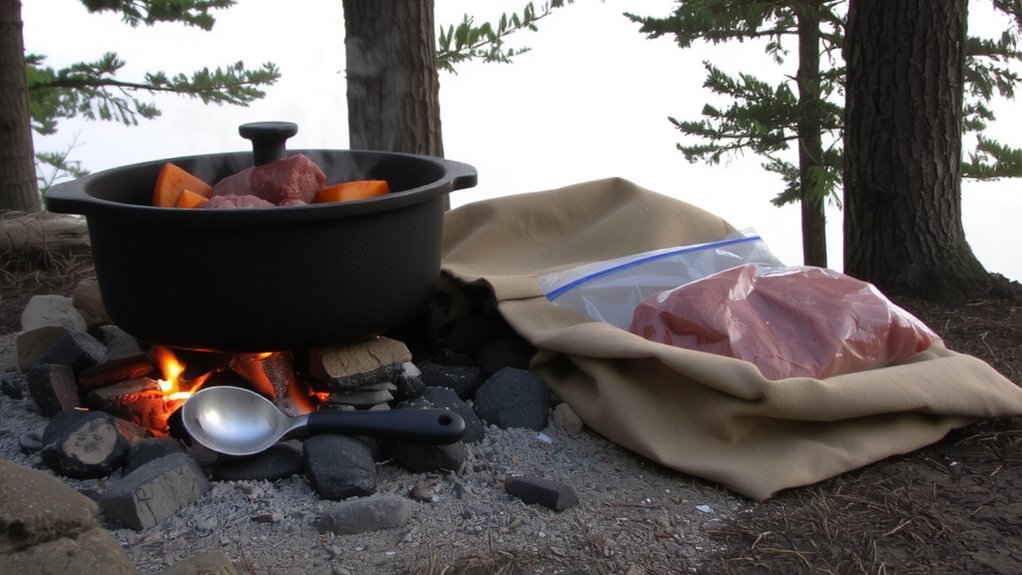
The foundation of a successful campfire stew lies in thoughtful preparation-specifically, how you pack your ingredients and gear. Your beef selection should favor well-marbled cuts like chuck, which hold up under long, slow cooking. Pre-cut and vacuum-seal portions to minimize waste and spoilage. Pack root vegetables-carrots, potatoes, onions-in sturdy bins to prevent crushing. Don’t forget garlic, herbs, and broth in leak-proof containers. Your Dutch oven should be seasoned cast iron, 6–8 quarts, ideal for even heat distribution. Include a lid lifter, long tongs, and a heat-resistant glove. These tools support effective fire management by letting you adjust coals safely and maintain consistent temperatures. Proper packing guarantees efficiency and safety, reducing campsite clutter. A well-organized kit streamlines cooking, allowing you to focus on technique rather than logistics. Good prep doesn’t guarantee success, but it markedly improves your odds when cooking off-grid.
Build a Fire for Dutch Oven Stew
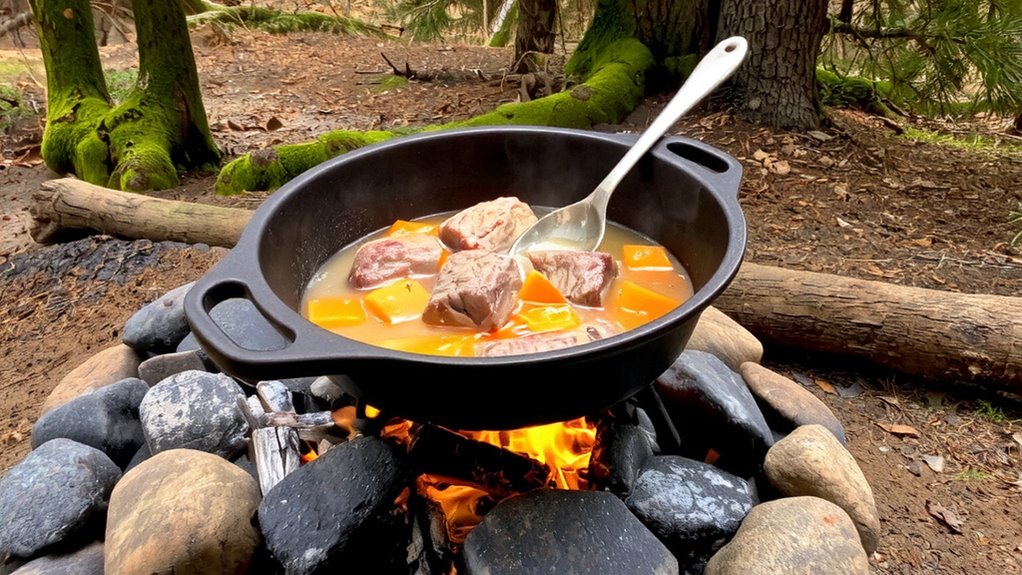
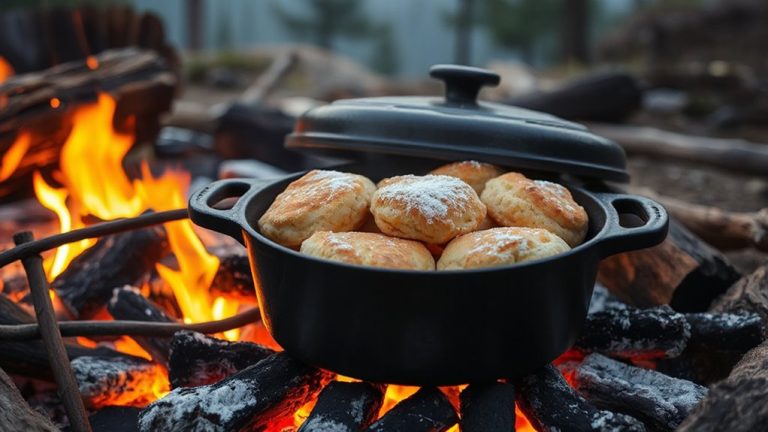
Though it might seem straightforward, building the right fire for your Dutch oven stew can make or break the dish, and understanding heat dynamics is key. You’ll want a two-zone fire: hot coals on one side for browning, a cooler area for simmering. Start with dry, seasoned wood-softwoods flare too much, making heat control difficult. Use hardwoods like oak or hickory for steady, predictable embers. Arrange rocks around the fire to reflect heat and stabilize temperature. Always keep a bucket of water nearby for fire safety, and never leave flames unattended. Avoid building under branches or near tents. Once coals form, spread them under and atop your Dutch oven to match recipe demands. Too many coals on top and you’ll over-sear; too few below and the stew won’t simmer uniformly. Consistent heat control guarantees tender meat and rich flavor, proving that patience and prep outperform brute heat every time. For optimal results, consider using the best bushcraft campfire styles recommended for even heat distribution and fuel efficiency.
Cook Stew Layer by Layer in Dutch Oven
Now that your fire’s settled into a steady bed of glowing embers, it’s time to put that heat to work inside the Dutch oven. Start by searing seasoned beef chunks directly in the pot-this builds flavor and sets the foundation. Then, use the layering technique: add onions, carrots, and potatoes in succession, tucking each into the liquid just enough to simmer. This method promotes even heat distribution, ensuring ingredients cook uniformly without scorching. Heavier root vegetables go toward the bottom where heat concentrates, while meat rests above, absorbing juices gradually. A tight-fitting lid traps steam, helping transfer heat efficiently across layers. Unlike stirring, which disrupts temperature balance, layering preserves consistent cooking dynamics. It’s a controlled, predictable approach favored in outdoor cooking where overheating or cold spots can ruin a dish. With proper coals management, this system delivers tender, flavorful stew every time-proof that technique often outweighs tools in backcountry BBQ.
Fix Common Dutch Oven Stew Problems
Why does your Dutch oven stew sometimes end up scorched on the bottom or unevenly cooked despite careful prep? Overcooking issues often stem from poor heat management over an open flame. You might’ve piled coals too densely underneath, leading to hotspots. Make sure to rotate the oven occasionally for even cooking. If the stew tastes bland or overly salty, consider seasoning adjustments-add herbs gradually and taste as you go. Don’t forget, campfire heat fluctuates, so patience is key.
| Problem | Likely Cause | Quick Fix |
|---|---|---|
| Scorched base | Excess bottom heat | Reduce lower coals, lift grate |
| Overcooked meat | Prolonged high heat | Simmer with fewer coals |
| Bland flavor | Insufficient seasoning | Adjust with herbs, salt, acid |
| Uneven texture | Infrequent stirring | Stir gently every 20 minutes |
On a final note
You’ve seen how a Dutch oven transforms camp cooking, and this one-pot stew proves its worth. Tough cuts like chuck hold up to sustained heat, while layered cooking guarantees even flavor development. Mastering fire placement-coals above and below-gives consistent results, mimicking oven braising. Though temperature swings happen, attentive coaling fixes most issues. For outdoor cooks, it’s a durable, high-performance tool that elevates meals with minimal gear. Success lies in prep and fire control, making Dutch oven cooking both practical and rewarding.