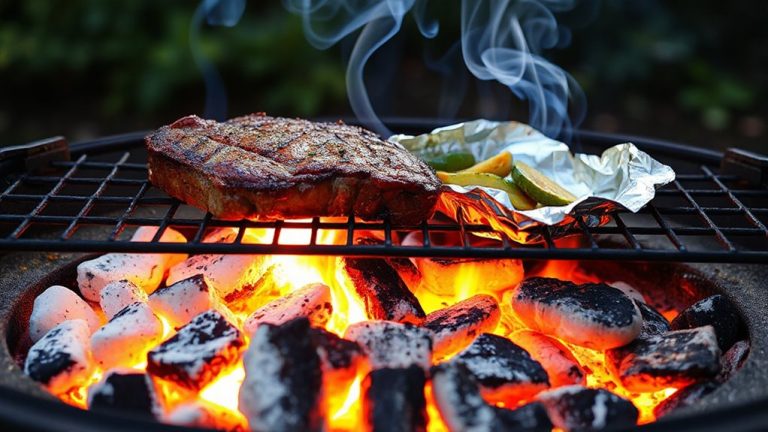
Perfectly Searing Steak in a Preheated Cast Iron Pan Over an Open Flame
You’ll get the best sear by using a preheated cast iron pan over an open flame, where intense, even heat triggers deep Maillard browning. Start with a thick-cut ribeye or strip steak, pat it dry, and season well. A smoking-hot pan guarantees a crisp crust without steaming, while strategic flare-ups from fat add smoky char. Flip as needed, then let rest on a rack-this method balances precision and primal fire. There’s more to mastering the technique just ahead.
Notable Insights
- Preheat your cast iron pan over high heat until smoking to ensure a proper sear and prevent steaming.
- Pat the steak dry with paper towels to remove moisture for faster browning and better crust formation.
- Use high-smoke-point oil like avocado oil to prevent burning when searing over open flame.
- Position the steak over hotter or cooler zones to control sear and manage flare-ups from fat drippings.
- Let the steak rest 8–10 minutes after cooking to redistribute juices and maintain tenderness.
Why Open Flame Gives the Best Steak Sear
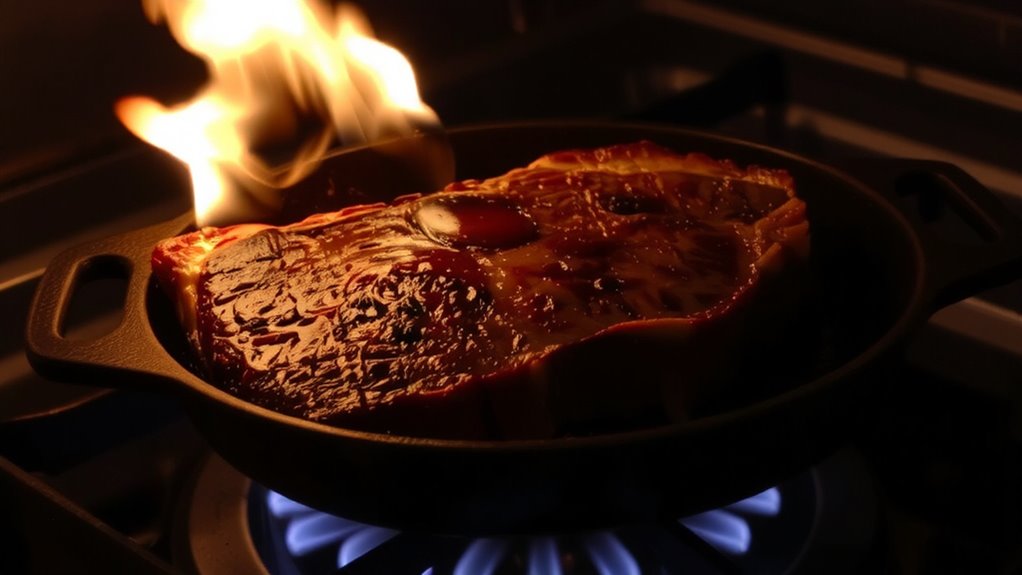
While you might achieve a decent crust in a cast-iron skillet, nothing quite replicates the intense, even char of an open flame when searing a steak. The direct contact with fire creates a distinct flame char that’s both visually striking and flavor-rich, thanks to caramelized surface proteins and Maillard reactions intensified by radiant heat. Unlike stovetop cooking, where heat control relies heavily on burner settings, open flame grilling lets you adjust sear intensity by simply repositioning the steak over hotter or cooler zones. This responsiveness allows for precise crust development without overcooking the interior. You can also manipulate flare-ups-brief bursts of flame from dripping fat-to enhance char without sacrificing juiciness. Though mastering it takes practice, the combination of immediate heat feedback and dynamic control makes open flame a superior method for achieving restaurant-quality results. Flame char isn’t just aesthetic; it’s a marker of skilled, intentional searing.
Choose the Best Cut for Cast Iron Searing
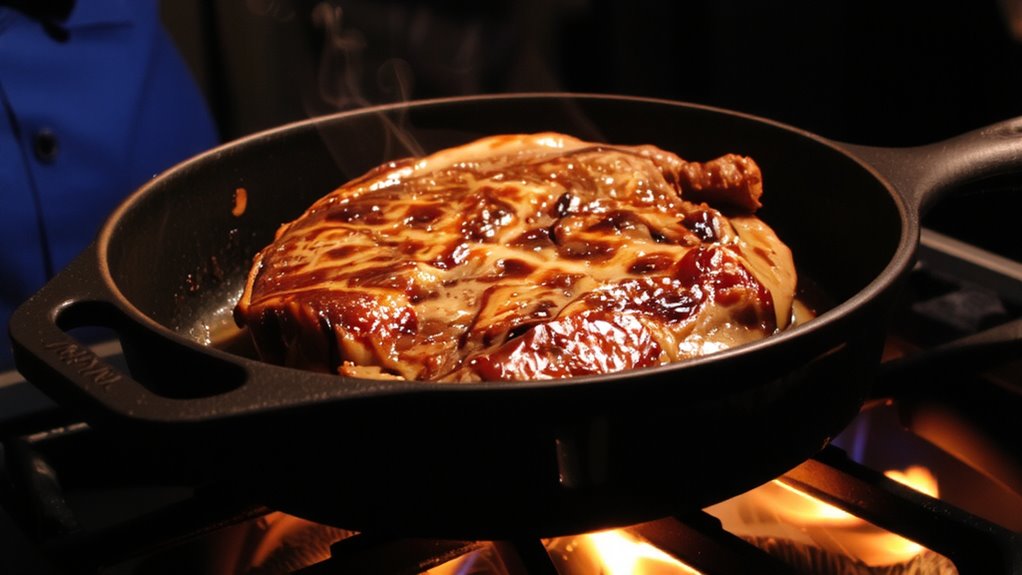
You don’t always need a grill to get a great sear-your cast iron skillet can deliver a deep, flavorful crust when used with the right cut of steak. For best results, choose steaks with high marbling content and consistent thickness, ensuring even cooking and juiciness. Cuts like ribeye, strip, and filet mignon excel here, each bringing unique advantages.
| Cut | Marbling Content | Thickness Consistency |
|---|---|---|
| Ribeye | High | Moderate |
| Strip | Medium | High |
| Filet | Low | High |
Ribeye offers rich flavor thanks to its marbling content, while strip balances tenderness and consistency. Filet, though leaner, sears beautifully due to its uniform thickness. Thickness consistency matters-it prevents undercooked centers or burnt edges. Pick based on your preference, but remember: more marbling means more flavor when searing over open flame. Choosing the right cut starts with understanding the best BBQ beef cuts for high-heat searing.
Preheat Your Pan Until It’s Blistering Hot
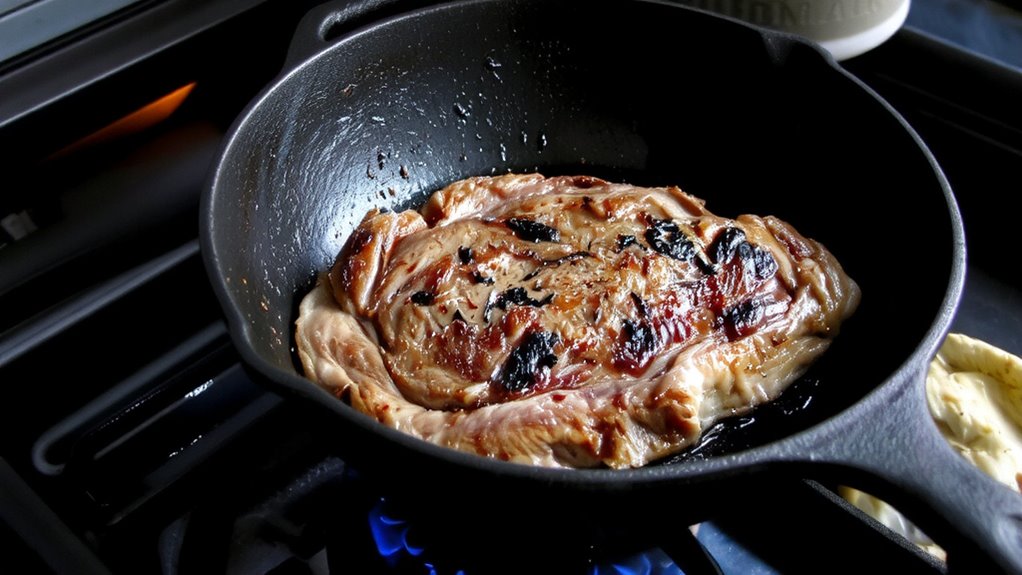
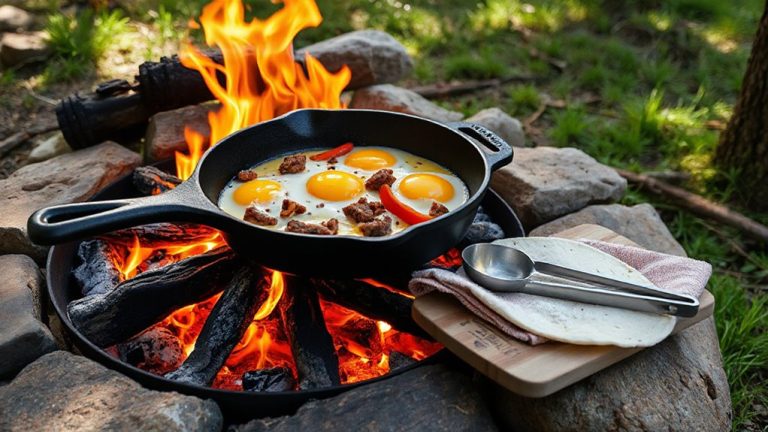
A properly preheated cast iron skillet makes all the difference when you’re aiming for that restaurant-quality sear at home. You’ll want to set your pan over high heat for at least 5–7 minutes until it’s smoking lightly-this guarantees proper heat control for an immediate, even crust. Cast iron retains heat exceptionally well, but that also means pan safety is critical; always use heat-resistant gloves and avoid loose sleeves. Skipping preheating leads to steaming instead of searing, robbing your steak of texture and flavor. On an open flame, especially outdoors, wind and ambient temperature affect performance, so monitor the heat closely. A well-preheated pan reacts instantly when the steak hits, locking in juices. Consistent, blistering heat is non-negotiable for ideal browning, and mastering this step elevates your outdoor cooking from casual grilling to precision BBQ. For best results, use an oil with a high smoke point such as avocado oil to prevent burning during high-heat searing.
Dry and Season Your Steak for Maximum Crust
Because moisture is the enemy of browning, drying your steak thoroughly before seasoning guarantees you get a crisp, caramelized crust rather than a gray, steamed surface. Pat the steak dry with paper towels to remove all surface moisture-this simple step dramatically improves searing efficiency. A dry surface allows the Maillard reaction to kick in quickly, essential for developing deep flavor. For seasoning technique, generously apply coarse salt and freshly ground black pepper; the salt draws out residual moisture initially but then dissolves and reabsorbs, enhancing taste and texture. Some swear by letting the seasoned steak sit at room temperature for 30–40 minutes, which promotes even cooking. When working over an open flame, proper drying and seasoning become even more vital-moisture can cause dangerous flare-ups and hinder crust formation. Your seasoning technique isn’t just about taste; it’s a functional step that directly impacts sear quality and overall performance.
Sear Your Steak Perfectly Over High Heat
When aiming for that ideal sear, high heat isn’t just helpful-it’s essential. You need your cast iron screaming hot, ideally between 400°F and 450°F, to trigger the Maillard reaction effectively. That’s where heat control matters: too low and you’ll steam the steak; too high and you risk burning before the interior cooks. Place your dry, well-seasoned steak on the surface-it should sizzle instantly. Resist the urge to move it; timing accuracy is vital for an even crust. Flip just once, letting each side develop that rich, caramelized exterior in roughly 2–3 minutes, depending on thickness. The open flame gives direct, intense heat, which enhances flavor but demands attention. Consistent heat control and precise timing accuracy separate a restaurant-quality sear from a lackluster result. Mastery comes from observing the steak’s response, adjusting fire intensity, and trusting the process. For best results, use a preheated cast iron pan that retains heat evenly over open flames.
Rest and Serve for Juicy, Flavorful Results
While the sizzle of a perfectly seared steak might tempt you to cut in right away, letting it rest is where the real magic happens. You see, during cooking, juices shift toward the center due to intense heat, and slicing too soon releases them all onto your plate. The ideal resting time depends on cut thickness-thicker steaks, like a 1.5-inch ribeye, need 8–10 minutes, while thinner cuts do well with 5. This pause lets the fibers reabsorb moisture evenly, ensuring juiciness in every bite. Use a wire rack to avoid steaming the crust. Don’t cover it tightly, just loosely tent with foil if the air’s cool. Proper resting time isn’t just tradition-it’s science-backed technique. For outdoor cooking, where temperature control is trickier, respecting cut thickness and resting time makes a clear flavor and texture difference. You’ll taste it.
On a final note
You’ve got the tools and the technique-now it’s about execution. Searing steak over an open flame in a preheated cast iron pan delivers unmatched crust and flavor, thanks to radiant heat and consistent contact. It’s not just effective; it’s ideal for high-heat cooking. With proper prep and resting, results are juicy, deeply caramelized, and restaurant-quality. Outdoor searing isn’t a gimmick-it’s a proven method that enhances control, flavor, and performance when done right.