Dutch Oven Coal Placement: How Many on Top vs. Bottom
You should match coal count to your Dutch oven’s size-use one coal per inch of diameter, splitting them between top and bottom. Place coals underneath in a ring for steady base heat, ideal for simmering. Set coals on the lid to circulate heat evenly, perfect for baking. Adjust placement based on cooking style: more on top for baking, more below for searing. Balance prevents scorching and guarantees thorough cooking. Smart coal positioning beats adding more fuel-precision wins. You’ll master control with a few simple tweaks.
Notable Insights
- Match coal count to your Dutch oven’s diameter, using equal top and bottom coals for balanced heating.
- Place bottom coals in a ring with a center cluster to create a stable heat foundation.
- Apply one-third of total coals on the lid to improve heat circulation and prevent undercooked tops.
- Adjust coal placement based on cooking method-use more top coals for baking, more bottom for searing.
- Troubleshoot uneven cooking by redistributing coals and ensuring vents remain unblocked for proper airflow.
How Many Coals for Your Dutch Oven Size
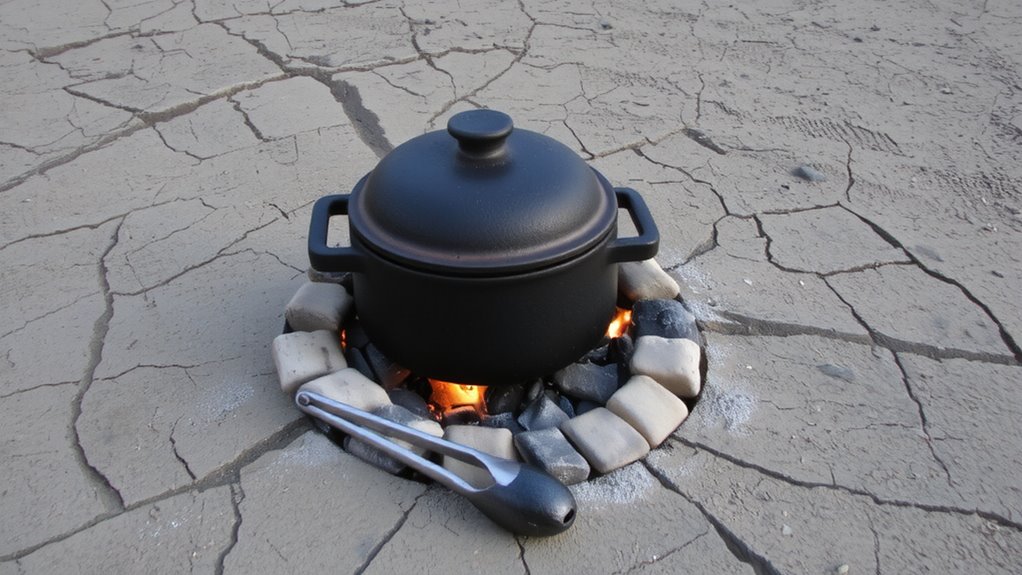
Getting the right number of coals for your Dutch oven size isn’t just helpful-it’s essential for even cooking over an open fire. You’ll want roughly one coal per inch of oven diameter on top, with a matching ring underneath. For example, a 12-inch oven needs about 12 coals on top and 12 below. This setup guarantees proper heat balance and consistent coal distribution, preventing hot spots or scorching. Too few coals and your meal cooks too slowly; too many, and you risk burning the outside while the inside stays raw. You’re aiming for steady, enveloping heat-like an outdoor convection oven. Proper coal count directly affects temperature control, especially in fluctuating conditions. While Dutch ovens vary in thickness and material, most perform best with this rule of thumb. Adjust slightly based on wind or fuel quality, but stick to the formula. It’s reliable, repeatable, and backed by seasoned camp cooks who prioritize precision over guesswork.
Put Coals Under the Oven for Steady Heat
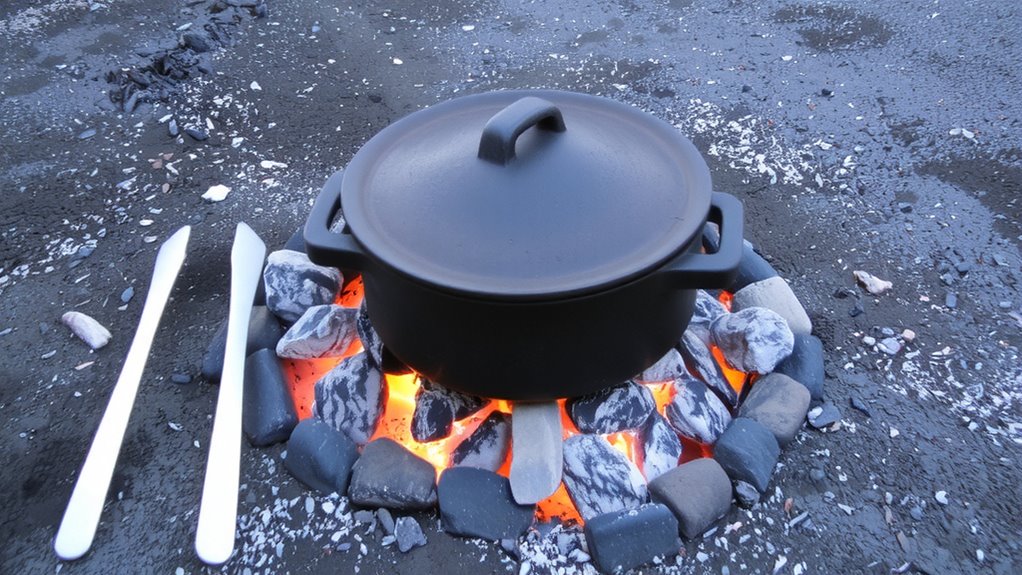
Think of the coals beneath your Dutch oven as your foundation-without a stable base, the whole cooking process can falter. Proper coal placement underneath guarantees consistent heat distribution, preventing hot spots and undercooked areas. You’re not just heating food-you’re managing a system where balance matters. Too few coals and your temperature dips; too many, and you risk scorching. For most dishes, a ring of coals around the edge with a few scattered in the center delivers even warmth. Here’s how different setups compare:
| Coal Pattern | Heat Distribution | Best Use Case |
|---|---|---|
| Ring Plus Center | Even | Baking, stews |
| Center Cluster | Concentrated | Boiling, searing |
| Outer Ring Only | Mild, even | Simmering, slow cook |
| Random Scatter | Uneven | Not recommended |
This setup gives you control-just adjust the number and position as needed.
Put Coals on the Lid for Even Cooking
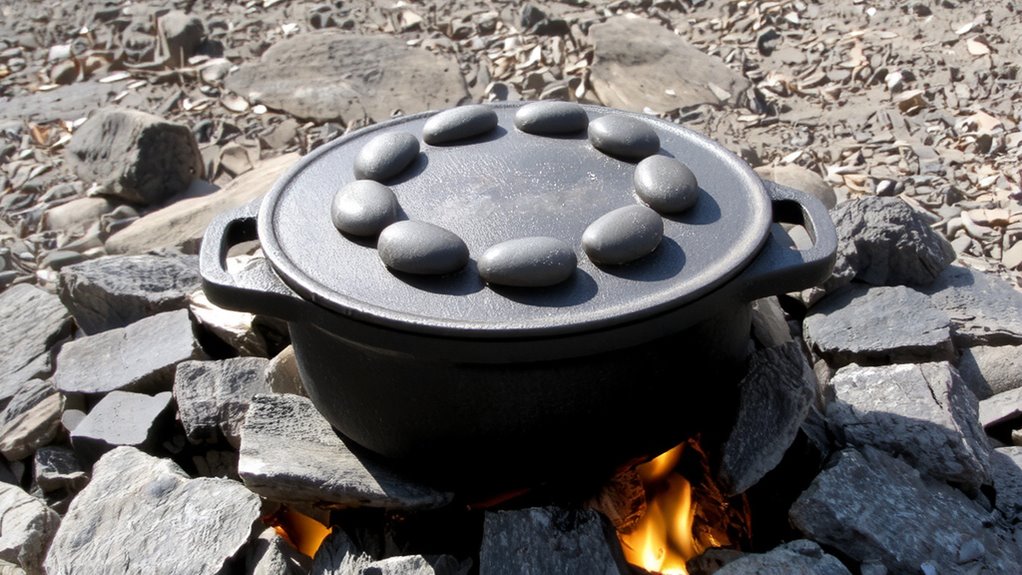
Placing coals on the lid isn’t just a technique-it’s a game-changer for achieving balanced, oven-like cooking outdoors. When you add coals to the top, you improve heat circulation, mimicking a conventional oven by surrounding the food with consistent warmth. Lid positioning plays a key role-keeping the lid centered and snug guarantees even heat distribution and prevents hot spots. Too few coals on top, and the top of your dish won’t cook properly; too many, and you risk over-browning or scorching. A general rule is to place about one-third of your total coals on the lid, adjusting slightly based on conditions. This method works especially well for casseroles, stews, and baked goods that need thorough, uniform heat. With proper lid positioning and thoughtful coal placement, you maximize heat circulation and achieve better results every time.
Adjust Coals for Baking, Roasting, or Simmering
Heat control defines the success of your outdoor cooking, and adjusting coals for baking, roasting, or simmering is where skill really matters. You’ve got to match coal timing and heat retention to your cooking goal. Baking needs steady, indirect heat-use more top coals to radiate evenly. Roasting benefits from strong bottom heat to sear, supported by moderate lid coals. Simmering requires low, consistent warmth, so fewer coals on top and bottom prevent scorching. Proper distribution guarantees even temperature and avoids hot spots. Pairing your coal setup with the right best smoke wood for chicken can elevate the flavor profile of your dish significantly.
| Cooking Method | Coal Pattern (Top/Bottom) |
|---|---|
| Baking | ¾ heat / ¼ heat |
| Roasting | ⅓ heat / ⅔ heat |
| Simmering | ½ heat / ½ heat |
| Fast searing | ¼ heat / ¾ heat |
| Slow braising | ⅔ heat / ⅓ heat |
Mastering coal timing enhances flavor, while heat retention preserves moisture and texture.
Fix Common Dutch Oven Coal Heat Issues
While even seasoned camp cooks sometimes struggle with temperature swings, getting your Dutch oven’s coal heat just right boils down to diagnosing a few predictable issues. Uneven coal distribution is often the culprit behind burnt edges or undercooked centers. If your food cooks too fast on one side, you’re likely piling coals unevenly-shift them to restore balance. A stable heat balance depends on symmetry: equal weight and spacing on both lid and base prevent hot spots. You’ll notice problems when bread scorches on the bottom but stays doughy on top-that’s a clear signal of poor heat management. Adjusting coal placement isn’t guesswork; it’s a practical fix rooted in observation. Check airflow too, since blocked vents disrupt combustion and skew temperatures. Over time, you’ll learn how minor tweaks improve results. Consistent performance comes not from more coals, but smarter coal distribution and sustained heat balance.
Control Temperature With Top and Bottom Coals
If you’ve ever pulled a Dutch oven meal off the coals only to find it underdone or bitter from scorching, you’re not alone-mastering temperature control comes down to how you balance top and bottom coals. You’ll want roughly two-thirds of your coals on top and one-third below to mimic an oven’s even heat. This ratio supports better coal distribution, ensuring consistent cooking without hot spots. Too many bottom coals risk burning the base, while too few hinder proper heat retention. You’re not just heating food-you’re managing a controlled environment. The thick cast iron holds heat well, but only if you maintain steady coal placement. Adjusting the number of coals based on outside temperature and cook time sharpens your precision. With practice, you’ll learn how small shifts in placement affect results, turning guesswork into repeatable success. Proper coal management isn’t just useful-it’s essential.
On a final note
You’ve got the basics down: balance top and bottom coals to control heat precisely. For baking, more coals on top mimic an oven; for simmering, fewer below prevent scorching. Dutch oven cooking thrives on this flexibility, offering consistent, radiant heat when managed well. Mastering coal placement boosts performance, whether you’re roasting or stewing. It’s not just tradition-it’s practical, effective, and reliable when done right.