The Role of Resting Meat After Grilling and How Long to Do It
You should rest meat after grilling because heat pushes juices toward the center, and letting it sit allows proteins to relax and reabsorb moisture evenly. Slice too soon, and you’ll lose those juices. Rest steaks 5–10 minutes, large roasts 15–20. Tent loosely with foil to retain heat without softening the crust. This short pause improves texture, flavor, and overall doneness-skip it, and you’ll notice the difference with every dry bite. There’s more to mastering this than timing alone.
Notable Insights
- Resting meat allows muscle fibers to relax, reabsorbing juices and improving moisture retention.
- Heat drives juices toward the center during grilling, requiring rest for even redistribution.
- Slicing too soon causes juice loss, resulting in drier, less flavorful meat.
- Rest steaks and chops 5–10 minutes; larger roasts need 15–20 minutes.
- Tent loosely with foil to retain heat without softening the crust.
Why Resting Meat Keeps It Juicy
While the grill’s heat does most of the work when cooking meat, what happens after you take it off the fire is just as critical. Letting your meat rest allows for proper temperature stabilization, giving the fibers time to cool slightly and retain more moisture. During cooking, proteins contract and tighten, pushing fluids inward. Once off the heat, protein relaxation begins-muscle strands loosen and reabsorb juices more evenly throughout the cut. Without this pause, slicing too soon causes those precious juices to spill onto the plate, leaving the meat dry. You’re not just waiting; you’re actively improving texture and flavor distribution. For best results, tent loosely with foil and rest steaks or chops for 5–10 minutes. Larger roasts may need 15–20. This simple step delivers noticeably juicier results, making it a non-negotiable in serious outdoor cooking.
How Heat Pushes Juices to the Center
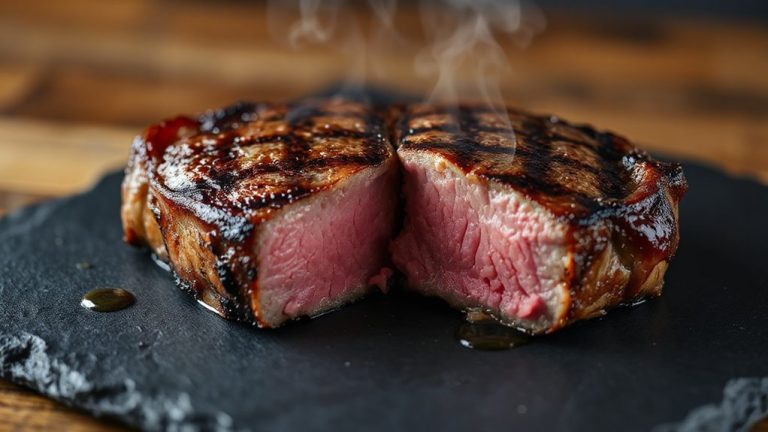
As the meat hits the hot grates, you can almost see the transformation begin-heat penetrating the surface, searing in flavor while driving moisture inward. Thermal expansion forces water and natural juices from the outer layers toward the cooler center. At the same time, protein denaturation causes muscle fibers to tighten and contract, squeezing out even more internal moisture. You’re fundamentally pushing liquid away from the heat, concentrating it in the middle. This is why a freshly grilled steak often leaks so much when sliced-those juices haven’t had time to redistribute. Skipping proper searing risks uneven cooking, but overcooking worsens juice loss due to excessive fiber contraction. Effective grilling relies on balancing high heat with controlled exposure. Understanding these reactions helps you manage doneness and juiciness. While searing creates flavor, it also sets the stage for resting, where equilibrium finally returns.
How Juices Rebalance When You Rest Meat
That rush of juice on the plate when you finally slice into a grilled steak? It’s not just flavor-it’s the result of proper juice redistribution. When you remove meat from the grill, the fibers begin to relax, allowing the heated juices pushed inward during cooking to migrate back outward. This protein relaxation lets moisture reabsorb evenly throughout the cut, so each bite stays succulent. Without resting, those juices spill out too fast, leaving meat dry and disappointing. You’re not just waiting-you’re improving texture and flavor retention. Think of it as a recovery phase, essential for ideal doneness. For thicker cuts especially, this step makes a noticeable difference in mouthfeel and juiciness. Resting isn’t passive; it’s active correction, balancing internal pressure and temperature. Skip it, and even perfectly grilled meat underperforms. Give it time, and you’ll see-better results every time.
How Long to Rest Each Cut of Meat
Most cuts need at least five to ten minutes of rest, but the ideal resting time depends on size, thickness, and doneness. During this pause, carryover cooking continues to raise the internal temperature, while surface cooling helps form a more stable crust. Letting meat rest balances these effects, delivering juicier, more evenly cooked results. Too short a rest and juices spill out; too long, and you risk overcooking or a cold exterior. Here’s a quick guide:
| Cut Type | Rest Time (min) |
|---|---|
| Steaks, chops | 5–10 |
| Chicken breasts | 5–7 |
| Large roasts | 15–20 |
Resting isn’t passive-it’s a critical phase where heat redistributes and fibers relax, making every bite better. Choose your time wisely based on thickness and doneness target to maximize flavor and texture.
Steak vs. Roast: Adjusting Rest Time
A single rule doesn’t fit all when it comes to resting meat after grilling, especially when comparing steaks to roasts. You’ll want to adjust your rest time based on thickness and density. A thick steak usually needs about 5 to 10 minutes-long enough for juices to redistribute and temperature carryover to finish the cook gently. Roasts, being larger and denser, benefit from 15 to 30 minutes, allowing deeper heat diffusion and more even results. This extended rest stabilizes the internal temperature, helping you avoid dry edges. Your carving technique matters too: slicing too soon, especially on a roast, leads to juice loss and uneven texture. Letting meat rest guarantees cleaner cuts and better moisture retention, which enhances flavor and tenderness across both steaks and roasts.
Should You Cover Resting Meat?
You’ve already considered how rest times vary between steaks and roasts, factoring in thickness and heat retention, so now it’s worth asking what to do with the foil-should you cover your meat while it rests or leave it exposed? Covering with a loose foil wrap helps retain heat without trapping too much moisture, ideal for thicker cuts like roasts that need longer rest periods. A tight seal steams the surface, potentially softening the crust you worked hard to build. For steaks, many pitmasters prefer no cover at all, letting airflow protect the sear while still allowing juices to redistribute. If you do use foil, create a tent seal-lofting the material slightly over the meat-so it shields without contact. This method balances heat retention and surface texture, especially in cooler environments. Ultimately, a thoughtful foil wrap improves results when used correctly, but it’s not always necessary. Judge based on cut, kitchen conditions, and desired finish.
How to Tell When Meat Is Fully Rested
How do you know when your meat has rested enough? Look for temperature stabilization-when the internal heat stops rising, you’ve reached the end of carryover cooking. If you’re grilling a thick steak or roast, rest it until it feels warm but not hot to the touch, usually 5–10 minutes for steaks and up to 20 for large roasts. Juices should settle, not pour out when sliced. You’re aiming for a balance: too short, and the meat loses moisture; too long, and it cools excessively. Using a reliable meat thermometer helps monitor stabilization. Most BBQ experts agree that proper resting enhances both texture and flavor. You’ll notice firmer, more evenly juicy results when timing is right. Resting isn’t passive-it’s a final, essential phase of cooking where carryover heat finishes the job. Judge by temperature, touch, and time for best outcomes.
On a final note
You’ve grilled it right, now don’t rush the rest. Letting meat sit lets juices redistribute, so you get flavor and tenderness in every bite. Larger cuts need more time-thirty minutes for roasts, ten for steaks-under a loose foil tent to retain heat without trapping steam. Resting isn’t passive; it’s key to peak BBQ performance. Skip it, and you’ll lose moisture fast. Do it, and your cook goes from good to precise, controlled, and truly restaurant-grade.