Why Charcoal Type Matters Most When Reverse-Sealing Thick Ribeye Steaks
Your charcoal choice shapes heat control, smoke, and sear when reverse-searing thick ribeye steaks. Briquettes deliver steady, even heat for reliable low-and-slow cooking, while lump charcoal generates the intense 700°F+ sear needed for crust development. Lump burns cleaner with lighter smoke, preserving meat flavor, whereas briquettes add bolder, smokier notes. Match fuel to your grill: lump excels in kamados, briquettes in offsets. Blending both gives you precision and power-key for consistent results-especially as you refine your method.
Notable Insights
- Charcoal type controls heat stability, crucial for evenly cooking thick ribeye during the low-and-slow phase.
- Briquettes provide consistent, long-lasting heat ideal for precise temperature control in reverse-searing.
- Lump charcoal delivers intense searing temperatures above 700°F for a perfect Maillard reaction.
- Smoke profile varies by charcoal, affecting flavor depth without adding wood chips.
- Matching charcoal to grill type and blending types optimizes performance for both cooking phases.
Choose the Right Charcoal for Reverse-Searing Ribeye
Charcoal choice isn’t just fuel-it’s the foundation of your reverse-sear. When you’re slow-cooking a thick ribeye before searing, consistent heat retention matters more than raw intensity. You need steady, predictable temperatures over an extended burn time, so your steak cooks evenly without temperature spikes. Briquettes are engineered for this-uniform in size and density, they deliver stable heat for hours, making them ideal for the low-and-slow phase. Their compressed composition guarantees longer burn time and superior heat retention compared to irregular fuels. While they may lack the instant high heat for searing, their reliability during the initial cook is unmatched. You’ll spend less time adjusting vents or adding fuel, giving you control and peace of mind. Choosing the right charcoal isn’t about tradition-it’s about performance. For reverse-searing, predictable, long-lasting fuel means the difference between a good steak and a great one. Top picks for reliable performance include best charcoal for smoking, which are specifically formulated to maintain even temperatures ideal for precision cooking methods like reverse-searing.
Lump Charcoal: Best for Reverse Sear Searing
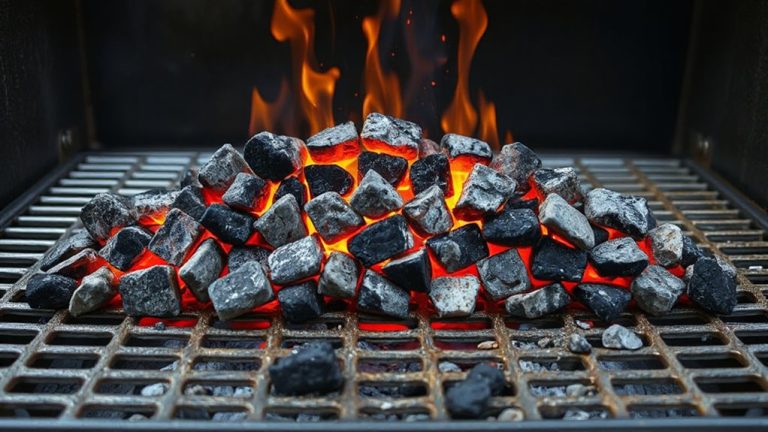
You’ll want lump charcoal when it’s time to sear-its ability to hit intense, concentrated heat fast makes it the clear choice for that final, crust-forming blast. Lump charcoal delivers the high heat needed for a proper Maillard reaction, crisping the exterior while sealing in juices. Unlike other options, it reaches searing temps-often above 700°F-quickly, thanks to its porous, pure wood composition. You’ll appreciate the quick ignition, too; just a few lighted coals spread through the pile, and you’re ready in under 15 minutes. Since it burns cleaner and hotter than alternatives, there’s less ash to manage, letting you focus on timing and placement. It’s also highly responsive, so you can adjust airflow and zones efficiently on a kettle or sear station. While pricier, its performance edge during the sear phase is worth it-precision matters when finishing a thick-cut ribeye. For best results, pair your lump charcoal with one of the top-rated charcoal grills that excel in heat control and airflow management.
Briquettes: Ideal for Reverse Sear Low-and-Slow
While lump charcoal dominates the sear, briquettes shine during the low-and-slow phase of the reverse sear-delivering steady, consistent heat that’s easier to maintain over extended periods. You’ll appreciate their uniform shape and density, which promote a consistent burn unmatched by irregular lump pieces. When you’re cooking a thick ribeye, maintaining a controlled low temperature for an hour or more is essential, and briquettes provide the steady heat needed without constant monitoring. They ignite reliably, burn longer, and minimize hot spots, making temperature regulation simpler. Though they contain additives, their performance in long cooks is objectively strong. For you, this means predictable results-more control, less stress. Whether using a kettle or offset, briquettes create a stable thermal environment ideal for slowly bringing steaks to perfect internal doneness. When precision and consistency matter most, choosing briquettes for the low phase isn’t just practical-it’s a deliberate advantage in mastering the reverse sear. A top-rated charcoal grill smoker can further enhance this process by optimizing airflow and heat retention.
How Charcoal Type Influences Smoke Flavor
Smoke flavor isn’t just about the wood chips or chunks you toss on the fire-it starts with the fuel itself, and that includes the type of charcoal you use. When you’re reverse-searing thick ribeyes, the charcoal’s burn characteristics directly affect smoke density and flavor intensity. Hardwood lump charcoal burns hotter and cleaner, producing a lighter smoke that lets the meat’s natural flavors shine, ideal for a refined, smoky hint. Briquettes, on the other hand, burn more consistently and generate denser smoke over time, amplifying flavor intensity-great when you want a bold, campfire-like character. Your charcoal choice shapes the smoke profile from the moment the fire starts, not just during wood addition. Since ribeyes benefit from balanced smokiness, understanding how your charcoal influences these elements guarantees you control the outcome, not just the heat.
Match Charcoal to Your Grill Type
Since not all grills perform the same, picking the right charcoal means aligning your fuel choice with your grill’s design and airflow system. If you’re using a kamado, its tight seals and ceramic walls retain heat well, so you’ll benefit from lump charcoal’s high charcoal density and fast ignition speed-giving you strong initial heat and responsiveness. Offset smokers, however, need consistent, long-burning fuel; hardwood briquettes work best here, offering slower ignition speed and steady density for prolonged sessions. For kettle grills, balance matters-lump gives you quick heat but can burn hot and fast, while briquettes deliver more predictable burn times. Your grill’s airflow controls also dictate how fuel behaves: restricted vents favor denser charcoal that won’t flare unpredictably. Match your charcoal type to these variables, and you’ll maintain control throughout the reverse-sear process. Ignition speed and charcoal density aren’t just specs-they’re essential to temperature stability.
Blend Lump and Briquettes for Perfect Temp Control
You’ve picked your charcoal based on your grill type, but even the best match won’t always deliver the fine temperature control reverse-searing demands. That’s where blending lump and briquettes comes in. Lump charcoal lights fast and burns hot, great for initial searing, but it burns down quickly and can be tricky to regulate. Briquettes, with their uniform charcoal density, offer steady heat retention over hours-ideal for the low-and-slow phase. Combine both, and you get the best of both worlds: start with briquettes for a stable base, then add lump for a controllable spike in temperature. This blend smooths out thermal inconsistencies, giving you precision during long cooks. Experienced grillers often favor this hybrid approach because it balances responsiveness with endurance, ensuring your thick ribeye hits perfect doneness before that final, blistering sear. It’s not just practical-it’s strategic.
On a final note
You’ll get the best results reverse-searing thick ribeye by choosing the right charcoal. Lump charcoal delivers intense, clean heat ideal for a hard sear, while briquettes offer steady, low-and-slow warmth. Your grill type matters-kettle grills pair well with lump, but offset or larger smokers often benefit from briquettes or a blend. Mixing both gives precise temp control. Ultimately, matching fuel to method guarantees even cooking, rich crust, and maximum flavor.