The Sequence of Applying Rub, Spray, and Mop Sauce During a 12-Hour Smoke
Start with a generous dry rub, pressing it into the meat to form a flavor-packed foundation for bark. After 2 hours, begin spritzing with apple juice or a vinegar blend every 45–60 minutes to maintain moisture without disrupting crust development. In the final 3 hours, switch to mop sauce for added shine, depth, and caramelization. Avoid over-mopping, especially on lean cuts. Adjust timing based on meat type and cooker conditions-you’re building layers, not just flavor. There’s more to mastering the balance.
Notable Insights
- Apply dry rub generously at the start, pressing it into the meat to form a flavor foundation and aid bark development.
- Begin spritzing with apple juice or vinegar after 2 hours to maintain moisture without disrupting bark formation.
- Use a fine mist every 45–60 minutes, holding the sprayer 10–12 inches away for even, light hydration.
- Switch to mop sauce in the final 3 hours to build a glossy, flavorful crust and enhance caramelization.
- Adjust mopping timing: fatty cuts can start earlier, while lean meats should be mopped only in the last 2–3 hours.
Start With a Robust Dry Rub to Build Bark
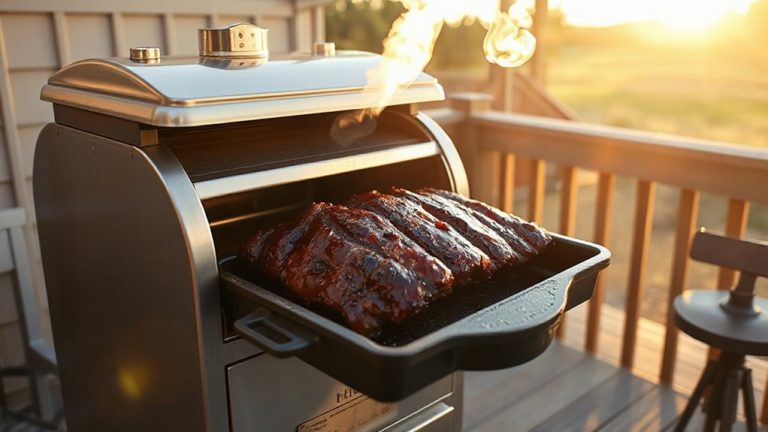
A good bark starts with intention, and that begins at the surface of your meat. You’ve got to apply a robust dry rub generously, pressing it into every crevice so it bonds during the initial hours of smoking. Bark formation relies on this foundation-without it, you’ll lack structure and depth. The rub’s sugar and salt caramelize slowly, forming a crust that’s firm but not burnt, dark without being acrid. Simultaneously, spices and seasonings enable flavor penetration, seeping into the outer layers as moisture evaporates and recondenses. A balanced rub with coarse pepper, paprika, and brown sugar performs best, reacting to low-and-slow heat without overwhelming. You’ll notice the difference in both texture and taste-complex, savory, and slightly sweet. Proper bark isn’t accidental; it’s engineered through technique, timing, and attention to surface chemistry. For best results, choose from among the best BBQ rubs based on ingredient quality and flavor balance.
Spray After 2 Hours to Lock in Moisture
Two hours into the smoke is when you’ll want to start spritzing, right as the rub has had time to bond and the surface begins drying out. This is the sweet spot for moisture retention-your meat’s exterior is stable, but without intervention, it’ll start losing hydration. A fine mist spray technique works best; heavy droplets can strip the rub or cool the surface too drastically. Using a spray bottle, lightly coat the meat every 45 to 60 minutes. This preserves the pellicle, supports bark development, and keeps internal moisture levels consistent. Proper technique matters: hold the bottle 10–12 inches away and use quick, even bursts. You’re not soaking the meat-just revitalizing the surface. Over-spraying risks steam buildup or temperature swings. When done right, this step enhances texture and juiciness without disrupting the smoke’s work. It’s a simple move, but essential for peak results. For best results, use a top pick spritz solution that complements the flavor profile of your rub and enhances moisture retention.
Use Apple Juice or Vinegar Spray for Flavor and Hydration
You’ve already built momentum with your rub and timed your spritz right-now it’s time to choose what goes in the bottle. Apple juice and vinegar are top choices, each bringing distinct advantages. Apple juice adds a subtle sweetness that enhances bark formation while maintaining moisture-this apple balance keeps leaner cuts like brisket or pork shoulder tender over 12 hours. Its natural sugars caramelize gently, enriching color without burning. On the other hand, vinegar offers vinegar synergy with smoke, cutting through fat and amplifying umami notes. It also helps stabilize surface temperature, reducing hot spots. Most pitmasters blend both: 2:1 juice to vinegar for ideal flavor and hydration. You’ll notice improved texture and depth, especially in pork and poultry. Avoid overspraying-light, even mists maintain integrity without cooling the cooker. This step isn’t just about moisture; it’s flavor layering in motion.
Switch to Mop Sauce in the Last 3 Hours for Shine and Depth
Though the spritz has done its job keeping the meat hydrated and building early flavor, switching to a mop sauce in the final three hours elevates both appearance and complexity. This shift boosts glaze development, creating a rich sheen and deeper color. Mop sauce doesn’t just moisturize-it enhances flavor complexity with layers of sweetness, tang, and spice that spritzing can’t achieve. Applied steadily, it forms a thin, sticky coating that reacts with smoke and heat, encouraging bark formation without drying. For best results, choose a commercially available mop sauce that balances these elements for consistent performance.
| Component | Contribution to Finish |
|---|---|
| Sugar | Promotes caramelization and shine |
| Vinegar/acid | Balances richness, aids penetration |
| Spices & herbs | Adds subtle depth and aroma |
You’ll notice the surface darkens slightly with each pass, signaling ideal glaze development. This phase isn’t about moisture-it’s about transformation.
Mop Vs. Spray: Don’t Confuse Moisture With Richness
What separates a good BBQ from a great one isn’t just time or temperature-it’s understanding the role each liquid plays in the cook. You spray early and often because it delivers quick moisture with minimal disruption to the bark, helping maintain texture contrast. But don’t mistake that mist for flavor-it’s mostly water, apple juice, or vinegar, used to stall the meat and control surface temp. Mop sauce, on the other hand, is thick, rich, and layered with spices, tomatoes, or butter. Applied later, it deepens color and contributes to flavor balance. You need both, but for different reasons: spraying manages physics, mopping manages flavor. Confusing one for the other leads to soggy bark or dull taste. Know their jobs-moisture isn’t richness. Use each deliberately, and your brisket or pork shoulder won’t just look better. It’ll taste built, not just cooked.
Stop Mopping Too Early or Too Often to Save the Bark
Sometimes, even experienced pitmasters get it backward-mopping too early or too frequently, only to wonder why the bark turns out soft or uneven. You need to respect bark formation: it thrives on dry heat and steady smoke penetration. Mopping too soon cools the surface and washes off seasoning, delaying crust development. Over-mopping does the same, turning potential crunch into mush. To balance moisture and texture, consider timing and method carefully.
| Action | Effect on Bark Formation | Effect on Smoke Penetration |
|---|---|---|
| Early mopping | Weakens crust | Interrupts absorption |
| Frequent mopping | Creates soggy surface | Reduces flavor depth |
| Minimal, timed mop | Enhances texture | Maintains consistent smoke |
Let the rub set, allow the smoke in, and mop only when necessary-usually after the stall. Your bark will thank you.
Adjust Timing Based on Meat Type and Temperature
Since different meats respond uniquely to heat and moisture, you’ll want to tailor your sauce application schedule based on both the cut and the cooking temperature. Thick, fatty cuts like pork shoulder benefit from early mopping to retain moisture during long cooks, especially when using dense smoke from woods like hickory or mesquite-your wood selection directly affects flavor penetration and bark development. Leaner meats, such as turkey breast, need lighter, later applications to avoid sogginess, particularly under thin smoke density. When cooking at lower temps (225°F), delay sauces until the last 2–3 hours to prevent drying or burning. At higher temps (275°F+), shorten the window further-early sugars in mops can caramelize too fast. Monitor internal temps closely; don’t rely solely on time. Strategic timing keeps textures balanced, ensuring tender interiors and a well-formed bark, no matter the meat.
On a final note
You’ve built a solid bark with your rub, kept the meat hydrated with timely sprays, and added depth using mop sauce late in the cook. Spraying too early or mopping too often risks washing away bark, so timing matters. Apple juice or vinegar spritzes help, but mops deliver richer flavor. Adjust for cut and temperature-brisket needs more care than ribs. This sequence balances moisture and crust, yielding tender, flavorful barbecue when executed with precision.