Using Cast Iron Skillets Over Open Pit Fires for Searing and Sautéing
You’ll get superior results searing and sautéing over open pit fires with a cast iron skillet. Its heat retention delivers even cooking, while proper seasoning prevents sticking and rust. Use a 10- to 12-inch size for balance between space and control. Nestle it in glowing coals, rotating for consistent heat. Adjust coal placement to manage zones for searing meat or gently cooking veggies. Afterward, clean gently, dry thoroughly, and re-oil to maintain performance-there’s more to mastering fire-side cooking where technique meets tradition.
Notable Insights
- Cast iron skillets excel over open pit fires due to superior heat retention and even cooking.
- A 10- to 12-inch skillet balances cooking space and ease of handling for searing and sautéing.
- Preheat the skillet in glowing coals for 8–10 minutes, rotating for even temperature distribution.
- Control heat by adjusting coal placement, creating zones for searing and gentler cooking.
- After cooking, clean gently, dry thoroughly, and re-season with oil to maintain durability.
Use Cast Iron Skillets for Better Fire Cooking
While other cookware might falter over an open flame, cast iron skillets thrive in the unpredictability of fire cooking, making them a top choice for outdoor enthusiasts and backyard pitmasters alike. You benefit from their unmatched heat retention and even distribution, essential when searing steaks or sautéing veggies over fluctuating flames. Thanks to cast iron history dating back centuries, these skillets are built for durability-seasoned properly, they resist rust and develop a natural non-stick surface. Their robust construction also supports outdoor cooking safety, minimizing warping or cracking under extreme temperatures. Unlike thinner pans, they won’t buckle on hot coals or grates, reducing spill risks. You’ll notice less food sticking and better browning, especially when managing direct flame exposure. Their weight demands care, but it contributes to stability on uneven surfaces. Ultimately, choosing cast iron enhances control, performance, and safety-proving it’s not just tradition, but practical superiority, that keeps it central to open-fire cooking. For those looking to upgrade, the best cast iron cookware options combine these qualities with modern refinements for grilling.
Pick the Right Skillet Size for Campfires
You’ve seen how cast iron thrives over open flames, delivering consistent heat retention and reliable performance when cooking outdoors. Now, picking the right skillet size matters just as much as the cookware itself. For campfires, a 10- to 12-inch skillet strikes the best balance-large enough to sear steaks or sauté veggies, yet manageable in weight and size. Skillet weight becomes essential when handling over coals; too heavy, and it’s awkward to lift with tongs or gloves. A lighter 8-inch may seem easier, but it limits cooking space and heat distribution. Handle length also affects control-longer handles offer better grip and heat protection, especially when moving the pan on and off the fire. Short handles can make maneuvering risky and uncomfortable. Choose a size that matches your typical meal load and gear setup, ensuring efficiency without sacrificing safety or cooking quality.
Heat Your Skillet in the Coals Properly
Once the fire’s settled into a bed of glowing coals, that’s the prime moment to position your skillet for ideal heating-plunging it directly into the embers guarantees even, radiant heat from all sides, not just below. You’ll want to nestle it deep enough that the coals surround the skillet depth, especially if you’re searing thick cuts or sautéing dense vegetables. Cast iron’s superior heat retention means it holds temperature steadily, reducing hot spots and flare-ups. You’ll notice the difference when searing-meats develop a crisp crust without scorching. But don’t rush it; let the skillet heat gradually for 8–10 minutes, rotating occasionally for balance. A well-heated skillet secures consistent cooking and minimizes sticking. Unlike thinner pans, cast iron’s mass buffers sudden temperature drops when food hits the surface. This stability is key for campfire mastery-reliable, repeatable results rooted in material and method.
Control Heat With Coal Placement
How do you maintain the right cooking temperature when the only knob you’ve got is a shovel and a pair of tongs? You master coal distribution. By shifting coals under and around your skillet, you create precise heat zoning-hot spots for searing, cooler zones for gentle cooking. Pile coals evenly for steady heat, or cluster them on one side to manage different tasks simultaneously. This method gives you control most stovetops can’t match. Uneven coal distribution leads to scorching or undercooking, so spread wisely. Heat zoning isn’t just practical-it’s essential for cooking efficiency over open flame. You’ll notice how cast iron responds instantly when coals are adjusted, offering real-time control. With practice, you’ll read the glow of embers like a dial. Proper coal placement means fewer surprises and better results, especially when sautéing delicate ingredients. It’s a skill born from attention and repetition, but once learned, it transforms outdoor cooking from guesswork to precision. A well-designed open fire grill can enhance heat management and make coal placement more effective.
Sear Steak Perfectly Over Open Flame
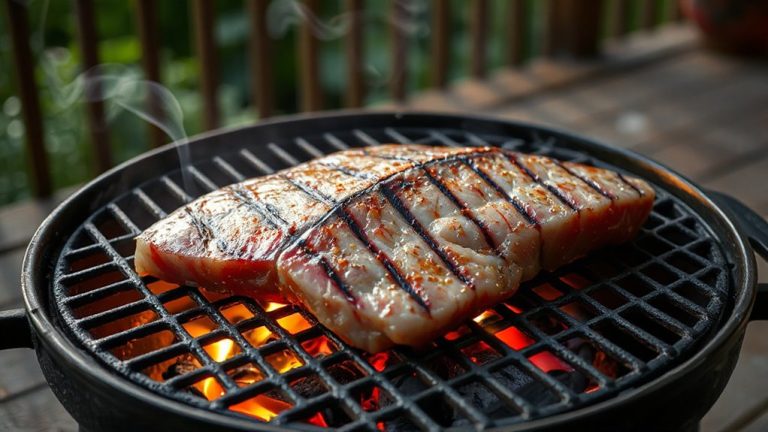
Achieving a flawless sear on a steak over open flame starts with understanding heat dynamics, not just cranking up the fire. You need intense, consistent heat, and that’s where your well-maintained cast iron skillet shines. Proper cast iron maintenance guarantees even heat retention and prevents sticking-season it regularly and avoid soap that strips the oil. Place the skillet directly over hot coals, letting it preheat fully before adding the steak. Open flame timing is critical: too soon, and the sear falters; too late, and you risk charring. Aim for 2–3 minutes per side for a medium-rare crust, flipping only once. The skillet’s mass stabilizes temperature spikes, delivering a rich Maillard reaction. With practice, you’ll master how coal position and flame height affect results. This method outperforms thinner pans in outdoor settings, making cast iron essential for serious open-fire cooking.
Cook Veggies Without Burning
While high heat is essential for searing meat, it can quickly turn vegetables from crisp-tender to charred if you’re not careful-especially when cooking over an open flame with a cast iron skillet. To prevent burning, toss your veggies in a light coating of vegetable oil-it boosts heat transfer and helps form a protective barrier while encouraging even browning. Spread them in a single layer and stir frequently for consistent cooking. For extra delicate vegetables like zucchini or mushrooms, try foil wrapping: enclosing them in a foil pouch traps steam, speeding up tenderness without direct flame exposure. You’ll get softer results, but it prevents flare-ups and dryness. Foil wrapping also simplifies cleanup and is reliable when flame control is tricky. Though it limits searing, combining both methods-searing firmer veggies directly and steaming sensitive ones in foil-gives balanced texture and flavor. It’s a smart, adaptable approach for open-pit cooking.
Clean and Re-Season After Outdoor Use
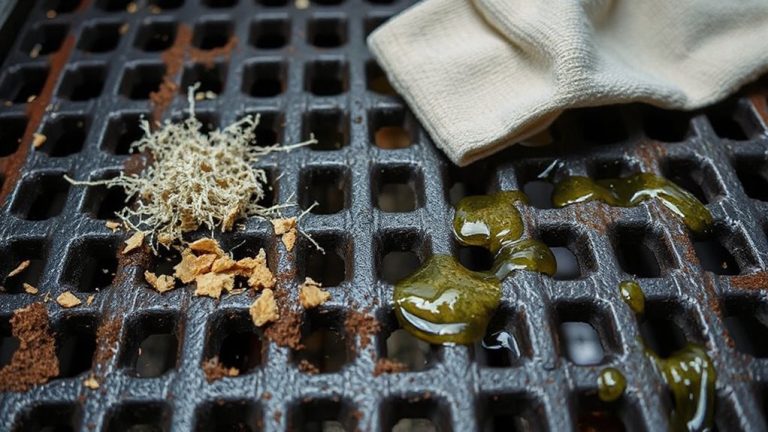
Once you’ve finished cooking over the open flame, cleaning your cast iron skillet properly out in the open air matters more than you might think-burnt-on residue and moisture from outdoor use can compromise the seasoning and lead to rust, especially if the skillet’s left to sit unpainted and exposed. After cooling slightly, scrape off food bits with a wooden spatula or chainmail scrubber, then wipe with a damp cloth-avoid soap if possible. Thorough drying is essential for rust prevention; place the skillet near residual heat to guarantee all moisture evaporates. Once dry, apply a thin layer of oil using a high-smoke-point variety like grapeseed or flaxseed-these oil types polymerize well, restoring the nonstick surface efficiently. Reheat the oiled skillet over the pit for 10–15 minutes to set the seasoning. This routine maintains integrity through seasons of outdoor cooking. For flavorful results when cooking proteins like chicken wings, consider using a well-balanced best dry rubs blend even when searing over open flames.
On a final note
You’ll find cast iron ideal for open-fire cooking-its heat retention and durability handle searing and sautéing with ease. Positioning it in the coals, not over flames, gives better control. You can sear steak evenly and cook veggies without burning if you manage coal placement. Afterward, cleaning and re-seasoning preserve its nonstick surface. Proper care guarantees long-term performance, making cast iron a reliable, high-performing tool for outdoor culinary success.