How to Grill Fish on a Plank Without It Sticking or Falling Apart
Choose firm, meaty fish like salmon or halibut-they hold together better on the plank. Use alder or cedar for balanced smoke flavor, and always soak the plank in water for at least an hour to prevent burning. Lightly oil the surface to minimize sticking and guarantee even heat transfer. Preheat the oiled plank on a 350°F grill for a few minutes, then place the fish skin-side down. Keep the lid closed and resist moving it. When done, the fish lifts cleanly-timing it right guarantees perfect results, and there’s more to mastering the technique.
Notable Insights
- Choose firm, meaty fish like salmon or halibut to prevent flaking and ensure structural integrity during grilling.
- Use properly soaked wood planks for 1–2 hours to prevent burning and promote even cooking.
- Lightly oil the plank surface to create a nonstick barrier and reduce fish sticking.
- Preheat the oiled plank on the grill to seal pores and stabilize temperature before adding fish.
- Place fish skin-side down and avoid moving it to ensure clean release and even, gentle cooking.
Choose Fish That Won’t Fall Apart on the Plank
When it comes to plank grilling, your choice of fish makes all the difference-go with a firm, meaty fillet that can hold its structure through the slow, smoky process. You’ll want species with a firm texture, like salmon, halibut, or mahi-mahi, since they won’t flake apart when lifted off the plank. These fish maintain integrity over indirect heat, absorbing smoke while keeping their shape. Avoid delicate varieties; they tend to crumble, making plating messy and uneven. A mild flavor works best, allowing the wood’s essence to enhance, not overpower, the natural taste. Think of it this way: the fish should complement the method, not fight it. With the right cut, you get moist, evenly cooked results that lift off cleanly. Choosing wisely guarantees both presentation and texture meet expectations-no one wants their dinner stuck to the plank.
Pick the Right Wood Plank for Grilling Fish
The plank you choose isn’t just a surface-it’s a flavor carrier, heat diffuser, and structural partner in cooking your fish. You’ve got to pick wood types that complement seafood without overpowering it-alder, cedar, and maple are top choices. Alder gives a subtle smokiness perfect for delicate fillets, while cedar adds a bolder, earthy note ideal for salmon. Maple delivers mild sweetness and even heat. Avoid strong woods like hickory or mesquite-they’ll dominate the fish. Plank thickness matters just as much; aim for 3/8 to 1/2 inch. Thinner planks may warp or crack under high heat, leading to flare-ups or breakage. A thicker plank holds up longer, releasing smoke steadily and staying intact from start to finish. You want durability and consistent performance-thick, food-safe wood guarantees both. For reliable options, consider trying best cedar planks for grilling that are sustainably sourced and specifically designed for repeated use.
Soak the Plank Properly Before Grilling
You’ve picked the right wood-now it’s time to prep it so it works for you on the grill, not against you. Proper water immersion is essential to prevent the plank from catching fire and to guarantee steady heat transfer. Submerge the plank completely in water for at least one to two hours; this soak duration allows the wood to absorb enough moisture to smolder rather than flame. While some skip this step or shorten the time, doing so risks flare-ups and uneven cooking. Tap water works fine-no need for beer or wine unless you’re chasing subtle flavor notes. A fully soaked plank releases steady, aromatic steam, gently cooking the fish from below. Thickness matters: 1/2-inch to 3/4-inch planks hold up best. Thin ones may char too quickly, even when soaked. Take the time-it’s a small step that directly impacts safety, flavor, and texture. Skip it, and the whole grill could go up in smoke.
Oil the Plank (So the Fish Doesn’t Stick)
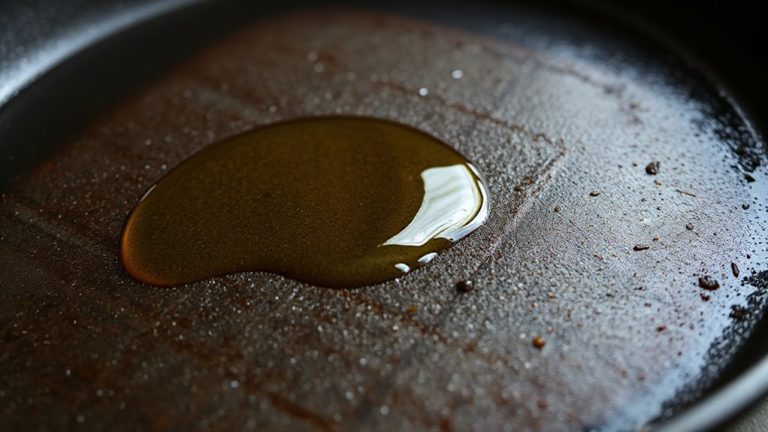
A light coating of oil on the plank’s surface keeps the fish from sticking and guarantees clean release after cooking, which matters just as much as proper soaking. You don’t need much-just a thin, even⎯ layer using a high-smoke-point oil like canola or grapese religating clean release after cooking, which matters just as much as proper soaking. You don’t need much-just a thin, even layer using a high-smoke-point oil like canola or grapeseed. This small step improves plank maintenance by creating a protective barrier that slows moisture loss and reduces charring. It also supports better heat control, preventing hot spots that can cause uneven cooking or flare-ups. Without oil, even a well-soaked plank risks gumming up, making removal messy and increasing the chance of torn fillets. Think of it as nonstick insurance. Over time, consistent oiling preserves the wood’s integrity, especially if you’re reusing planks (though this is rare). While the plank will still char slightly, proper lubrication assures it chars evenly, giving you both flavor and function. It’s a simple move, but it elevates your results every time.
Preheat the Plank on the Grill First
Don’t skip heating the plank before placing the fish on it-after oiling, this step sets the stage for controlled cooking and maximum flavor. Start by setting your grill temperature to medium (around 350°F), letting it stabilize for even heating. Place the oiled plank directly on the grates and let it preheat for 3–5 minutes per side, depending on plank thickness-thicker planks (¾ inch) need longer to char slightly and become stable, while thinner ones can warp or ignite if overheated. You’re aiming for a warm, aromatic surface that gently smokes but doesn’t flame. This conditioning prevents sudden moisture loss from the wood, helping maintain steady heat transfer. Preheating also seals the wood’s pores, reducing the risk of fish sticking or breaking upon placement. It’s a small step with big impact, improving both safety and sear efficiency, especially with delicate fillets. A properly preheated plank works best when paired with the right equipment, such as a Top Outdoor Pizza Oven for consistent, high-heat performance.
Grill Skin-Side Down: And Don’t Peek
Once the plank is properly preheated and emitting that subtle, woody aroma, lay the fish on it skin-side down-this isn’t just habit, it’s sound technique. The skin acts as a natural barrier, shielding the delicate flesh from direct heat and ensuring even heat distribution across the fillet. This side-down position stabilizes the fish, minimizing curling and improving contact with the plank, which influences overall fish behavior on the grill. You’ll notice less sticking and flaking, especially when you resist the urge to peek. Lifting the lid or poking at the fish disrupts the cooking environment, leading to uneven results and potential breakage. Trust the process: the plank steams and grills simultaneously, gently firming the flesh while preserving moisture. Patience here pays off-interference compromises texture and structural integrity, so keep the lid closed and let the heat work uninterrupted. A well-chosen best yakitori grills can enhance this technique by providing consistent, controllable heat ideal for plank cooking.
How to Tell When It’s Done and Remove Safely
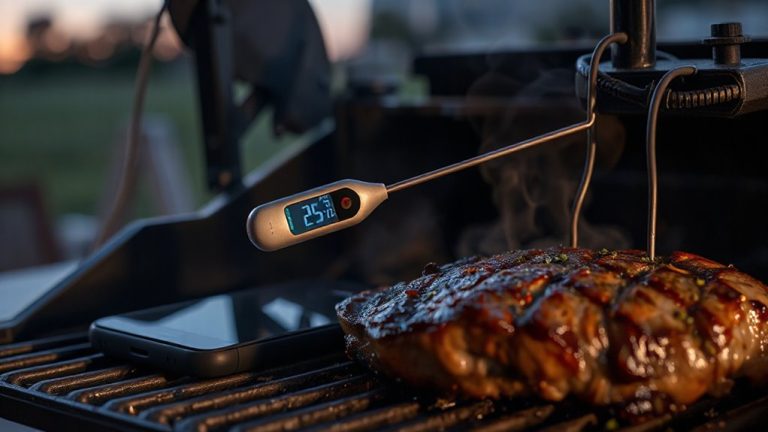
How can you be sure your plank-grilled fish is perfectly cooked without overhandling it? Use both internal temperature and visual cues to judge doneness accurately. For most fish, aim for an internal temperature of 135°F; carryover heat will bring it to the FDA-recommended 145°F. Insert a quick-read thermometer into the thickest part, avoiding the plank. You’ll also notice clear visual cues-opaque flesh that flakes easily with a fork. If the fish resists flaking, it needs more time. When it’s done, slide a wide spatula between the fish and the plank, lifting gently to avoid breakage. Never attempt to flip it. The wood plank will likely char, but that’s normal-just don’t let it flame. Removing it too early risks sticking; waiting too long dries out the fish. Timing, temperature, and observation together guarantee a clean, safe release every time.
On a final note
You’ve picked a firm, grill-safe fish and the right wood plank-likely cedar or alder-for flavor and stability. Soaking it for at least 60 minutes prevents burning, while oiling the surface cuts sticking risks. Preheating the plank kills bacteria and creates a non-stick surface. Keeping the fish skin-side down locks in moisture. Resist flipping; let the steam do the work. When the flesh flakes easily and lifts cleanly, it’s done. Use a thin spatula to transfer it safely-intact, aromatic, and perfectly cooked.