Using Leek Tops in Smoked Broths for BBQ-Inspired Soups
You trim and slice leek tops, then smoke them over apple wood at 225°F for rich, savory-sweet depth. These smoky greens anchor a robust broth when simmered with onions, garlic, tomato, and herbs. The resulting liquid adds authentic BBQ complexity to potato leek soup or chowders. Leftover broth elevates grains and beans or reduces into a concentrated base. This technique transforms scraps into something far greater-worth exploring further for any outdoor cook chasing layered flavor.
Notable Insights
- Trim and slice leek tops into 1-inch pieces, then soak and dry them before smoking for maximum flavor.
- Smoke leek tops at 225°F using apple or hickory wood for a sweet, smoky depth in broths.
- Combine smoked leek tops with other smoked vegetables and herbs to build a rich, savory BBQ broth.
- Simmer smoked ingredients gently for 1–1.5 hours, then strain to create a silky, concentrated broth.
- Use smoked leek broth as a base in soups, stews, or grain dishes for authentic BBQ-inspired complexity.
Prep Leek Greens for Smoking
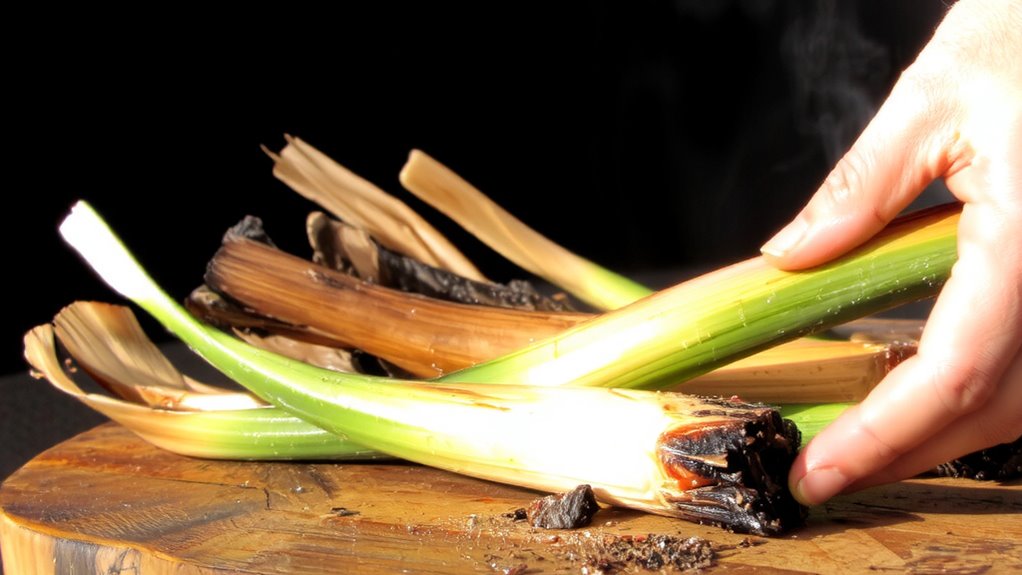
Smoke-ready leek greens start with smart prep-those dark green tops aren’t just scraps, they’re flavor gold waiting to be tapped. When prepping leek tops, always trim the tough green tops from the white and light green sections, saving them specifically for smoking. Slice the green tops into 1-inch pieces to really well expose surface area, helping them absorb more smoke. Make sure to soak them in cold water for 10 minutes-leek tops trap dirt between their layers, so cleaning is non-negotiable. After soaking, pat them dry; damp greens create steam, which hinders smoke adhesion and slows the process. Dry, clean pieces respond much better to low-and-slow exposure at 225°F. This prep guarantees maximum flavor transfer when later added to broths. Properly prepped green tops deliver a subtle, savory depth that raw or poorly cleaned ones simply can’t match. Make sure this step isn’t rushed-it’s foundational for quality smoked broth.
Smoke Leek Tops With Apple Wood
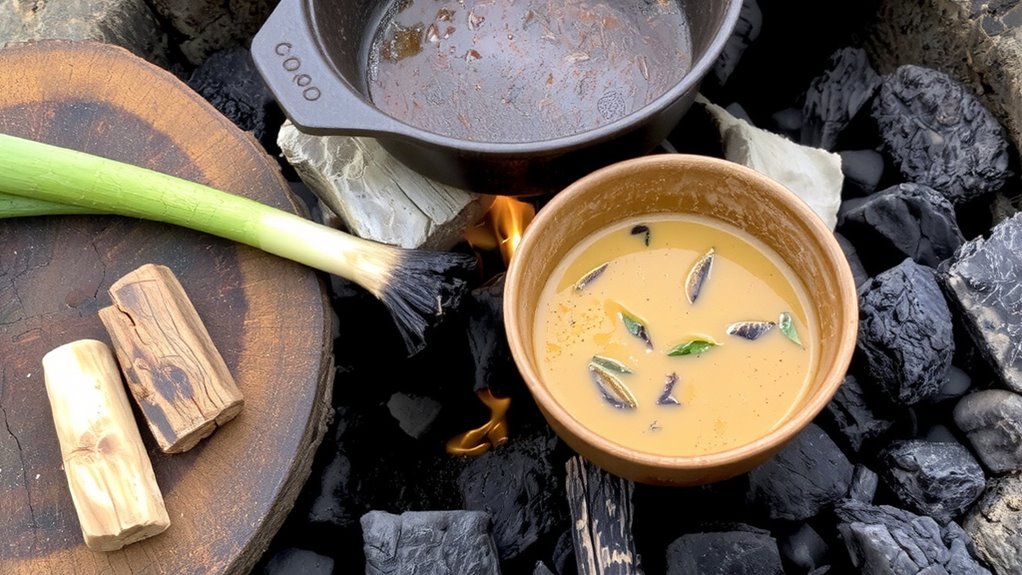
While apple wood won’t deliver the bold punch of hickory or mesquite, it’s the ideal partner for leek tops when you’re aiming for a balanced, nuanced smokiness. To smoke leek tops, start by preheating your grill to 380–450°F and placing soaked apple-wood chips in a foil pouch with holes or a cast iron ramekin to generate steady smoke. Halve the leek tops lengthwise, brush them with olive oil, and add some salt and pepper for seasoning. Place them cut-side down on the grill grates, where they’ll char lightly and absorb smoke over 10 minutes-any longer and they risk turning bitter. The apple-wood chips impart a sweet, aromatic smokiness that enhances rather than overwhelms. This method delivers deeply flavored, subtly charred leeks perfect for building complexity in broths, without the aggressive bite of stronger woods. Apple wood is one of the best wood chips for smoking chicken, making it a reliable choice for delicate proteins and vegetables alike.
Build BBQ Broth With Smoked Leeks
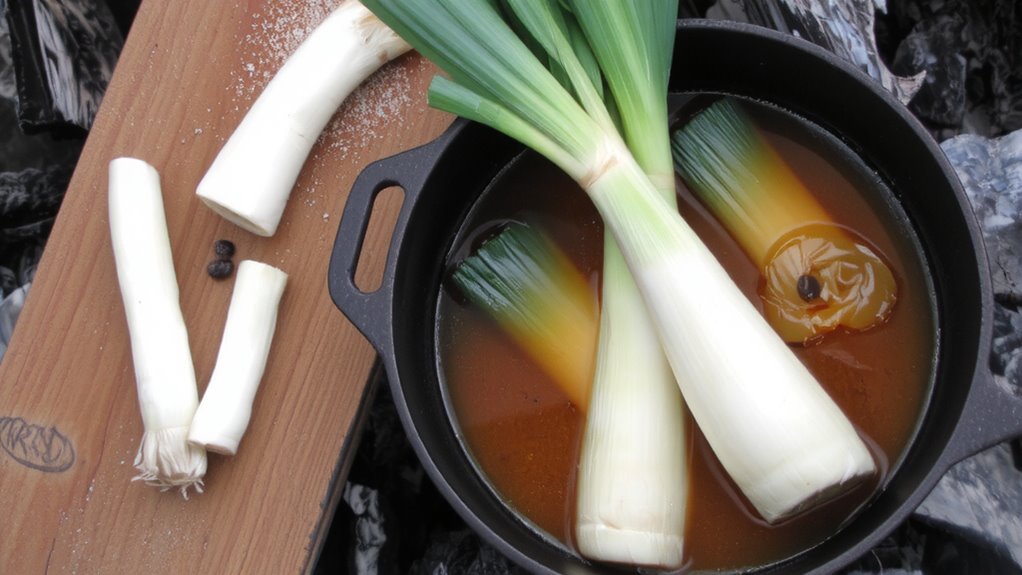
Once you’ve smoked your leek tops over indirect heat at 225°F using apple-wood or hickory chips, you’re set to build a deeply layered BBQ broth that’s both aromatic and rich in umami. Add the smoked leek tops to a pot with other smoked scraps-onion, garlic, tomato-and 2 quarts of water or light vegetable stock. Drop in a couple of bay leaves and bring it to a gentle simmer over medium heat. Let it cook for 1–1.5 hours, just enough to extract every bit of savory-sweet depth without overcooking. The smoked leek tops infuse the liquid with a robust, complex flavor that store-bought stocks can’t match. After simmering, strain out the solids to yield about 1.5 quarts of concentrated, silky broth. It’s a small step that makes a big difference in building authentic BBQ-inspired depth.
Use Smoked Leek Broth in Hearty Soups
You’ve already built a rich, smoky foundation with your homemade BBQ broth, where grilled leek tops lent their char-kissed sweetness to a deeply savory liquid-now it’s time to put that broth to work in hearty soups that go beyond comfort to deliver nuanced flavor. Swap out plain chicken stock or Vegetable Broth with your smoked version to make soup with deeper complexity. Try it in classic Leek Soup, where the smokiness amplifies the leeks’ natural sweetness without overpowering the dish. The broth also shines in potato leek or pumpkin leek soup, elevating humble ingredients with fine-dining appeal. Since the smoked leek broth simmers with herb and vegetable scraps, it carries subtle earthy notes that layered stocks often miss. It performs especially well in slow-simmered recipes, absorbing and enhancing other flavors. Whether you’re making creamy chowders or rustic stews, using this broth adds a distinct BBQ-inspired depth few base liquids can match.
What to Make With Leftover Smoked Leek Broth
That smoky depth you’ve captured in your leftover smoked leek broth? It’s too valuable to toss. Use it as a base for bean and grain dishes like farro soup or black bean stew-its savory notes deepen the flavor beautifully. You can also reduce it further to create a concentrated stock for risottos, especially those with mushrooms or squash. The broth pairs well with creamed corn or tomato-based soups, where the smokiness balances the sweetness of vegetable scraps. When enhancing dishes, stir in fresh herbs like thyme or parsley at the end to lift the earthy tones. Your leftover smoked leek broth shines brightest when used within five days refrigerated, or frozen for up to three months to lock in that BBQ-inspired complexity. It’s not just waste reduction-it’s flavor refinement.
On a final note
You’ve transformed overlooked leek tops into a smoky foundation that elevates any soup. Smoking them with apple wood imparts a subtle, sweet earthiness, ideal for barbecue-inspired broths. This technique maximizes flavor and reduces waste, aligning practicality with depth. The resulting broth performs well in bean, potato, or corn-based soups, adding complexity without overpowering. Leftovers freeze cleanly, offering future meals a head start. It’s efficient, flavorful outdoor cooking at its most resourceful.