Why Roasted Garlic Adds Sweet, Mellow Depth to Smoked Meat Glazes
You get sweet, mellow depth in your glaze because roasting deactivates garlic’s harsh enzymes and breaks down sulfur compounds, allowing natural sugars to caramelize. At 400°F in oil, cloves develop rich umami and nutty notes through the Maillard reaction, blending smoothly with smoky meats. Pureed roasted garlic integrates evenly, enhancing mouthfeel without sharpness. This complexity elevates your glaze beyond surface flavor, building a more balanced, lingering finish-exactly what sets expert barbecue apart.
Notable Insights
- Roasting garlic at high heat breaks down harsh sulfur compounds, creating a sweet, mellow flavor ideal for glazes.
- The Maillard reaction and caramelization during roasting develop rich, nutty, and sweet notes that enhance smoked meat complexity.
- Deactivation of the alliinase enzyme prevents pungent allicin formation, allowing garlic to add depth without sharpness.
- Confiting garlic in oil infuses the fat with aromatic richness, improving glaze texture and adherence to meat.
- Roasted garlic contributes umami and smooth sweetness, balancing smoke, char, and spice in finished glazes.
Why Roasted Garlic Elevates Smoked Meat Glazes
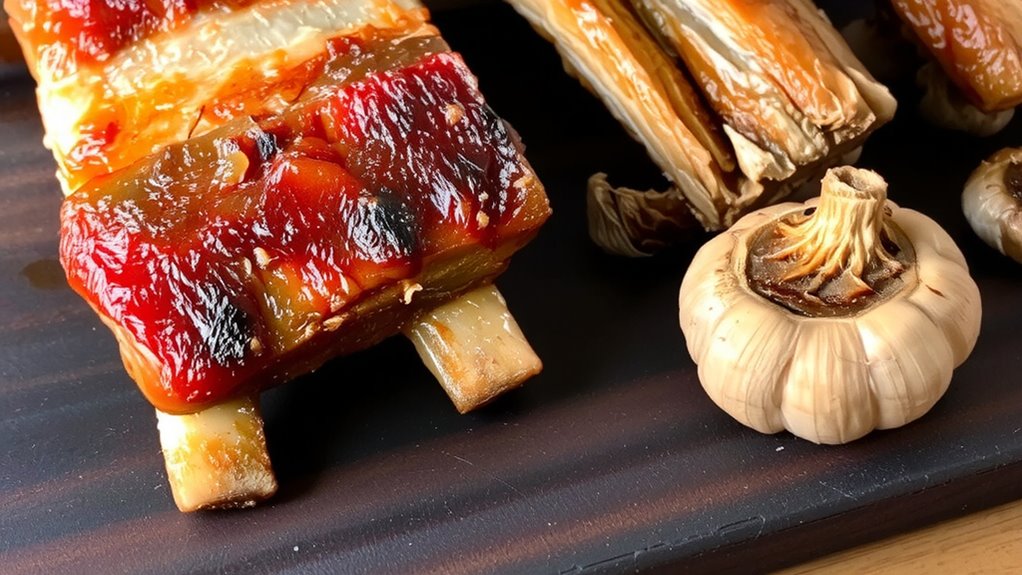
Flavor transformation is the secret behind a standout smoked meat glaze, and roasted garlic delivers it in spades. When you roast garlic at 400°F for 30 minutes, the natural sugars caramelize, triggering the Maillard reaction and creating rich, sweet complexity. Roasted garlic mellows garlic’s flavor by deactivating the alliinase enzyme, removing the harsh bite raw cloves bring. That means your glaze layers savory depth without sharpness. Confit-style roasting in oil also infuses fat with aromatic richness, boosting mouthfeel and helping the glaze cling to brisket or ribs. Once applied, those umami notes in roasted garlic harmonize with smoke compounds like guaiacol, deepening the overall profile. You’ll notice the flavor lingers, smooth and rounded, instead of fading fast. Using roasted garlic isn’t just about removing pungency-it’s about building balance. It elevates your glaze from simple topping to integral flavor driver, especially with long-smoked meats where nuance matters most.
How Roasting Transforms Garlic for Glazes
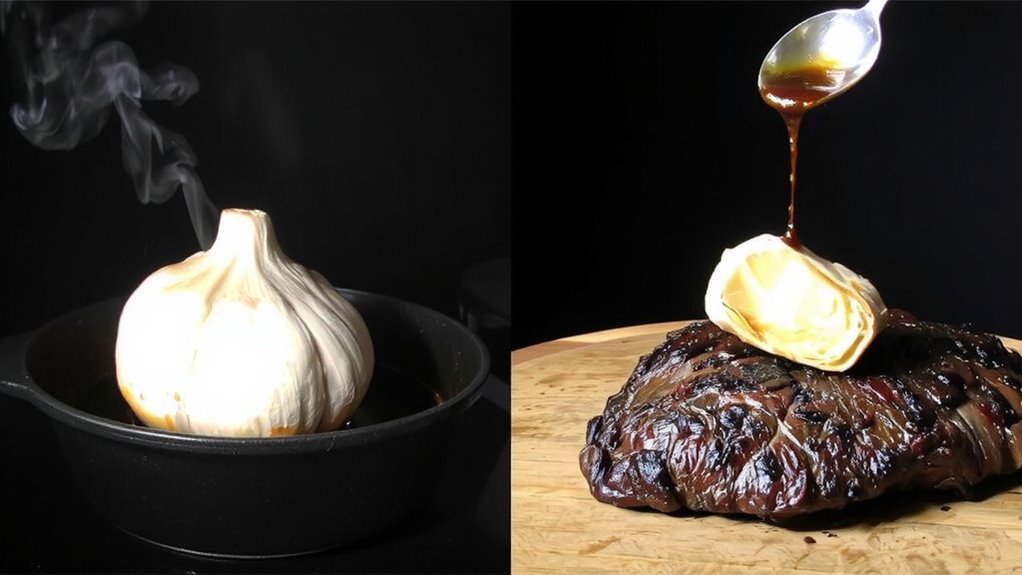
Transformation begins the moment garlic meets heat, and when it comes to glazes for smoked meat, roasting is where the magic happens. When you slow roast whole heads in olive oil, they soften into a spreadable richness while the oil absorbs deep, aromatic notes-ideal for a garlic confit base. Roasted Garlic loses its sharp bite as heat deactivates alliinase, the enzyme behind raw garlic’s punch, so it won’t overpower your glaze. Instead, garlic transforms into a sweet, mellow ingredient thanks to caramelized sugars from the Maillard reaction. This version blends seamlessly with tangy or fruity elements like citrus or preserves. Plus, it develops S-allyl cysteine, boosting umami and health value. Using slow roasted cloves guarantees balanced flavor integration, letting smoked meat shine while adding complex depth only true Roasted Garlic can provide.
Why Roasted Garlic Tastes Sweeter
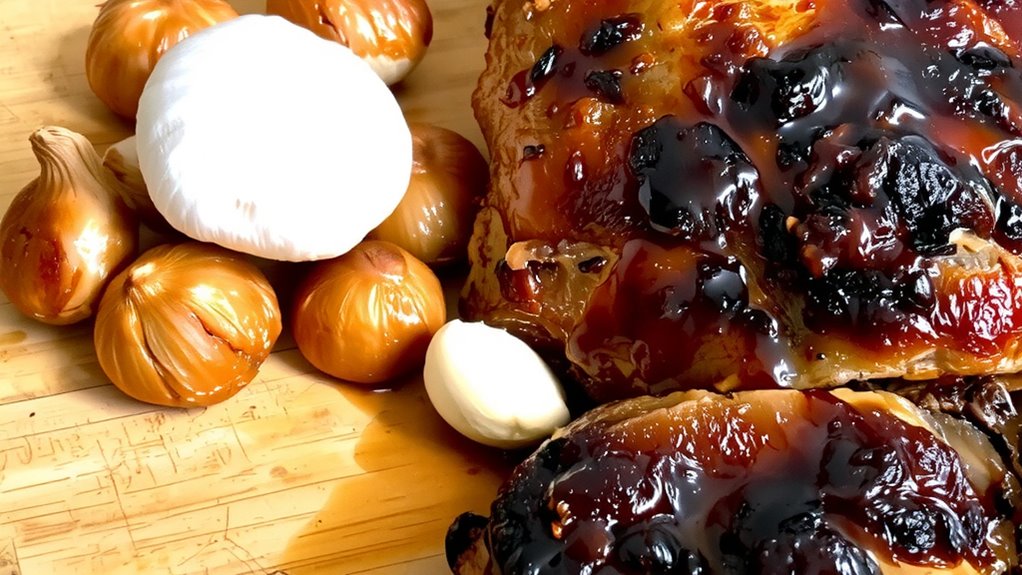
While raw garlic hits sharp and spicy, roasting it reveals a surprising sweetness you’re likely to notice the first time you pull a golden head from the oven. Roasted Garlic undergoes a transformation when exposed to steady heat-around 350°F for 45–50 minutes-breaking down harsh sulfur compounds and converting inulin into fructose. This natural caramelization, supported by the Maillard reaction, builds rich, nutty notes while deactivating alliinase, the enzyme that forms pungent compounds like allicin. Heat mellows garlic’s bite, leaving a soft, buttery clove with deep sweetness. At 400°F in oil, the effect intensifies, with exterior edges browning and flavor concentrating. Unlike its raw form, roasted garlic doesn’t overpower; it integrates smoothly into glazes, enhancing complexity without heat. That balance makes it ideal for smoked meats, where sweetness complements char and spice in a well-rounded profile.
Roast Garlic in Oil for Maximum Flavor
You already know roasted garlic brings sweetness and depth to smoked meat glazes, thanks to the breakdown of sulfur compounds and the caramelization of inulin into fructose. To maximize flavor, roast garlic cloves in a single layer, fully submerged in olive oil, at 400°F for 30 minutes until golden. This slow roast transforms sharp cloves into soft, sweet morsels while infusing the oil with rich aroma-perfect for finishing Roasted Garlic Bread or building complex sauces. Submerging the cloves prevents drying and allows the oil to act as both cooking medium and flavor carrier. Once cooled, remove the garlic before blending into glazes to control texture and richness. Store the roasted cloves in their cooking oil, sealed in the fridge for up to six months; a splash of vinegar boosts safety by inhibiting botulism. The resulting confit is a staple for serious outdoor cooking.
How to Mix Roasted Garlic Into Smoked Meat Glazes
A well-crafted smoked meat glaze leans on balance, and roasted garlic plays a key role-when used right. To blend roasted garlic smoothly, mince or puree it finely so it integrates without texture issues. Use 25–30% less than raw garlic since roasting deepens sweetness and softens bite. For best results, simmer the cloves in your glaze base-like vinegar or fruit juice-for 5–7 minutes before blending; this pulls flavor into the liquid. Add the prepared garlic during the final 10–15 minutes of cooking to preserve its mellow aroma and avoid over-reduction. Store leftover garlic-infused glaze for up to a week; top it with oil to limit oxidation.
| Step | Tip |
|---|---|
| Prep | Puree roasted garlic for smooth texture |
| Quantity | Use 25–30% less than raw garlic |
| Simmer | Cook cloves in base 5–7 mins for depth |
| Timing | Add to glaze in final 10–15 minutes |
| Storage | Refrigerate up to 1 week, seal with oil |
3 Easy Ways to Add It to Glazes
Two simple techniques make adding roasted garlic to glazes both efficient and effective. First, mash the cloves into a smooth paste-using a garlic press saves time and guarantees even distribution. Roasted garlic blends seamlessly when mixed at a 1:2 ratio with oil, creating a silky base that adds sweet, mellow depth without overpower herself. For maximum integration, combine it with acidic ingredients like vinegar or citrus juice to help emulsify the glaze. You can also experiment by blending in a small amount of black garlic, which deepens umami and complexity. Add the garlic during the final 15–20 minutes of smoking to preserve its delicate flavors. Remember, roasted garlic is sweeter and more concentrated than raw, so use 25–30% less to avoid overpowering the glaze.
Store Roasted Garlic for Glaze Use
Preservation hinges on both method and mindfulness when storing roasted garlic for future glaze applications. To safely store roasted garlic, always use sterilized glass jars and guarantee every clove is fully submerged in olive oil to limit oxidation. When garlic is prepared this way, adding 1–2 tablespoons of vinegar per cup of oil helps increase acidity, reducing the risk of botulism, as the USDA FSIS recommends. This method protects garlic’s flavor while maintaining texture over time. An airtight seal and consistent refrigeration are non-negotiable-these keep microbes at bay and quality high. Label the container with the date; though it stays safe indefinitely when refrigerated, peak flavor lasts up to 6 months. Proper storage means you’ll always have rich, mellow garlic ready to deepen your smoked meat glazes whenever the grill fires up.
On a final note
You’ll find roasted garlic transforms smoked meat glazes by mellowing sharpness and deepening flavor complexity. Its natural sugars caramelize during roasting, adding subtle sweetness without overpowering. Blending it into glazes guarantees a smoother, richer profile that complements smoke and char. Stored properly in oil, it remains convenient for frequent use. For balanced, restaurant-quality results, roasted garlic isn’t just an enhancement-it’s essential.