Mastering Temperature Control for Evenly Cooked Brisket in a Charcoal Grill
You’re managing more than a fire-you’re balancing airflow, fuel, and heat retention for even brisket doneness. Set up a two-zone charcoal layout with a drip pan, then stabilize at 225°F using precise vent adjustments. Pre-light charcoal to avoid spikes, and monitor both meat and ambient temps with a calibrated dual-probe thermometer. Watch smoke behavior and meat cues to catch hot spots early. Fine-tune vents gradually, as small changes impact temp fast. There’s a smarter way to maintain consistency from start to finish.
Notable Insights
- Set up a two-zone charcoal configuration to enable indirect heat and better temperature control.
- Adjust top and bottom vents in small increments to maintain a steady 225°F cooking environment.
- Use pre-lit charcoal added gently to the fire to avoid temperature spikes during long cooks.
- Monitor for hot spots by observing smoke patterns and uneven meat browning during cooking.
- Employ a dual-probe thermometer to track both brisket internal temperature and ambient grill conditions.
Set Up Your Charcoal Grill for Low-and-Slow Brisket
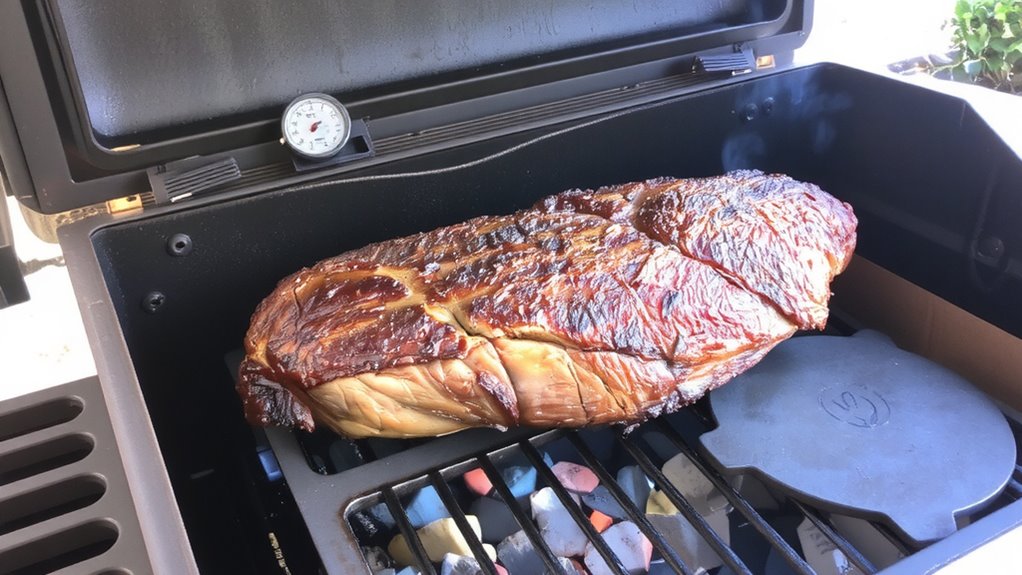
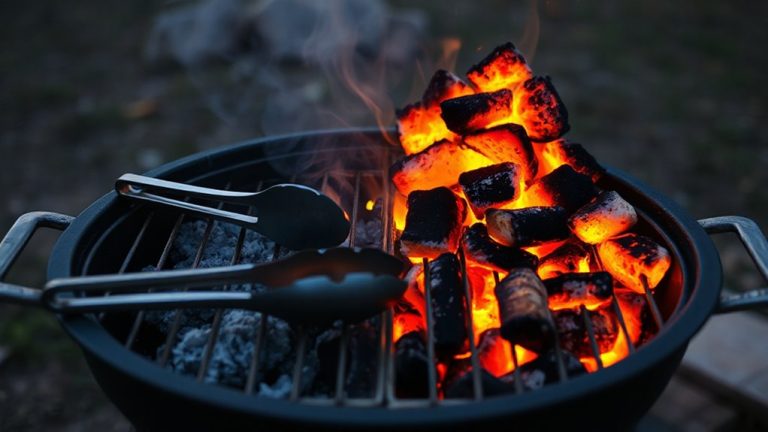
You’ll want to get this right the first time-setting up your charcoal grill for low-and-slow brisket isn’t just about lighting coals, it’s about creating a stable, indirect cooking environment that mimics a smoker. Proper charcoal arrangement is essential: pile lit coals on one side of the grill, leaving the opposite side empty for indirect heat. This two-zone setup gives you control and prevents burning. Use a chimney starter-avoid lighter fluid-for clean, consistent ignition techniques that don’t taint the meat’s flavor. Light the coals fully until ashed over, ensuring even burn and steady temperature from the outset. Position a drip pan under the brisket to catch fat and reduce flare-ups. The lid must seal well to maintain airflow dynamics. For best results, consider using one of the top-rated charcoal grill smokers that combine excellent heat retention with precise airflow controls. Done right, this foundation supports hours of stable cooking, letting smoke and patience do the work. Skip shortcuts-you’re not just grilling; you’re barbecuing.
Maintain 225°F With Vent Control and Monitoring
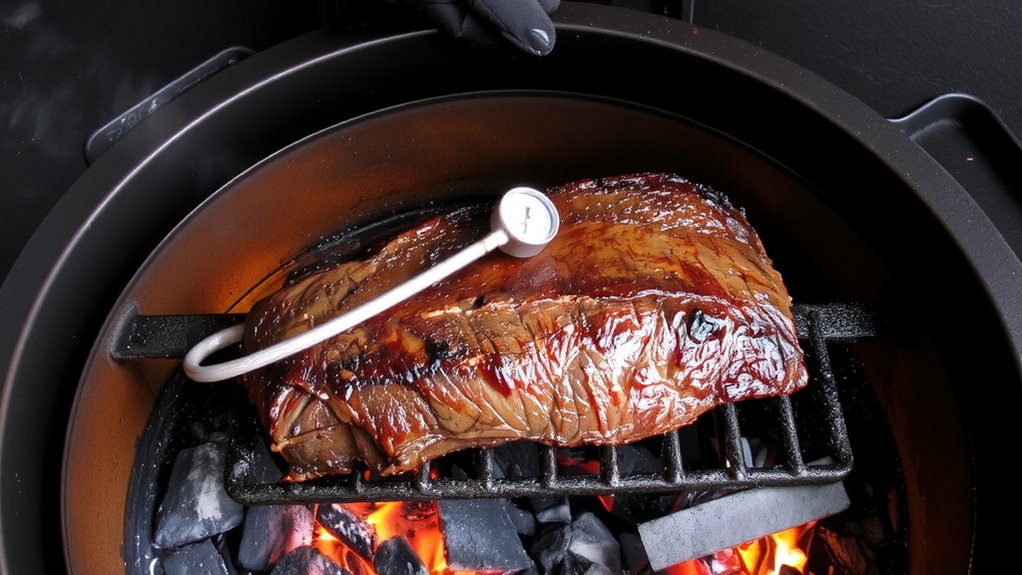
Now that the grill’s set up with a proper two-zone fire and the brisket is in position over the indirect side, holding a steady 225°F becomes the key to breaking down tough connective tissue without drying out the meat. You’ll maintain this target primarily through vent balance-adjusting the top and bottom vents to regulate oxygen flow. Restricting both slows combustion, while opening them increases heat. Small tweaks matter: even a quarter-inch change can shift temps 25°F. Pair this with even charcoal distribution across the fuel side to guarantee consistent radiant heat. Uneven piles create hot spots, risking uneven cooking. A reliable lid thermometer and real-time probe monitor let you catch fluctuations early. For precise and consistent readings, consider using one of the best thermometers available, as accuracy is critical when maintaining low and slow cooking temperatures. Best thermometers provide the responsiveness and reliability needed for pitmasters who demand control. Mastering these elements means more than stability-it means control. With practice, you’ll anticipate swings before they happen, fine-tuning airflow rather than reacting. That’s how you turn good BBQ into great.
Add Charcoal Without Temperature Spikes
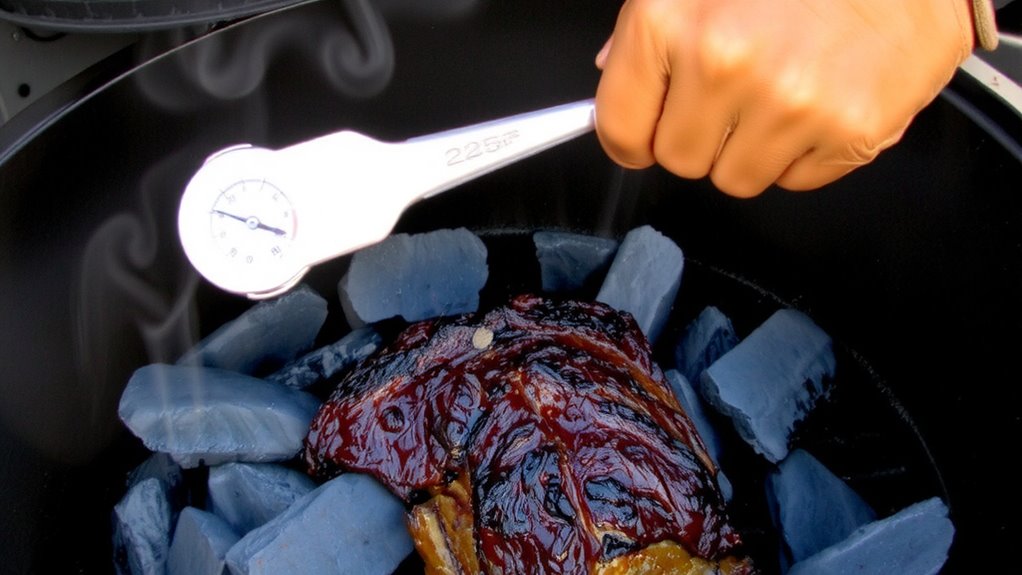
While maintaining a steady 225°F is critical for tender brisket, adding fresh charcoal without disrupting that balance remains one of the trickier parts of long cooks. You’ll want to use the same charcoal type already burning-mixing blends can alter combustion rates and create spikes. Always pre-light new charcoal using a chimney starter, your most reliable lighting method, allowing it to develop an even ash layer before adding. Dumping raw coals directly risks oxygen surges and temperature swings. Instead, gently place the pre-lit coals toward the edges of the pile, letting them integrate gradually. Avoid overfilling; add only what’s needed to sustain the burn for the next few hours. This method preserves stability, supports consistent smoke production, and prevents the thermal shock that can toughen meat. With the right charcoal type and controlled lighting method, you keep the pit steady and your brisket on track. For consistent results, choose a charcoal chimney that heats evenly and is easy to pour from.
Use Smoke and Meat Cues to Spot Hot Spots
How do you know when your smoker’s heat isn’t as even as it seems? Watch the smoke patterns. If trails drift heavily to one side or swirl unevenly, that’s a red flag. Thick, lazy smoke in a corner suggests poor airflow and likely a hot spot. Thin, fast smoke elsewhere might mean cooler zones. These imbalances cook your brisket unevenly. Also, check for meat discoloration-patches that brown too fast or turn gray while other areas stay pink signal inconsistent heat exposure. You’ll often see one end drying out or developing a thicker bark. That’s not just airflow; it’s heat pooling. These cues matter because even smoke distribution typically means even cooking. Trusting only your grill’s thermometer ignores what’s actually hitting the meat. Adjusting vents or repositioning coals based on these visual and physical signs keeps temps balanced. Spotting problems early means better control-and better brisket.
Monitor Brisket Temp With a Dual-Probe Thermometer
A dual-probe thermometer isn’t just a convenience-it’s a game-changer when you’re trying to nail the perfect brisket. You get real-time readings from both the meat and the grill, so you can track progress without lifting the lid. Insert one probe into the thickest part of the brisket, avoiding fat or bone, to monitor internal temperature accurately-proper brisket placement guarantees consistent results. Use the second probe to check ambient grill heat, helping you catch thermal inconsistencies early. Always perform probe calibration before starting; inaccurate readings can ruin hours of cooking. These steps eliminate guesswork, letting you maintain steady temps between 225°F and 250°F. Dual-probe models with wireless alerts and high-precision sensors offer reliability worth the investment. They provide actionable data, not just numbers-critical when cooking low and slow. With correct setup and attention to detail, you’re set up for even doneness and tender results every time.
Adjust Airflow to Fix Temperature Drift
Why does your smoker’s temperature swing when you’re hours into a cook? Changes in ambient weather-like wind or humidity-can disrupt airflow, and uneven charcoal distribution often creates hot or cold zones. You’ll notice drift when oxygen flow isn’t balanced. If the fire’s too hot, restrict the top vent slightly and close the bottom damper a touch-don’t shut it completely. Too cool? Open the dampers to feed the fire more oxygen. Remember, airflow controls combustion just as much as fuel does. Consistent temperature hinges on balancing intake and exhaust. Check your coals early; spreading them evenly guarantees steady burn. When ambient weather shifts, your smoker responds-you must too. Tweaking airflow compensates for these changes, preventing stalls or spikes. It’s not just about adding fuel-it’s managing how air moves through the system. Master this, and you’ll keep that brisket cooking steady from start to finish.
On a final note
You’ve set up your charcoal grill for low-and-slow cooking, maintained 225°F through careful vent control, and added fuel without spikes. Using smoke patterns and meat cues, you identified hot spots and adjusted airflow to correct drift. With a dual-probe thermometer, you monitored brisket internally and ambient grill temps accurately. These steps, grounded in airflow management and thermal observation, guarantee even cooking. Mastering them elevates your control, turning variables into predictable results-essential for reliable, competition-grade BBQ outdoors.