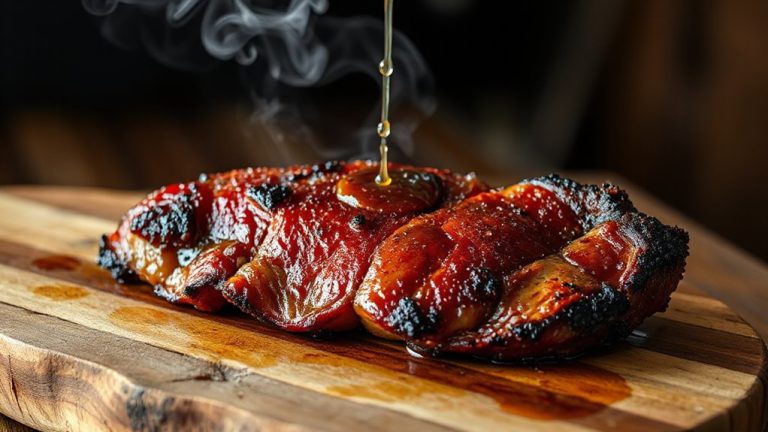
Avoiding Ash Contamination When Transferring Coals Onto a Dutch Oven Lid
Use stainless steel tongs or a sturdy shovel with a long handle to transfer coals safely and cleanly. Brush off loose ash first-it improves heat control and prevents grit from getting into your food. Lift coals smoothly to avoid scattering embers, and carry them close to the lid to reduce spills. Position the Dutch oven with the raised edge upwind to block ash entry. Let coals burn fully before use, and tap the lid gently before placing it. You’ll get cleaner results with smarter techniques.
Notable Insights
- Use heat-resistant stainless steel tongs or shovels with long handles to safely transfer coals without scattering ash.
- Brush loose ash from coals before placing them on the Dutch oven lid to prevent contamination.
- Transfer coals smoothly and close to the lid to minimize ash dislodging during placement.
- Position the lid with the raised edge facing upwind to block airborne ash from entering the pot.
- Use fully lit, gray-ash-covered lump charcoal to reduce excess ash and maintain clean cooking conditions.
Use the Right Tools to Handle Coals Safely
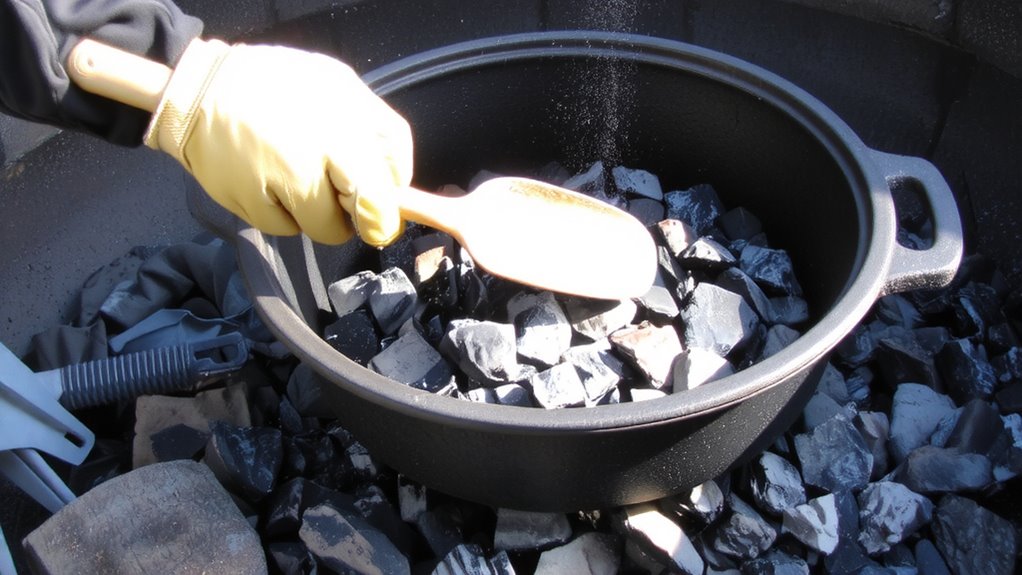
Safety starts with the right equipment-so don’t grab just any kitchen tool when moving hot coals. Proper coal handling demands tools built for heat resistance and control. Tongs or shovels made of stainless steel with long handles give you leverage and keep hands safe. Tool selection isn’t just about convenience-it directly affects how cleanly and safely you transfer coals. Cheap alternatives warp under high heat or lack grip, increasing spill risk. For Dutch oven cooking, precision matters: you’re not just moving coals-you’re positioning heat sources. A well-designed coal-handling tool offers durability, balance, and a secure hold on individual briquettes or chunks. Look for reinforced tips and ergonomic handles that resist burns. These features minimize accidents and reduce ash disturbance. When you invest in purpose-built tools, you’re not just cooking-you’re managing fire with intention, reducing contamination before it starts.
Brush Ash Off Coals Before Placing Them
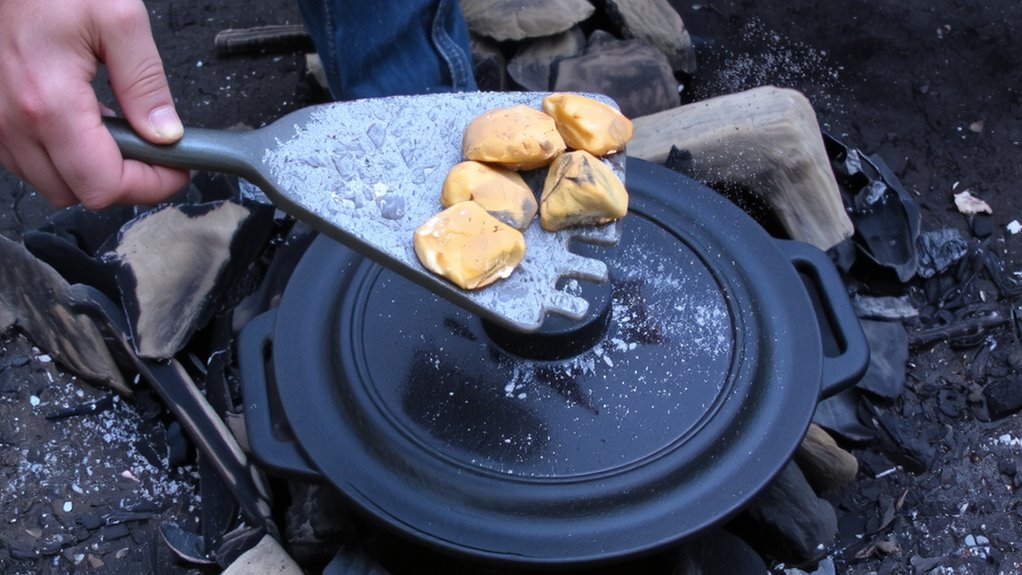
You’ll want to brush off loose ash before placing coals where they’ll cook, because doing so improves heat transfer and reduces debris falling into food. This simple step in coal cleaning guarantees more consistent temperatures and keeps your meal free of gritty surprises. Effective dust prevention isn’t just about cleanliness-it’s about control. When ash builds up, it insulates the coal, reducing efficiency and creating hot or cold spots on your Dutch oven. A quick brush with a dedicated tool takes seconds but makes a meaningful difference in cooking performance. Using a charcoal chimney ensures coals are evenly lit and produce less excess ash to begin with.
| Feeling | Reason |
|---|---|
| Frustration | Grit in food ruins texture and flavor |
| Satisfaction | Clean heat means even, delicious results |
| Disappointment | Poor coal cleaning leads to uneven cook |
| Confidence | Proper dust prevention shows skill |
Practice this habit regularly-it reflects attention to detail that defines great outdoor cooking.
Transfer Coals Without Spilling Ash
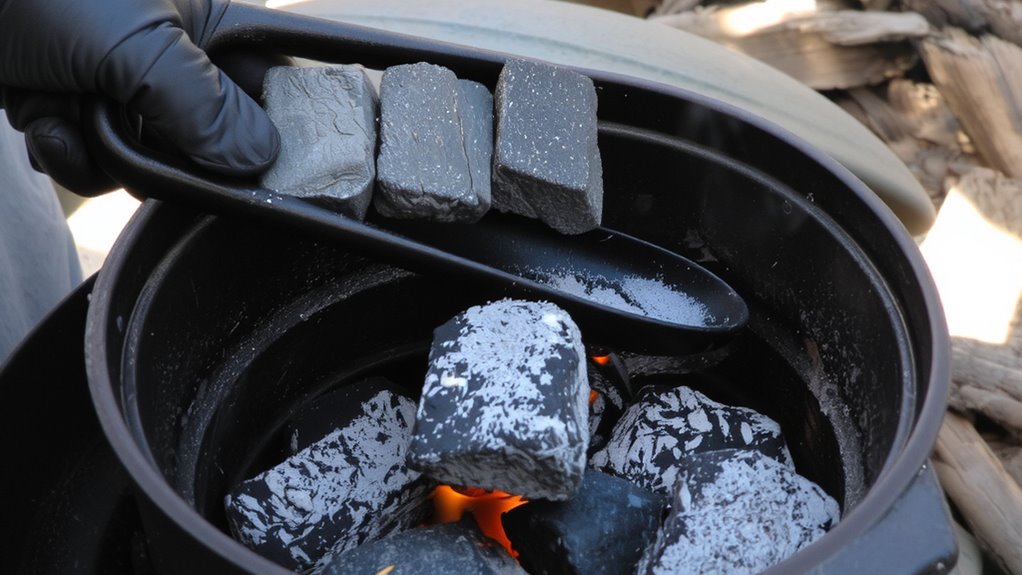
While maintaining clean coals is essential, how you move them matters just as much-transferring coals without spilling ash keeps your cooking environment controlled and your food free of residue. You’ll want to use a sturdy coal shovel or tongs designed for precision; they minimize ember scatter and prevent a coal smudge on your oven lid. Avoid rushing-quick, jerky motions increase the chance of ash shedding mid-transfer. Instead, lift coals smoothly and carry them close to the lid to reduce fallout. Tongs with grooved grips hold coals securely, decreasing slip risk, while a shallow shovel allows better control. If you see embers breaking apart during transfer, your tools may be worn or ill-suited. Consistent ember scatter not only wastes fuel but can compromise heat distribution. Over time, careful technique and the right tools drastically cut contamination risks, ensuring cleaner cooking and better-tasting meals.
Position the Lid to Keep Ash Out of Food
Keeping the cooking area free of ash starts the moment you move the coals, but your next move-how you place the lid-can make or break that effort. You’ve got to weigh grill placement and wind direction before settling the Dutch oven lid. Always position the lid with the raised edge facing upwind; otherwise, drifting ash will slide into your food. Wind direction isn’t just a detail-it’s a decisive factor in contamination control. If the breeze shifts, reposition the pot. Your grill placement should allow easy access from the leeward side, minimizing disturbance to settled ash. A well-seated lid, aligned with airflow, prevents unwanted particles from sneaking into the meal. Skilled outdoor chefs treat these small adjustments as essential, not optional. Precision here preserves flavor and safety. The right positioning doesn’t take extra time, but it shows respect for the craft.
Avoid Common Ash-Contamination Mistakes
Even when you’ve mastered the basics of handling coals, it’s easy to overlook subtle missteps that let ash sneak into your food. Using poor coal quality often leads to excess ash and inconsistent heat, increasing contamination risks during transfer. High-quality, lump hardwood charcoal burns cleaner and breaks down less, reducing loose particles. Your fire preparation matters just as much-let coals burn fully until covered in gray ash before moving them. Rushing this step leaves incomplete combustion byproducts that can flake off. Avoid poking or sliding coals aggressively; instead, lift them cleanly with tongs. Position your Dutch oven near the fire to minimize travel distance. Skipping these details undermines even careful lid placement. Proper technique from fire start to coal placement guarantees better control, cleaner cooking, and more reliable results when you’re cooking outdoors.
Keep Your Dutch Oven Meal Ash-Free
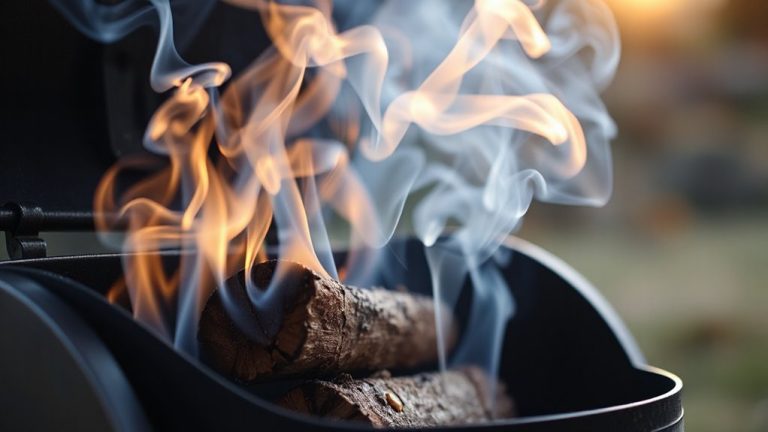
Since ash contamination can spoil an otherwise well-prepared Dutch oven meal, taking deliberate steps during coal transfer makes all the difference in flavor and cleanliness. Your success hinges on coal quality and precise heat control-two factors that directly impact how cleanly your fire burns and how much ash becomes airborne. High-quality, dry coals burn more completely and produce less residue, reducing the risk of grit in your food. Use tongs to gently place coals on the lid, avoiding abrupt movements that kick up ash. Consider these best practices:
| Technique | Benefit |
|---|---|
| Shake coals gently | Reduces ash release |
| Use screened coals | Improves coal quality |
| Position lid carefully | Enhances heat control |
| Tap lid before placing | Prevents ash transfer |
These steps ensure cleaner cooking and consistent results.
On a final note
You’ve got the tools and techniques to keep ash out of your Dutch oven meals. Brushing coals, using proper tongs, and careful lid placement make a real difference in flavor and safety. These steps aren’t just best practices-they’re essential for clean, consistent results in outdoor cooking. Skipping them risks contamination and uneven heat. Master these details, and your BBQ will perform better every time, delivering the quality your outdoor kitchen demands without compromise.