A Beginner’s Guide to Choosing the Right Gas Grill for Your Backyard
Choose a gas grill that fits your cooking habits and space-frequent grilling or large gatherings call for a durable, four- to five-burner model with 450–600+ square inches of cooking area. Opt for propane if you value portability, or natural gas for long-term savings and convenience. Don’t be fooled by high BTUs; even heat distribution matters more than raw power. Pick stainless steel burners and sturdy materials for longevity, and consider side burners and grease management for ease. Look for strong warranties and real-world performance-there’s more to master beyond the initial flame.
Notable Insights
- Match your grill size and features to how often you cook and how many people you typically serve.
- Choose propane for portability or natural gas for convenience and lower long-term fuel costs.
- Aim for a mid-sized three-burner grill with 450–600 square inches of cooking space for most households.
- Prioritize even heat distribution over high BTU ratings to avoid fuel waste and hot spots.
- Select grills with stainless steel burners, solid construction, and a 5+ year warranty for durability.
Match Your Grill to Your Cooking Style and Space
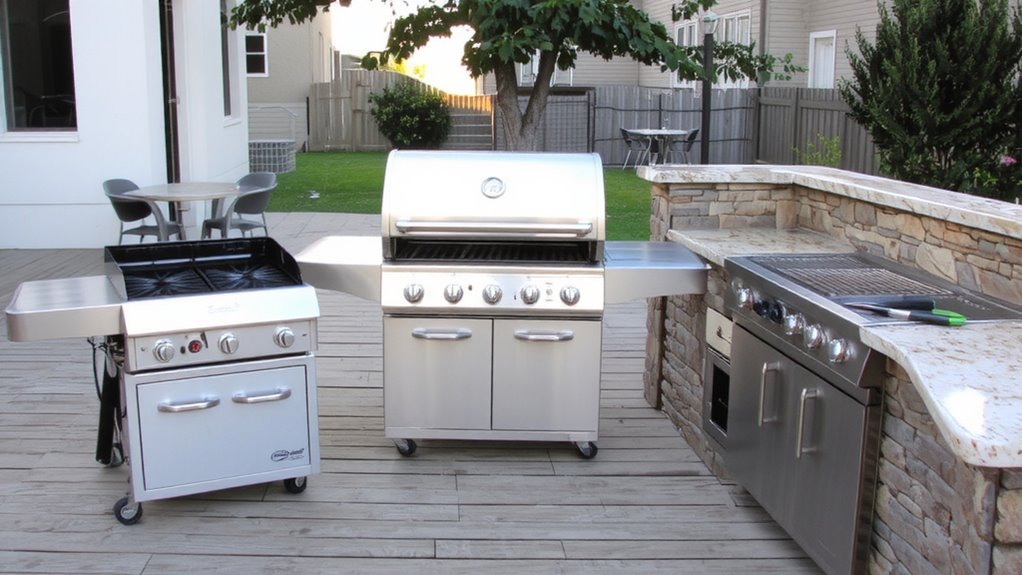
While your outdoor cooking habits and available space might seem like separate considerations, they’re actually deeply connected when picking the right gas grill. Your cooking frequency determines how durable and feature-rich your grill should be-grilling nightly demands a heavy-duty burner setup, while weekend use suits mid-range models. If you love hosting, you’ll need ample cooking space and side burners; for small families, compact grills work fine. Grill placement impacts both performance and safety-ensure at least 10 feet from structures, with good airflow and a level, non-flammable surface. Don’t tuck it too close to walls or overhangs. Consider traffic flow and proximity to the kitchen. A poorly placed grill, no matter how powerful, becomes more hassle than help. Think long-term: the right match between your style and space saves time, improves convenience, and enhances every cookout. For reliable options tailored to different needs, check out expert-tested best gas grills recommendations.
Propane vs. Natural Gas: Which Gas Grill Is Right?
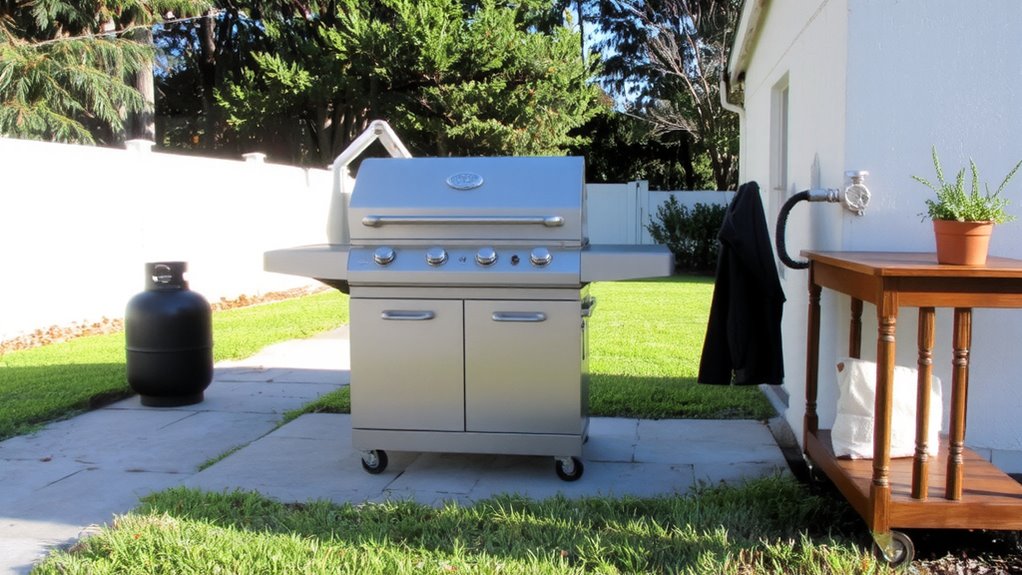
You’ve thought about your cooking habits and figured out the right size and setup for your outdoor space-now it’s time to evaluate what powers your grill. Propane and natural gas each offer distinct advantages. Propane grills heat up quickly and give you excellent flame control, making them ideal for precise searing or delicate foods. They’re portable, so you can take them on the go, but they cost more over time due to fuel refills. Natural gas grills connect to a permanent line, offering unmatched convenience and better fuel efficiency. You’ll never run out mid-cookout, and the cost per use is lower. While initial setup can be pricier, long-term savings and consistent performance make it worthwhile. Natural gas burns cleaner, too, reducing maintenance. Consider your access to gas lines, how often you grill, and whether convenience or flexibility matters most-both fuels deliver strong performance, but the right choice depends on your lifestyle.
Find the Right Gas Grill Size for Your Family
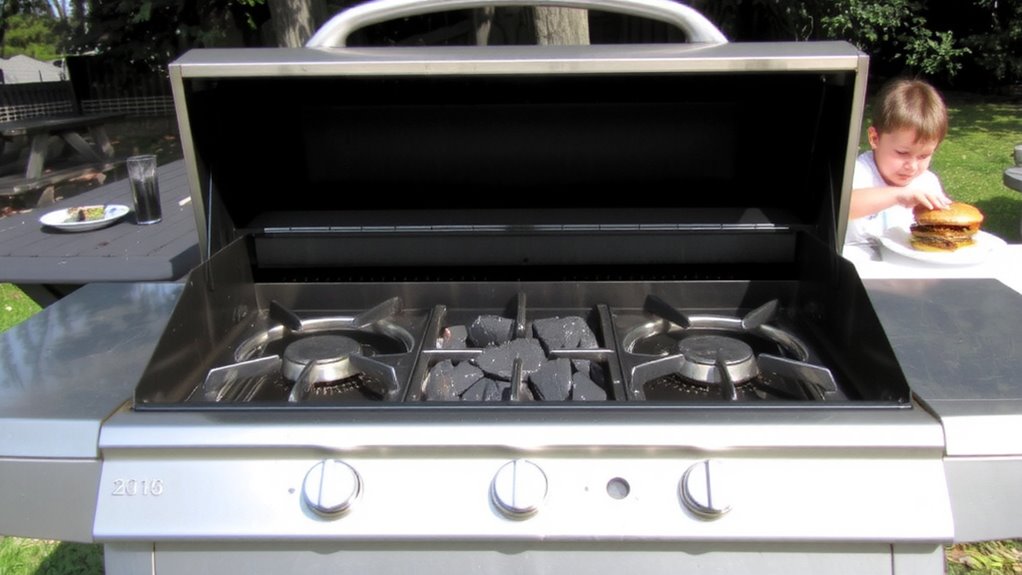
A mid-sized three-burner grill suits most families, striking a balance between cooking space and backyard practicality. You’ll want to take into account grill dimensions carefully-larger models offer more surface, but they need room to breathe and won’t overwhelm a small patio. For everyday use, 450–600 square inches of cooking area lets you grill burgers, veggies, and chicken comfortably. If you regularly host big gatherings, step up to a four- or five-burner model with expanded grill dimensions. Keep in mind that bigger grills demand more fuel, so check the fuel capacity-especially if using propane. A standard 20-lb tank lasts about 10–15 hours on medium heat, but larger grills may deplete it faster. Matching grill size to your household makes certain efficient performance, easier maintenance, and consistent results without wasting energy or space. For added flavor, consider pairing your grilling routine with a high-quality smoker rub that enhances the taste of meats and vegetables.
Do High BTUs Mean Better Cooking?
What does a high BTU rating really tell you about a grill’s performance? Not as much as you might think. While BTUs measure heat output, a higher number doesn’t guarantee better cooking. In fact, excessive BTUs can waste fuel and create hot spots if heat distribution is poor. True performance comes from balanced design, not just raw power. When making a BTU comparison, consider how evenly the grill spreads heat across the cooking surface.
| BTU Range | Heat Distribution Quality |
|---|---|
| 30,000 | Even, consistent results |
| 50,000 | Moderate, may have hot zones |
| 80,000+ | Often uneven without good design |
Optimal grilling depends more on engineering than brute force. A well-designed 30,000 BTU grill can outperform a 90,000 BTU model with poor heat distribution.
Choose Durable Materials and Must-Have Features
While power and heat output matter, what really determines a grill’s longevity and performance over time is the quality of its materials and the inclusion of key features designed for real-world use. You’ll want to prioritize stainless steel construction-it resists rust, handles high heat well, and stands up to the elements better than painted or coated metals. This material also conducts heat evenly, improving cooking consistency. Look for burners made from stainless steel too, since they last longer and resist corrosion. A side burner inclusion is another smart upgrade, giving you space to simmer sauces, boil corn, or sauté vegetables without crowding the main grill. It adds real kitchen functionality outdoors. Built-in thermometers, grease management systems, and sturdy cart frames also contribute to daily usability. These features aren’t luxuries-they’re practical investments that enhance control, safety, and long-term satisfaction with your backyard cooking setup. Charcoal grills like the kettle-style design offer exceptional heat retention and versatility for smokers and sear enthusiasts.
Skip These Common Gas Grill Buying Mistakes
If you’re aiming for long-term satisfaction from your outdoor cooking setup, overlooking build quality in favor of flashy features is a mistake you’ll regret. You might be tempted by digital controls or extra burners, but durable materials like stainless steel and cast-iron grates make a bigger difference over time. Check warranty coverage carefully-brands offering 5+ years on burners and housings often stand behind their craftsmanship. A limited warranty can signal lower confidence in longevity. Always read customer reviews to identify recurring issues like rust, ignition failure, or uneven heating. Real-world feedback reveals how grills perform after months of use, not just showroom appeal. Don’t ignore assembly difficulty or part availability mentioned in reviews. Cutting corners now could mean replacing parts-or the whole unit-sooner than expected. Balancing initial cost with proven durability and support saves money and frustration. Make informed choices, not impulse buys.
On a final note
You’ve weighed fuel types, space, and size, and now you see that high BTUs don’t guarantee better searing-heat retention and burner design do. Choosing the right materials, like stainless steel burners and cast-iron grates, guarantees longevity and consistent performance. Avoid common missteps, like overlooking ventilation or ignoring maintenance. Your ideal grill balances practicality with cooking precision, turning backyard meals into reliable, flavorful results season after season.