The Ins and Outs of Using an Infrared Burner in Your Outdoor Kitchen Setup
You get incredible heat fast with an infrared burner-up to 700°F in minutes-thanks to radiant energy that sears food directly, not the air. It’s more efficient than traditional grilling, with less heat loss and fewer flare-ups. Perfect for steaks, burgers, and veggies, it delivers restaurant-quality crusts. Just clean regularly, check for gas leaks, and always open the lid before igniting. Keep it covered and maintained, and you’ll see exactly how it transforms your outdoor cooking game.
Notable Insights
- Infrared burners use radiant heat from a ceramic tile or metal plate to deliver fast, efficient cooking at temperatures up to 700°F.
- They outperform traditional grills by minimizing heat loss, maintaining consistent temperatures, and reducing flare-ups during searing.
- Always open the lid before ignition and check for gas leaks to ensure safe startup and operation.
- Ideal for searing steaks, seafood, and vegetables, infrared burners create a flavorful crust through rapid Maillard reaction.
- Regular cleaning, cooling before maintenance, and protective covering extend burner life and prevent performance issues.
How Infrared Burners Work
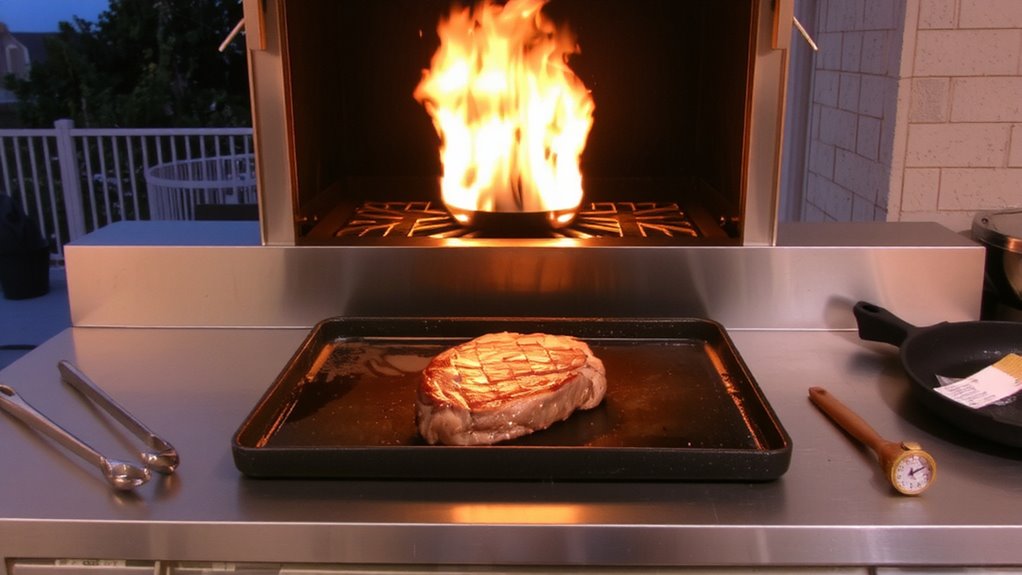
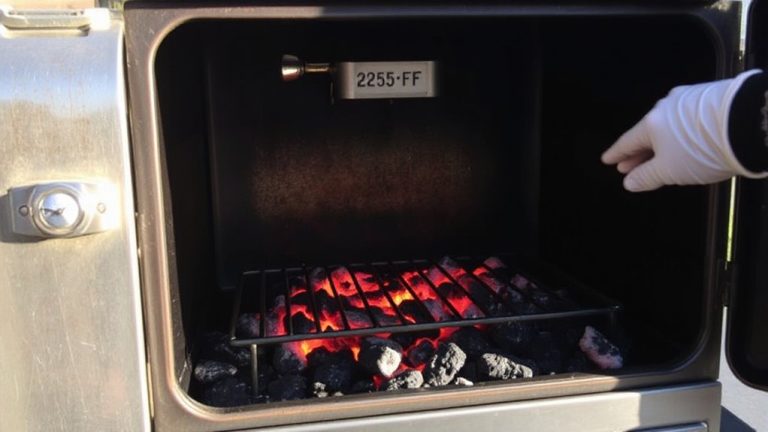
While traditional burners rely on convection to heat the air around your food, infrared burners work by radiating intense heat directly from a heated surface, and that makes all the difference when you’re searing steaks in your outdoor kitchen. You’re using radiant heat-energy transferred straight from the emitter, usually a ceramic tile or metal plate, to the food without heating the surrounding air. This method boosts thermal efficiency, meaning less fuel waste and faster temperature ramp-up, often hitting 700°F in minutes. Because the heat is so focused, you achieve better crust development with shorter cook times. You’ll notice less moisture loss in meats, which many find ideal for premium cuts. The system does require careful cleaning to prevent clogs in the burner ports, but maintenance is straightforward. Once you adapt your technique, the consistent, intense output gives you precise control you can’t always get with convection alone.
Why Infrared Beats Traditional Grills
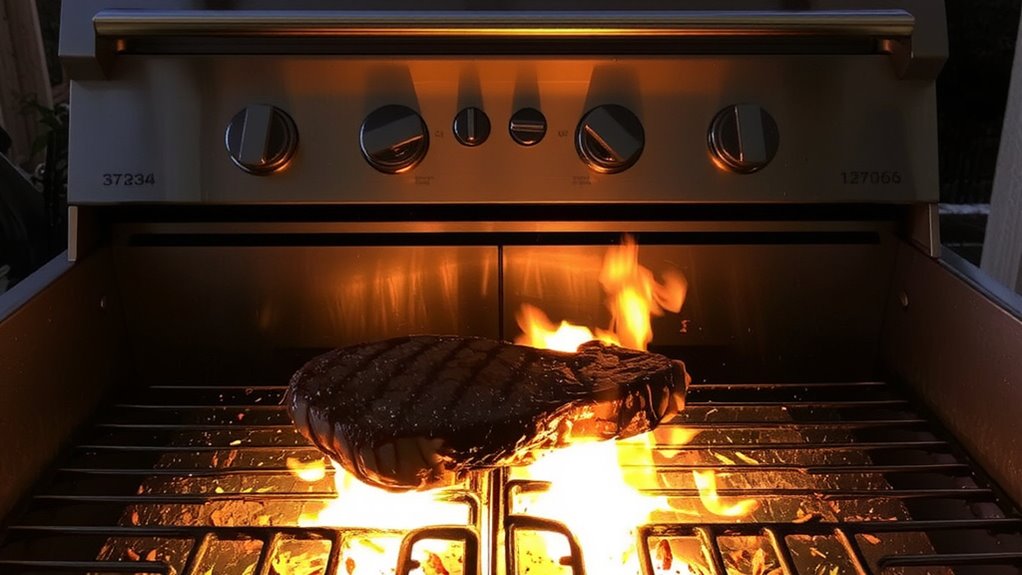
Since heat transfer efficiency is critical when searing thick steaks or delicate fish, you’ll find infrared burners outperform traditional grills by delivering focused radiant energy that minimizes ambient heat loss. With superior heat retention, they reach high temperatures faster and maintain them more consistently, giving you a perfect sear without overcooking the interior. Traditional grills rely on convective heat, which disperses and fluctuates, often leading to uneven results. In contrast, infrared’s direct energy transfer boosts energy efficiency, using less fuel for the same-or better-cooking performance. You’ll also notice shorter preheat times and fewer temperature drops when the lid’s open. Whether you’re searing scallops or reverse-searing a ribeye, the precision is unmatched. Plus, consistent heat retention reduces flare-ups, making control easier. While traditional grills have their place, infrared gives you a technical edge in speed, efficiency, and results-especially when cooking dense or delicate proteins.
Fire Up Your Burner the Safe Way
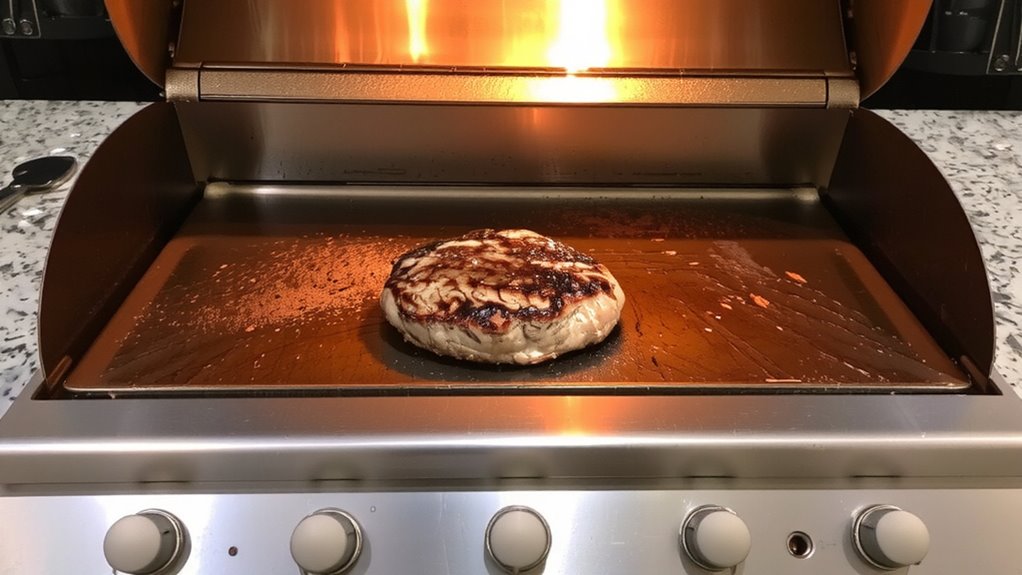
When firing up your infrared burner, it’s essential to follow the right steps to guarantee both safety and peak performance. Adhering to proper safety protocols minimizes risks like flare-ups or gas buildup. Always inspect connections and make certain the area is clear before ignition. Proper ignition timing-waiting a few seconds after turning the knob-allows gas to mix correctly, ensuring a smooth start.
| Step | Action |
|---|---|
| 1 | Check for gas leaks with soapy water |
| 2 | Open the lid to prevent gas accumulation |
| 3 | Turn the control knob and wait 3–5 seconds |
| 4 | Ignite using the push-button system |
Ignoring these guidelines can damage components or cause injury. Consistent use of safety protocols and correct ignition timing not only protects you but also extends your burner’s lifespan. In high-heat cooking, precision matters-for your food and your safety.
Best Foods for Infrared Searing
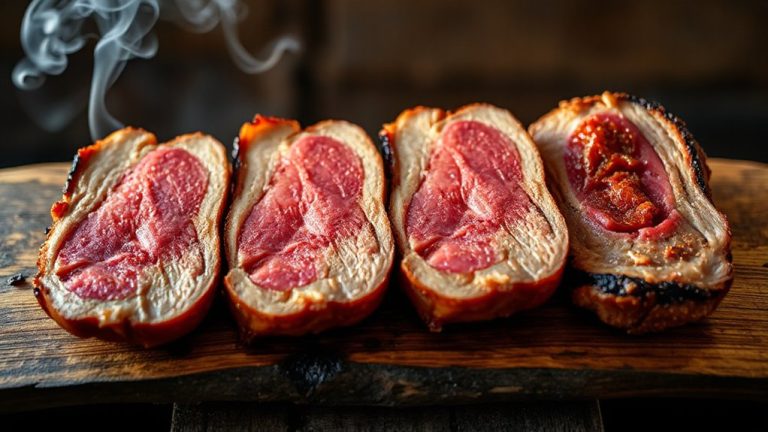
Steak is the undisputed champion of infrared searing, and for good reason. You get intense, direct heat-up to 700°F-that locks in juices fast, giving you perfectly seared, juicy steaks every time. The Maillard reaction kicks in almost instantly, creating a rich, flavorful crust without overcooking the interior. Thick-cut ribeyes, strip steaks, and filets respond exceptionally well thanks to the precise temperature control. But don’t stop at meat. Infrared’s even, radiant heat also excels with caramelized vegetables-think bell peppers, zucchini, and asparagus. They char beautifully without drying out, developing deep, smoky sweetness. Seafood like tuna or salmon benefits too, with crisp exteriors and tender centers. Even burgers gain a professional-quality sear that enhances taste and texture. Just remember: high heat demands attention. Overcooking happens fast, so watch closely. With practice, you’ll consistently achieve restaurant-grade results right in your outdoor kitchen, turning simple ingredients into standout dishes.
Gas vs. Infrared: What’s the Real Difference?
You’ve seen how infrared searing transforms steaks, vegetables, and seafood with speed and precision, but understanding what makes that possible starts with knowing the core difference between standard gas and infrared burners. Traditional gas burners heat the air around the food, relying on convection, which limits heat intensity and can waste energy. Infrared burners, however, use a ceramic or metal surface heated by gas flames to emit radiant energy directly to the food. This delivers far greater heat intensity-often exceeding 1,000°F-searing faster and locking in juices more effectively. The result? Better caramelization, less moisture loss, and noticeably bolder flavor. Infrared is also more energy efficient, transferring up to 60% more heat to the cooking surface compared to conventional gas. While gas offers control and gentler cooking, infrared excels when you demand peak heat and efficiency. For high-performance outdoor kitchens, infrared is often the smarter, more powerful choice.
Keep Your Burner in Top Shape
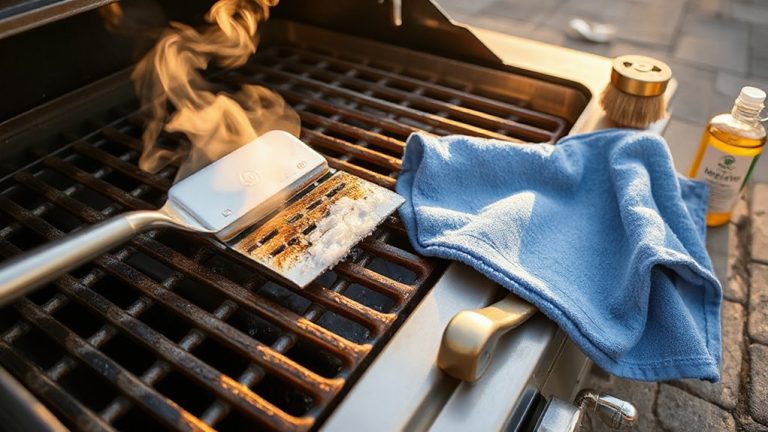
After each use, letting the burner cool completely before inspection guarantees you catch small issues before they become costly problems. Clean surfaces regularly with a soft brush or cloth to prevent grease buildup, which can impair heat distribution and ignite flare-ups. Grease and debris near the burner panel reduce efficiency and pose safety risks, so routine cleaning is non-negotiable. You should also check connections periodically-especially gas lines and fittings-for tightness and wear. Loose or cracked connections compromise performance and create gas leaks, a serious hazard. Inspect the emitter plate for warping or corrosion; replacing it early preserves heating consistency. Using a cover when the unit’s not in use shields it from moisture and debris. Proper care secures reliability and extends your infrared burner’s lifespan, making maintenance not just advisable but essential for anyone serious about outdoor cooking.
Get Restaurant-Quality Sear Every Time
While high heat alone doesn’t guarantee a perfect sear, an infrared burner gives you the intense, focused energy needed to caramelize the surface of meats quickly and evenly-just like in a professional kitchen. You achieve that desirable crust without overcooking the interior, thanks to consistent radiant heat up to 900°F. This rapid browning enhances flavor retention by locking in juices that traditional burners often lose. Unlike convective heat, which can fluctuate, infrared delivers direct energy transfer, reducing cook time and improving texture. Steaks, chops, and even vegetables develop a rich Maillard reaction-the hallmark of restaurant-quality results. For best outcomes, preheat the burner for five minutes and avoid overcrowding. Your food gets a perfect sear with minimal flare-ups, maximizing control and consistency. Infrared isn’t just about speed; it’s precision that elevates outdoor cooking from casual grilling to culinary performance. With proper use, flavor retention and visual appeal go hand in hand.
On a final note
You’ll get faster preheats and higher searing temps with an infrared burner, making it ideal for steaks and chops that need a crisp crust fast. While traditional grills offer broader versatility, infrared delivers unmatched precision and efficiency. Just mind the learning curve-hotter isn’t always better. With proper cleaning and careful use, your burner stays reliable. It’s a smart upgrade if you value restaurant-style results and consistent performance in your outdoor kitchen.