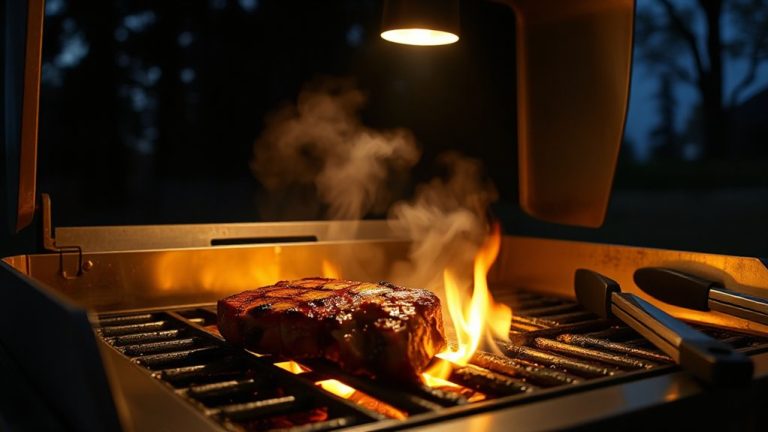
Roasting Raw Almond Shells Until Dark Brown to Deepen Their Smoke Contribution
Roast raw almond shells at 225°F to 250°F for two to three hours until deep brown-they’ll develop rich, nutty aromas and burn clean, enhancing your BBQ with layered smokiness. Properly roasted shells add complexity without bitterness, unlike scorched or blackened ones. Use uniform, dry shells, and store the finished batch in an airtight container away from light. You’ll find the technique refines your smoke profile, much like selecting aged wood-there’s more to how heat transforms natural lignins.
Notable Insights
- Roast raw almond shells at 225°F to 250°F for two to three hours to achieve a dark brown color and deepened smoke flavor.
- Ensure shells are dry and uniform in size before roasting to promote even thermal breakdown and consistent results.
- Use low, slow heat to gradually develop nutty and earthy aromatic compounds without scorching or bitterness.
- Cool roasted shells completely before storing in an airtight container to preserve flavor and prevent moisture absorption.
- Visually check for uniform dark brown color and crisp texture, avoiding blackened or charred shells that impart harshness.
Why Roasting Shells Boosts Flavor
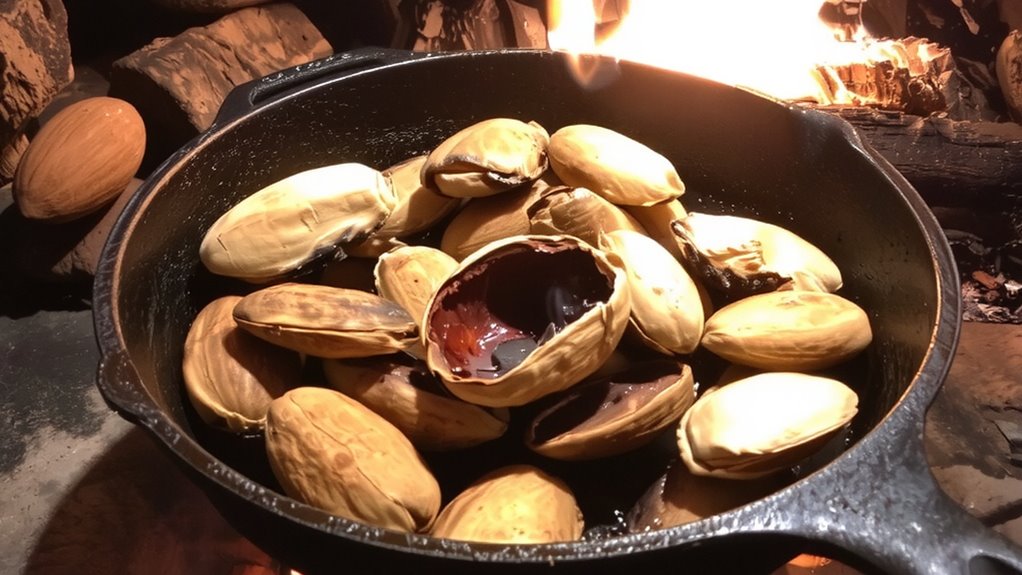
Flavor transformation starts with heat, and roasting almond shells reveals a depth you wouldn’t expect from a byproduct. You’re not just drying them out-you’re accessing flavor complexity through controlled thermal breakdown. As the shells darken, they develop aromatic compounds that raw ones simply lack. When used in smoking, these roasted shells contribute a subtle, nutty base note, enhancing the smoke enhancement of meats without overwhelming them. Unlike stronger woods, they burn clean and even, making temperature control easier. You’ll notice the smoke is less acrid, more rounded, especially useful in long cooks where balance matters. This isn’t a gimmick; it’s a refinement. Think of it like toasting spices: raw is flat, but roasted delivers presence. The result? A more layered smoke profile that complements, not dominates. You get richer barbecue, with nuance you can taste. It’s small moves like this that separate good from great.
Prep Raw Almond Shells for Roasting
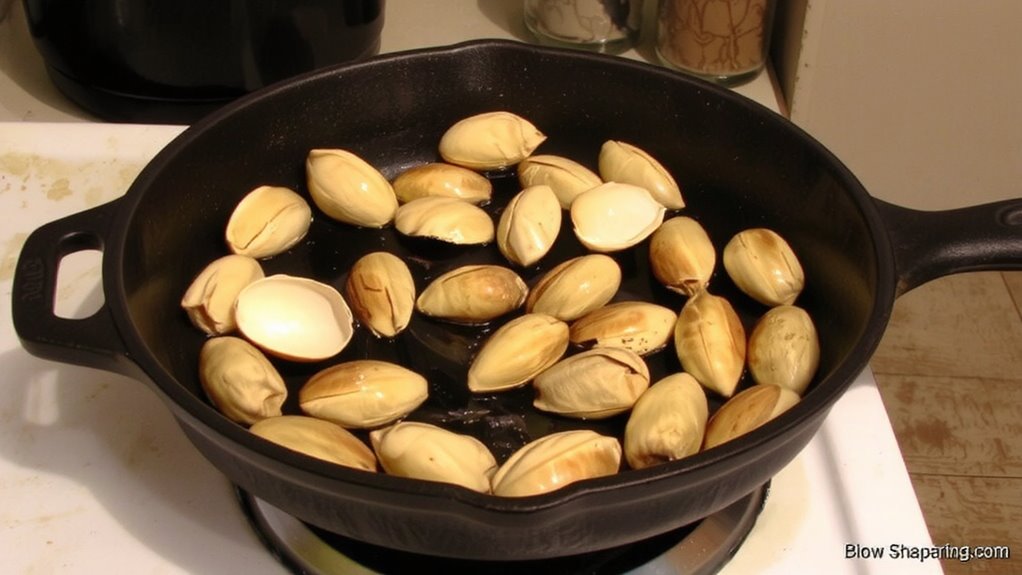
You’ve seen how roasting brings out the hidden potential in almond shells, turning a modest byproduct into a tool for nuanced smoke. Now, proper prep is key. Start with careful shell selection-look for dry, intact shells free of mold or residues; avoid any with a musty smell. Freshly hulled shells work best, as they retain natural lignins that enhance smoke complexity. Uniform size guarantees even roasting, so sift out overly fine or large fragments. Moisture control is just as critical. Shells straight from storage often carry ambient humidity, which can lead to steaming instead of toasting. Spread them in a single layer and air-dry for a few hours, or use a low oven (around 200°F) for 10–15 minutes to drive off surface moisture. Let them cool completely before roasting-this stabilizes them for consistent thermal breakdown. Proper prep sets the foundation for deeper, cleaner smoke.
Roast Almond Shells Low and Slow
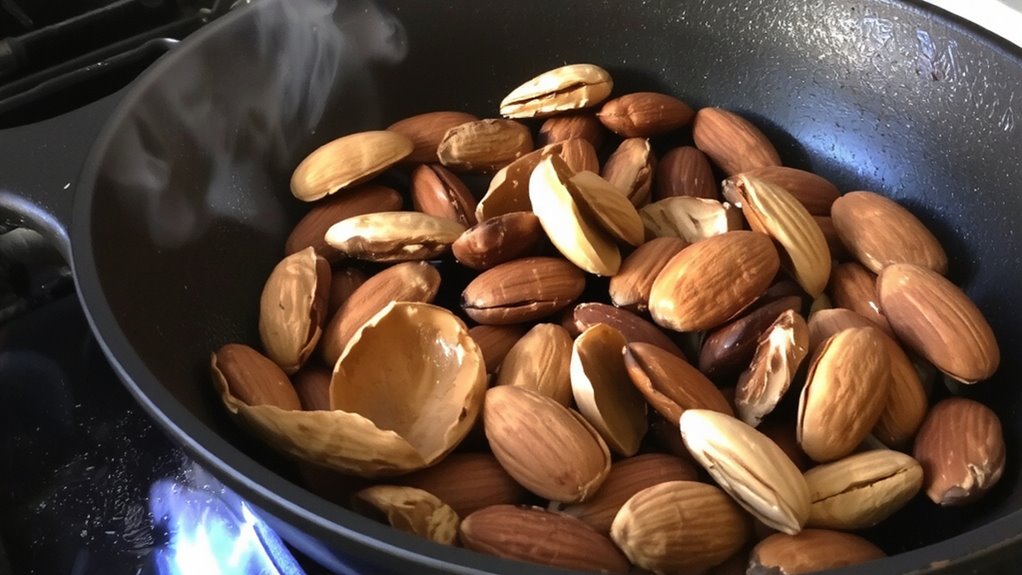
While high heat might seem efficient, it tends to scorch almond shells before they release their full aromatic potential, so sticking to a low and slow approach makes all the difference. You’ll want to set your smoker or oven between 225°F and 250°F, letting the shells roast gradually over two to three hours. This steady, gentle heat allows for ideal smoke infusion, drawing out subtle nutty and earthy notes without burning. It also supports effective flavor layering-essential when you’re building complex profiles in BBQ. The shells develop a deeper, richer essence that complements meat without overpowering it. Rushing the process compromises both aroma and texture, yielding harsh, acrid undertones. But when done right, the shells contribute a nuanced smokiness that enhances everything from ribs to beans. This method isn’t flashy, but it’s proven-precision and patience beat speed every time in serious outdoor cooking.
How to Tell When Shells Are Done
A steady roast sets the foundation, but knowing when almond shells have reached their peak requires close attention to sensory cues. You’re looking for a deep brown hue and rich aroma that signals ideal smoke development. Check for color consistency across batches-uneven tones mean inconsistent roasting. Surface texture should shift from brittle to slightly resilient, snapping cleanly when pressed. Over-roasted shells turn black and ashy, sacrificing nuance for bitterness.
| Roast Level | Color Consistency | Surface Texture |
|---|---|---|
| Underdone | Light, patchy | Hard, raw |
| Ideal | Uniform dark brown | Crisp, fragile |
| Overdone | Blackened | Powdery, brittle |
| Burnt | Charred, glossy | Ash-like |
Trust your eyes and nose-when color and texture align, you’ve hit the mark.
Use Roasted Shells in Rubs and Broths
Roasted almond shells bring a surprising depth to savory preparations when applied with intention. You can crush them finely to blend into smoky rubs, where their charred essence amplifies the flavor of meats without overpowering. Their low moisture and high surface area allow them to bond well with spices, creating a crust that holds up under grill heat. For broth enrichment, simmer coarse shells alongside aromatics-the subtle bitterness and woody notes elevate soups, especially bean or root-vegetable varieties. They won’t thicken, but they do contribute a background complexity similar to smoked paprika or grilled onion. Use sparingly, as their intensity builds quickly. These applications let you repurpose shells without compromising quality. While not as potent as wood chips, they offer a nuanced, sustainable smoke element that aligns well with backyard BBQ practices focused on resourcefulness and layered flavor.
Store Roasted Almond Shells Properly
Every batch of roasted almond shells you set aside needs protection from moisture and heat to preserve its smoky integrity. Store them in an airtight container, like a glass jar or resealable metal tin, to guarantee moisture prevention and maintain flavor potency. Keep the container in a cool, dark place-such as a pantry or cupboard-away from stoves or windows that expose it to temperature swings. Properly stored, your shells can retain their aromatic quality for up to six months, making storage duration a key factor in long-term BBQ planning. Avoid plastic bags, which don’t offer adequate moisture prevention and can degrade over time. While almond shells aren’t meant to replace traditional smoking woods, they’re a nuanced addition when blended. Their performance is best when freshness is prioritized-so label your container with the roast date and monitor shelf life carefully.
On a final note
You’ve accessed deeper smoky depth by roasting almond shells low and slow. This technique intensifies flavor without bitterness, making the shells ideal for rubs or broths. Proper toasting guarantees consistent smoke output, enhancing grilled dishes with subtle nutty complexity. Stored correctly, they last weeks. While not a pantry staple, they’re a smart addition to any outdoor cook’s toolkit-practical, aromatic, and cost-effective when used intentionally.