Using Lemon Balm to Infuse Citrus Notes Into Grilled Seafood Glazes
Pick fresh lemon balm just before flowering and in the morning for the brightest citrus notes. Chop it finely and add it at the end of cooking to preserve its volatile oils. Mix with honey and olive oil, or infuse into a tea base to replace lemon juice in glazes. Use during the last few minutes of grilling to maintain fragrance. Layer sprigs under fish or in foil to steam in flavor without burning. You’ll find even oily seafood takes on a bright, herbal lift when prepared this way-there’s more to mastering this balance than meets the eye.
Notable Insights
- Harvest lemon balm before flowering and in the morning for the highest concentration of aromatic oils.
- Finely chop fresh leaves and add them at the end of cooking to preserve volatile citrus compounds.
- Steep lemon balm in hot water to create a concentrated tea that replaces lemon juice in glazes.
- Combine lemon balm tea with honey, olive oil, or soy-based mixtures to enhance grilled seafood flavor.
- Apply glazes with lemon balm during the last 3–5 minutes of grilling to maintain fragrance and adhesion.
How to Prepare Lemon Balm for Glazes
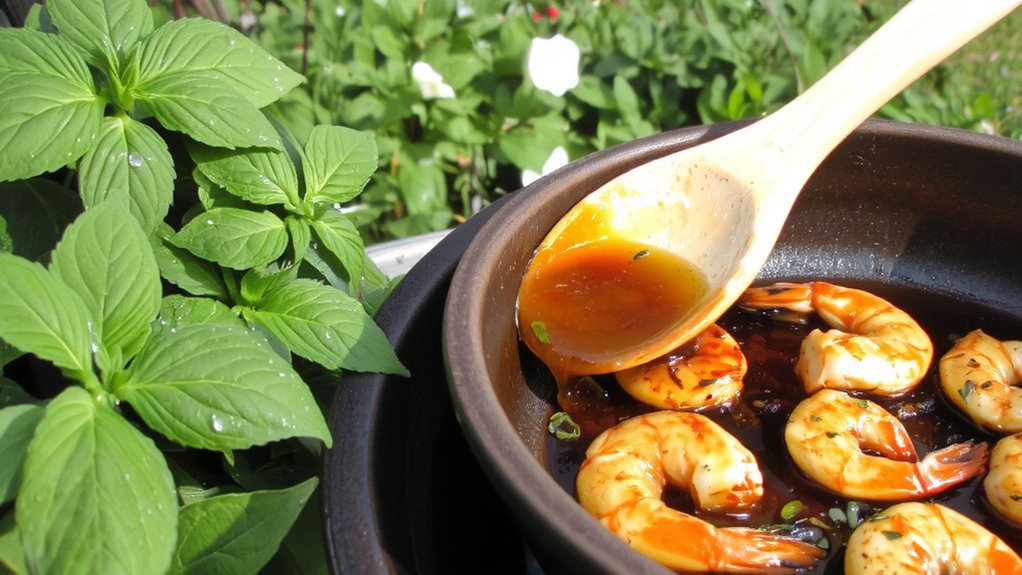
Freshly harvested lemon balm brings a bright, citrusy aroma to grilled seafood glazes-without the acidity of lemon-making it a standout herb for delicate flavor balance. You’ll want to use the tender stems and leaves, finely chopping about 2–3 tablespoons per ½ cup of glaze base for maximum impact. This quantity delivers a noticeable but not overpowering lemony flavor, especially when paired with garlic, honey, and a drizzle of olive oil. These ingredients support the herb’s aromatic profile without masking its subtlety. For best results, add your fresh lemon balm at the very end-just before you Remove from heat. That way, the volatile oils stay intact, preserving the herb’s vibrant character. You can even substitute up to half the basil or mint in a recipe with lemon balm to introduce bright, herbal citrus notes seamlessly. It’s a small tweak that elevates grilled seafood with minimal effort.
Pick Fresh Lemon Balm for Stronger Flavor
You’ve already learned how to prep lemon balm to enhance grilled seafood glazes, but getting the most flavor starts long before chopping or cooking-it begins with the harvest. To pick fresh lemon balm at its peak, harvest before it flowers, when the essential oils are most concentrated. Do this in the morning, after the dew dries, to capture the highest levels of aromatic compounds. Use fresh lemon balm immediately, as volatile oils degrade quickly once picked. Select vibrant, unblemished fresh leaves-they deliver the strongest, most lovely lemony punch. When you use fresh lemon balm leaves right after harvesting, your glaze gains brightness and depth you can’t achieve with older or dried herb. Plus, regularly picking fresh lemon balm encourages bushier plants and boosts future yields. For the most flavorful results on the grill, never skip this critical step-freshness makes all the difference.
Blend Honey and Olive Oil With Lemon Balm
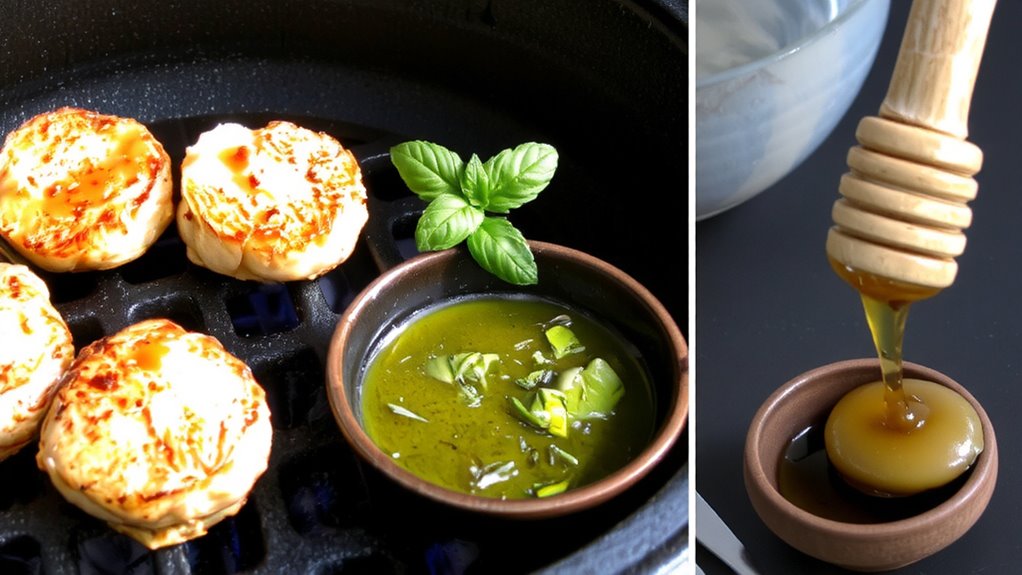
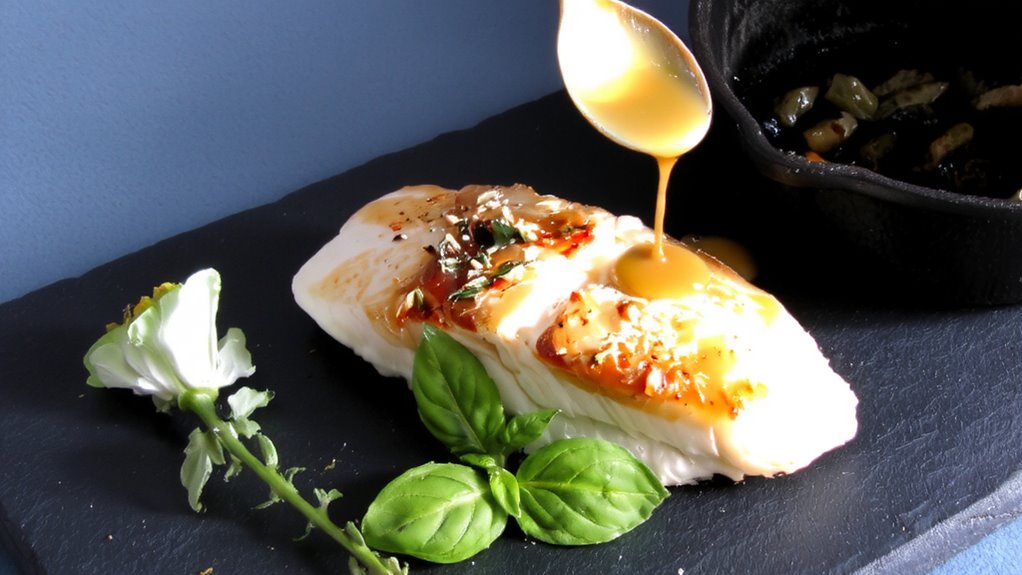
A well-balanced glaze can elevate grilled seafood from simple to exceptional, and combining honey, olive oil, and lemon balm delivers just that. Start by gently heating 1/2 cup olive oil and 1/3 cup honey to thin the honey slightly-this helps the flavors marry without scalding. Stir in 1/4 cup of finely chopped fresh lemon balm leaves, which add a bright, citrusy note without acidity. Let the mixture steep for at least 30 minutes, then strain to remove leaf particles. While you don’t need to blend until smooth for a brushed glaze, doing so creates a sleek texture that adheres evenly. This honey and olive oil blend enhances delicate grilled seafood like salmon beautifully, especially when applied during the last five minutes of cooking. Store leftovers in a sealed jar in the fridge for up to two weeks, though best flavor comes from freshness.
Infuse Glazes With Lemon Balm Tea
While many rely on citrus juice to brighten grilled seafood glazes, switching to lemon balm tea delivers a more nuanced lift without the sharp tang. You can make this aromatic base by steeping 3 tablespoons of fresh lemon balm leaves in 8 oz of boiling water for 10 minutes, creating a concentrated brew ideal for an infused glaze. Replace lemon juice with this tea in recipes to add bright, herbal notes without acidity-perfect for delicate grilled seafood. For a balanced honey glaze, simmer ¼ cup of lemon balm tea with 2 tablespoons of honey until thickened. You can also blend the tea with olive oil, Dijon mustard, and garlic for a marinade-glaze hybrid, or reduce it with brown sugar and soy sauce in a 2:1 ratio for a glossy finish on shrimp or scallops. This method elevates flavor while maintaining control over sweetness and depth.
Use Lemon Balm to Enhance Salty, Oily Fish
When working with rich, oily fish like salmon or swordfish, lemon balm proves especially effective at brightening the flavor without relying on acidity to cut through the fat. You’ll find that lemon balm’s mild, citrus-like notes lift the taste of salty oily fish, balancing intensity with herbal freshness. Try a marinade of chopped lemon balm, honey, apple cider vinegar, and mustard-let it work for four hours to deepen flavor without overpowering. Tucking whole sprigs under or over fillets before cooking infuses a delicate aroma, especially when steaming in parchment. For grilled seafood, brush on a warm glaze of lemon balm and honey to create a savory-sweet crust that complements natural oils. Even in herb-infused oils or butter, lemon balm enhances richness while mellowing any overly fishy tones, making it a smart, aromatic upgrade in outdoor cooking.
Grill Seafood Without Losing Fragrance
Because preserving the delicate aroma of lemon balm is key to elevating grilled seafood, you’ll want to adjust both technique and timing to protect its volatile oils. When you grill seafood, the goal is to lock in fragrance without scorching the herb. Add lemon balm by layering whole sprigs inside foil or parchment packets-this traps aromatic steam and gently infuses the fish. You can also place stems under salmon or swordfish on the grate; this lifts the fish slightly and allows subtle lemony notes to rise while shielding the herb from direct flames. Avoid high heat when grilling, as intense temperatures degrade lemon balm’s fresh, citrus-like scent. Instead, brush on glazes with lemon balm and olive oil or butter during the last 3–5 minutes to maximize fragrance retention. This method guarantees your grilled seafood stays fragrant, balanced, and true to the herb’s bright character.
Store or Reuse Leftover Lemon Balm Glaze
To make the most of your leftover lemon balm glaze, storing it properly is key-transfer it to an airtight container and refrigerate for up to a week, or freeze in ice cube trays for longer use. If you plan to reuse the glaze later, freezing is your best bet; just pop the cubes into a labeled freezer bag and store them for up to three months. When ready to use, gently reheat the leftover glaze on the stove or in the microwave to regain its smooth, pourable texture. Don’t let that citrus-herbal flavor go to waste-use it as a marinade for chicken or fish, letting proteins soak up the bright lemon balm notes for at least 30 minutes. Or stir a spoonful into warm grains or roasted veggies. Smart storage means your glaze keeps delivering flavor beyond the grill.
On a final note
You’ll find lemon balm elevates grilled seafood glazes with bright, citrusy depth without overpowering delicate flesh. When infused properly-whether fresh, steeped in tea, or blended into oil-the herb enhances fatty fish like salmon while balancing salty notes. Its volatile oils degrade under high heat, so add glaze late in grilling to preserve fragrance. Stored correctly, leftover glaze keeps flavor for days, making it both efficient and impactful for outdoor cooking.