The Ultimate Guide to Selecting and Preparing the Ideal Rubs for Grilling Success
You’re building flavor from the start, and the right rub makes all the difference. Match delicate meats like chicken or fish with herbal blends featuring thyme or dill, while bold spices like smoked paprika and cumin elevate beef or pork. A great rub balances salt, sugar, and aromatics-press it on firmly and let it rest for at least 30 minutes. Dry rubs create better crust than marinades, especially under high heat. For even deeper flavor, timing and ingredient texture matter-find out how to perfect each layer of taste.
Notable Insights
- Match rub ingredients to meat type-delicate proteins suit herbs like thyme, while beef and lamb thrive with bold spices like smoked paprika.
- Choose sweet, smoky, or spicy rub profiles based on desired flavor, using sugar for caramelization, paprika for smoke, or chipotle for heat.
- Build balanced dry rubs with essential ingredients like kosher salt, garlic powder, onion powder, and dried herbs for depth and even seasoning.
- Press the rub firmly into the meat using circular motions, focusing on thicker areas, and avoid damaging delicate proteins like fish.
- Apply rubs at least 30 minutes before grilling-or up to 24 hours in advance-and refrigerate for deeper flavor penetration.
Matching Rubs to Your Meat
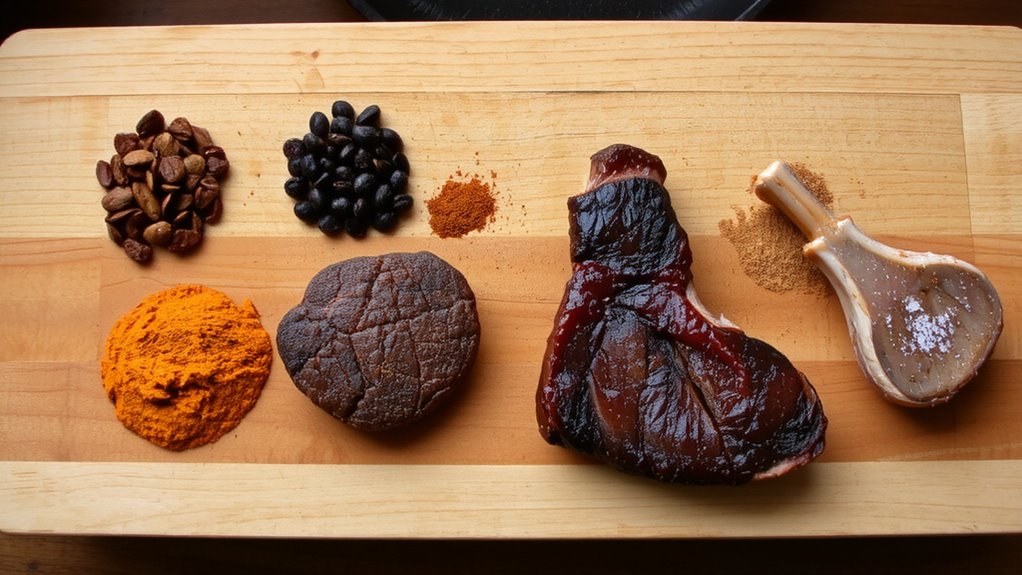
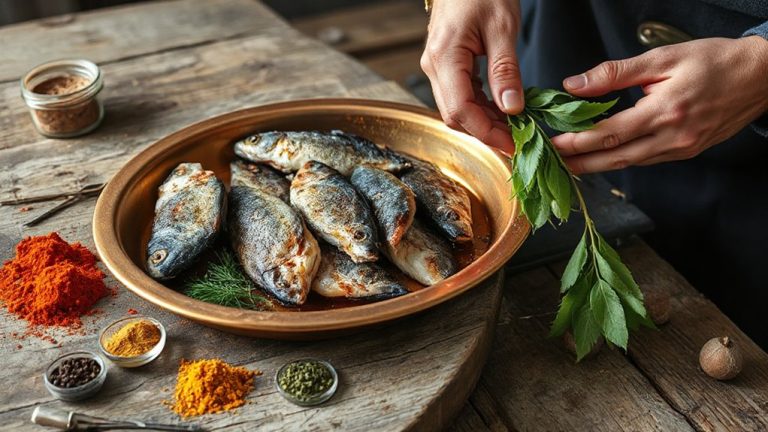
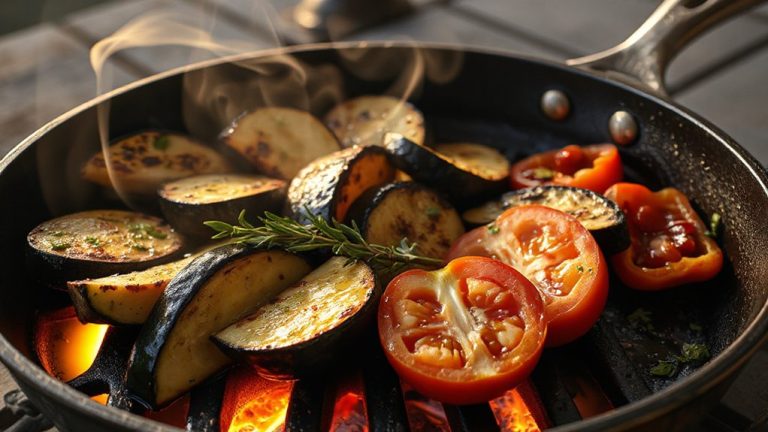
While some rubs claim to be universal, you’ll get the best results when you match the seasoning blend to the type of meat you’re grilling-different proteins absorb and react to flavors in distinct ways. You see, herb pairings aren’t just for sauces; they matter in rubs too. Delicate fish or chicken responds well to thyme, dill, or rosemary, which complement without overpowering. Heavier meats like beef or lamb stand up to bold mixes with oregano, sage, or smoked paprika. Equally important are meat textures-tender cuts absorb seasoning quickly, so finer rubs work best. Tougher, fibrous meats benefit from coarser blends that cling longer and penetrate slowly during extended grilling. Applying the right rub enhances natural flavors rather than masking them. You’ll notice better crust formation and depth of taste when seasoning aligns with both protein type and cooking method. Matching rubs to your meat isn’t fussy-it’s strategic, and it makes all the difference. For even more precision, consider exploring the top-rated blends in our roundup of the best BBQ rubs.
Sweet, Smoky, or Spicy Grill Rubs?
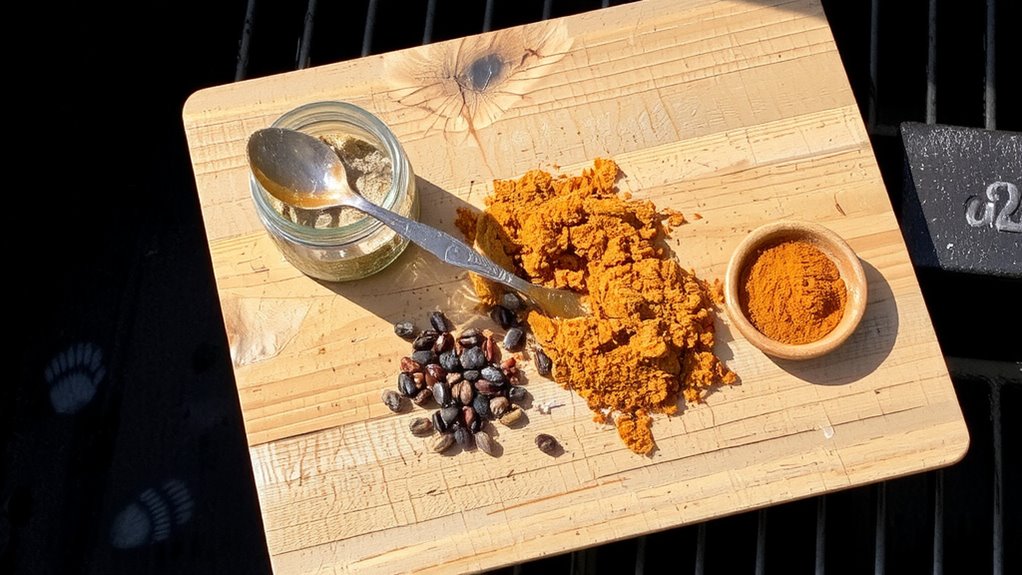
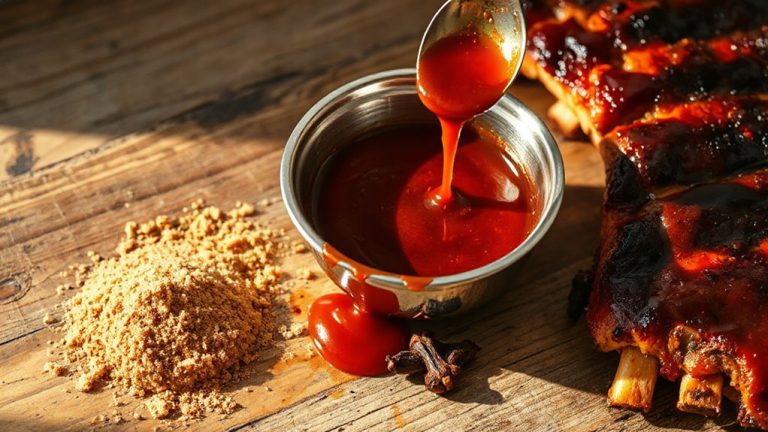
Flavor profile is your blueprint when choosing a rub-think of it as the foundation that’ll shape every bite. If you crave depth with a touch of sweetness, go for rubs that lean into molasses or brown sugar; they caramelize beautifully, especially under a honey glaze applied in the final minutes of grilling. Smoky blends, often built on paprika or smoked salt, deliver rich, char-kissed notes ideal for ribs or brisket. For those who like a kick, chipotle heat brings both spice and earthy warmth, perfect for chicken or pork where boldness shines. Sweet rubs balance heat and caramelization, smoky ones emphasize authenticity, while spicy variants energize bland cuts. Each profile alters the eating experience dramatically-consider your meat and method. A honey glaze amplifies sweetness, while chipotle heat can dominate if not balanced. Choose deliberately, knowing each element directly influences the final flavor. Based on expert testing and taste evaluations, the top-performing blends offer a balanced mix of herbs, sugar, and salt, making Best BBQ Rubs a reliable starting point for beginners and pros alike.
Build Your Own Grill Rub: Key Ingredients
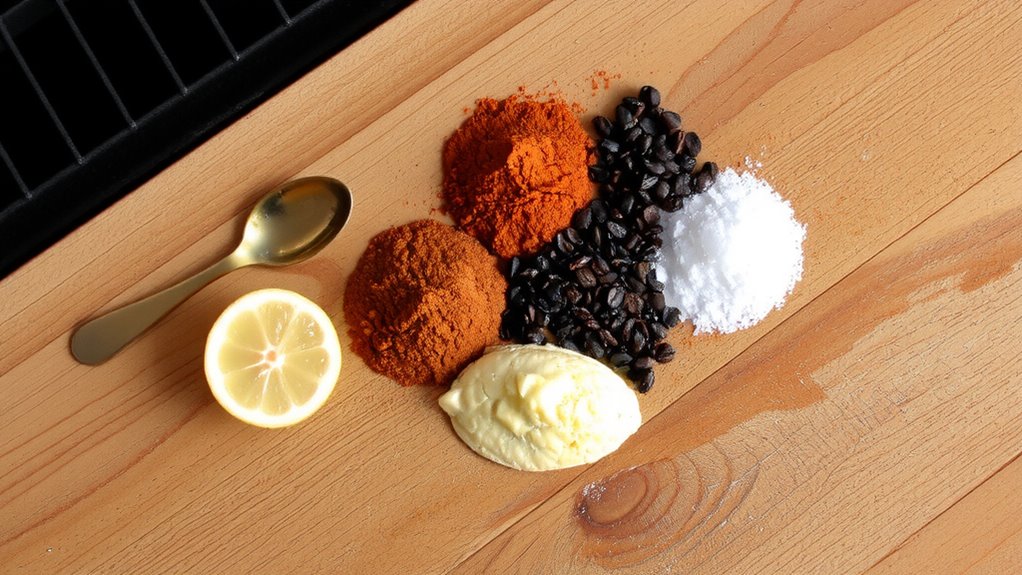
A well-crafted grill rub starts with the right mix of foundational ingredients, each bringing something essential to the heat. You need a solid salt balance-too little and your meat falls flat; too much, and it overpowers. Use kosher salt for even dissolution and consistent seasoning. Next, consider your herb selection: dried thyme, oregano, and rosemary add earthy depth, while parsley brings a subtle brightness. Pair these with bold spices like smoked paprika or cumin to build complexity. Sugar helps with caramelization, but keep it modest unless you’re grilling at lower temps. Freshly cracked black pepper adds bite without harshness. Don’t overlook garlic and onion powder-they’re stable, potent, and distribute evenly. Together, these components create a harmonious rub that enhances, not masks, your meat’s natural flavor. Thoughtful combinations matter more than quantity-precision wins every time. For those buying pre-made blends, consider the quality and freshness of ingredients, as top-rated BBQ rubs often feature balanced spice profiles and minimal fillers.
How to Apply a Grill Rub for Maximum Flavor
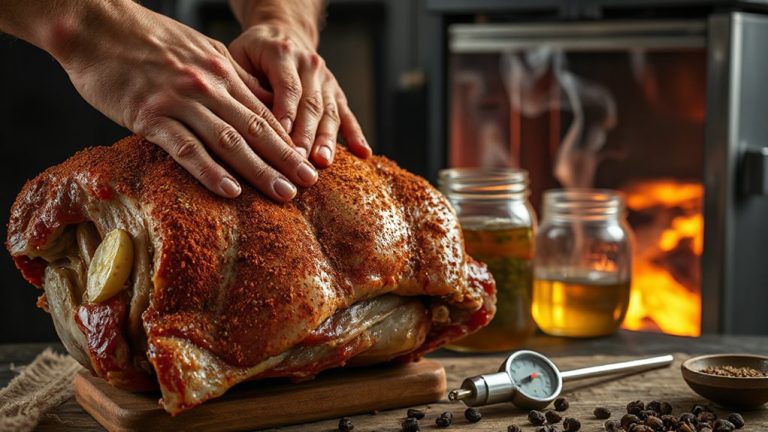
Since applying a rub properly can make or break the final result, it’s worth paying close attention to technique. Your application technique directly impacts flavor penetration, so don’t just sprinkle-press the rub firmly into the meat’s surface. This guarantees better adhesion and helps the spices interact with the protein. For even coverage, use your hands and work in circular motions, focusing on thicker areas that benefit from extra seasoning. Apply the rub at least 30 minutes before grilling, ideally up to 24 hours in advance, and let the meat rest refrigerated. This wait time allows deeper flavor penetration and helps form a flavorful crust when seared. Avoid rubbing too aggressively on delicate meats like fish, where gentler seasoning preserves texture. Proper timing and pressure make a significant difference, transforming a good grill job into a great one.
Dry Rub vs. Marinade: What’s the Difference?
What really sets a dry rub apart from a marinade, and which one should you reach for when planning your next cook? The core difference lies in the dry vs. wet application. A dry rub is a mix of spices, herbs, and particularly salt content, pressed directly onto meat to form a flavorful crust. It enhances texture and deepens flavor without moisture. Marinades, however, are wet solutions-usually oil, acid, and seasonings-that tenderize and infuse, especially in tougher cuts. While both boost taste, dry rubs deliver more concentrated flavor and better sear, since they don’t steam the surface. Marinades offer penetration but can dilute natural juices if overused. Salt content is often higher in dry rubs, helping with moisture retention and seasoning depth. For bold, smoky profiles on steaks or ribs, go dry. For lean meats needing tenderness, like chicken breasts or flank steak, a wet marinade works better.
Timing Your Rub and Grill for Best Results
You’ve picked your method-dry rub for bold crust, marinade for tenderizing-but the clock starts the moment you apply it, and timing plays a big role in how your flavors develop and sear. Rest timing is critical: let meat sit with a dry rub for at least 30 minutes to form a pellicle, or up to 24 hours in the fridge for deeper seasoning. Marinades need 2–12 hours, depending on cut thickness. Going too long can turn texture mushy. Grill temperature must match your strategy-high heat (400°F+) locks in crust fast, while low-and-slow (225–275°F) benefits tougher cuts with long rest timing.
| Cut Type | Rest Timing | Grill Temperature |
|---|---|---|
| Chicken thighs | 1–4 hours | 375°F |
| Pork shoulder | 8–12 hours | 250°F |
| Steak | 30 min – 2 hours | 450°F |
| Fish fillets | 15–30 min | 350°F |
The 5 Elements of a Great Grill Rub
A well-crafted grill rub isn’t just seasoning-it’s the foundation of flavor that transforms raw protein into something memorable. You need five key elements to get it right. First, flavor balance-sweet, salty, spicy, smoky, and umami should complement, not overpower. Second, ingredient freshness matters; stale spices lose potency and depth. Third, texture plays a role-too fine and it burns, too coarse and it won’t adhere. Fourth, salt content must be intentional; it enhances flavor but can dry out meat if excessive. Finally, cohesion-your rub should form a light crust, or “bark,” enhancing moisture retention and complexity. When you combine these elements thoughtfully, your rub doesn’t just sit on the surface-it integrates, sizzling into a flavorful crust that elevates grilled chicken, ribs, or steak. You’ll notice the difference in every bite: layered, rich, and distinctly intentional, not haphazard.
On a final note
You’ve now got the tools to choose and use rubs that elevate your grilling. A well-crafted rub enhances, not masks, the meat’s natural flavor. Whether sweet, smoky, or spicy, the right balance of sugar, salt, and spices creates a flavorful crust. Applying it properly-and timing it right-ensures deep seasoning. Dry rubs offer simplicity and texture, while marinades add moisture. Mastering these elements gives consistent, restaurant-quality results every time.