Campfire Cooking Without Specialized Equipment: Using Found Materials
You can cook effectively over a campfire using only natural materials. Use dry, seasoned hardwoods like oak or maple for clean, steady heat and easy ignition. Roast food on stripped green wood skewers from hickory or maple-they resist burning and stay cool to handle. Boil water by heating dense river rocks in the fire and transferring them with green wood tongs into a watertight container. Build a rock oven with flat, heat-retaining stones arranged in a dome to trap radiant heat for baking. Grill directly on stable, crack-free flat rocks or a simple grate lashed from green hardwood sticks, ideal for fish or veggies. Wrap meals in large leaf packets to steam gently over coals, locking in moisture and flavor. Each method leverages nature’s tools for reliable, versatile cooking without gear. You’ll find even more ways to master flame-free techniques with time-tested adjustments.
Notable Insights
- Use dry, seasoned hardwoods like oak or maple for clean, safe campfire cooking with consistent heat and less smoke.
- Roast food on green wood skewers made from straight hardwood branches, which resist burning and reduce hand burn risks.
- Boil water by heating dense, dry river rocks in a fire and transferring them into a watertight container using green wood tongs.
- Bake food in a rock oven built from flat, dense stones that absorb and radiate heat after being heated by a fire.
- Grill over the fire using stable flat rocks or a grate made from lashed green hardwood sticks for even, adjustable cooking.
Use Dry Wood for a Safe Cooking Fire
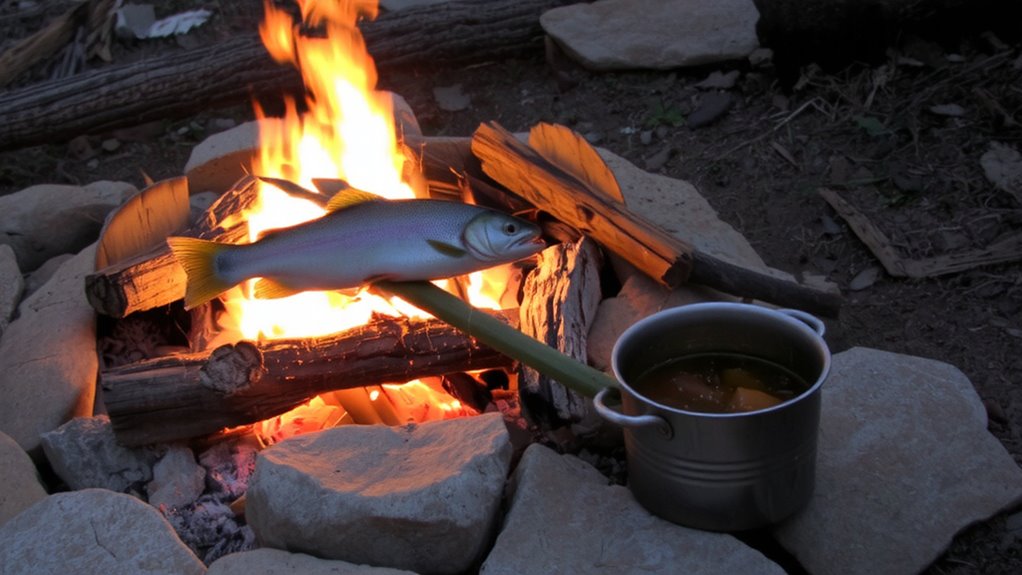
A well-built campfire starts with the right fuel, and when it comes to safe and effective outdoor cooking, dry wood is your best bet. You’ll want to prioritize wood selection-dry, seasoned hardwoods like oak, maple, or hickory burn cleanly and produce consistent heat, essential for even cooking. Wet or green wood smolders, creates excess smoke, and can impart unpleasant flavors. More importantly, it poses a fire safety risk due to unpredictable flare-ups and difficulty maintaining control. Properly dried wood ignites easier, sustains steady flames, and minimizes sparks-key when managing open flames without modern equipment. You should check wood for dryness by tapping two pieces together; a hollow sound indicates low moisture. Always clear debris around your fire ring and keep a water source nearby. Smart wood selection isn’t just about performance-it’s a core component of responsible fire safety in any outdoor setting. For optimal results, choose from the best fire pit wood picks that combine efficiency, heat output, and cleanliness for cooking over open flames.
Roast Food on Green Wood Skewers
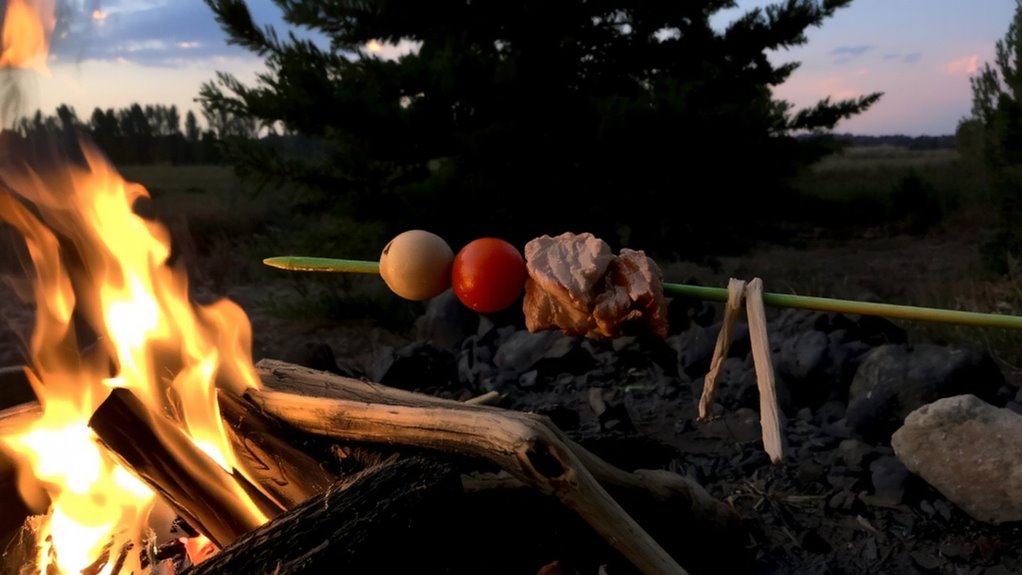
While you might expect dry wood to work best for every part of campfire cooking, green wood can actually serve a useful purpose when fashioned into skewers for roasting food. Skewer selection matters-choose straight, thumb-thick branches from hardwood trees like hickory or maple, and strip off the bark to reduce smoke. Green wood resists catching fire because of its moisture content, making it ideal for holding food close to flames without burning through. You’ll need to rotate the skewer steadily, using heat control to cook evenly and avoid charring. The moisture steams the food slightly from within, enhancing tenderness. Unlike metal, green wood doesn’t conduct heat aggressively, reducing the risk of blistering your hands. Though not as durable as steel, these skewers are effective for short roasts. For best results, prep them fresh and keep spare ones ready. A good alternative for longer cooking sessions is using reusable metal skewers, which offer durability and even heat distribution.
Boil Water Without a Pot: Use Hot Stones
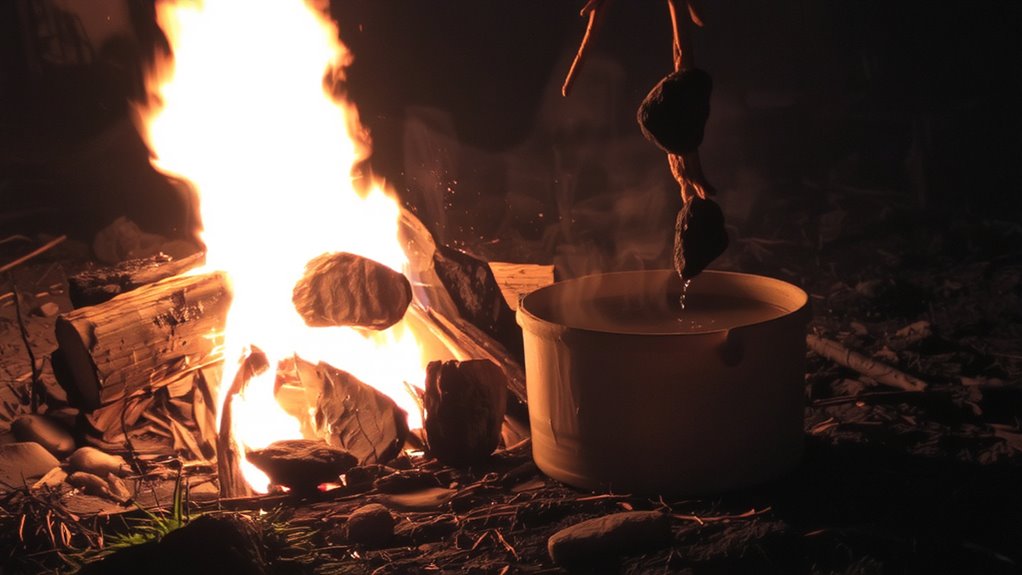
How do you boil water when you’ve got no pot? You use hot stones. Pick dense, dry river rocks-they won’t crack easily and handle heat transfer well. Heat them in your fire for at least 20 minutes until glowing hot. Meanwhile, prepare a watertight container from a hollowed log, animal hide, or sturdy bark. Carefully transfer the stones with green wood tongs into the water. The retained heat from the stones will bring the liquid to a boil. Stone durability matters-soft or wet rocks can explode, so avoid limestone or anything with visible moisture. This method’s slow, needs constant stone replacement, but it works when metal’s unavailable. It’s not efficient, but it’s reliable in survival scenarios. Just keep adding hot stones to maintain the boil. With care, heat transfer from stone to water proves effective, even primitive.
Bake in a DIY Rock Oven
What if you could bake bread or roast meat over an open fire without a modern oven or even a cast-iron dutch oven? You can-by building a DIY rock oven. Stack flat stones into a dome or lean-to shape, leaving an opening for fire access. Heat retention is key: dense rocks absorb and slowly release heat, mimicking an oven’s radiant warmth. Line the interior with small stones or sand for natural insulation, which helps maintain even temperatures. Once the interior stones are hot, push coals to the sides or back and place food inside to bake. It’s slower than metal ovens, but durable and surprisingly effective. For optimal results, use a best bushcraft campfire style that provides consistent, long-lasting heat.
| Feature | Benefit | Consideration |
|---|---|---|
| Heat Retention | Sustains cooking temps after fire dies | Requires thick, dense stones |
| Natural Insulation | Reduces fuel needs | Takes longer to heat initially |
| Rock Material | Readily available in nature | Some rocks may crack in heat |
Grill on Flat Rocks or Green Stick Grates
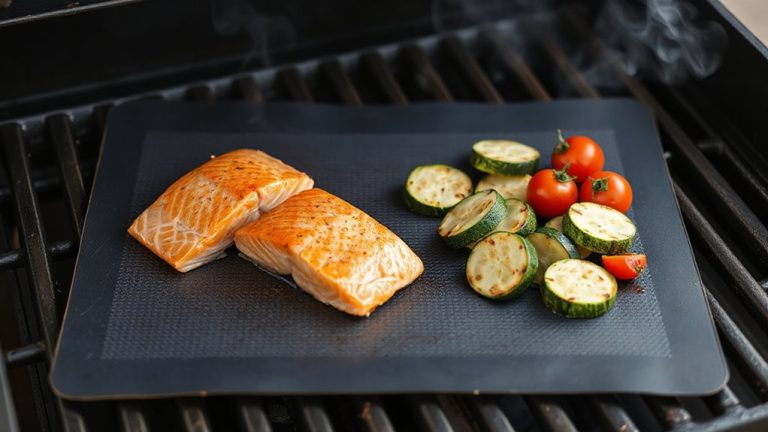
Using flat rocks or crafting a makeshift grate from green sticks offers a surprisingly effective way to grill over an open fire without specialized gear. You can stabilize flat rock surfaces around the fire to create durable cooking zones that retain heat well and offer even searing. These stones work best when thick and free of cracks, reducing the risk of splitting from thermal shock. Alternatively, green stick construction involves lashing together fresh, moist branches-ideally hardwoods like maple or hickory-into a simple grate. Though less stable than metal, it chars slowly and supports lightweight foods like fish or vegetables. Both methods require monitoring; rocks may shift, and green wood can sag. Still, flat rock surfaces offer superior heat retention, while green stick construction provides flexibility in remote settings. Each is functional, low-effort, and surprisingly efficient for backcountry BBQ when done right. Choose based on available materials and meal type.
Steam Food in Leaf Packets
Your next meal’s simplicity might just lie in the leaves at your feet, turning nature’s wrap into a steaming kitchen. Leaf selection is critical-opt for broad, pliable, non-toxic leaves like banana, grape, or maple, which resist burning and impart subtle flavor. Avoid wilted or damaged ones, as they compromise packet sealing and structural integrity. Once you’ve gathered your ingredients, place them near the leaf’s center, fold tightly, and seal the edges by twisting or using slender green twigs as natural pins. Proper packet sealing traps steam, ensuring even cooking and moisture retention. Set the packet directly on warm coals or beside the fire, turning occasionally. Cooking times vary, but most meals need 15–25 minutes. This method preserves nutrients and minimizes cleanup, though it demands attention to detail. With practice, leaf packets offer a reliable, elegant solution for backcountry meals.
On a final note
You’ve seen how basic materials can handle campfire cooking effectively. Dry wood burns safest and hottest, while green sticks hold food without charring. Hot stones boil water when metal isn’t available, and flat rocks grill evenly if preheated slowly. Rock ovens trap heat well but need patience. Leaf packets steam efficiently, preserving flavor and nutrients. These methods aren’t perfect, but they’re reliable when gear’s limited-proving smart techniques often beat fancy tools.