Expert Advice on Creating Mouthwatering, Herb-Infused Smoker Sauces That Complement Any Grill Dish
You get the best results by using fresh rosemary and thyme early-they hold up to heat and boost smoky depth-while stirring in delicate herbs like cilantro at the end to preserve brightness. Build your base with caramelized onions and tomato paste for natural umami and sweetness, avoiding artificial smoke. Simmer gently below 200°F to protect aromatic oils. Pair bold herb sauces with rich meats like brisket, and store extras properly. There’s more to mastering balance and timing just ahead.
Notable Insights
- Use fresh rosemary, thyme, and oregano for robust flavor, adding delicate herbs like basil at the end.
- Build a smoky base with caramelized onions, reduced apple cider, and smoked salt instead of liquid smoke.
- Simmer herbs gently at 180–190°F to preserve aromatic oils and ensure proper infusion.
- Pair bold herb blends with heavily smoked meats and lighter herb sauces with fish or poultry.
- Store sauce properly in airtight containers, refrigerate within two hours, or freeze for longer use.
Choose Herbs That Boost Your Smoker Sauce
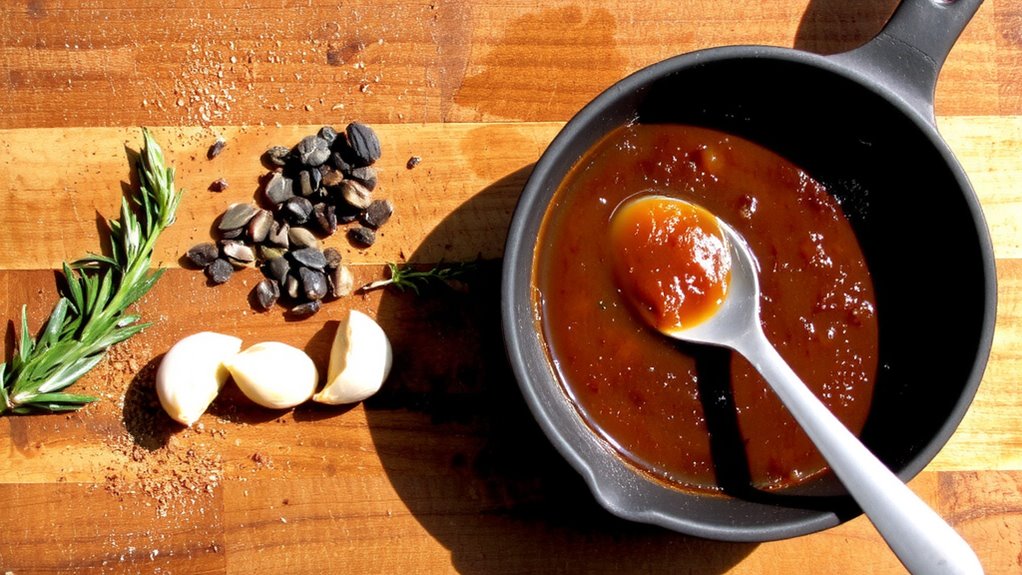
Flavor is the foundation of any great smoker sauce, and the herbs you choose can make or break that depth. You need herb freshness to guarantee vibrant taste and aromatic complexity-dried herbs often lack the punch fresh ones deliver. When selecting, think rosemary, thyme, or oregano, all of which hold up well under heat and enhance smoky profiles without overpowering. Cilantro and basil work too, but add them late to preserve their brightness. Achieving proper flavor balance means pairing bold herbs with milder ones, so no single note dominates. You’re aiming for synergy-each ingredient should support, not clash. Taste as you go, adjusting quantities to match your meat’s intensity. Herbs also interact with acids and sugars, so consider how they mesh with vinegar or honey in your blend. A well-chosen herb mix doesn’t just add flavor-it elevates the entire sauce, making it more cohesive, dynamic, and true to your grill’s character.
Build a Smoky Base for Herb-Infused Sauce
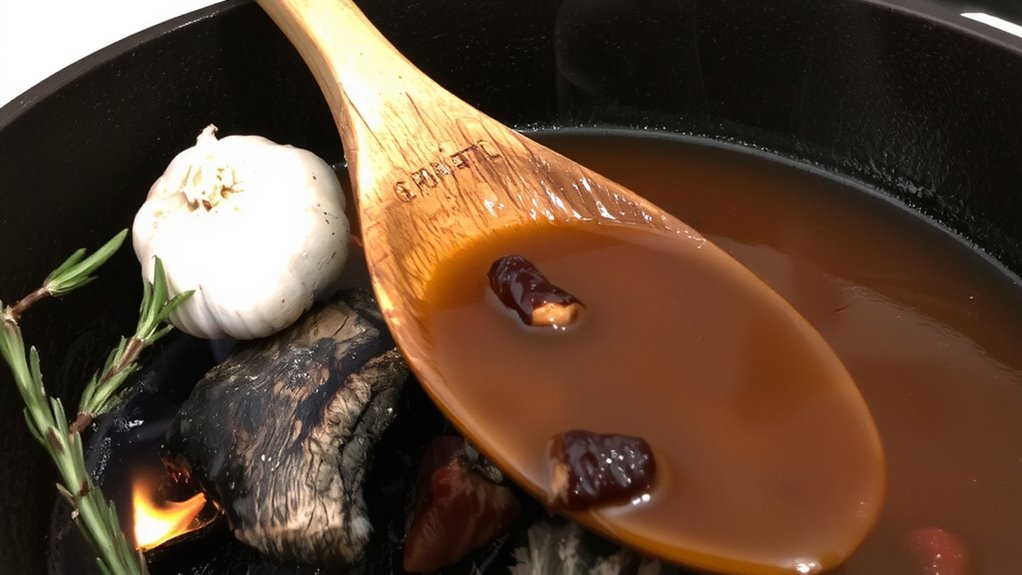
While smoke itself doesn’t carry much flavor on its own, how you capture and concentrate it in your sauce base makes all the difference. You’re better off building a foundation that enhances, not masks, the smoke. Start with a base like caramelized onions or reduced apple cider-both add natural smoky sweetness when charred slowly. Pair that with ingredients rich in glutamates, such as tomato paste or soy sauce, to develop umami depth that supports both smoke and herbs. Dry rubs left on meats during smoking also contribute to pan drippings you can incorporate, deepening complexity. Avoid liquid smoke; it lacks nuance and can overwhelm. Instead, rely on actual wood-fired cooking or smoked salts to layer the flavor authentically. A well-constructed base doesn’t just taste smoky-it feels rounded, balanced, and ready to carry the bright, earthy notes of herbs without losing its backbone. For a rich, complementary smoke flavor, consider using best wood for smoking prime rib such as oak or cherry, which impart a robust yet sweet smokiness ideal for pairing with herbs.
Infuse Herbs at the Right Time and Temperature
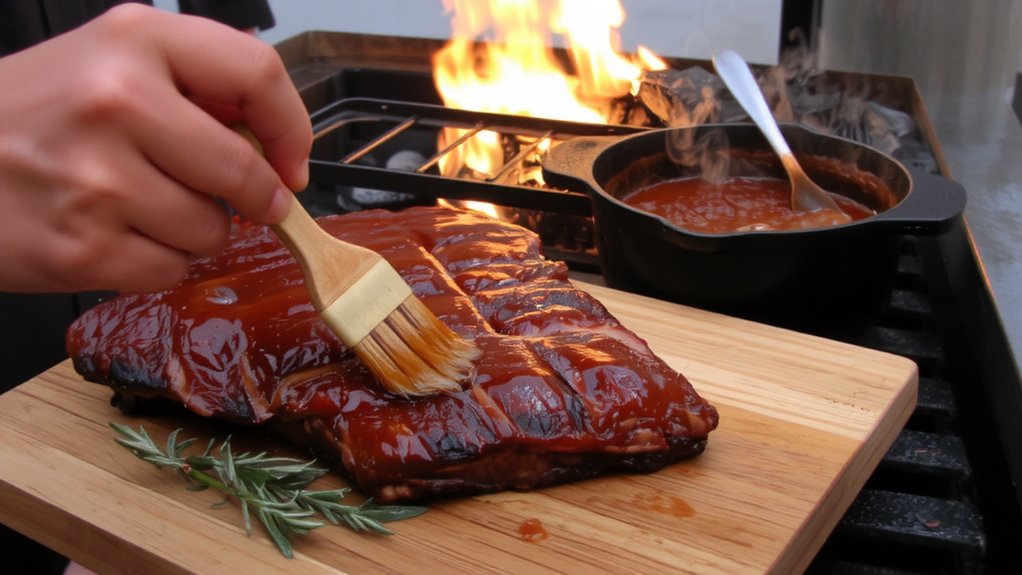
When should you add fresh rosemary or thyme to your smoker sauce-now, or later? Timing matters. Add delicate herbs too early, and the heat breaks down their essential oils, leaving you with muted flavor. That’s where herb timing and temperature control come in. For best results, introduce fresh herbs in the last 15–20 minutes of simmering. This preserves their bright, aromatic notes without sacrificing infusion depth. Dried herbs, more heat-stable, can go in earlier-about 30 minutes before finishing-to rehydrate and blend. Keep the sauce at a gentle simmer, never a boil; temperatures above 200°F risk scorching and volatility. A steady 180–190°F gives ideal extraction. Trust your nose: if the scent is vibrant, you’ve nailed the balance. Proper herb timing isn’t just technique-it’s the difference between average and exceptional smoker sauces.
Pair Herb-Infused Sauce With Grill Proteins
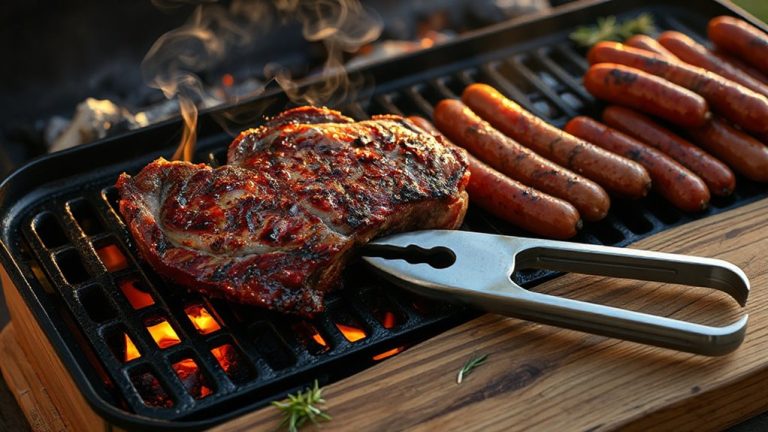
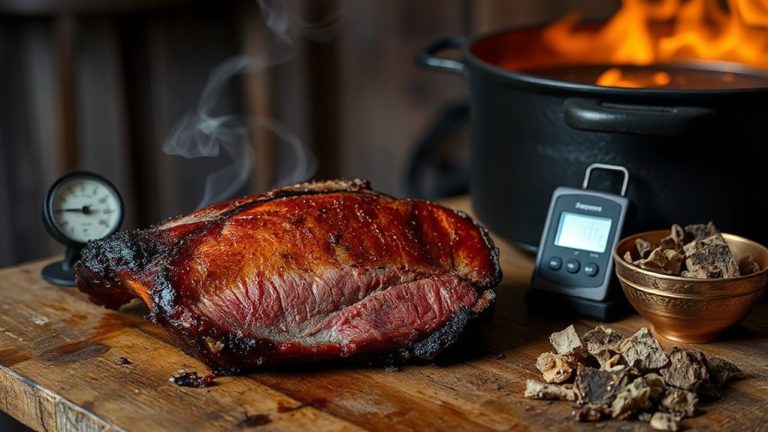
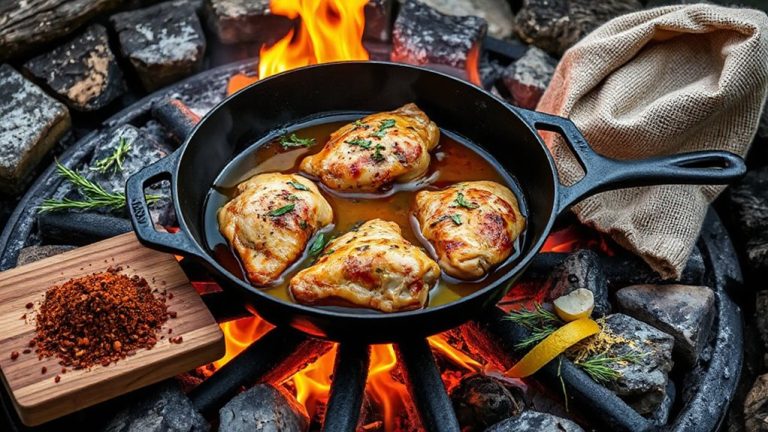
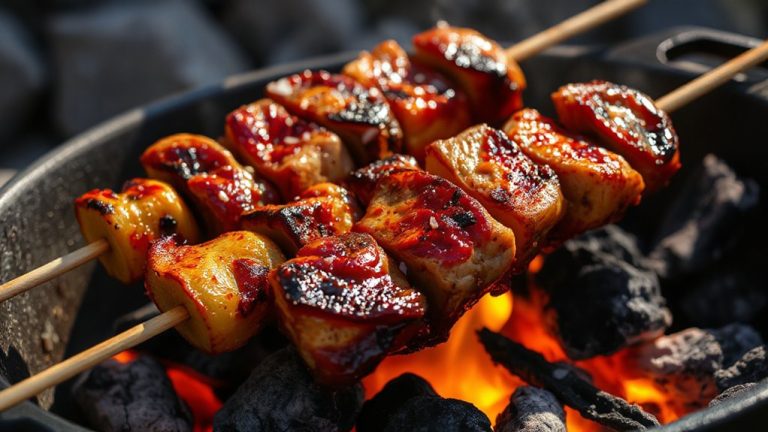
You’ll find that matching your herb-infused smoker sauce with the right grilled protein makes all the difference in building a cohesive, flavorful dish. For lean meats like chicken or turkey, a thinner sauce consistency works best, guaranteeing even coating without overpowering the delicate texture. Heavier proteins such as brisket or pork shoulder benefit from a thicker sauce that clings well during the final glaze. Reflect on flavor pairing: rosemary-thyme blends enhance lamb or beef, while lemon-herb infusions brighten grilled fish or shrimp. Basil or tarragon-based sauces pair beautifully with lighter fare, complementing rather than masking natural flavors. You’ll also want to reflect on smoke intensity-bold herbs stand up well to heavily smoked meats. Balancing sauce consistency and flavor pairing guarantees each bite enhances the grill’s natural char and the herbs’ aromatic depth, elevating your outdoor cooking with precision and purpose. Best cuts of meat for smoking deliver optimal flavor absorption and texture when paired with robust herb-based sauces.
Store and Reuse Leftover Smoker Sauce Safely
Cool your leftover smoker sauce quickly after cooking to prevent bacterial growth, then transfer it to an airtight container for maximum shelf life. Proper storage methods are essential-refrigerate within two hours to guarantee leftover safety and maintain quality. Most herb-infused sauces last 5–7 days in the fridge, though acidic or vinegar-based versions may keep longer due to natural preservation. For extended use, freeze portions in ice cube trays before transferring to freezer bags-this lets you thaw only what you need. Always use clean utensils when scooping to avoid contamination. Reheat gently on the stove to preserve flavor and consistency. While some sauces separate after refrigeration, a quick stir usually restores them. Smart storage methods not only extend usability but also enhance your outdoor cooking efficiency, letting you repurpose flavors without sacrificing taste or safety.
On a final note
You’ve now mastered building herb-infused smoker sauces that elevate your grilled dishes. Choosing fresh, complementary herbs and layering them into a rich, smoky base guarantees depth and balance. Timing the infusion correctly preserves flavor without bitterness. Paired thoughtfully with proteins, these sauces enhance rather than overpower. Proper storage maintains quality for reuse, making them practical for regular outdoor cooking. A well-crafted sauce isn’t just a finish-it’s a signature element of great barbecue.