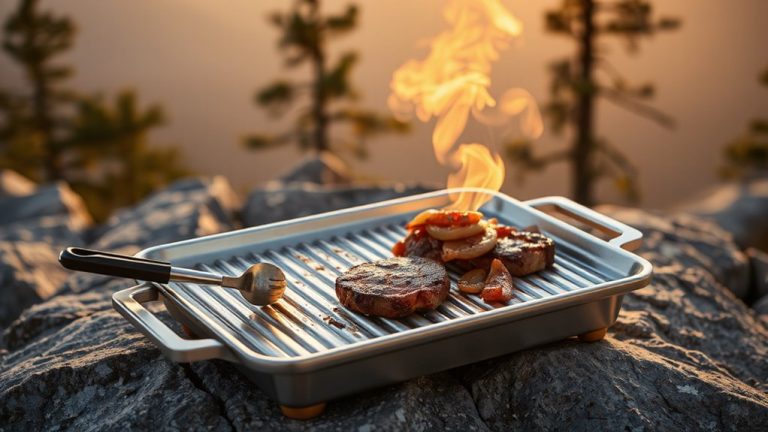
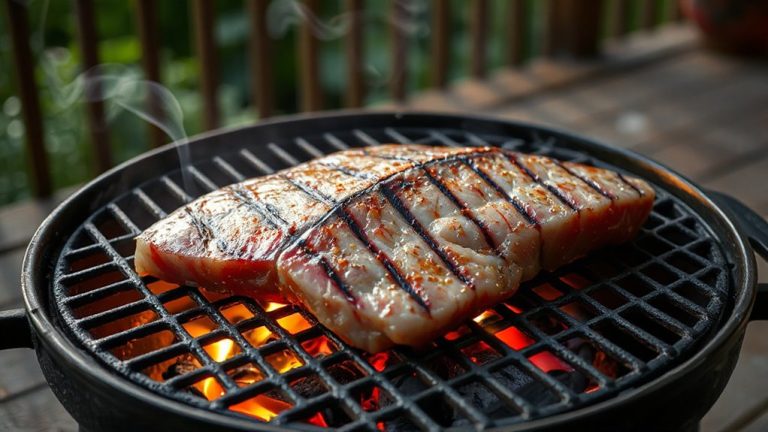
Elevating Flavor Profiles Through a Deep Understanding of Salt, Sugar, and Spice Combinations in Outdoor Cooking
You elevate grilled dishes by mastering how salt, sugar, and spice interact under heat. Salt draws out moisture and boosts browning through the Maillard reaction, especially when applied ahead. Sugar fuels caramelization for a crisp, rich crust but should be added late to avoid burning. Spices like smoked paprika and cumin add depth and withstand high temperatures. Together, they build layers of flavor-timing and balance are key. You’ll discover even more nuance in how these elements transform heat into taste.
Notable Insights
- Salt enhances flavor and texture by promoting moisture retention and supporting Maillard browning through reduced surface water activity.
- Sugar drives caramelization for rich crusts, with brown sugar ideal for slow cooking and white sugar for quick searing.
- Robust spices like smoked paprika, cumin, and toasted fennel withstand grilling heat and add aromatic, smoky depth.
- Applying salt in advance and sugar near the end optimizes flavor penetration and prevents burning.
- Pairing complementary herbs and spices with proteins-like rosemary with lamb-elevates the overall flavor profile.
Why Salt, Sugar, and Spice Rule Grilling
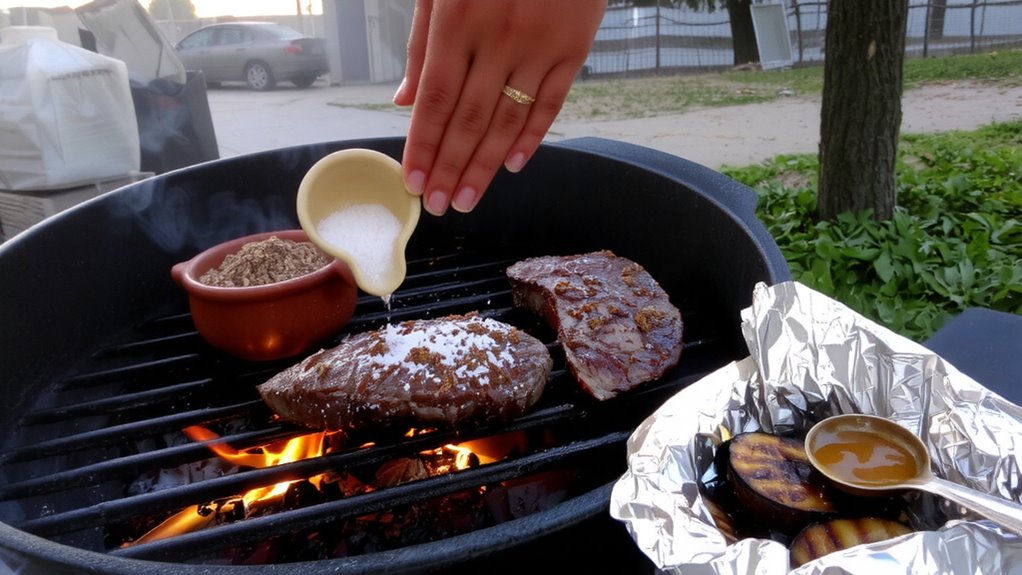
While you might think the secret to great grilling lies in technique or equipment, it’s actually the simple trio of salt, sugar, and spice that does the heavy lifting when building deep, complex flavors. You rely on sugar to caramelize and develop a rich crust, especially when heat control is precise-too high, and it burns; too low, and it won’t react. Spices contribute aromatic depth, but their effectiveness depends on proper smoke infusion, which happens when wood breaks down slowly under steady temperatures. Together, these elements work in tandem: sugar amplifies browning, spices respond to thermal changes, and both benefit from consistent heat control. Whether you’re searing or slow-cooking, balancing this trio guarantees flavor development isn’t left to chance. Smoke infusion becomes more effective when the foundation of sugar and spice is calibrated well, transforming ordinary proteins into layered, memorable dishes. For accurate heat monitoring, using a reliable thermometer can make all the difference in achieving optimal best thermometers.
How Salt Boosts Grilled Flavor
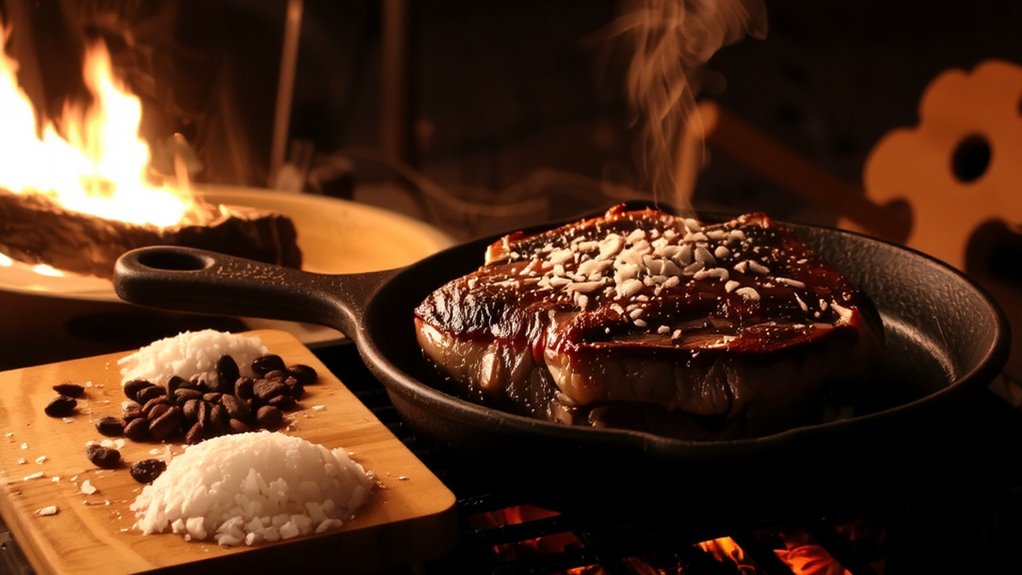
When you’re grilling, salt isn’t just seasoning-it’s a flavor catalyst that transforms the entire cooking process. By drawing out surface moisture initially and then allowing the meat to reabsorb seasoned juices, salt enhances moisture retention, keeping your proteins juicy and tender throughout high-heat exposure. It also enables effective crust formation by lowering water activity on the surface, promoting better browning through the Maillard reaction. You’ll notice a deeper, more complex sear on steaks or chops when properly salted ahead of time. This isn’t just about taste-it’s about texture and aroma, too. A well-salted piece of meat develops a flavorful crust that locks in succulence while delivering a satisfying snap when bitten into. For best results, apply coarse salt early, giving it time to work its magic. Don’t skip this step-your grill’s performance depends on it. Choosing the right type of salt, such as Best Salts for Steak, can significantly impact the final flavor and texture of your grilled meats.
How Sugar Builds Char and Sweetness
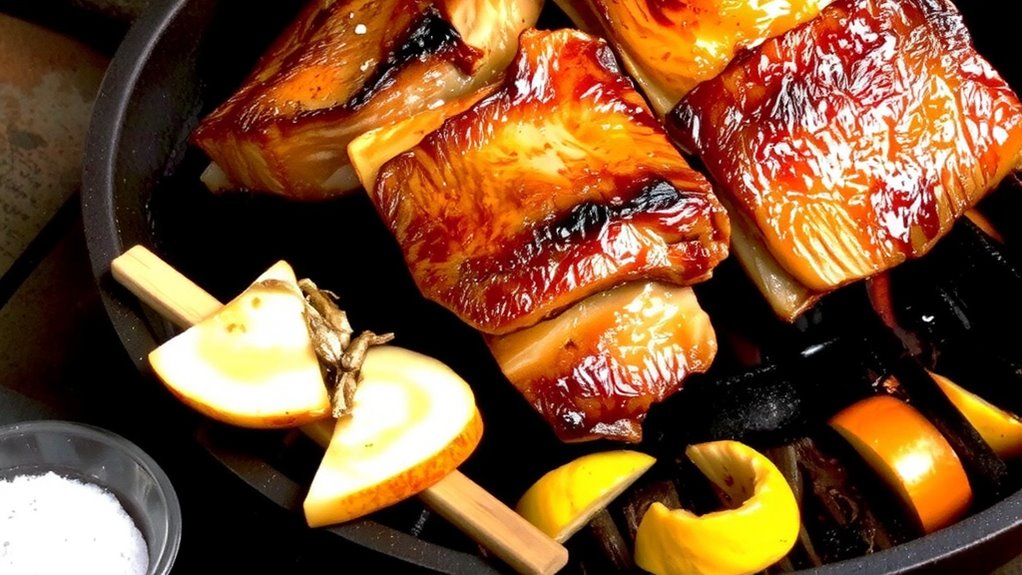
Salt sets the foundation for flavor and texture, but sugar takes the transformation a step further-especially when it comes to color, char, and complexity on the grill. When you apply sugar-rich rubs or glazes, they caramelize under high heat, developing deep browning and a crisp, flavorful crust. Proper caramelization control prevents burning while enhancing sweetness and aroma. Sugar also improves moisture retention in meats, helping them stay juicy during extended cooking. Different sugars behave uniquely, so your choice impacts results.
| Sugar Type | Best Use Case |
|---|---|
| Brown sugar | Ribs, pork shoulder |
| White sugar | Quick-searing meats |
| Honey | Glazes needing shine |
| Maple syrup | Smoked bacon, game birds |
| Turbinado | Crust formation, less stick |
Balance is key-too much sugar risks scorching, while too little limits char. With smart application, you build both sweetness and structure.
Which Spices Work Best Outdoors
Why do some spices thrive on the grill while others fade under flame? You’ll find that hardy spices like smoked paprika, cumin, and coriander stand up well to high heat, delivering a smoky depth that complements charred edges. Delicate herbs burn easily, but when blended wisely, they enhance rather than vanish. You’re better off adding dried thyme or oregano early, while fresh rosemary holds up best when seared. Think carefully about herb pairing-rosemary with lamb, thyme with chicken-to amplify natural flavors without overpowering them. Spices with high oil content, like mustard seed or fennel, toast beautifully, releasing complex aromas. Ground chili and black pepper add bite that endures heat, unlike subtler spices that degrade. Choosing the right ones guarantees bold, layered results every time you cook outdoors. For reliable options, consider exploring top-rated blends from the best grilling spices roundup.
Make Balanced Rubs and Marinades
Though heat and smoke play starring roles in outdoor cooking, they’re not the only forces shaping flavor-your rubs and marinades carry just as much weight, and getting them balanced means understanding how salt, acid, fat, sweetness, and spice interact under high temperatures. You’ll want to layer components thoughtfully: salt enhances taste and tenderizes, acid cuts richness and aids penetration, while fat carries flavor deep into the meat. A well-structured rub balances sweetness with heat, and spice with earthiness-don’t overlook herb pairing, since rosemary and thyme complement bold meats, while dill and parsley brighten lighter proteins. For marinades, include a citrus infusion to add vibrancy and help break down fibers without overpowering. Avoid oversweet or overly salty mixes that burn or dull. The best combinations evolve on the palate, offering complexity that stands up to flame and time.
When to Apply Salt, Sugar, and Spice
Getting your rubs and marinades to taste great isn’t just about the ingredients-it’s also about timing. You need smart timing techniques to maximize flavor penetration and texture. Salt early-it draws out moisture at first, then reabsorbs, seasoning deep within the meat. For best results, apply salt 30 minutes to 24 hours ahead, depending on thickness. Sugar burns easily, so wait until the final 15–20 minutes if grilling directly over flame; otherwise, it works well in slow-smoked dishes. Spices vary: volatile oils in herbs like basil degrade with heat, so add them late. Hardier spices such as cumin or paprika benefit from earlier application. Your application methods matter-rubbing directly, using pastes, or marinating all affect how flavors adhere and develop. Mastering these steps guarantees balanced, rich profiles every time.
On a final note
You’ve seen how salt, sugar, and spice shape outdoor cooking. When balanced, they build depth, promote browning, and enhance texture. Salt draws out flavor and firms proteins, sugar caramelizes into crust, and spices add complexity. Timing and ratios matter-early salt penetration, sugar’s controlled char, and spice layering define success. Mastering these elements doesn’t just season food-it transforms grilling into precise, rewarding craft. Your results will show it.