Exploring How Different Types of Woods Influence Flavor Profiles in Grilled Meats: A Guide for Aspiring Culinary Masters
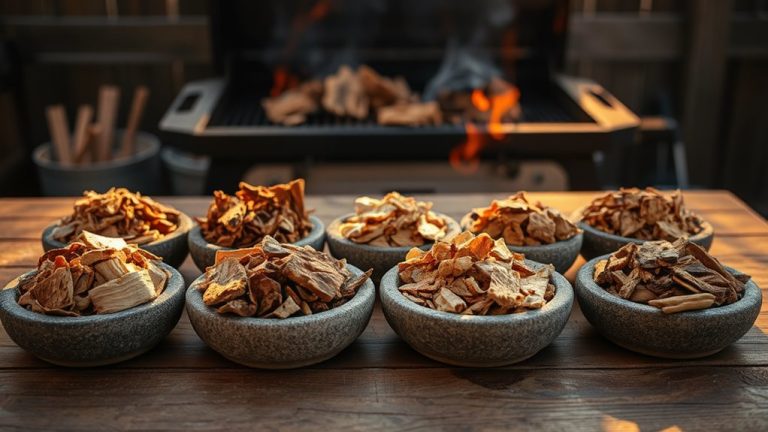
You’ll get cleaner, richer flavor by choosing wood based on density and smoke output. Drier, denser hardwoods like oak and hickory burn slow and hot, perfect for beef and pork, while fruitwoods like apple and cherry add subtle sweetness ideal for poultry and fish. Wet or resinous woods ruin taste with bitterness. Match wood intensity to meat weight-strong smoke for heavy cuts, light smoke for delicate proteins-and you’ll master flavor balance with confidence. There’s a smarter way to build smoke profiles ahead.
Notable Insights
- Hardwoods like hickory and oak burn hotter and longer, imparting robust, smoky flavors ideal for beef and pork.
- Fruitwoods such as apple and cherry offer mild, sweet notes perfect for poultry, pork, and fish without overpowering delicate meats.
- Moisture content in wood should be 15–20%; wet wood produces bitter, acrid smoke that ruins flavor.
- Clean, thin smoke from dry, seasoned hardwoods enhances taste, while thick white smoke creates undesirable bitterness.
- Avoid resinous softwoods like pine; their sap releases harmful compounds that result in unpleasant, chemical-like flavors.
Why Wood Choice Makes or Breaks Your Grill Game
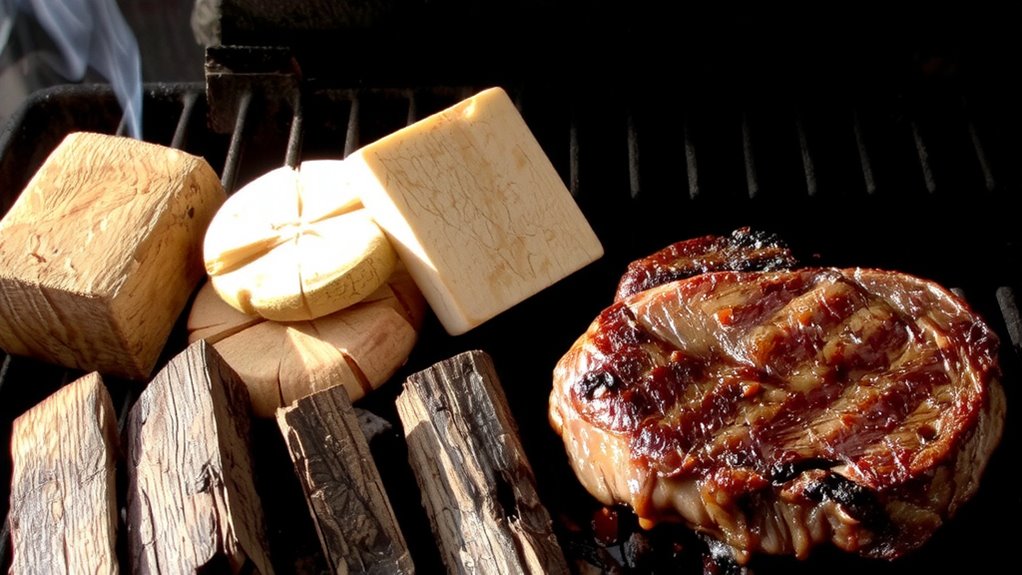
While you might think the meat does most of the talking on the grill, the wood you toss into the fire actually plays a starring role in shaping flavor, and getting it wrong can ruin even the most carefully seasoned brisket. You’ll find that wood density directly affects burn time and heat output-denser hardwoods like hickory or oak burn slower and hotter, ideal for long smokes. Softer woods, with lower density, flare up quickly and cool fast, risking uneven cooking. Moisture content matters just as much; wood with too much moisture smolders, producing bitter smoke, while properly seasoned wood-ideally at 15–20% moisture-lights easily and generates clean, steady smoke. Choosing the right wood isn’t just about flavor preference-it’s a technical decision. Poor choices undermine temperature control and flavor balance, no matter how skilled your technique. Pick wisely, and you’re already halfway to great barbecue. For those looking to maximize value without sacrificing quality, checking current charcoal deals can help secure premium hardwood charcoal at a fraction of the cost.
How Smoke Builds Flavor on the Grill
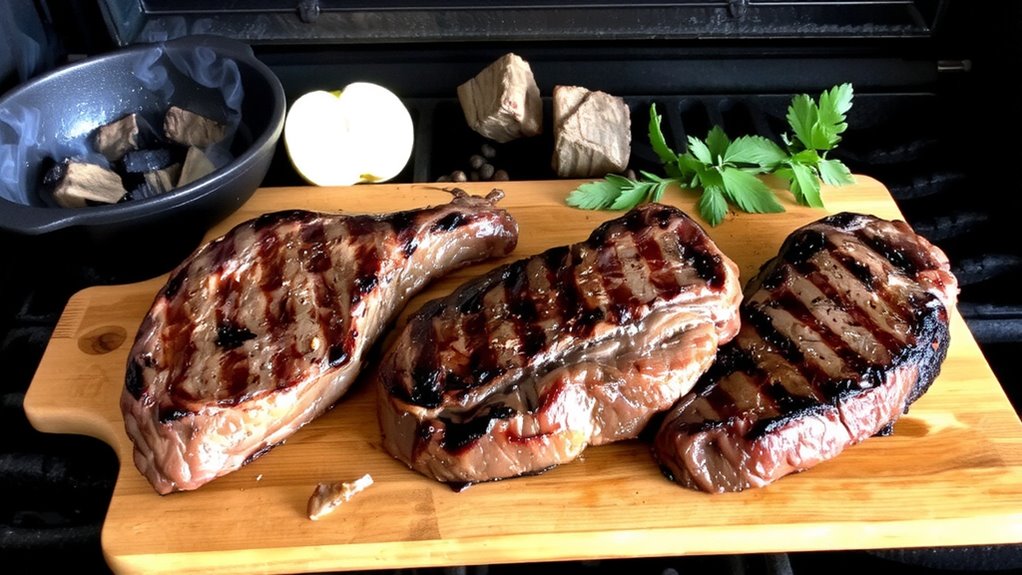
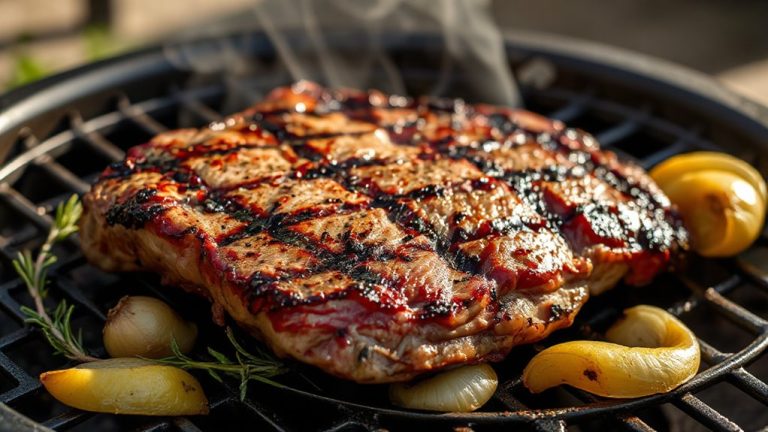
Since the moment smoke starts curling from your coals, it’s already working to transform your meat, carrying aromatic compounds that cling to the surface and slowly penetrate the flesh. The smoke composition-made up of phenols, carbonyls, and acids-determines how deeply and distinctly flavor absorption occurs. You’re not just cooking; you’re layering taste through sustained, low-temperature exposure. Hardwood smoke, clean and thin, delivers consistent flavor without overwhelming the meat, while dense, white smoke from wet wood can impart bitterness. For best results, maintain steady airflow and dry fuel to optimize smoke quality. You’ll notice that thinner cuts absorb flavor quickly on the surface, but thicker cuts benefit from prolonged exposure, allowing compounds to migrate deeper. Mastering this balance guarantees your grilled meats aren’t just smoky, but complex and intentional in taste. It’s a subtle science, but one that defines great barbecue. Choosing the right wood, such as best smoke wood for chicken, can significantly enhance the flavor profile of your grilled dishes.
Fruitwoods for Grilling Delicate Meats
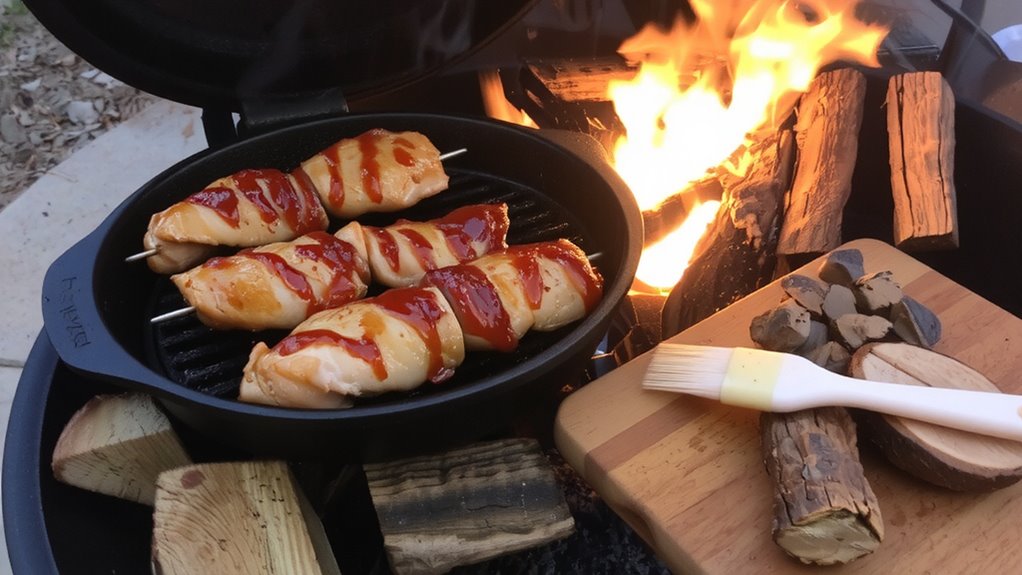
A handful of fruitwood chunks can make all the difference when you’re grilling delicate meats like chicken, pork chops, or fish. Apple wood imparts a subtly sweet, mild smoke that enhances flavor without overpowering-ideal when you want smoke to complement, not dominate. You’ll notice its gentle aroma works especially well with poultry and lighter pork cuts. Cherry wood runs a bit richer, lending a faint tartness and beautiful mahogany hue to the meat’s surface. It pairs wonderfully with both pork and firm fish, adding complexity without harshness. Unlike stronger smokes, these fruitwoods burn cleanly and evenly, giving you consistent results with less risk of bitterness. You don’t need much-just a few chunks mixed into your coals or added to the smoker box. Both apple wood and cherry wood offer approachable, balanced profiles that elevate your grilling with precision and control, making them staples for thoughtful, flavor-driven outdoor cooking. For reliable options, consider checking top-rated picks such as the best smoking wood for consistent quality and performance.
Hardwoods for Grilling Heavy Meats
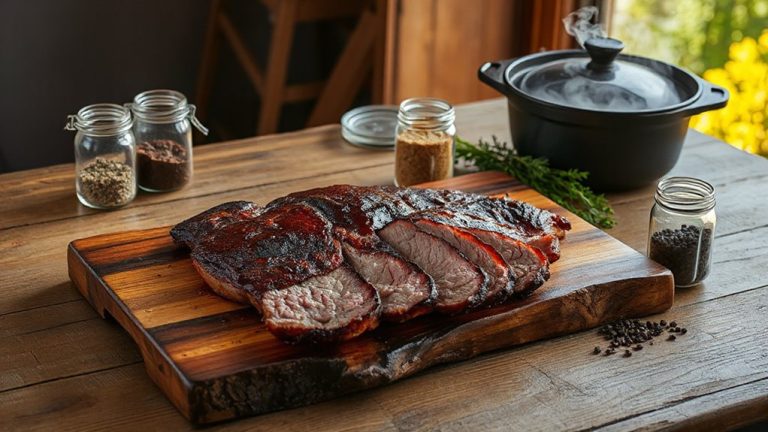
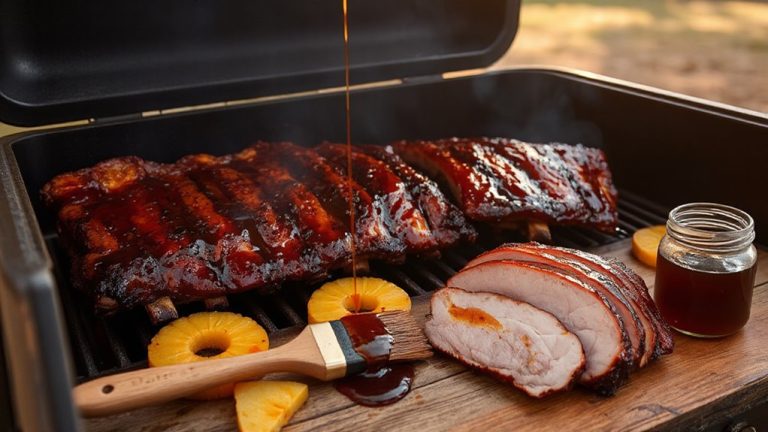
You’ll want to reach for hardwoods when tackling beef brisket, pork shoulder, or ribs-meats that can stand up to bold, robust smoke. Hickory pecan offers a sweet, nutty depth with moderate intensity, perfect for long smokes without overwhelming the meat. You’ll appreciate how oak delivers a balanced, medium-strong flavor that enhances richness while maintaining the meat’s natural taste-ideal for multi-hour cooks. Mesquite, though potent, brings a sharp, earthy punch that works well when used sparingly; too much can dominate, but blended with oak or pecan, it adds complexity. These hardwoods burn longer and hotter than fruitwoods, making them better suited for heavy cuts needing sustained heat. You’ll notice cleaner smoke and more consistent temperatures, especially with dense logs or high-quality chunks. For serious BBQ, hardwoods aren’t just tradition-they’re functionally superior, delivering the structural burn and flavor backbone that delicate meats simply don’t require.
Best Wood and Meat Pairings
When matching wood to meat, the key is balancing smoke intensity with the cut’s inherent richness. You’ll want strong, bold woods like mesquite for robust meats such as beef brisket-its intense flavor stands up well, but use it sparingly to avoid bitterness. Wrap your meat in mesquite bacon to add a sweet, smoky depth without overwhelming the palate. For something more delicate, cherry wood works beautifully with pork and especially cherry lamb, enhancing the meat’s subtle sweetness with a mild, fruity smoke. Cherry lends a rich mahogany hue and smooth profile, making it ideal for medium-bodied meats. Avoid overpowering poultry or fish with heavy woods-match lighter meats with fruitwoods. Hickory remains a versatile choice for ribs or sausages, delivering a familiar bacon-like note. Knowing which wood complements which meat guarantees every grilled dish turns out flavorful and well-balanced, just like the pros intend.
Mixing Grill Woods Like a Pro
Pairing single woods with meats sets a solid foundation, but combining different types of wood takes control of flavor to another level. Mastering wood blending techniques lets you fine-tune taste and aroma, especially when managing smoke intensity control. A balanced blend can deepen complexity without overwhelming the meat. Consider pairing a mild fruitwood with a stronger hardwood to add nuance while avoiding bitterness.
| Base Wood | Accent Wood | Effect |
|---|---|---|
| Oak | Apple | Rich, slightly sweet smoke |
| Hickory | Cherry | Smoky-sweet with red hue |
| Pecan | Mesquite | Nutty depth, low smoke rush |
Use stronger woods sparingly-they dominate fast. With smart combinations, you achieve layered flavor profiles that elevate grilled results. Control is key; too much smoke ruins even the best blend.
5 Grilling Wood Mistakes to Avoid
Though smoke is essential to great barbecue, using the wrong wood or handling it improperly can easily sabotage your results. You might not realize it, but wet wood issues are one of the most common mistakes-green or damp wood produces excessive smoke and uneven heat, leading to bitter flavors and sooty meat. Always use properly seasoned wood with a moisture content below 20%. Equally critical are resinous wood dangers: softwoods like pine or fir contain terpenes and sap that burn hot and acrid, releasing harmful compounds and giving meat a chemical-like taste. Stick to hardwoods like oak, hickory, or fruitwoods for clean, flavorful smoke. Don’t just grab any scrap-you’re grilling, not experimenting with toxic fumes. Proper wood selection and preparation aren’t optional; they’re foundational to mastering outdoor cooking and achieving consistent, delicious results every time.
On a final note
You’ve seen how wood choice shapes flavor, from fruitwoods’ gentle smoke to hardwoods’ bold intensity. Matching the right wood to your meat elevates the dish, while mistakes like using wet or resinous wood can ruin it. Mastering smoke control and wood pairings proves essential for authentic BBQ. With practice, you’ll balance time, temperature, and timber to consistently achieve rich, nuanced results worth every effort at the grill.