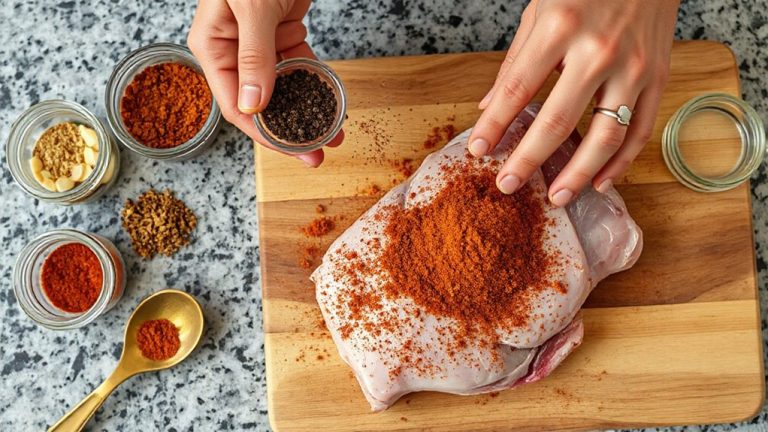
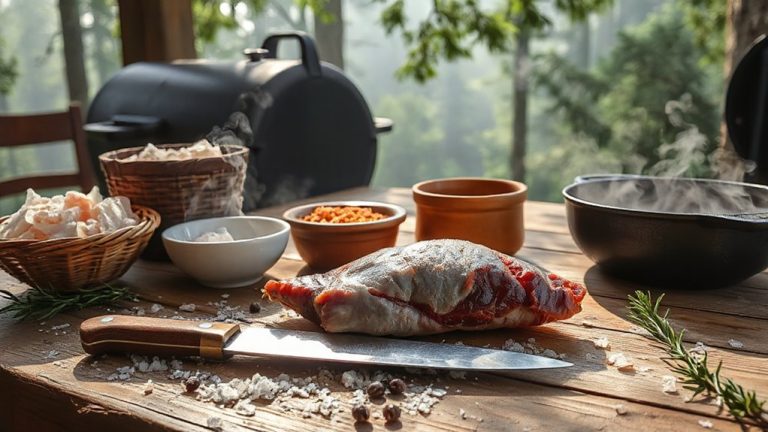
Achieving Rich Umami Flavors in Smoked Meats Using Traditional and Modern Methods
You get rich umami in smoked meat by combining slow, low-heat smoking with smart ingredient choices. Traditional methods like clean blue smoke and temperature control deepen flavor through Maillard reactions and enzymatic breakdown. Use hickory or oak for clean phenols, and boost glutamates with mushroom powder or fish sauce in your rub. Let seasoning penetrate overnight. You’re not just smoking meat-you’re building layers of savoriness that reveal new depth with every bite.
Notable Insights
- Slow, low-temperature smoking enhances umami by promoting enzyme activity and Maillard reactions.
- Use thin, blue smoke from clean-burning hardwoods like oak or hickory for optimal flavor development.
- Apply seasoning blends with glutamate-rich ingredients such as mushroom powder or fish sauce to boost savoriness.
- Allow meat to rest after smoking to integrate flavors and maximize umami perception.
- Combine traditional techniques with modern tools like controlled fermentation or precise temperature monitoring for consistent umami depth.
What Is Umami and Why It Matters in Smoked Meat
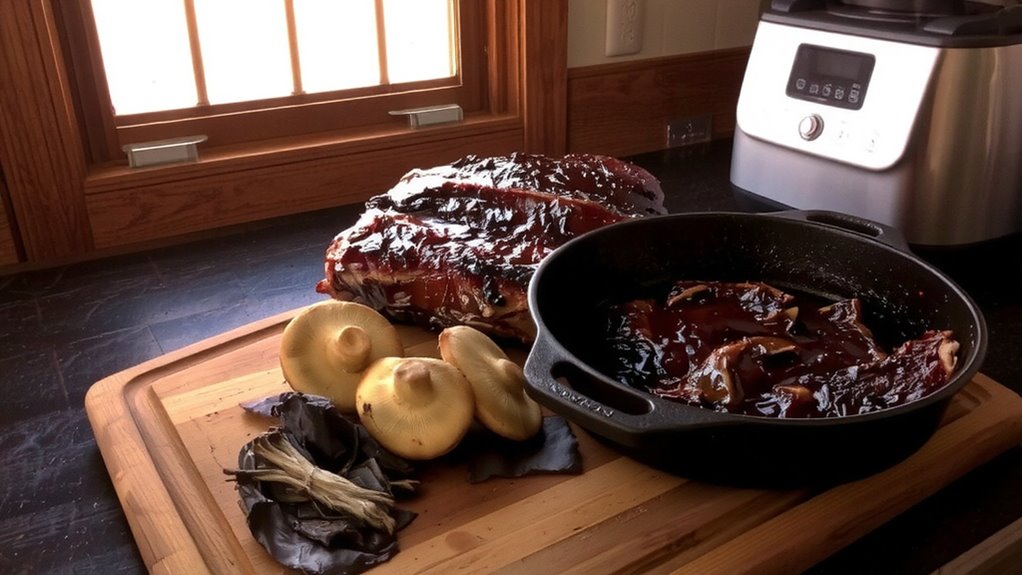
Umami-often called the fifth taste-adds depth and savoriness that transforms smoked meat from simple barbecue to an intense, layered experience. You’ve likely noticed it when biting into a well-smoked brisket: a rich, mouth-filling satisfaction beyond salt or spice. This flavor perception isn’t just instinctive-it’s biological. Umami origin traces back to glutamate, an amino acid found naturally in meat, especially after breakdown during cooking. When proteins degrade under heat and time, they release glutamates that activate umami receptors on your tongue, enhancing savory notes. In smoked meats, this effect intensifies, creating complexity that flat flavors can’t match. You don’t just taste meat-you experience its depth, texture, and transformation. Understanding umami origin helps you refine outdoor cooking, turning average barbecue into something memorable. It’s not just about smoke; it’s about science meeting craft in every bite.
How Traditional Smoking Builds Umami in Meat
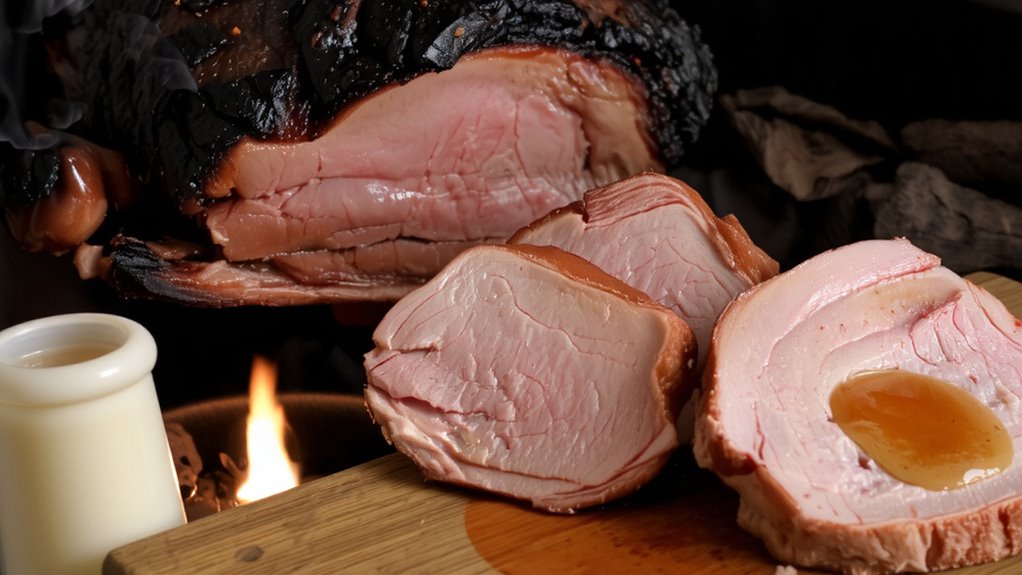
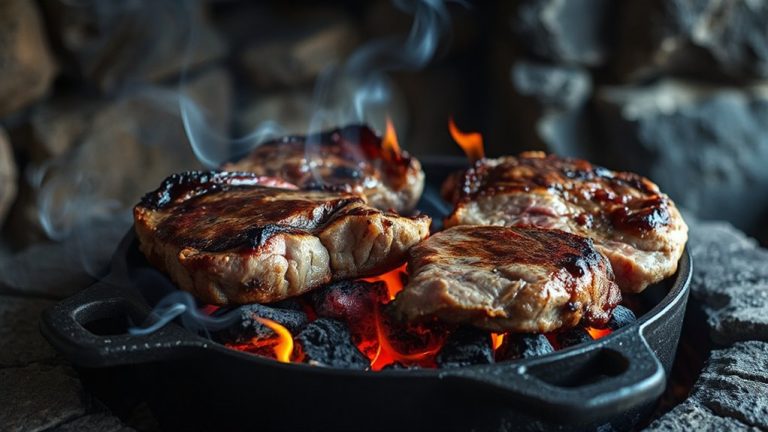
The magic of traditional smoking lies in its slow, patient transformation of raw meat into deeply flavorful fare, and you’re probably tasting more than just smoke when that first bite delivers a rich, lingering savoriness. You’re developing umami through low-and-slow heat, where natural enzymes and Maillard reactions deepen flavor over hours. Your choice of wood selection directly influences this process-hickory, oak, or cherry each contribute distinct phenols and aromatic compounds that enhance savory complexity. Too much smoke density, though, can overwhelm, masking meat’s natural taste with bitterness. You want thin, blue smoke, not thick white plumes, for clean flavor development. This careful balance allows smoldering wood to interact with meat surface proteins and fats, gradually building layers of umami without overpowering. Traditional methods rely on this precision-controlling airflow, temperature, and combustion-so you’re not just adding smoke, but cultivating depth. It’s time-intensive, but the result is unmistakably rich. Choosing the best smoking wood involves understanding how different species burn and the flavor profiles they impart, with options like hickory, oak, or cherry offering varied intensities and aromatic nuances.
Key Ingredients That Boost Umami Naturally
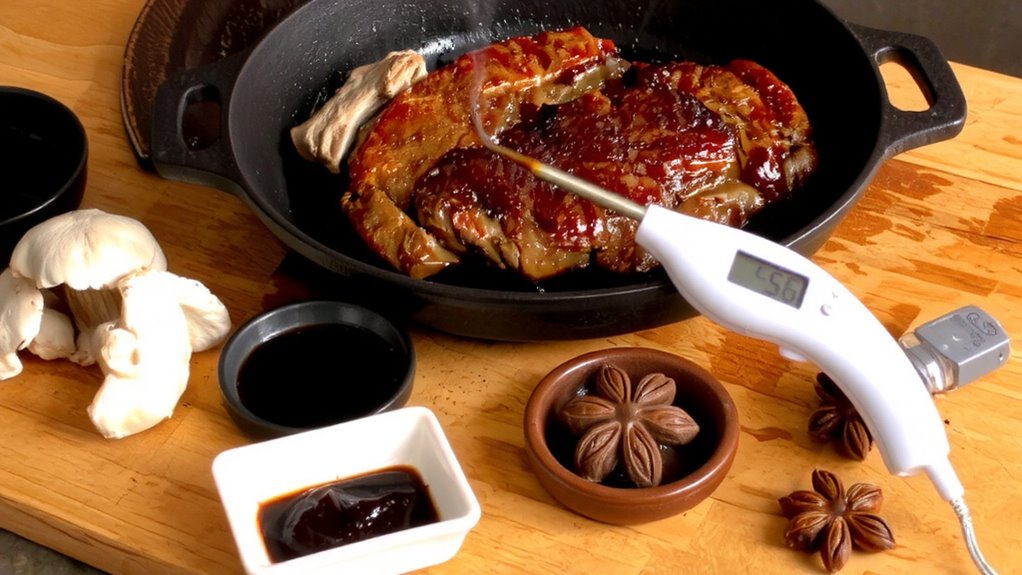
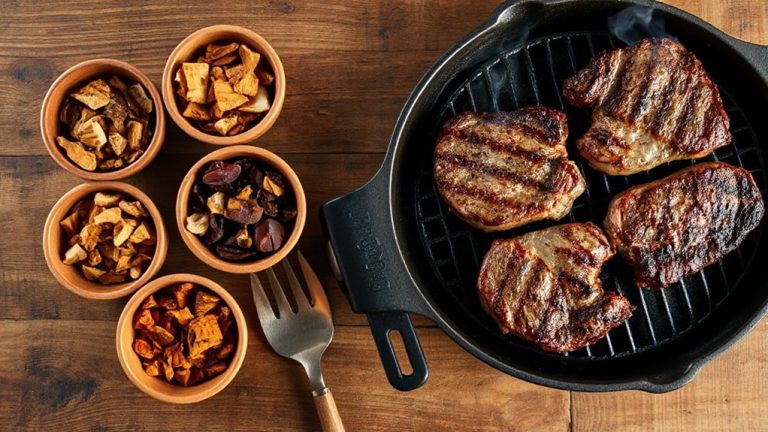
You’re already tapping into umami when you use traditional smoking methods, but you can amplify that savory depth even further by strategically adding ingredients that naturally boost glutamates and nucleotides. Incorporating umami-rich components enhances complexity without overpowering the meat’s natural taste. Mushroom powder delivers earthy depth and is packed with free glutamates, making it ideal for rubs or injectable brines. Fish sauce, though pungent alone, blends seamlessly into marinades, contributing nucleotides that synergize with meat’s inherent flavors. These ingredients elevate smoked dishes with layered savoriness. For even greater impact, consider using best umami seasonings that combine multiple glutamate- and nucleotide-rich sources.
How Fermentation and Maillard Reaction Deepen Flavor
Flavor transformation in smoked meats doesn’t stop at wood and heat-fermentation and the Maillard reaction play pivotal roles in building the complex savoriness you taste in well-crafted barbecue. When you allow meat to undergo controlled fermentation, microbes break down proteins into amino acids like glutamate, intensifying umami-the longer the fermentation duration, the deeper the flavor, provided you maintain safe conditions. Then, during smoking, the Maillard reaction kicks in as surface moisture evaporates and the reaction temperature climbs past 300°F. This chemical reaction between amino acids and reducing sugars creates rich, roasted notes and that desirable crust. You’ll get the best results when you balance time and heat: too low a reaction temperature stalls browning, while excessive heat burns rather than builds flavor. Mastering both fermentation duration and reaction temperature means you’re not just cooking-you’re engineering depth.
Timing Smoke and Seasoning for Maximum Umami
Getting smoke and seasoning in sync makes or breaks the umami you pull from brisket, ribs, or sausage. Early seasoning penetration and controlled smoke density are key. Apply rubs at least 12 hours ahead, letting enzymes and salt deepen flavor. Fire up your smoker with careful wood selection-cherry for sweetness, hickory for boldness-each altering umami development. Too much smoke early on overwhelms; aim for thin blue smoke, not thick billows. Choosing the right cut is just as crucial as timing-selecting well-marbled best cuts of meat ensures optimal fat rendering and flavor absorption during the smoking process.
| Phase | Action |
|---|---|
| First 2 hours | Light smoke, full seasoning |
| 2–6 hours | Moderate smoke density |
| 6–8 hours | Adjust wood selection |
| Final hours | Rest, no smoke |
Timing guarantees complex layers build gradually. Smoke density tapers after the stall, preserving richness without bitterness. You’re not just cooking-you’re orchestrating chemistry. With patience and precision, you elevate meat into deeply savory art.
On a final note
You’ve seen how umami transforms smoked meat from simple to extraordinary. Traditional smoking, fermentation, and the Maillard reaction all build depth when timed precisely. Natural umami boosters like aged cheeses, fish sauce, or mushrooms elevate flavor without overpowering. Modern techniques refine what old methods started, letting you control variables like temperature and humidity for consistent results. Mastery lies in balancing these elements-respecting tradition while using science to enhance. That’s how truly rich, satisfying barbecue happens.