Calibrating Distance From Fire Source to Achieve Specific Baking Temperatures
You can calibrate baking temperatures by positioning your pan over the fire’s hot, medium, or cool zones-3–5 inches above hot coals for pizza’s charred crust, 6–8 inches above medium heat for even bread baking. Use the hand test to gauge heat: 2 seconds for high, 3–4 for medium. Rotate the pan halfway for even cooking. Add reflectors and wind shields to stabilize heat. You’ll learn smarter ways to master outdoor thermal control just ahead.
Notable Insights
- Position the pan 6–8 inches above medium heat for bread to achieve even crust development at ~350°F–400°F.
- Place the pan 3–5 inches above hot coals for pizza to reach high heat (450°F+) for a quick rise and char.
- Use the hand test to estimate heat: 3–4 seconds at 6 inches indicates ideal medium heat for most baking.
- Align pan distance with fire zones-hot, medium, or cool-to match the desired baking temperature and food type.
- Rotate the pan 180 degrees halfway through baking to counter uneven heat and ensure uniform results.
Find the Hot, Medium, and Cool Zones in Your Fire
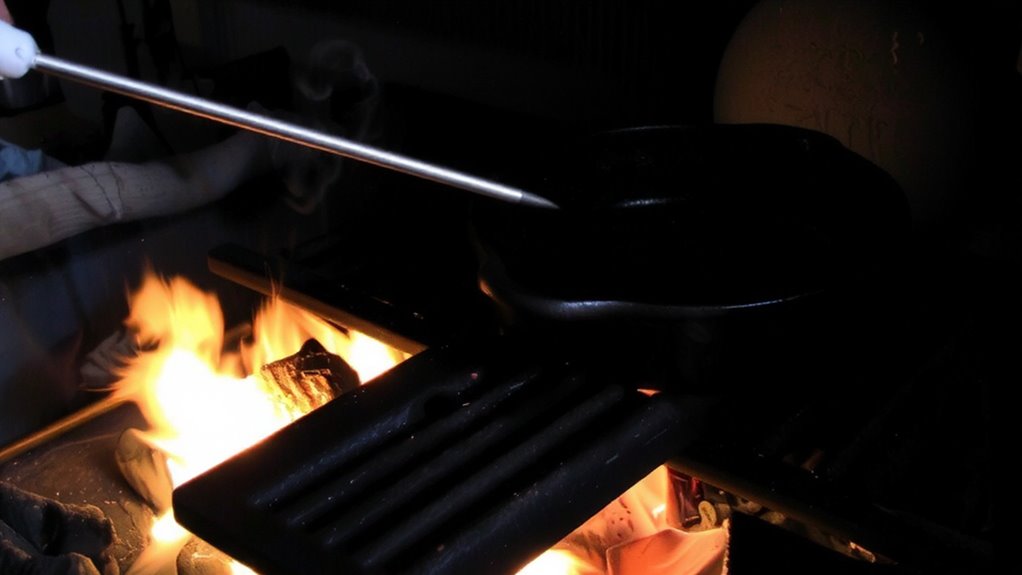
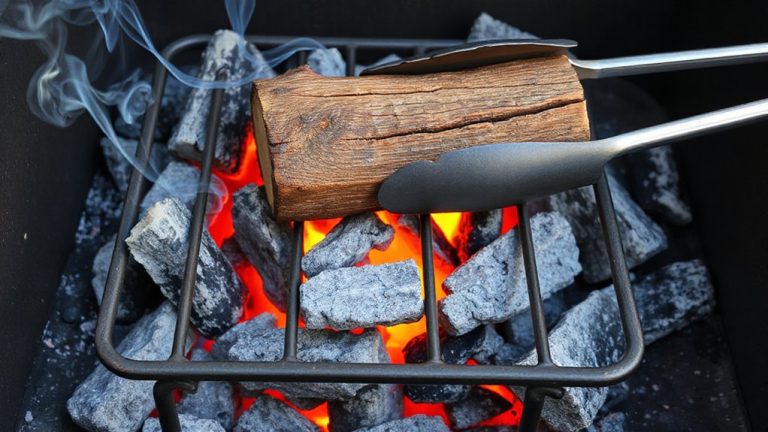
Where should you place your baking stone when the coals are roaring on one side and barely glowing on the other? You need to assess fire positioning first-this directly controls heat distribution across your cooking surface. The roaring coals create a hot zone, ideal for searing or quick baking. The medium zone forms where embers taper off, balancing intensity for foods needing steady, indirect warmth. The cool zone lies beyond, where residual heat gently cooks without charring. Recognizing these zones isn’t just observational-it’s essential technique. You’ll adjust placement based on desired outcome, using the hot zone for crust development and cooler areas for even doneness. Proper fire positioning guarantees predictable heat distribution, preventing burnt bottoms and raw centers. With experience, you’ll intuitively read flame spread and ember density, aligning your stone accordingly. Mastering this balance turns unpredictable flames into a reliable outdoor oven.
How Far Should Your Pan Be for Bread vs. Pizza?
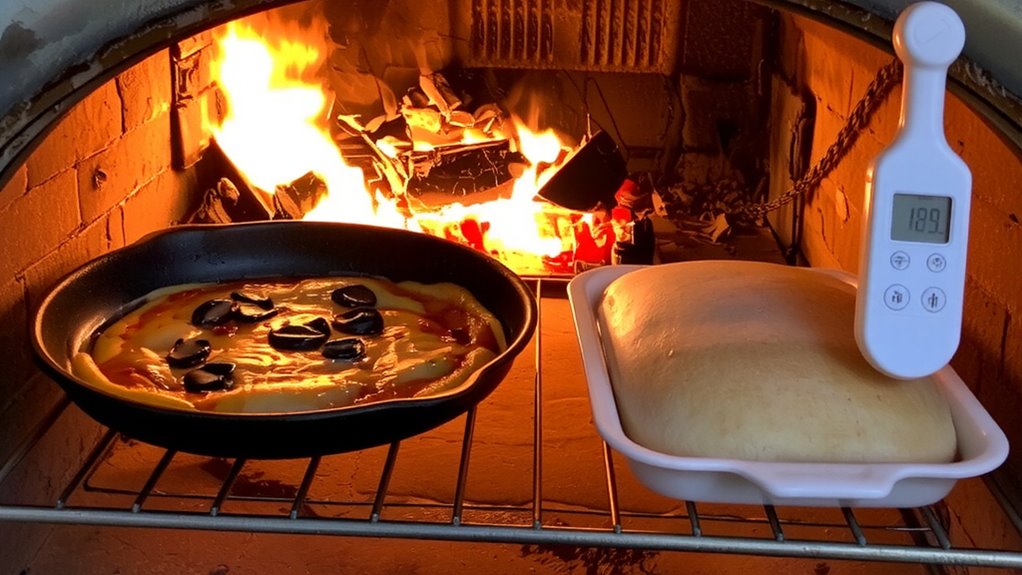
When baking over an open flame, how you position your pan relative to the heat source makes all the difference between a perfect crust and a burnt disaster. Pan placement is critical: bread needs gentle, even baking, so set your pan 6–8 inches above medium heat for consistent heat distribution. This allows the loaf to rise fully and crust without scorching. Pizza, though, thrives on intensity-place the pan just 3–5 inches above hot coals for rapid rise and charred spots characteristic of well-fired crusts. The closer distance boosts radiant heat, mimicking a wood-fired oven. You’ll notice uneven heat distribution if the fire isn’t properly zoned, leading to patchy results. Adjust pan placement based on your fire’s layout-using the hot, medium, and cool zones you’ve established-to match each dish’s demands. Mastering these distances guarantees reliable, professional-quality results every time. For even better control, consider using one of the top outdoor pizza ovens designed to maintain high, consistent temperatures with outdoor pizza ovens.
Test Fire Heat Without a Thermometer (Use the Hand Test)
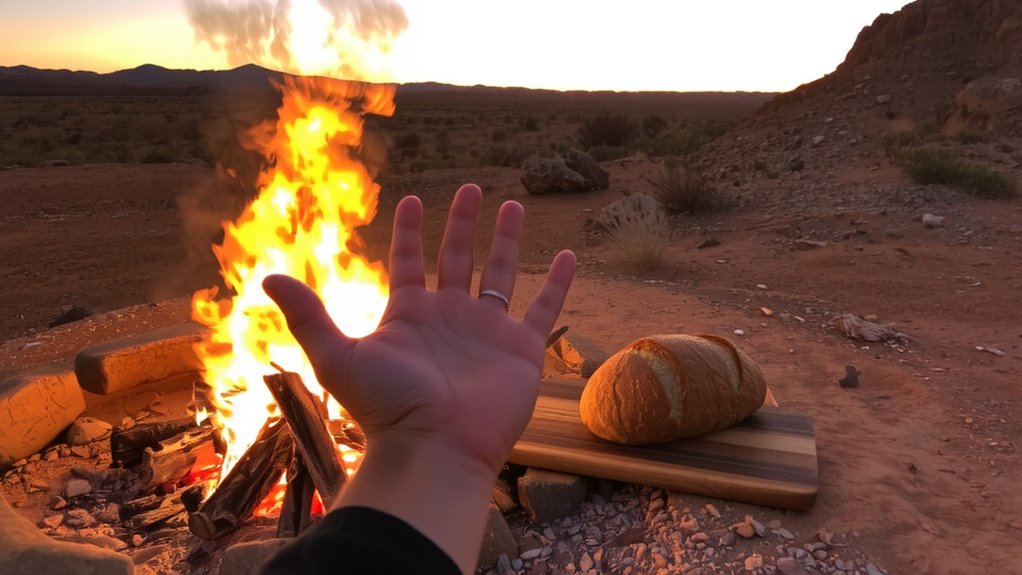
How do you know if your fire’s ready without sticking a thermometer in it? You use the hand test-a reliable method for heat estimation when cooking outdoors. Hold your hand about six inches above the cooking surface and count how long you can keep it there. If you last 5–6 seconds, it’s low heat (around 250°F); 3–4 seconds means medium (350°F–400°F), ideal for most baking. A 2-second limit signals high heat (450°F+), perfect for searing or quick-cooking flatbreads. Your hand position matters-keep it palm-down, fingers together, and don’t hover too long to avoid burns. While not as precise as a thermometer, this technique offers fast, practical feedback. Experienced cooks often rely on it because it’s immediate and adjustable. The hand test won’t replace tools entirely, but it’s a skill worth mastering for accurate, on-the-fly heat estimation.
Move Your Pan as Needed for Even Cooking
Why does one side of your baked good rise higher or brown faster than the other? Uneven heat distribution from your fire is likely to blame. Outdoor ovens and open flames rarely deliver consistent temperatures across the entire cooking surface, so you’ve got to take control. That’s where pan rotation comes in. Turning your pan 180 degrees halfway through baking helps balance exposure to hotter zones, promoting even cooking. It’s a simple move, but it makes a real difference-especially with delicate items like cakes or thin crusts. Don’t wait until browning’s advanced; check early and reposition as needed. While perfect heat distribution is ideal, it’s often unattainable without precise setup. Regular pan rotation compensates for those inconsistencies effectively. Think of it as maintenance, not correction. With practice, you’ll anticipate hot spots and adjust proactively, not reactively.
Boost Heat Control With Reflectors and Wind Shields
Though you can’t always control the fire, you can influence how its heat behaves, and that’s where reflectors and wind shields make a real difference in outdoor baking. By redirecting warmth and blocking gusts, they enhance heat retention and sharpen radiant focus. A well-placed reflector bounces energy back toward your pan, cutting cooking time and improving consistency. Wind shields stop erratic airflow from cooling one side, helping maintain steady temps.
| Material | Effectiveness |
|---|---|
| Aluminum foil | High reflectivity, low durability |
| Stainless steel | Excellent heat retention, durable |
| Clay bricks | Steady radiant focus, heavy |
| Ceramic panels | Superior insulation, costly |
Use reflectors at 45-degree angles for even distribution. Pair with partial wind barriers to avoid starving the flame. Together, they turn unpredictable outdoor heat into something far more manageable and reliable, especially when precision matters.
On a final note
You’ve now learned to gauge fire zones, adjust pan distance, and use simple tests to control heat. Proper positioning guarantees bread bakes evenly while pizza crisps quickly. Reflectors and wind shields improve efficiency, especially in shifting conditions. These techniques, backed by observation and practice, elevate your outdoor cooking. Though not foolproof, they offer reliable results when thermometers aren’t available, making them essential for effective, consistent BBQ performance in open-fire setups.