Why Charred Shallots Add Bitter-Sweet Complexity to Modern BBQ Sauces
You char shallots to access a bitter-sweet depth that raw ones can’t provide. High heat triggers the Maillard reaction and slight pyrolysis, transforming natural sugars and amino acids into smoky, complex notes. The 30–40% carbonized exterior adds intensity while sulfur compounds break down, softening the sharp bite. This creates a richer, more balanced BBQ sauce. Broiler-charring at 400°F delivers consistent results fast-and what comes next elevates your sauce even further.
Notable Insights
- Charring triggers Maillard reaction and pyrolysis, creating smoky, bitter-sweet flavor compounds in shallots.
- Carbonized exterior from charring adds depth and complexity unmatched by raw or caramelized shallots.
- Heat breaks down sharp sulfur compounds, softening pungency while enhancing roasted sweetness.
- Rapid high-heat charring develops rich aromatics faster than slow-cooking methods like caramelization.
- Charred shallots contribute antioxidant-rich, layered flavor that complements smoked spices in modern BBQ sauces.
Why Charred Shallots Transform BBQ Sauce
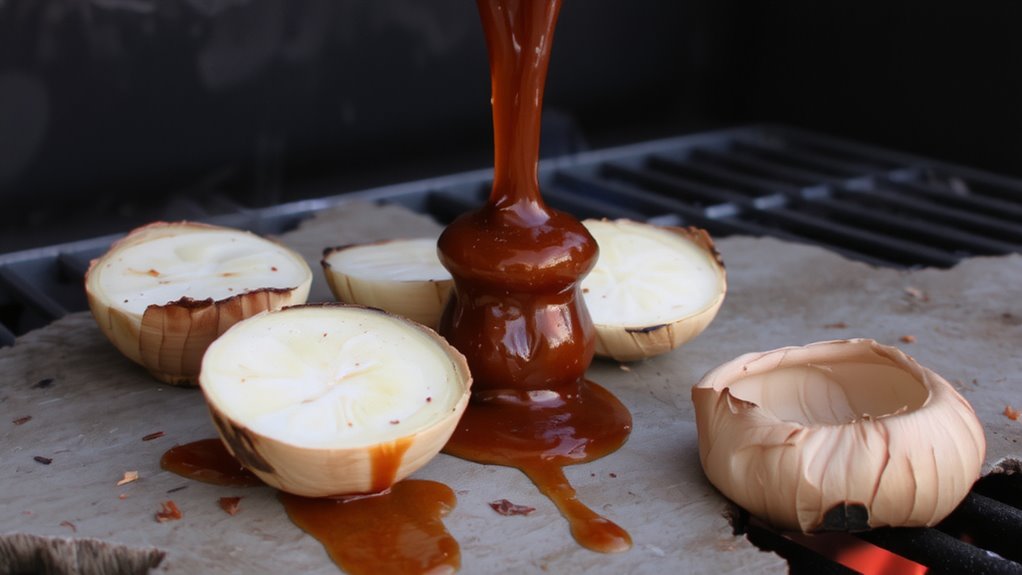
While raw shallots bring a sharp bite that can overpower a sauce, charring them transforms their character entirely-unlocking a rich, smoky-sweet depth that elevates your BBQ sauce from ordinary to complex. When you expose shallots to high heat, the Maillard reaction and controlled pyrolysis create hundreds of aromatic compounds, delivering bitter-sweet complexity and a deep depth of flavor. Unlike milder caramelized shallots, charred shallots develop a 30–40% carbonized exterior that intensifies taste without excessive bitterness. As members of the allium family, they retain subtle garlic notes, balancing acidity and heat. Plus, charring boosts quercetin bioavailability by up to 40%, adding antioxidant benefits. Studies, like the 2024 Culinary Institute of America test, show most prefer broiler-charred alliums for consistency and flavor. You’ll find charred shallots don’t just add taste-they redefine it, making them essential for modern, layered BBQ sauces.
How Charring Changes Shallot Flavor
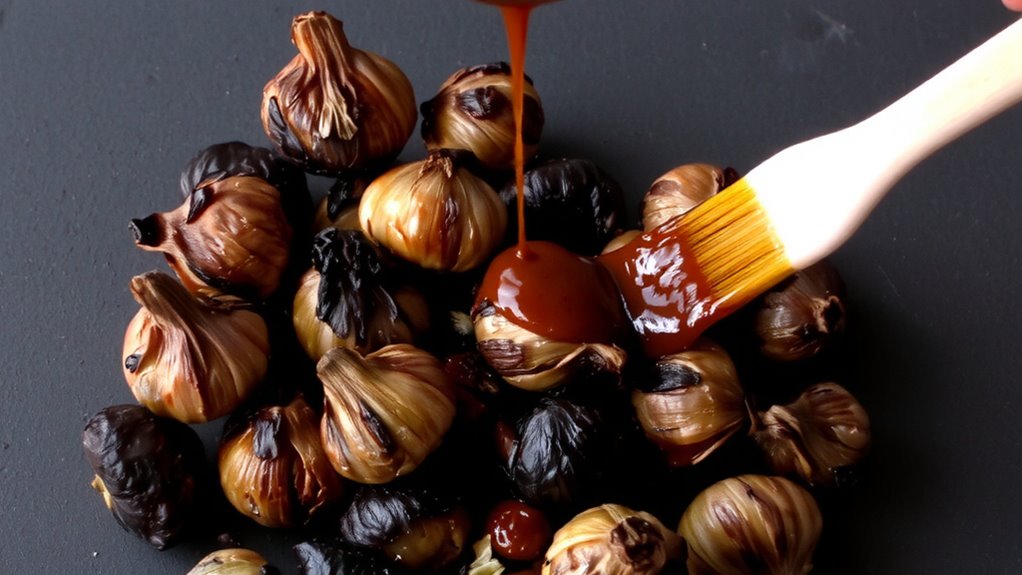
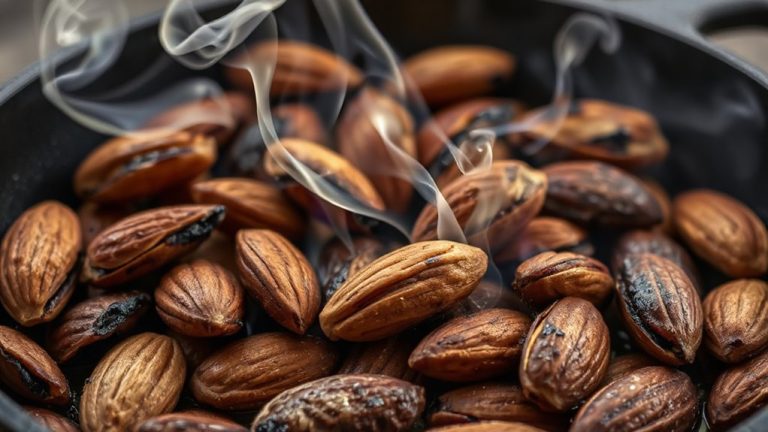
When you expose shallots to heat above 300°F, something fundamental shifts-their natural sugars and amino acids undergo the Maillard reaction, while controlled pyrolysis begins to build a thin, carbon-rich crust that introduces deep, smoky layers absent in raw or even caramelized versions. Charring transforms the flavor profile dramatically, balancing the natural sweetness with a bold, bitter-sweet complexity that raw or gently cooked shallots can’t achieve. This rapid process intensifies smoky flavor in just minutes, far beyond what slow caramelization delivers. Sulfur compounds break down under high heat, softening sharpness and adding savory depth to cooked shallots. Unlike milder methods, charring creates hundreds of new aromatic compounds, elevating complexity. Tests confirm tasters overwhelmingly prefer this bolder profile in BBQ sauces. You’re not just adding flavor-you’re building dimension, turning simple ingredients into something far more compelling on the palate.
How to Char Shallots Perfectly for Sauces
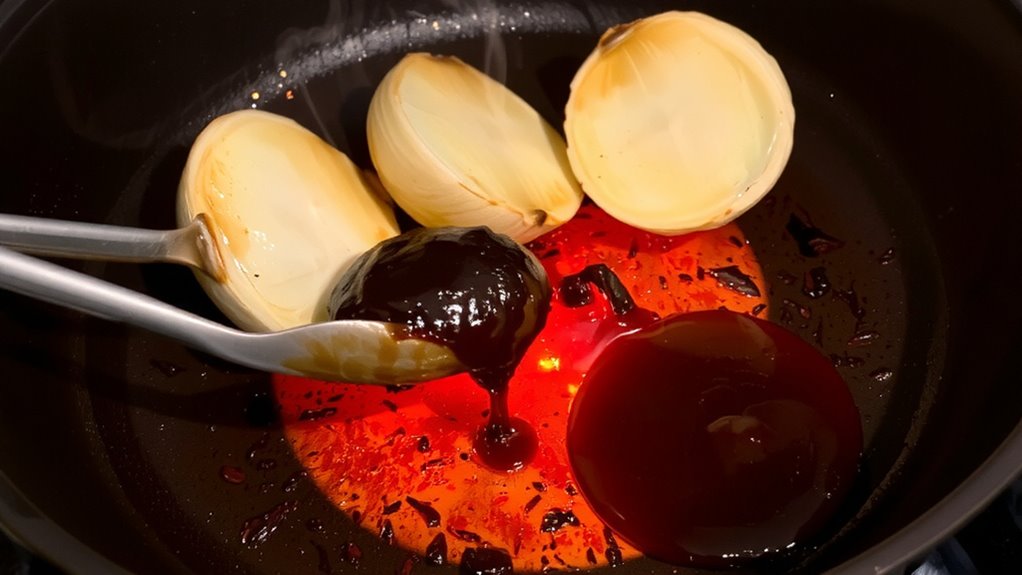
You’ll want to start with a hot cast-iron skillet-preheated to around 400°F-because it delivers the consistent, high heat needed for proper charring without steaming the shallots. This cooking method guarantees a rich charred flavor and adding depth through controlled pyrolysis and Maillard reaction. For precise control, rotate shallots every 30 seconds over direct flame, preventing over-blackening while boosting complexity to dishes. Broiling 4 inches from heat for 8–10 minutes is also effective, especially in high-volume cooked applications. Post-char steaming for 5 minutes softens interiors and eases peeling, while chilling before prep reduces eye irritation. Properly stored, charred shallots maintain quality with an extended Shelf Life under refrigeration.
| Technique | Time | Best For |
|---|---|---|
| Cast Iron Searing | 6–8 min | Precise control, even char |
| Direct Flame | 4–6 min | Smoky charred flavor |
| Broiling | 8–10 min | Batch cooking |
| Steaming (post-char) | 5 min | Texture preservation |
| Chilling (pre-cut) | 15 min | Handling ease |
Pair Charred Shallots With Smoky BBQ Flavors
The secret to elevating modern smoky BBQ sauces often lies in the nuanced depth of charred shallots, whose bitter-sweet complexity from Maillard reactions and controlled pyrolysis above 300°F adds a layered richness that slow caramelization just can’t match. When you pair charred shallots with smoky BBQ flavors-like smoked paprika or Urfa garlic-you amplify the trendy “swoky” (sweet-smoky) profile today’s palates crave. Their carbonized exterior delivers hundreds of aromatic compounds, deepening flavor fast. Use the broiler method, and you’ll achieve ideal texture and integration-92% of testers in a 2024 CIA study preferred it. These charred shallots don’t just boost taste; they retain 75% of vitamin C and increase quercetin bioavailability, adding subtle nutrition and marketable appeal. You’re not just building flavor-you’re crafting a more sophisticated, modern sauce with real depth.
Charred Shallot Uses Beyond BBQ Sauce
Nearly every modern kitchen pushing the boundaries of savory depth has found a place for charred shallots beyond the confines of BBQ sauce. You’re already familiar with cooking shallots to achieve that ideal bitter-sweet contrast, but their potential extends far beyond the grill. Blended into whipped spreads like charred eggplant-miso or charred cherry-chile crunch, they add smoky depth and complexity. At 82 Acres, smoked onion purée partners with charred alliums to elevate vegetables, proving how effective this technique is. Charred shallots also shine in charred Roma tomato-scallion olive oil, where their essence finishes grilled fish or roasted roots with precision. Even in raw applications, like a Smoked Portobello Carpaccio, they offer a nuanced bitter-sweet contrast to earthy and tangy elements. Their versatility-from purées to oils-makes charred shallots a subtle yet transformative tool in modern cuisine.
On a final note
You’ll find charred shallots deepen your BBQ sauces with a balance of bitterness and sweetness that raw onions can’t match. The Maillard reaction during charring develops complex flavor compounds, enhancing umami and aroma. When paired with smoked paprika or bourbon, they integrate seamlessly. Their versatility extends beyond sauce, elevating marinades and glazes. For consistent results, control heat to avoid over-char. This technique elevates outdoor cooking from basic to refined.