Essential Hibachi Seasonings and Sauces for Authentic Flavor Profiles
You’ll need garlic and onion powder for sharp, sweet depth without burning, plus a soy glaze that caramelizes beautifully on high heat. Toss in sesame oil at the end for nutty richness, and pair it with a creamy hibachi sauce made from mayo, ketchup, and rice vinegar. Use grapeseed oil with aged vinegar to boost complexity, and layer flavors with marinades, dry rubs, and timed sauce applications. Balance sweet, savory, and umami just right-and you’re already closer to the pro hibachi taste. There’s a smarter way to build every layer, and it starts with the next step.
Notable Insights
- Well-balanced rice seasoning with umami and vinegar tang enhances grain dishes authentically.
- Garlic and onion powders add depth and sweetness without burning under high hibachi heat.
- Sesame oil and soy glaze provide rich, nutty aroma and caramelized flavor on grilled foods.
- Homemade hibachi sauce combines mayonnaise, ketchup, rice vinegar, and garlic for creamy tanginess.
- Marinating meats and layering sauces during cooking builds balanced, professional hibachi flavor profiles.
The 5 Essential Hibachi Seasonings
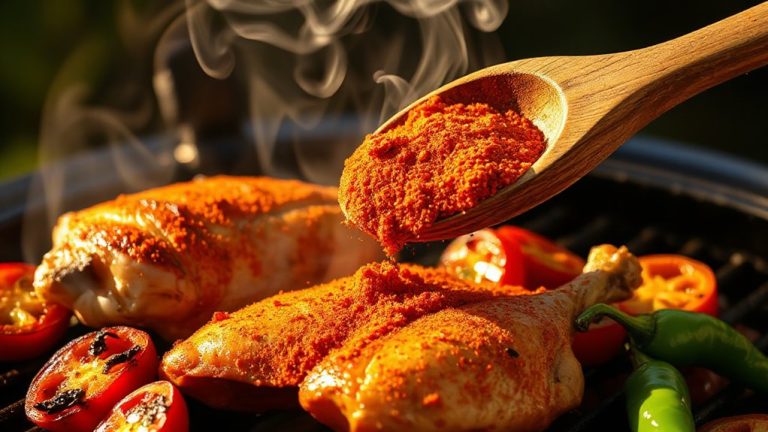
You’ll want to stock these five essential hibachi seasonings if you’re serious about nailing that authentic, high-heat grilled flavor. First, a well-balanced rice seasoning enhances every grain with umami and just the right touch of vinegar tang-critical for finishing fried rice with flair. Garlic powder brings sharp depth without burning, unlike fresh garlic under intense flames. Onion powder integrates seamlessly into dry rubs or oil blends, adding sweetness without sticking to grills. Then there’s sesame oil: its rich, nutty profile elevates dishes subtly but noticeably when drizzled before serving. Finally, a quality soy glaze acts as both marinade and finisher-thicker than regular soy sauce, it caramelizes beautifully on hot surfaces, sealing in moisture and flavor. Together, these seasonings form the backbone of hibachi cooking, ensuring consistent, professional results every time you grill. For maximum impact, consider pairing these staples with top-rated meat seasonings to enhance protein-rich dishes with complementary savory notes.
How to Make Hibachi Sauce From Scratch
One standout sauce that defines the hibachi experience is the creamy, tangy hibachi sauce often drizzled over grilled meats and vegetables. You can easily make it from scratch using simple pantry ingredients like mayonnaise, ketchup, rice vinegar, garlic, and a touch of sugar. Blending these components gives you control over flavor balance and lets you create custom homemade blends tailored to your taste. While traditional hibachi sauce skips the fermentation process, incorporating a small amount of fermented rice vinegar adds subtle depth and complexity. The result is a smooth, versatile sauce that enhances grilled dishes without overpowering them. Unlike store-bought versions laden with preservatives, your DIY version guarantees freshness and authenticity. Apply it during the final minutes of grilling or serve it on the side-either way, it elevates texture and taste. Mastering this sauce means you’re one step closer to recreating an authentic hibachi meal at home.
The Oil and Vinegar Trick for Better Flavor
A balanced blend of oil and vinegar sets the foundation for deeper, more resonant flavors in hibachi-style cooking. You’ll want to control the oil temperature carefully-too high and the oil degrades, too low and ingredients stick. Using aged vinegar enhances complexity, as vinegar aging develops subtle tangy notes that regular varieties lack. Pairing a high-smoke-point oil like grapeseed with rice vinegar that’s undergone slow aging balances heat resilience with nuanced acidity. Here’s how they compare:
| Oil Type | Best Vinegar Pair |
|---|---|
| Grapeseed | Rice (aged 6+ months) |
| Canola | Apple cider (2-year) |
| Sesame (toasted) | Black rice (aged) |
| Avocado | White balsamic (1-year) |
| Sunflower | Red wine (traditional) |
This pairing strategy sharpens flavor without overpowering. You’ll notice improved sear and aroma when the oil temperature aligns with the vinegar’s intensity.
How to Mix and Apply Hibachi Seasonings
The foundation of authentic hibachi flavor lies in the careful blending and precise application of seasonings at the right cooking stage. You’ll want to start by mastering basic marinade techniques-soy sauce, garlic, ginger, and sesame oil work together to penetrate proteins deeply when given time. For best results, marinate meats at least 30 minutes, or overnight for richer flavor. When applying dry rubs, coat proteins evenly but lightly, ensuring even browning without clumping. During cooking, toss vegetables and meats with seasoning blends mid-grill to amplify taste without burning. These grilling tips maximize flavor development and texture. Apply sauces like yakitori glaze in the final minutes to avoid caramelizing too early. Success comes from layering flavors thoughtfully-not all at once. Your timing, heat control, and seasoning order define the final taste more than the ingredients themselves.
Balance Sweet, Savory & Umami Like a Pro
Flavor harmony defines exceptional hibachi cooking-something you’ll master when you learn to balance sweet, savory, and umami with intention. You need more than just soy sauce and sugar; it’s about how flavors build and interact. Use flavor layering by adding mirin for sweetness, soy for saltiness, and miso or dashi-infused oils to deepen umami. Caramelization techniques on the grill lock in complexity-sear proteins and veggies over high heat to develop fond, enhancing both texture and taste. The Maillard reaction isn’t just science; it’s your tool. Don’t dump sauce at the start; add it in stages so each component shines. A well-balanced hibachi dish shouldn’t taste of one dominant note but of integration-sweetness that doesn’t overwhelm, savoriness anchored by depth, and umami that lingers. Control heat, time, and seasoning order, and you’ll cook like a pro.
On a final note
You’ve now got the essentials to recreate authentic hibachi flavors at home. The right mix of seasonings, homemade sauce, and the oil-vinegar base elevates your cooking with balanced sweetness, savoriness, and umami. These techniques aren’t just about taste-they’re about replicating the precision and depth that define real hibachi grilling, making your outdoor meals flavorful, consistent, and restaurant-quality every time.