How to Convert a Hibachi Grill Into a Smoking Chamber With Wood Chunks
Pick a heavy-duty hibachi with a tight lid and thick steel construction-it’ll hold heat better for low-and-slow smoking. Clean the firebox and grate, removing rust and old residue to guarantee even heating and clean smoke. Set up indirect heat by banking coals to one side and using the other for food. Tweak the bottom and top vents to keep airflow steady, aiming for 225°F to 250°F. Add hardwood chunks like hickory or cherry-15–20% moisture-for rich, balanced smoke. Avoid softwoods like pine; their resin creates bitter flavors. You’ll get tender, flavorful results if you maintain temperature control and use quality fuel-and there’s more to optimizing each smoke session than most realize.
Notable Insights
- Choose a hibachi with a 18-inch diameter, thick steel construction, tight-fitting lid, and adjustable vents for effective smoking.
- Clean the hibachi thoroughly, removing grease, ash, and rust, then treat metal surfaces with high-heat resistant oil.
- Set up indirect heat by placing coals on one side, leaving space on the opposite side to cook food without flare-ups.
- Use hardwood chunks like hickory, oak, or cherry with 15–20% moisture for clean, flavorful smoke; avoid resinous softwoods.
- Maintain 225°F–250°F by managing airflow with partially open vents and adding wood chunks for steady smoke during the cook.
Choose a Hibachi That Works as a Smoker
When it comes to turning a hibachi into a functional smoker, size and construction matter-more than you might think at first glance. You need enough grill size to hold both food and a steady heat source, ideally at least 18 inches in diameter, so temperature stays consistent. Smaller models lose heat too quickly, making low-and-slow smoking nearly impossible. Material quality is just as critical-thick steel or cast iron retains heat better and resists warping over time. Thin, flimsy metal won’t hold steady temps and may rust after only a few uses. Look for tight-fitting lids and solid hinges, since heat retention relies on a sealed environment. You’ll also want vents you can adjust, allowing control over airflow. A well-built hibachi might cost more, but it pays off in even smoking and durability. Choose wisely-you’re not just buying a grill, you’re building a smoker. For best results, consider models highlighted in expert reviews, such as those in the Top Hibachi Grills roundup, which evaluate performance and smoker conversion potential.
Clean and Modify Your Grill for Smoking
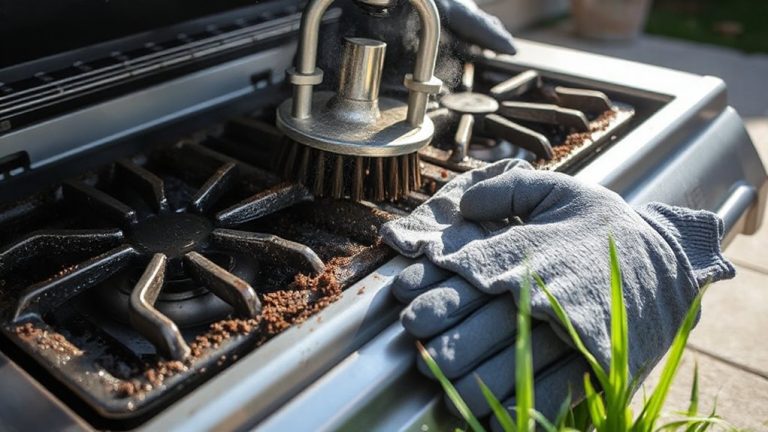
A solid hibachi’s built to last, but before it’s ready to smoke, it needs a thorough cleaning and a few smart tweaks. Start by scraping off built-up grease and old charcoal residue-these impurities affect flavor and heat distribution. For grill rust prevention, inspect the cooking grate and firebox closely; if you spot surface rust, scrub it with a wire brush and treat the metal with a high-heat resistant oil. Regular maintenance like this prolongs your grill’s lifespan and guarantees cleaner burns. Don’t skip proper charcoal ash disposal: cool ashes fully, then remove them to prevent airflow blockages and corrosion. Accumulated ash retains moisture, accelerating rust. While hibachis aren’t designed for long smokes, modifying them with a clean, rust-resistant firebox improves performance. A well-maintained unit holds steady temperatures better and responds more predictably to fuel and wood chunk additions-critical when shifting from grilling to low-and-slow smoking.
Set Up Indirect Heat and Control Airflow
Though hibachi grills are built for direct heat cooking, you can adapt them for effective smoking by creating indirect heat and fine-tuning airflow. Shift your coals to one side so you establish a consistent heat zone on the opposite side for indirect cooking. This setup allows food to cook slowly without scorching. Adjust the bottom and top vents to regulate temperature and improve smoke management-partially close them to slow combustion and increase smoke circulation, but don’t restrict airflow too much or the fire may die. You’ll need steady oxygen flow to maintain clean, flavorful smoke. Monitor the grill temperature closely; fluctuations disrupt cooking and degrade smoke quality. Most hibachis lack built-in dampers, so manual vent adjustments are essential for stability. While this demands vigilance, the control you gain enhances results considerably. With practice, you can maintain even heat and efficient smoke management, turning a simple grill into a capable smoking setup. For best results, consider using a model designed for versatility, such as those featured in reviews of the best charcoal grill smokers.
Use the Right Wood Chunks for Smoke
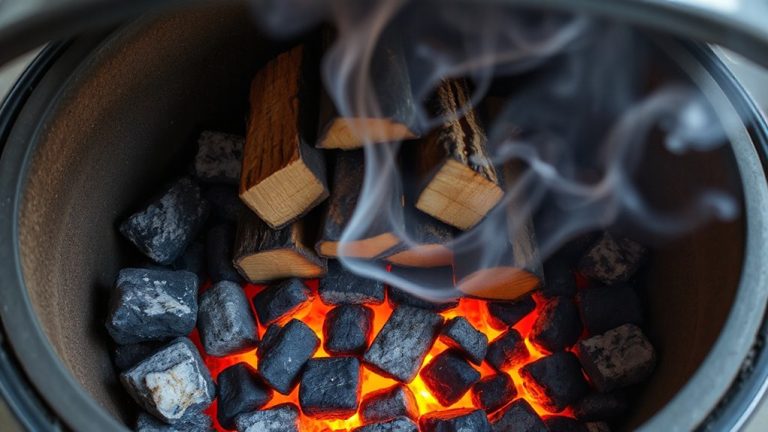
Smoke quality starts with your wood choice-skip the random scraps and go for proper hardwood chunks designed for smoking. Your wood selection directly shapes the smoke flavor, so pick wisely. Alder and cherry offer mild, slightly sweet notes, perfect for poultry or fish. Hickory and oak deliver stronger, robust profiles that stand up to beef and pork. Mesquite burns hot and bold-use it sparingly unless you want to overpower your food. Avoid softwoods like pine; they contain resins that create bitter, unpleasant smoke. Quality hardwood chunks burn evenly and produce clean, consistent smoke. Moisture content matters too-chunks with 15–20% moisture give longer, cooler smoke ideal for flavor development. Pre-soaking isn’t necessary and can actually hinder performance by causing steam instead of smoke. Matching the right wood to your protein guarantees balanced, restaurant-quality results every time you fire up your converted hibachi. For best results, choose wood chunks recommended in trusted best wood chips for smoking guides to ensure optimal flavor and performance.
Keep Your Hibachi Smoker at Low Heat
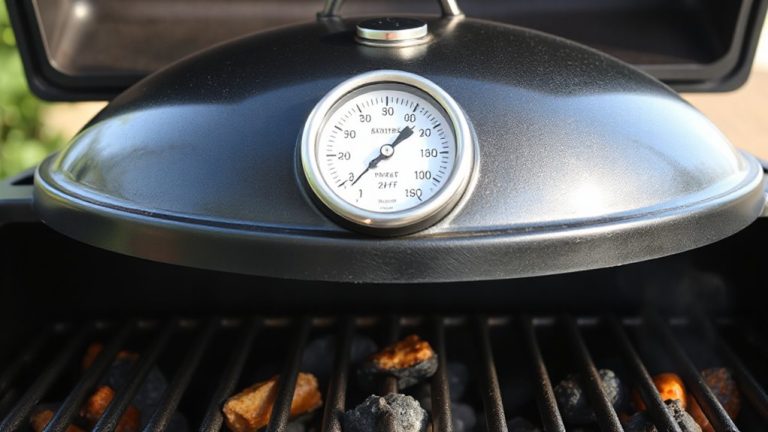
Since maintaining a steady, low temperature is critical for proper smoke penetration and tender results, you’ll want to manage your hibachi’s airflow and fuel load carefully. Open the vents just enough to allow oxygen in without spiking the heat-roughly a quarter to half open usually works. Use fewer charcoal briquettes or lump charcoal, arranging them to one side so indirect heat circulates through the chamber. This layout enhances temperature stability and improves heat retention by minimizing flare-ups and thermal spikes. A tight-fitting lid is essential; any gaps cause heat loss and force constant adjustments. Monitor the internal temperature with a reliable meat or grill thermometer, aiming to hold between 225°F and 250°F. Consistent temperature stability transforms tough cuts into succulent meals, while poor heat retention leads to uneven cooking and wasted fuel. With practice, your hibachi smoker delivers restaurant-quality results using simple, effective design.
Smoke Meat Successfully the First Time
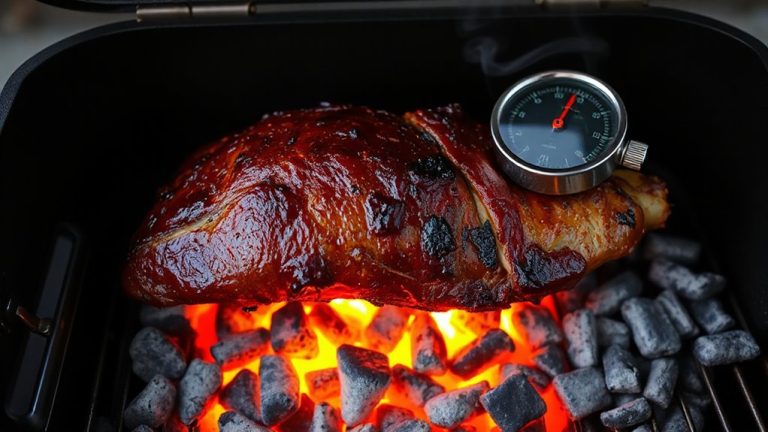
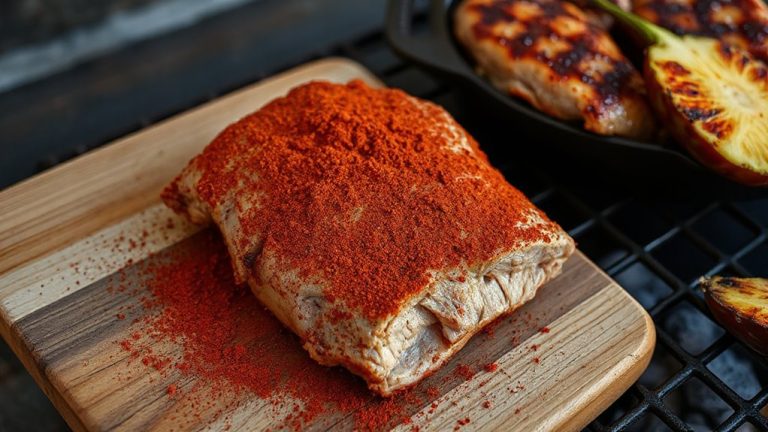
Once you’ve stabilized your hibachi’s temperature, the real test begins-transforming raw meat into deeply flavored, smoke-infused barbecue on your first try. Success hinges on preparation as much as execution. Start with smart marinade selection; acidic or enzymatic blends like pineapple juice or vinegar-based mixes tenderize while amplifying smoke absorption. Avoid sugary marinades-they’ll char at low-and-slow temps. Position meat fat-side up so drippings carry flavor, and maintain steady airflow to avoid bitter, acrid smoke. Patience matters most during meat resting: let cuts like brisket or pork shoulder sit, tented in foil, for 30–45 minutes. This stabilizes fibers, redistributing juices for tender slices. Skimping here risks dry, tough results. Though hibachis lack precision dampers, attentive monitoring and a reliable thermometer turn limitations into teachable moments. Your first smoke may not be perfect, but mindful technique guarantees progress, not guesswork, shapes the outcome.
On a final note
You’ve turned your hibachi into a functional smoker, and it works best with careful airflow control and the right wood chunks. Though compact, it delivers genuine smoke flavor when kept at low, steady heat. It’s not a replacement for a dedicated smoker, but for small batches and backyard versatility, it performs surprisingly well. With practice, you’ll balance temperature and smoke more efficiently, making this a practical, low-cost option for beginners exploring outdoor cooking.