Balancing Charcoal Volume and Airflow to Sustain 250°F for Pork Shoulder
You’ll hold 250°F steadily by matching high-density briquettes to your smoker’s size-2–3 lbs for smaller units, up to 8–9 lbs for larger ones-and using vents to control airflow. Open the bottom vent slightly to feed oxygen to the coals, then adjust the top vent to manage exhaust. This balance sustains clean, consistent combustion. Pair quality charcoal with tight seals and insulation, and you’ll maintain the ideal temp all through the cook, especially overnight. There’s more to mastering this balance than just fuel and flaps.
Notable Insights
- Use 4–9 lbs of high-density briquettes or lump charcoal based on smoker size to sustain steady heat.
- Maintain 250°F by adjusting bottom vents for oxygen control and top vents for smoke release.
- Opt for quality briquettes with high burn efficiency to ensure consistent, long-lasting combustion.
- Avoid airflow overcorrection; make small vent adjustments to prevent temperature spikes or drops.
- Load enough charcoal to last 6–8 hours, ensuring stable heat overnight without refueling.
How to Hold 250°F for Perfect Pork Shoulder
While maintaining a steady 250°F might sound simple, getting it right is essential when smoking pork shoulder to achieve that tender, pull-apart texture without drying out the meat. You’ll need to balance charcoal volume with airflow-too much fuel spikes the temperature, while restricted vents choke the fire. Aim for thin, blue smoke rather than thick white billows; this indicates ideal combustion and clean flavor. Smoke density should remain light to avoid bitterness. Use your dampers to fine-tune oxygen flow, adjusting incrementally. A quality thermometer helps monitor pit stability. Once the internal meat temp hits 195–203°F, remove it and let the meat rest for at least an hour. That rest allows juices to redistribute, ensuring moist, flavorful results every time. Beginners may find it easier to master this process with a well-designed beginner offset smoker.
Why 250°F Works Best for Tender Results
Holding your smoker at 250°F isn’t just a suggestion-it’s the sweet spot where collagen breaks down efficiently without pushing the pork shoulder into the danger zone of drying out. You get consistent connective breakdown, turning tough fibers into gelatin over time, which delivers that melt-in-your-mouth tenderness. At this temperature, the meat isn’t cooking too quickly to lose moisture, nor too slowly to stall excessively. It also allows smoke to cling evenly, enhancing flavor development without overwhelming the pork. You’ll notice richer, more balanced taste-smoky, savory, with subtle sweetness-because chemical reactions like the Maillard reaction and lipid degradation occur steadily. Going much higher risks toughness; lower, and you prolong the cook unnecessarily. For reliable, tender results with deep flavor development, 250°F is your best bet. It’s not just tradition-it’s food science working in your favor.
How Much Charcoal to Use for Steady Heat
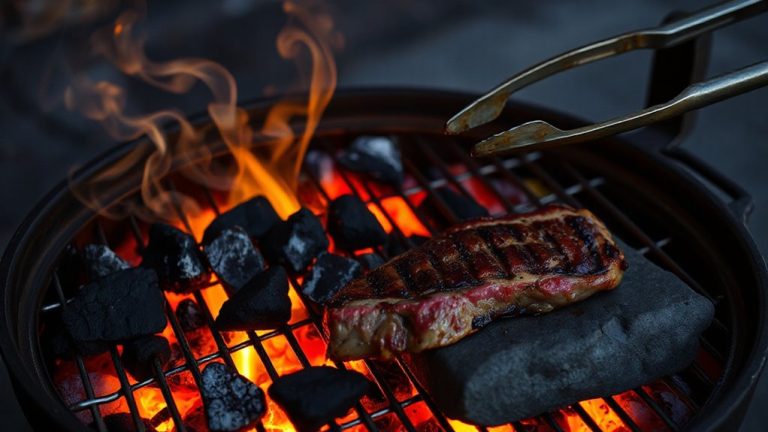
Getting the right amount of charcoal in your smoker makes all the difference when aiming for a steady 250°F cook. Too little, and you’ll struggle to maintain heat; too much, and you’ll risk overheating your pork shoulder. Your charcoal type and ignition method directly influence burn rate and consistency. For most offset smokers, lump charcoal lights faster but burns hotter, while briquettes offer longer, more predictable burns. A reliable charcoal chimney starter ensures even ignition without the need for lighter fluid, improving temperature control from the start. Use this guide to gauge volume based on cooker size:
| Smoker Size (gallons) | Charcoal Type | Ignition Method |
|---|---|---|
| 18–30 | 2–3 lbs briquettes | Chimney starter |
| 30–45 | 4–5 lbs lump | Electric probe |
| 45–60 | 6–7 lbs mixed | Fatwood sticks |
| 60+ | 8–9 lbs briquettes | Torch lighter |
| Pellet hybrid | 1–2 lbs start fuel | Built-in igniter |
How Vents Control Oxygen and Temperature
Since oxygen feeds combustion, your smoker’s vents play a vital role in managing both flame intensity and internal temperature. You control this through vent positioning, which directly influences airflow restriction and heat levels. Open vents allow more oxygen in, boosting combustion and raising temperatures, while closing them reduces airflow, slowing the burn and cooling things down. For steady 250°F smoking, you need precise airflow restriction-too much and your charcoal burns too fast; too little and the fire risks smothering. Top and bottom vents work together: the bottom regulates oxygen intake, the top controls exhaust and smoke flow. Proper vent positioning secures consistent draft without starving the fire. Experienced pitmasters adjust vents incrementally, responding to temperature swings with small changes. This balance isn’t automatic-it demands attention, but once mastered, it delivers reliable, even heat essential for tender pork shoulder.
Best Charcoal for Holding 250°F
You’ll want to choose a charcoal that burns clean and delivers steady heat over long periods if you’re aiming to maintain a consistent 250°F for pork shoulder. Your best bet is hardwood lump or high-quality briquettes with high charcoal density and excellent burn efficiency. These hold temperature longer and respond predictably to airflow adjustments. While lump charcoal lights fast and burns hot, premium briquettes offer more uniformity, which helps with stability over 8–12 hour smokes. For reliable performance, consider top picks for smoking charcoal that are specifically formulated for consistent temperature and clean burn.
| Charcoal Type | Charcoal Density | Burn Efficiency |
|---|---|---|
| Hardwood Lump | Medium | High |
| Quality Briquettes | High | Very High |
| Instant-Light | Low | Low |
Quality briquettes outperform others in consistency, while cheaper or instant-light options often contain fillers that disrupt heat and flavor. You’ll get better control and less maintenance with dense, efficient fuel.
Fixing Common 250°F Temperature Problems
Why does your cooker struggle to hold 250°F steady? Poor fuel placement is often the culprit. If your coals are clustered too tightly or spread too thin, temperature control becomes erratic. You need an even ring of coals around the burner bowl or fire ring to promote consistent heat circulation. Uneven burning disrupts heat retention, especially in offset or kamado-style smokers. A warped lid or damaged gasket also reduces heat retention, letting warm air escape and cold air sneak in. Adjust your airflow vents gradually-over-opening them can drop temps fast by cooling the coals. Make sure the charcoal quality supports long burns without constant tweaking. You’ll get better stability by pairing smart fuel placement with a well-sealed cooking chamber. These fixes address root causes, not just symptoms, so your pork shoulder stays on track without constant babysitting.
Keep 250°F Steady Through the Night
While maintaining a steady 250°F during the day requires attention, doing so overnight demands a more deliberate setup and reliable equipment. You’ll need a cooker with strong insulation and a snug-fitting lid to minimize heat loss. For night monitoring, use a digital thermometer with an alarm to alert you if temps drop or spike-relying on guesswork risks ruining your pork shoulder. Charcoal quality directly affects fuel longevity; hardwood lump burns faster, while high-density briquettes offer more consistent burn times. Load enough fuel to last 6–8 hours, adjusting airflow slightly to sustain a steady draft without overfeeding the fire. Partially close the dampers to regulate oxygen, but never seal them completely. A stable fire bed, paired with minimal disturbance, keeps combustion efficient. Plan ahead, check your rig’s seals, and trust calibrated tools over instinct when sleeping.
On a final note
You’ve learned how balancing charcoal volume and airflow sustains 250°F for pork shoulder. Using the right amount of quality lump or briquettes, managing top and bottom vents for oxygen flow, and monitoring temperature swings guarantees steady low-and-slow cooking. This method delivers tender, juicy results by breaking down collagen without drying. While minor adjustments are inevitable, consistent fuel and vent control means reliable performance-especially overnight-making your setup as predictable as it is effective for barbecue that impresses.