Campfire French Toast: Pre-Mixing Batter for Morning Convenience
You can prep your French toast batter the night before-just whisk eggs, milk, cinnamon, and vanilla, then store it sealed in a cooler below 40°F. It stays safe and performs just like fresh for up to 24 hours. Thick sourdough or day-old challah soaks it up perfectly without falling apart. Cook over medium coals in a seasoned cast iron for golden results, and keep cleanup easy with foil or swift scraping. There’s more to mastering the full campfire breakfast with smart prep and gear choices.
Notable Insights
- Pre-mix French toast batter the night before with eggs, milk, cinnamon, and vanilla for a smooth, consistent mixture.
- Store prepared batter in a sealed container in a cooler at or below 40°F for up to 24 hours.
- Use thick-cut, slightly stale sourdough or challah bread for optimal soak and structural integrity over the fire.
- Cook batter-soaked slices in a preheated cast iron skillet over medium coals, flipping after 3–4 minutes per side.
- Add toppings like fruit compote or toasted nuts after cooking to minimize mess and maintain texture.
Make Ahead Campfire French Toast Batter
While you’re prepping for a morning of outdoor cooking, mixing your campfire French toast batter the night before can save time and simplify breakfast at the campsite. You’ll want to whisk the ingredients thoroughly so the batter consistency stays uniform-neither too thick nor too runny-ensuring even coating and proper absorption when poured over bread. A well-balanced mixture typically includes eggs, milk, cinnamon, and a touch of vanilla. Store it in a sealed container; the storage duration should not exceed 24 hours, especially if kept in a cooler at or below 40°F. Beyond that, microbial risks rise, and the texture may degrade. You’ll find pre-mixed batter performs just as well as fresh, with no noticeable difference in browning or flavor when cooked over a grill or cast-iron skillet. Planning ahead this way streamlines camp cooking, letting you enjoy a warm, satisfying breakfast without morning hassle.
Best Bread for Campfire French Toast
The best bread for campfire french toast holds up to soaking and cooking over open flames without falling apart or turning mushy. You need a loaf with the right bread texture-dense enough to maintain structure, yet porous enough for ideal flavor absorption. Thick-cut sourdough is ideal; its slight tang enhances richness, while the firm crumb soaks up pre-mixed batter evenly without disintegrating. Brioche works if slightly stale, offering buttery notes and softness, but fresh brioche can become too tender over heat. Challah strikes a balance, with sturdy elasticity and good saturation, browning well over coals. Avoid flimsy sandwich bread-it collapses easily. For reliable results, day-old bread is best; it absorbs without breaking. Ultimately, texture impacts performance as much as flavor-choose loaves that endure both soak and flame.
How to Cook French Toast Over a Campfire
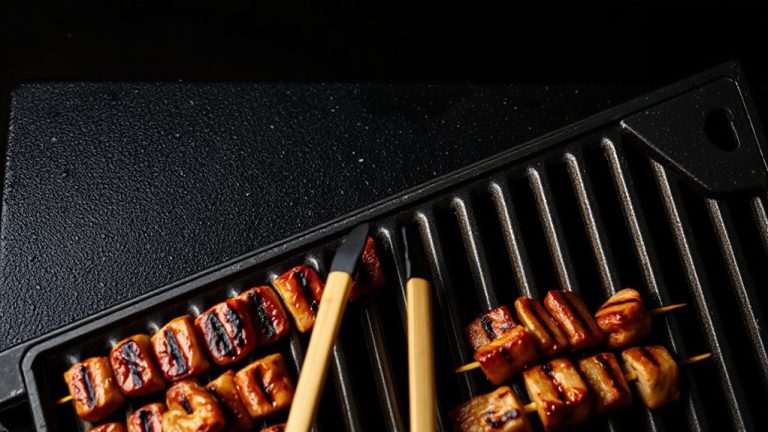
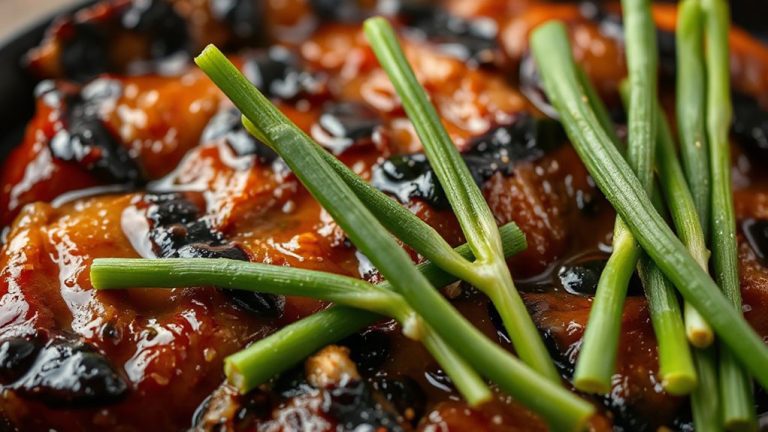
You’ve picked the right bread-something sturdy like sourdough or day-old challah that can handle a good soak without falling apart-so now it’s time to get that batter-coated bread cooking over the fire. A cast iron skillet is your best bet: it retains heat evenly and withstands the harsh conditions of outdoor cooking. Set it over medium coals, not roaring flames, to prevent scorching. The direct flame method works, but it requires careful attention-hold the skillet with a heavy-duty handle and rotate it often for uniform browning. You’ll notice the edges firm up first; that’s your cue to flip. Cook each slice about 3–4 minutes per side, depending on bread thickness. Cast iron’s heat retention gives a crisp exterior while sealing in moisture, outperforming thin pans that warp or spot-burn. Pre-season your skillet to avoid sticking, and you’ll get consistent, golden results every time.
Simple Toppings and Add-Ins for Campfire French Toast
A well-crafted campfire French toast tastes even better when topped simply but smartly, since outdoor cooking limits your options and rewards efficiency. You’ll want toppings that pack flavor without clutter-fruit compote is a standout choice, especially if pre-made and stored in a leak-proof container. Its rich, jam-like consistency clings well to warm bread, offering a sweet, tangy burst that cuts through the custard’s richness. Pair it with a nut crunch-think chopped pecans or walnuts toasted lightly over the fire-for texture contrast and depth. The nut crunch adds a satisfying bite and boosts protein, making your breakfast more sustaining. Both toppings travel well and require no last-minute prep. Unlike heavier syrups, fruit compote spreads evenly and won’t drip excessively, while the nut crunch stays crisp if kept dry. Together, they elevate your French toast without complicating campsite logistics.
Easy Cleanup for Camp Cooking
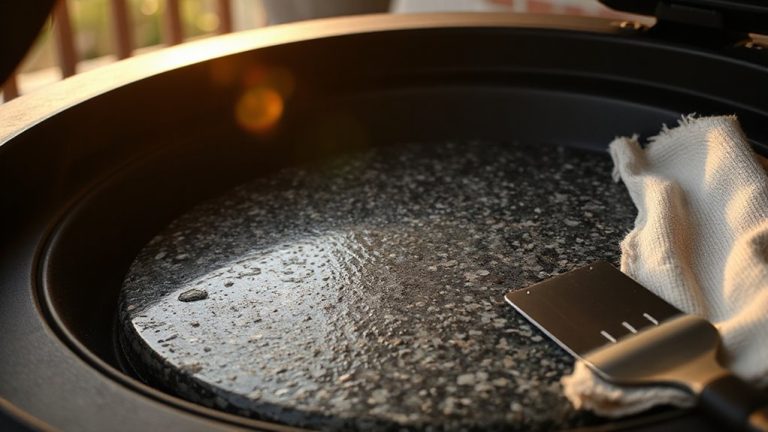
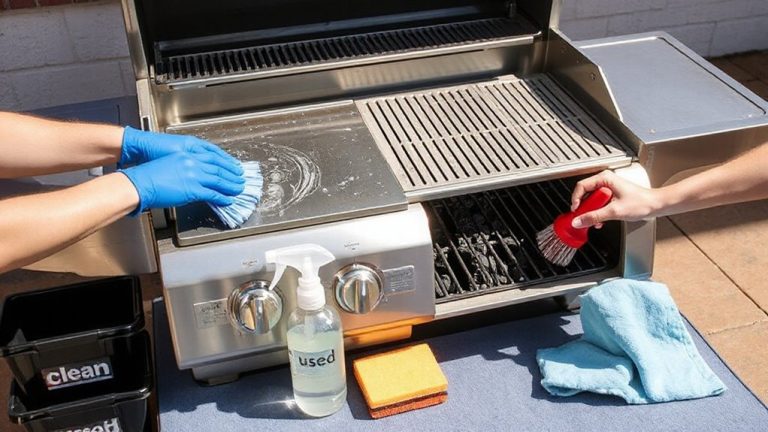
After cooking over an open flame, dealing with greasy pans and stuck-on batter can turn a peaceful morning into a chore, but with a few smart strategies, cleanup becomes almost as effortless as the prep. Try foil packet cooking-simply assemble ingredients in heavy-duty aluminum foil, seal tightly, and let the campfire do the work. You’ll cut down on dishes dramatically, and cleanup often means folding the used foil inward and tossing it out later. For those using a skillet, especially cast iron, proper cast iron maintenance is key. While it browns French toast beautifully, let it cool slightly, then scrub with a brush and minimal water-never soap. Dry immediately to prevent rust. A well-seasoned pan actually gets easier to clean over time. These methods aren’t just convenient; they’re proven performers in real camp settings, balancing durability with minimal post-meal effort.
Why Pre-Mixing Saves Your Morning
Dawn light creeps over the tree line, but your breakfast is already halfway done-thanks to a sealed container tucked in the cooler, the batter for campfire French toast waits, fully mixed and evenly blended with eggs, milk, vanilla, and a touch of cinnamon. You skip the fumble of cracking eggs on uneven ground or measuring spices with sleep-heavy eyes. This is morning efficiency: less prep, more productivity. The time saving adds up fast when you’re managing a fire, hot coals, and hungry campers. Pre-mixing guarantees consistency-no lumps, no separation-and means you can focus on heat control and toast color. It’s a small upgrade with outsized returns, especially in outdoor cooking where variables run high. Practical, clean, and reliable, it reflects smart planning. For anyone serious about camp breakfasts, pre-mixing isn’t just convenient-it’s essential.
On a final note
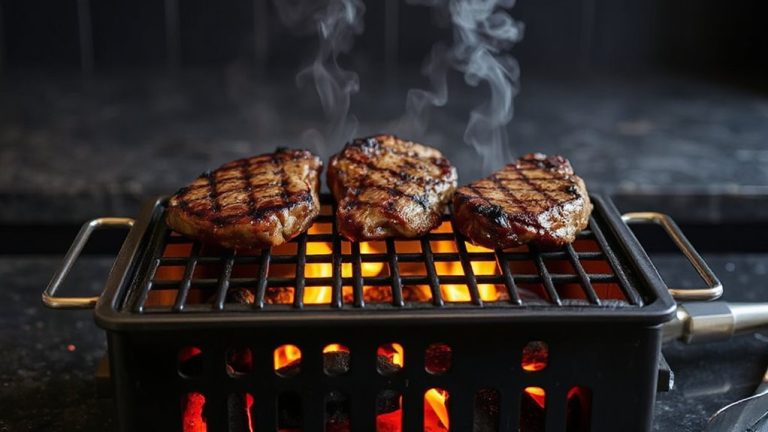
Pre-mixing your campfire French toast batter saves time and reduces morning hassle, letting you focus on cooking over the fire. Thick, sturdy bread like sourdough holds up well to soaking and grilling. Cooking on a well-heated grate guarantees even browning without sogginess. With minimal cleanup and smart prep, this method proves efficient and reliable-ideal for outdoor cooking where simplicity and performance matter most.