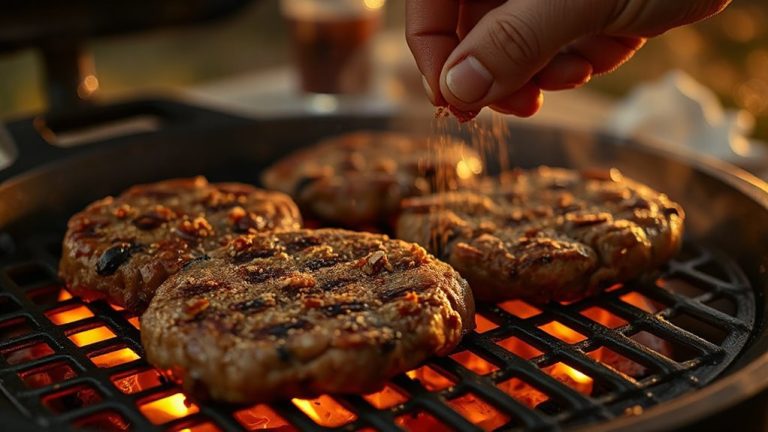
How to Maintain Even Heat Across the Narrow Konro Grill Surface
Keep your konro’s heat even by spreading binchotan in a single, tight layer-too thick blocks airflow, too sparse creates weak zones. Adjust bottom vents slightly to balance combustion; too much air cools the coals fast, too little starves them. Rotate food regularly-every 60 to 120 seconds depending on type-to counter hot spots. If one end flares, redistribute coals with tongs or tweak the grill height. You’ll soon master consistent searing and avoid frustrating temperature swings.
Notable Insights
- Arrange binchotan in a single, uniform layer to ensure consistent infrared heat across the grill surface.
- Balance airflow by adjusting bottom vents to maintain even combustion and prevent cooling zones.
- Rotate food regularly-chicken every 90 seconds, fish every 60, vegetables every 120-to counteract heat variance.
- Spread coals evenly and break up clusters to eliminate hot spots caused by uneven fuel distribution.
- Adjust grill height: raise grid to reduce searing in hot zones, lower to intensify heat where needed.
Why Your Konro Grill Heats Unevenly
Why does one end of your konro grill sear food while the other barely sizzles? You’re likely dealing with grill design flaws and fuel quality variations. Most konro grills have narrow, elongated chambers that don’t naturally promote even heat distribution. If the air vents are uneven or poorly placed, airflow becomes inconsistent, starving one end of oxygen. That means weak combustion and lukewarm results. Then there’s the fuel-binchotan quality varies widely. Lower-grade charcoal may contain impurities or inconsistent density, leading to uneven burn rates. Even if you load it symmetrically, some pieces flare while others smolder. These fuel quality variations undermine temperature control. While thoughtful design could mitigate airflow issues, many mass-produced models ignore these details. You’ll need to compensate for these flaws manually. So don’t blame your technique immediately-inspect the grill’s construction and charcoal batch first. Even small imbalances in either area ruin thermal consistency. Choosing one of the best konro grills can significantly improve heat uniformity through superior materials and vent placement.
Arrange Binchotan for Even Konro Heat
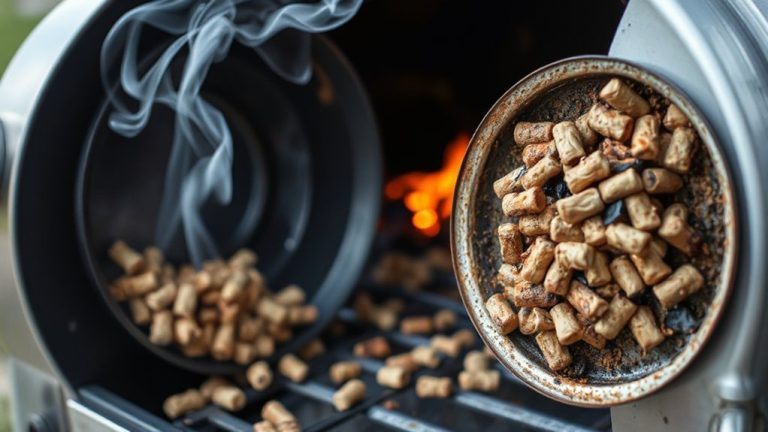
Though you can’t change your konro’s narrow chamber, you can control how you lay the binchotan to encourage even heat. Proper charcoal density and careful layer alignment are key to eliminating hot spots. Spread the coals in a single, uniform layer-too thick, and airflow suffers; too sparse, and the heat dips. For best results, place fully ignited binchotan side by side, snug but not piled. This arrangement promotes consistent infrared radiation across the grill surface.
| Method | Charcoal Density | Layer Alignment |
|---|---|---|
| Staggered | Medium | Offset rows |
| Tight Even | High | Flush, aligned |
| Loose Spread | Low | Random gaps |
Tight even delivers the most stable heat for searing, while loose spread risks uneven zones. Staggered offers balance, ideal when cooking varied items. Your setup directly shapes thermal output.
Balance Heat With Airflow Control
Since airflow directly shapes combustion, you’ll want to manage your konro’s vents with precision to maintain consistent heat. Proper airflow management guarantees the binchotan burns evenly, avoiding flare-ups or cooling zones along the narrow grill surface. You can fine-tune temperature by slightly opening or closing the bottom vents-small draft adjustments make a big difference. Too much air cools the coals prematurely through over-combustion; too little starves them, leading to uneven heat. Most high-quality konro grills respond quickly to these tweaks, offering superior control compared to open fires. By learning how your grill reacts, you’ll maintain a stable cooking environment. Experienced users find that mastering draft adjustment not only stabilizes heat but also extends fuel efficiency, preserving precious binchotan. Effective airflow control is less about constant tinkering and more about intentional, informed adjustments throughout the cook.
Rotate Food to Prevent Hot Spots
You’ve already learned how adjusting the vents shapes the burn rate and spreads heat across the konro’s cooking surface, but even with perfect airflow, radiant intensity isn’t perfectly uniform-binchotan emits varying levels of infrared energy depending on placement and consumption, which means some zones cook faster than others. Food rotation is essential for balanced heat distribution and consistent results. By regularly shifting items across the grill, you compensate for inherent thermal variances and prevent scorching. Especially on the konro’s narrow surface, strategic movement guarantees even cooking without relying on guesswork.
| Protein Type | Rotation Interval | Effect on Heat Distribution |
|---|---|---|
| Chicken | Every 90 seconds | Evens sear, avoids flare-ups |
| Fish | Every 60 seconds | Prevents flaking, maintains moisture |
| Vegetables | Every 120 seconds | Promotes uniform charring |
Fix Konro Hot Spots Fast
When uneven temperatures start to sabotage your sear, acting fast keeps your cook on track-konro grills, for all their precision, aren’t immune to sudden hot spots caused by inconsistent binchotan placement or airflow blockages. You can fix konro hot spots fast by adjusting the coal grading: spread the coals evenly and break up dense clusters to balance radiant heat. Use tongs to level the bed, ensuring uniform distance from the grilling surface. If needed, tweak the grill elevation slightly-raising the grid cools intense zones, while lowering intensifies searing. These micro-adjustments preserve control without killing momentum. Proper coal grading isn’t just prep-it’s maintenance during cook time. Likewise, grill elevation fine-tunes exposure when airflow adjustments fall short. Together, they offer responsive corrections that passive methods can’t match. For consistent results on the narrow konro surface, actively managing heat through structured positioning beats waiting it out. Precision comes from intervention, not luck.
On a final note
You’ve seen how binchotan arrangement, airflow control, and food rotation directly impact heat distribution on your konro. These methods aren’t just theory-they’re proven in practice, yielding consistent searing and even cooking. While the grill’s narrow design invites hot spots, smart management turns limitation into precision. For serious yakitori or delicate fish, mastering these techniques elevates results reliably, making your konro not just traditional, but technically effective when maintained with care and understanding.