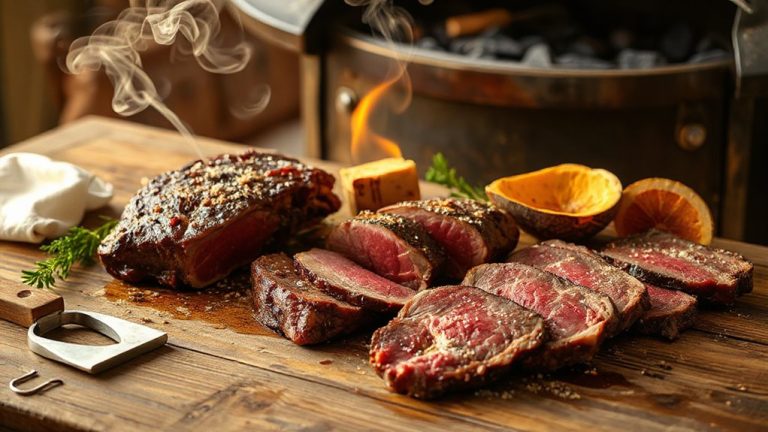
How to Monitor Smoke Color to Avoid Bitter or Bland Flavors
Watch your smoke closely-thin, blue-tinged wisps mean clean combustion and rich, savory flavor, while thick white or gray smoke signals wet wood or poor airflow, leading to bitter, acrid results. Make certain your wood is dry and well-seasoned, with splits that feel light and snap cleanly. Maintain steady airflow by keeping vents clear and the chimney free of grease. You’ll get the best taste with consistent, nearly invisible smoke. There’s more to mastering flavor than color alone.
Notable Insights
- Look for thin, blue-tinged smoke, which indicates clean combustion and optimal flavor.
- Avoid thick, white, or gray smoke, as it signals incomplete burning and bitter creosote.
- Ensure wood is dry and well-seasoned to prevent excess moisture and poor smoke quality.
- Maintain proper airflow by cleaning the chimney and checking for blockages regularly.
- Match smoke intensity to cook time and meat type, using mild woods for short cooks.
Know the Difference Between Good and Bad Smoke
Smoke, that visible signature of your fire, tells a story about what’s happening with your cook. You need thin, barely visible smoke-that’s your signal of clean combustion and ideal conditions. Thick, billowing smoke means trouble: it’s a sign of poor airflow or wet fuel, leading to excessive smoke density that overwhelms the meat. That kind of smoke doesn’t just look wrong-it tastes wrong, leaving a bitter, acrid aftertaste. Good smoke, the kind you want, carries subtle flavor intensity, enhancing the meat without dominating it. You’ll notice it’s almost translucent, drifting lazily off the cooker. Lean toward dry, well-seasoned wood and maintain steady, low-temperature burns. Watch your smoke output closely-consistency here guarantees clean flavor development. Bad smoke masks; good smoke complements. Your brisket, ribs, or chicken depend on that difference. Get it right, and your barbecue sings. Choosing the right type of wood, such as best smoking wood, can significantly impact smoke quality and flavor.
Why Smoke Color Affects Your Meat’s Flavor
Think of smoke as flavor currency-its color tells you whether you’re investing in taste or burning through quality. When you see thin, blue-tinged smoke, you’re getting efficient combustion, meaning the wood burns clean and hot, releasing flavor compounds without excess soot. This ideal smoke chemistry enhances your meat’s taste, not overwhelms it. But if the smoke’s thick or gray, combustion efficiency drops, producing acrid byproducts like creosote that leave a bitter coating. Your meat doesn’t just taste off-it’s actively absorbing flawed smoke chemistry from incomplete burning. The color shift isn’t just visual; it reflects what’s happening at a molecular level. You’re not just cooking; you’re managing a reaction. Maintain clean airflow, use dry wood, and you’ll keep combustion efficiency high. That blue-gray wisp? That’s flavor compounding, not canceling. Get it right, and every bite pays dividends. Choosing the right type of wood, such as best wood chips for smoking, ensures cleaner combustion and more consistent smoke quality.
Stop Thick White Smoke: And Fix It Fast
You’re aiming for that clean, blue-tinged smoke because you know what it means for flavor-efficient combustion and well-balanced wood breakdown. Thick white smoke? That’s trouble. It’s a sign of incomplete burning, often caused by poor airflow or wet fuel. You’re not just risking a bitter taste-you’re wasting wood and building unnecessary creosote. Check your fuel dryness first; moisture content above 20% hampers ignition and creates excess vapor. Seasoned wood should feel light and snap cleanly. Then, inspect your chimney maintenance: a clogged or greasy flue restricts draft, starving the fire of oxygen. Clean it regularly to guarantee steady airflow. Adjust your vents if needed, but remember-dry wood and a clear chimney are non-negotiables. Fix these fast, and you’ll cut the white plumes before they ruin your cook.
How to Maintain Perfect Smoke Color
While achieving ideal smoke color starts with proper fire setup, keeping it consistent demands ongoing attention to fuel quality and airflow dynamics. You’ve got to monitor smoke density closely-thin, blue-tinged wisps mean clean combustion, while thick plumes signal trouble. That gray or white smoke? It’s often from wet wood, which ruins flavor and creates soot. That’s why wood seasoning matters: dry, well-cured hardwood burns hotter and cleaner, yielding that steady, translucent smoke you want. Poorly seasoned logs steam instead of burning, increasing smoke density and introducing bitter notes. Adjust your air vents as needed to maintain oxygen flow without oversupplying, which can lead to overheating. Consistent smoke color isn’t just visual-it’s a sign of thermal and chemical balance. You’ll know you’ve nailed it when the smoke nearly disappears, leaving only a faint trail. Stay vigilant, and your food will taste like mastery, not guesswork.
Apply the Right Smoke for Any Cook
Though smoke is essential to great barbecue, applying it the right way depends on matching intensity to cook time and protein type. Your success hinges on smart smoke types and fuel choices-softwoods like fruit trees deliver mild, sweet notes ideal for poultry or fish, while dense hardwoods like hickory or oak pack bold flavor suited for beef or pork. For short cooks, lighter smoke is better; long smokes demand a steady, thin stream to avoid bitterness.
| Cook Time | Recommended Smoke Type |
|---|---|
| 1–3 hours | Apple, cherry |
| 3–6 hours | Pecan, maple |
| 6–8 hours | Oak, walnut |
| 8–12 hours | Hickory, mesquite |
| 12+ hours | Oak or oak blends |
You’ll want consistent, thin blue smoke-thick white smoke overwhelms. Match your fuel choices to flavor goals and cook length for best results.
On a final note
You’ll know you’ve nailed your smoke when it’s thin and blue-gray, not thick and white. That color means clean combustion, enhancing flavor without bitterness. Thick smoke coats meat in acrid soot, while balanced airflow and dry wood create subtle, rich notes. Monitoring smoke color isn’t just visual-it’s key to taste control. Master this, and you’ll consistently achieve clean, smoky depth in every cook.