Matching Pellet Flavor Strength Ratings to Desired Intensity Levels Per Dish
Match pellet flavor strength to your meat type and cook time for best results. Use mild pellets like alder or apple for delicate fish and chicken, where subtle smoke enhances natural flavors. Opt for medium-intensity maple or pecan with burgers, pork, or turkey to add depth without overpowering. Choose bold hickory or mesquite for fatty cuts like brisket-long cooks mellow intense smoke, building rich bark and smoke rings. Even short smokes need strong pellets to infuse flavor fast. You’ll discover smarter pairings just ahead.
Notable Insights
- Choose mild pellets like alder or apple for delicate meats such as fish and poultry to enhance natural flavors without overpowering.
- Use medium-intensity pellets like cherry or maple for versatile cuts including pork and turkey to achieve balanced smoke flavor.
- Opt for strong pellets like hickory or mesquite when smoking fatty, long-cooked meats such as brisket and ribs for deep, rich flavor.
- Select high-intensity pellets for short cooking times to ensure rapid, flavorful smoke infusion before the cooking cycle ends.
- Store all pellets in airtight, cool containers to maintain flavor strength and burn efficiency for consistent results per dish.
Know Your Pellet Flavor Strength Scale
While some might assume all wood pellets taste the same once they’re burning, the truth is they vary considerably in flavor intensity, and knowing where each type falls on the spectrum can make or break your cook. You’ll find pellets generally ranked from mild to strong, with alder at the lighter end and hickory or mesquite near the peak. Cherry and maple sit comfortably in the middle-ideal for balanced depth. Your pellet storage method directly affects flavor aging; exposure to moisture or heat degrades both burn efficiency and taste. Pellets kept in airtight, cool containers preserve their integrity, ensuring the flavor profile stays true over time. That aging process isn’t like wine-older isn’t better. Use them within six months for best performance. Choosing based on strength-not just preference-means you’re matching smoke to protein effectively, giving your dish the character it deserves without overpowering it. Different woods produce varying best wood chips for smoking results depending on the type of meat and desired smokiness.
Choose Mild Pellets for Delicate Meats Like Fish and Chicken
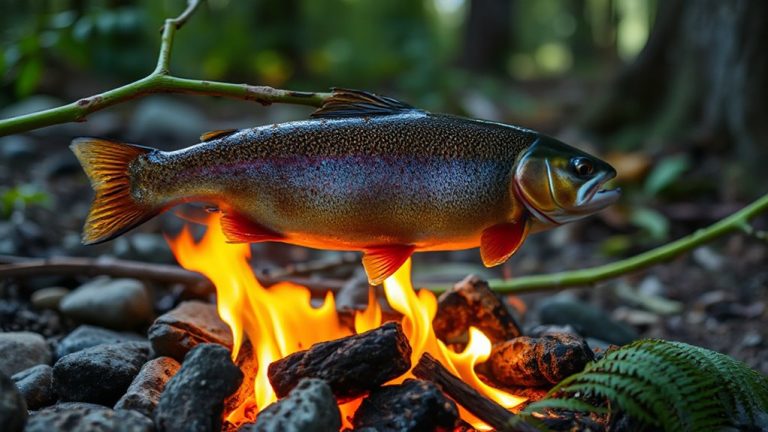
You’ve got your pellet strength scale sorted-now think about how that flavor intensity plays with your protein. Delicate meats like fish and chicken need mild smoke to avoid overpowering their natural taste. Stronger pellets can mask subtle flavors, so mild options like alder or cherry are ideal. They enhance without dominating, delivering clean smoke notes that support the meat’s texture and seasoning. For fish pairing, mild wood guarantees the ocean-fresh character stays intact. Chicken compatibility improves when smoke enhances, rather than competes with, herbs and brines. Choosing the right pellets can make a noticeable difference in flavor clarity and best pellets for brisket performance across various proteins.
| Pellet Type | Best For |
|---|---|
| Alder | Fish, poultry |
| Cherry | Chicken, light ribs |
| Maple | Turkey, fish |
| Apple | Chicken, seafood |
These woods balance sweetness and smoke, making them top choices for finesse-driven dishes.
Use Medium Smoke for Burgers, Pork, and Turkey
When you’re working with heartier cuts like burgers, pork, or turkey, medium smoke pellets strike the ideal balance-delivering robust flavor without overwhelming the meat’s natural character. You get a noticeable smokiness that enhances rather than masks, making them ideal for backyard staples. Achieving the right smoke balance means avoiding the harshness of strong pellets while still going beyond the subtlety of mild options. These cuts absorb smoke well, so medium pellets deepen the profile without dominating. Think of it as a smart flavor pairing-like matching a bold red wine with steak, but for grilling. Hickory, maple, or pecan work especially well here, adding warmth and complexity. You’ll notice cleaner burn results and more consistent taste across cookouts. For everyday BBQ with reliable results, medium smoke is your go-to-versatile, balanced, and efficient whether you’re smoking, grilling, or searing. For pork ribs specifically, choosing the best pellets for cooking pork ribs can elevate the final dish with optimal smoke penetration and flavor harmony.
Go Bold With Pellets for Brisket, Ribs, and Fatty Cuts
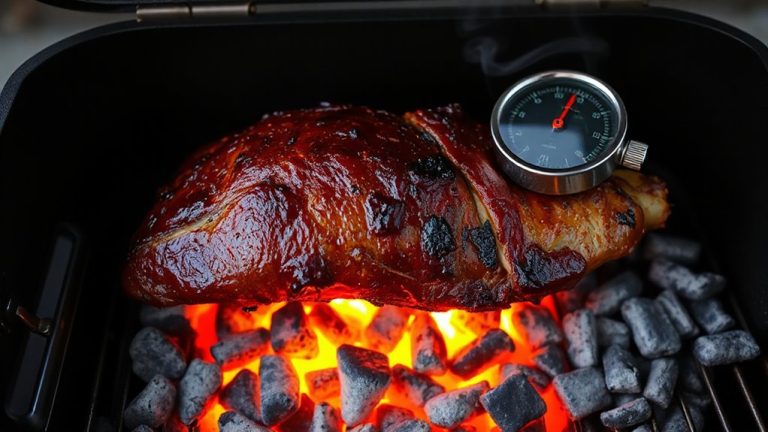
Brisket, ribs, and other fatty cuts can handle a stronger smoke presence, so don’t hold back-you’re better off going bold. These meats absorb smoke deeply during long cooks, and a robust pellet choice guarantees flavor dominance without overwhelming the natural richness. Opt for hickory, mesquite, or a well-blended competition mix to build complexity. While smoke balance is key, fatty cuts tolerate heavier smoke because fat renders slowly, mellowing intense notes over time. You’ll notice a richer bark and more pronounced smoke ring when pairing strong pellets with low-and-slow methods. Weak pellets get lost, leaving you with flat flavor, so aim for intensity that complements the meat’s density. Monitor the smoke output-thin blue smoke, not thick billowing clouds-to maintain control. Your goal is deep, smoky layers that enhance, not mask. With the right pellet, your brisket and ribs won’t just taste smoky-they’ll taste masterfully balanced.
Shorter Smokes Need Stronger Pellets: Here’s Why
Though time is shorter, the need for bold flavor isn’t diminished-intense pellets actually become more critical when smoking for fewer hours. You’re not giving the meat long exposure, so the smoke has to make an immediate impact. That’s where high pellet density matters; denser pellets burn hotter and release more concentrated flavor quickly. Paired with efficient burn efficiency, they maximize smoke output without wasting fuel. Weak pellets in a short cook leave food tasting flat-there’s just not enough time to build complexity. But robust, resinous blends like hickory or mesquite deliver fast, assertive notes that stick. You’ll notice the difference in dishes like chicken breasts or fish, where timing is tight. Burn efficiency also guarantees consistent heat, so flavor infusion stays even. In short, when minutes count, you need powerful pellets that pack a punch from the first whiff of smoke.
On a final note
You’ve got the tools to match pellet flavor strength to your dish with confidence. Mild pellets won’t overwhelm delicate proteins like fish, while bold blends stand up to brisket’s richness. Medium smoke strikes the right balance for turkey or burgers. Remember, shorter smokes demand stronger pellets to impart flavor fast. Your pellet choice directly affects depth and harmony-so consider the meat, cook time, and desired result every time.