Cooking on Hot Stones: Ancient Techniques for Modern Outdoor Meals
You can cook like ancient chefs by heating dense, non-porous stones such as basalt or soapstone to sear steaks and char veggies with even, radiant heat. Warm them slowly to prevent cracking, then place them in a stable setup with a cooking surface on top. Marinated meats and firm vegetables thrive, while proper seasoning and heat control prevent sticking. It’s efficient, flavorful, and surprisingly precise-discover how to master this timeless method step by step.
Notable Insights
- Use dense, non-porous stones like soapstone or basalt to prevent cracking and ensure even heat retention.
- Gradually preheat stones for at least 30 minutes to avoid thermal shock and dangerous shattering.
- Build a two-zone fire setup to heat reserve stones and enable indirect cooking for better control.
- Place a cooking slab or griddle on hot stones to create a safe, stable surface for food contact.
- Cook quick-searing foods like steaks, vegetables, and fish to maximize flavor while minimizing sticking.
Choose the Right Stones for Hot Cooking
Smooth river rocks and dense soapstone aren’t just pleasing to the eye-they’re your best bet when picking stones for hot cooking. You’ll want stone types that handle high heat without flaking or exploding, and these fit the bill. Their dense mineral structure gives them excellent heat retention, meaning they absorb warmth slowly and release it evenly over time-perfect for searing meats or warming flatbreads. Unlike porous rocks, which trap moisture and can burst in flames, these reliable types endure repeated use. You’ll notice soapstone, in particular, maintains a consistent surface temperature, reducing scorching. River rocks, rounded by nature, offer flat spots ideal for stabilizing food. When arranged properly, they mimic a stone oven’s floor, transforming your fire pit into a functional grill. Choose wisely-your meal’s success hinges on the right balance of durability and heat retention. Some stones simply can’t keep up. For long-lasting performance, consider best rocks for fire pits that are specifically rated for high-temperature applications.
Heat Stones Safely Without Cracking
While you might be keen to get cooking, heating your stones too quickly could lead to cracks or even dangerous shattering-so patience really does pay off. Stone selection isn’t just about shape and size; it’s critical for avoiding thermal shock. You want dense, non-porous rocks like granite or basalt-they handle heat far better than softer types. Even then, never toss them straight into roaring flames. Instead, place them at the fire’s edge and let them warm gradually. This slow introduction minimizes internal stress caused by sudden temperature shifts. You’ll know they’re ready when they’ve sat in high heat for at least 30 minutes. Skipping this step risks not only ruined stones but also flying fragments. Smart preheating guarantees longevity and safety. Remember, effective hot stone cooking hinges on managing heat exposure just as much as choosing the right rock in the first place.
Build a Hot Stone Cooking Setup
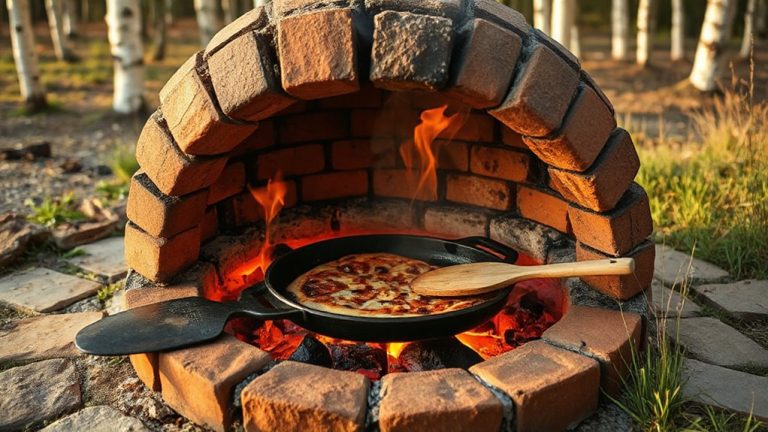
If you’ve chosen the right stones and heated them properly, setting up your hot stone cooking station becomes a straightforward process that can substantially enhance your outdoor cooking experience. Good stone selection guarantees even heat retention and safety-basalt or soapstone work best. Arrange your fire layout to create two zones: one for heating reserve stones, another for indirect cooking. Place your hot stones flat on a stable, heat-resistant surface, like sand or clay. Then, add a cooking slab or cast-iron griddle on top for direct food contact.
| Comfort | Anticipation | Satisfaction |
|---|---|---|
| Steady warmth from stone radiating through camp air | The sizzle as food hits the hot surface | Juicy, evenly cooked meals with a rustic flavor |
| A safe, controlled setup soothes the mind | Smell of searing meat over open flame | Pride in mastering an ancient technique |
| Durable design withstands repeated use | Glow of embers enhancing the evening mood | Connection to tradition with modern ease |
This method blends practicality with timeless appeal.
Best Foods to Cook on Hot Stones
A properly heated stone surface excels at cooking foods that benefit from high, consistent heat and a touch of mineral-derived warmth. You’ll find marinated meats sear beautifully, their surfaces caramelizing while juices stay locked in. The stone’s even temperature renders fats smoothly, reducing flare-ups compared to open grilling. Steaks, chops, and kebabs respond exceptionally, developing a rich crust without drying out. Grilled vegetables also perform well-zucchini, bell peppers, and eggplant gain smoky depth while retaining firmness. The stone’s surface promotes even char, enhancing flavor without burning. Delicate items like fish fillets work too, provided they’re watched closely. Foods with shorter cook times thrive, as prolonged exposure can lead to overcooking. Compared to metal grates, hot stones offer gentler browning and better heat retention, making them ideal for outdoor meals where control matters. You’ll appreciate the subtle, earthy character it lends dishes.
How to Prevent Sticking and Burns
| Method | Effectiveness & Use Case |
|---|---|
| Seasoning surfaces | High – ideal for long-term nonstick performance |
| Using barriers | Medium-high – best for delicate foods or one-time use |
Why Hot Stone Cooking Beats the Grill
While grilling remains a backyard staple, hot stone cooking often delivers a more consistent and forgiving experience, especially when you’re searing delicate proteins or managing uneven fuel heat. Unlike grill grates that create hot spots, a thick stone retains and radiates heat evenly, promoting even heating across the entire surface. This steady warmth reduces scorching and helps lock in juices, giving you better control over doneness. You’ll also notice distinct flavor enhancement-food develops a rich, golden crust without drying out, thanks to the stone’s ability to sear while gently cooking beneath. Grills can flare up and char aggressively, but stones offer a more balanced approach, ideal for fish, vegetables, or thin cuts that usually struggle on open flames. Plus, cleanup’s simpler with fewer grease fires and stuck-on bits. When performance and results matter, hot stone cooking isn’t just a novelty-it’s an upgrade.
On a final note
You’ve seen how hot stone cooking blends tradition with practicality. These stones retain heat evenly, giving you consistent searing without flare-ups. Compared to grills, they offer superior moisture retention in meats and reduce charring risks. With proper setup and stone selection, cleanup is easier and fuel use is lower. Though it demands attention to safety, the results-flavorful, gently caramelized food-speak for themselves. For outdoor cooking, it’s a reliable, efficient method worth mastering.