The Ultimate Buyer’s Guide to Choosing a Charcoal Grill for High-Heat Searing
You’ll get superior searing with a charcoal grill, as it hits and holds over 700°F-perfect for a crisp crust and rich Maillard flavors. Kettle and Kamado models excel, with thick walls and cast iron grates boosting heat retention. Look for adjustable dampers, a tight lid seal, and dual chambers for zone cooking. Proper airflow through bottom and top vents guarantees fast, stable high-heat performance. Your best bet combines durable materials and smart venting-keep going to see which models deliver it best.
Notable Insights
- Choose a grill with thick walls and heavy materials like cast iron or ceramic for superior heat retention during searing.
- Prioritize models with adjustable dampers and ample venting to precisely control airflow and sustain temperatures above 500°F.
- Opt for grills with thick cooking grates made of cast iron or heavy-gauge stainless steel for even sear marks and heat distribution.
- Select a grill type like a kamado or kettle that balances rapid heat-up with stable high-heat performance for searing.
- Ensure a tight-fitting lid and efficient airflow design to maintain consistent radiant heat and enhance Maillard reaction development.
Why Charcoal Beats Gas for Searing
While gas grills offer convenience, you’ll find that charcoal delivers unmatched heat for searing, and that makes all the difference when locking in flavor. Charcoal fires up hotter-often exceeding 700°F-giving you the ideal conditions for a crisp, caramelized crust on steaks and chops. That peak heat directly boosts flavor intensity, as Maillard reactions thrive under high temperatures. You’re not just cooking; you’re developing depth. Plus, charcoal grills typically have better heat retention due to thick walls and materials like cast iron or heavy-gauge steel, keeping temperatures stable even when the lid’s open. This consistency matters when you’re managing delicate searing windows. Gas flames can flicker and cool quickly, but charcoal holds steady, radiating heat from below and around. For serious searing, where every second counts and char meets juice, charcoal’s heat control and thermal mass give you a tangible edge in performance. Models like the Weber Original Kettle charcoal grill design exemplify this balance of heat, control, and durability.
Top High-Heat Charcoal Grill Types
Heat retention isn’t just a feature-it’s the foundation of what makes a charcoal grill excel at high-temperature cooking, and your choice of grill type directly shapes that performance. For intense searing, kettle, kamado, and offset grills stand out, each balancing grill durability and fuel efficiency differently. Kettles heat quickly and are portable but lose heat faster. Kamados excel in heat retention and fuel efficiency thanks to thick ceramic walls, making them ideal for long cooks. Offsets offer superior temp control for smoking but demand more skill. Choose based on how you balance sustained heat, maintenance, and build quality. Portable options like compact charcoal grills for camping offer convenience without sacrificing searing capability.
Must-Have Charcoal Grill Features for Searing
A sear that locks in juices and builds a rich, caramelized crust starts with the right setup-your grill isn’t just a cooking surface, it’s a precision tool. For high-heat searing, look for a charcoal grill with strong heat retention so it maintains intense, consistent temperatures even when the lid opens. Thick cooking grates-cast iron or heavy-gauge stainless-hold and radiate heat well, giving you even sear marks. Adjustable dampers help you control airflow, letting you fine-tune the fire with accuracy. A tight-fitting lid enhances both heat retention and flavor infusion by trapping smoke, which subtly enriches your meat’s taste. Offset chimneys or dual-chamber designs allow zone cooking, though direct heat is your go-to for searing. Finally, make sure the firebox retains heat efficiently and resists warping over time. These features together elevate your control and results. For top-performing models engineered with these searing essentials, check out the best charcoal grills for 2025.
How Grill Materials Shape Heat Control
You’ve got the features locked in for a powerful sear-now let’s talk about what those parts are made of, because the materials your grill is built from directly influence how well it handles and holds heat. Thick steel and cast iron offer superior material thermal retention, keeping searing temps steady even in wind. Thin steel heats fast but cools quickly, risking uneven cooking. For long-term use, grill rust resistance matters-especially in damp climates. Porcelain-coated lids resist corrosion while reflecting heat downward. Here’s how common materials stack up:
| Material | Thermal Retention | Rust Resistance |
|---|---|---|
| Cast Iron | Excellent | Good (if seasoned) |
| Thick Steel | Very Good | Moderate |
| Thin Steel | Fair | Low |
| Porcelain-Coated | Good | High |
Choose wisely-material impacts performance and lifespan.
Airflow Design: The Key to Searing Power
While high-quality materials set the stage for consistent heat, it’s the airflow design that truly releases a charcoal grill’s searing power. You need precise vent placement to control oxygen flow-top and bottom vents work together to regulate temperature. When you open the bottom vent, more air feeds the coals, boosting combustion and cranking up the heat. Closing it slightly tempers the flame, giving you finesse. The top vent pulls smoke and hot air upward, creating convection that enhances heat distribution across the cooking surface. Uneven searing often stems from poor airflow, not weak fuel. Grills with adjustable, well-placed vents let you fine-tune conditions for a proper sear-think 500°F+ with clear grill marks. You’ll want ample lower vent area for rapid heat build-up and a daisy-wheel top vent for steady exhaust control. Smart airflow isn’t just convenient-it’s essential for turning raw meat into a caramelized, restaurant-style crust.
Best Charcoal Grills for Restaurant-Quality Sear
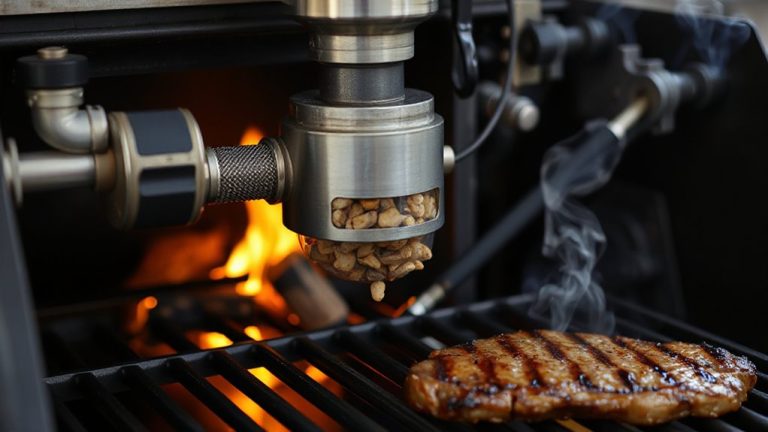
Fire up your expectations, because achieving a restaurant-quality sear at home isn’t just about skill-it starts with the right grill. You need intense, consistent heat, and that’s where models with cast iron plates excel. These retain heat remarkably, delivering even searing surfaces that mimic commercial grills. Though typically found on gas units, some hybrid charcoal grills now integrate infrared burners to boost surface temps beyond 700°F, giving you that perfect crust fast. Look for grills that combine natural lump charcoal with strategic airflow and heavy-duty construction-this combo sustains high heat longer. While infrared burners add convenience and precision, they shouldn’t replace charcoal’s flavor; instead, they enhance control. Cast iron plates require seasoning and care, but they’re worth the effort for their performance. Choose a model that balances traditional charcoal charm with modern searing tech, and you’ll replicate steakhouse results night after night.
On a final note
You’ve seen how charcoal delivers superior searing heat over gas, and now you know which features truly matter. A well-designed charcoal grill with thick materials, precise airflow, and a solid structure holds and radiates heat effectively. For consistent, restaurant-grade sears, your best bet is a grill built for temperature control and durability. Choose wisely-performance and craftsmanship make all the difference in high-heat cooking.