How to Grill Skewered Vegetables Evenly Over an Open Flame
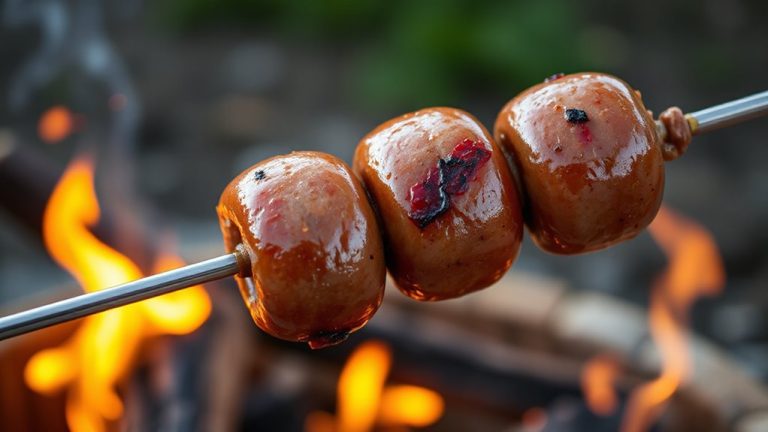
Use flat metal skewers for better heat transfer and stability-they won’t spin when you flip and handle high heat better than soaked bamboo. Cut veggies into 1- to 1.5-inch uniform pieces so they cook evenly, then thread them by cooking time to avoid undercooked potatoes or mushy zucchini. Set up a two-zone fire: sear over direct heat, then move to indirect to finish. Lightly coat with oil to prevent sticking and enhance char, using olive oil with garlic powder or smoked paprika for depth. Season well and turn often for even doneness. You’ll see how small adjustments improve results with every batch.
Notable Insights
- Use flat metal skewers for better heat conduction and to prevent vegetables from spinning during cooking.
- Cut vegetables into uniform 1- to 1.5-inch pieces to ensure even grilling and consistent texture.
- Group vegetables by cooking time on separate skewers to prevent some from burning while others undercook.
- Set up a two-zone fire to sear over direct heat and finish cooking over indirect heat.
- Lightly coat vegetables with oil and seasonings to promote charring, prevent sticking, and enhance flavor.
Choose Skewers That Work for Grilled Veggies
While you might be tempted to grab the first skewers you see, choosing the right ones can make or break your grilled vegetable experience. Bamboo skewers are affordable and widely available, but their durability depends on prep-soak them for at least 30 minutes to prevent charring. Even then, bamboo durability is limited; they can still snap or burn with prolonged heat. On the other hand, metal skewers offer superior heat transfer thanks to metal conductivity, promoting slightly faster cooking and better sear marks. They’re reusable and sturdy, though more expensive upfront. Flat metal skewers hold veggies more securely than round ones, reducing spin when flipping. Consider your grilling frequency: occasional cooks might prefer bamboo for simplicity, but regular grillers benefit from investing in metal. Whichever you choose, guarantee they’re the right length to rest securely on the grill grates without sagging or slipping through.
Cut Veggies Into Even, Grill-Ready Pieces
Cut your vegetables into uniformly sized pieces is key to even cooking-aim for 1- to 1.5-inch chunks so they grill at the same rate without some pieces charring while others stay raw. This consistency guarantees reliable results, especially over unpredictable open flames. You’ll also get better texture contrast when pieces hold their structure-crisp-tender carrots alongside soft, caramelized zucchini, for instance. Uniformity doesn’t mean monotony; strategic flavor pairing, like sweet bell peppers with earthy mushrooms, elevates the whole skewer. Denser veggies such as potatoes or beets need precise cutting to avoid undercooking, while softer types like tomatoes benefit from sturdy, even slices that resist collapse. Taking time to chop with care improves both appearance and taste. Small variations in size lead to uneven doneness, undermining your heat control efforts. Properly cut vegetables not only cook more evenly but also layer flavors and textures effectively, turning simple ingredients into a balanced, grill-kissed dish.
Thread Veggies by Cooking Time
Since grilling involves direct exposure to fluctuating heat, grouping vegetables on skewers according to their cooking times guarantees everything finishes evenly-nobody wants mushy mushrooms next to crunchy onions. You’re better off threading veggies with similar cooking duration together so tender ones like zucchini and bell peppers don’t overchar while denser vegetables like potatoes or carrots catch up. Consider each vegetable’s heat sensitivity: mushrooms and tomatoes cook fast and burn easily, while onions and squash hold up longer. Skewering them separately gives you control, ensuring each batch reaches ideal texture without guesswork. Mixing high- and low-heat-sensitive vegetables on one stick forces compromises-either underdone roots or limp greens. Matching items by cooking duration isn’t just smart prep; it’s essential for consistent results. This method streamlines grilling, reduces flipping stress, and maximizes flavor by preventing overexposure, making it a reliable strategy for balanced, well-cooked skewers every time.
Set Up a Two-Zone Fire for Even Heat
If you want consistent results when grilling skewered vegetables, setting up a two-zone fire gives you far better control over cooking temperatures than a fully lit grill. You’ve got one side with direct heat, where the flames or coals sit directly under the grates, and the other with indirect heat, where no flames touch the food below. Start by piling hot coals on one half of your grill, leaving the other side empty. This setup lets you sear veggies over direct heat for color, then move them to indirect heat to finish cooking without burning. Delicate vegetables like zucchini won’t char too quickly, while denser ones like potatoes cook through evenly. It’s a simple but effective method, preferred by experienced grillers who value precision. You’ll get better texture, fewer flare-ups, and more reliable results every time.
Coat With Oil and Season for Better Char
A light coating of oil isn’t just a suggestion-it’s essential for achieving that rich, even char without sticking or drying out your vegetables. You’ll want enough oil to promote browning but not so much that it drips and causes flare-ups. This layer also helps seasonings adhere, deepening flavor through improved marinade depth. Toss your veggies in a simple mix of olive oil, salt, pepper, and herbs before threading them onto skewers. Achieving the right spice balance is key-too little and your dish falls flat; too much and you overpower the natural sweetness of the vegetables. Go for complementary flavors like smoked paprika or garlic powder, which enhance without dominating. The oil aids heat transfer, encouraging consistent grill marks and caramelization. Done right, this step sets the foundation for complex flavor and texture, making each bite more satisfying without masking the freshness of your ingredients.
Flip Often and Check for Tenderness
You’ll usually get the best results by flipping your skewered vegetables every few minutes, as this promotes even cooking and guards against charring on one side while leaving the other underdone. Rotate gently using tongs to avoid breaking the skewers, and baste frequently with oil or marinade to boost flavor and moisture. Consistent turning guarantees heat exposure is balanced, especially over unpredictable flame zones. Test tenderness with a fork-vegetables should pierce easily but still hold structure. Overcooking leads to mush, while undercooking leaves them harsh and fibrous.
| Sensation | Grilling Outcome |
|---|---|
| Slight resistance when pierced | Just right |
| Falls apart on touch | Overdone |
| Crunchy, raw center | Needs more time |
| Golden, smoky edges | Ideal char |
This method delivers reliable results and elevates your outdoor cooking game.
On a final note
You’ve got the tools to grill skewered veggies evenly-just use the right skewers, cut uniformly, and group by cook time. A two-zone fire gives control, letting you sear and finish without charring. Oiling prevents sticking and boosts flavor. Frequent flipping guarantees even tenderness. These steps, grounded in heat management and prep efficiency, elevate your outdoor cooking. They’re practical, repeatable, and effective-key for reliable, restaurant-quality results at home.