Using a Dutch Oven to Bake Cornbread Over Hot Coals
You’ll mix cornbread batter with pantry staples like cornmeal, flour, and baking powder, then stir in milk, egg, and oil until just combined. Build a coal bed with glowing embers-two-thirds underneath, one-third on the lid-for even 350°F heat. Use a well-seasoned cast iron Dutch oven with a tight lid to guarantee a crisp crust and moist crumb. Rotate the lid occasionally to prevent hot spots. With proper coal placement and a reliable oven, you’ll get consistent, smoky-flavored results every time.
Notable Insights
- Combine pantry staples like cornmeal, flour, baking powder, and salt before mixing in milk, egg, and oil for a tender crumb.
- Create a coal bed with glowing embers, placing two-thirds underneath and one-third on the lid for even, oven-like heat.
- Use golf ball-sized coals spaced evenly to maintain consistent temperature and prevent scorching during baking.
- Bake at 350°F by balancing coals under and on the Dutch oven for proper rise, crisp crust, and moist interior.
- Rotate the lid every ten minutes and ensure proper seasoning to fix uneven browning and prevent sticking.
Mix Cornbread Batter With Pantry Staples
Pantry power makes outdoor cooking not just feasible but efficient-and cornbread is the perfect test case. You’ve got cornmeal, flour, baking powder, and salt-chances are, you already have these on hand. When mixing, your technique matters: blend dry ingredients first, then stir in milk, egg, and oil until just combined-overmixing leads to tough bread. Don’t stress if you’re missing something; ingredient substitutions work well here. Out of buttermilk? Use regular milk with a splash of vinegar. No eggs? Try yogurt or mashed banana. These swaps hold up under heat and deliver consistent texture. Cornbread is forgiving, making it ideal for beginners mastering Dutch oven use. The batter’s simplicity means flavor hinges on proper mixing techniques and balanced substitutions. Even with changes, you’ll get a golden crust and moist center when baked right. It’s a reliable staple that proves reliable outdoor meals don’t require luxury ingredients.
Build a Coal Bed for Even Dutch Oven Heat
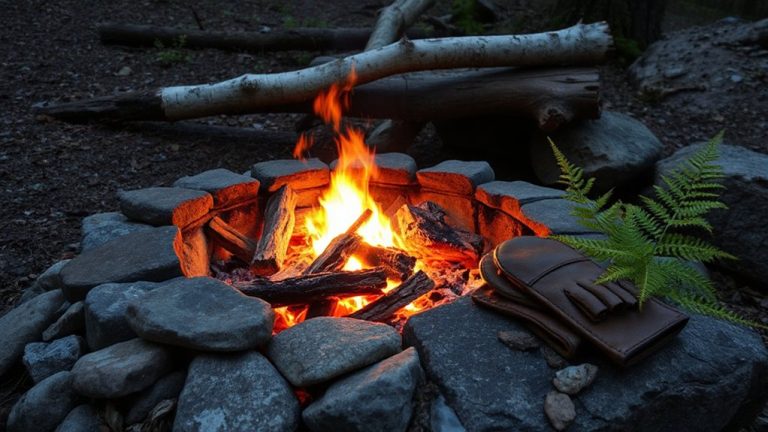
Once your fire has burned down to a bed of glowing embers, you’re in the sweet spot for Dutch oven cooking-too soon, and the flames will scorch the bread; too late, and the heat won’t be strong enough to rise through the cast iron evenly. Proper coal placement is essential for consistent heat circulation. You’ll want about two-thirds of the coals underneath the oven, with the rest spaced evenly on the lid. This setup guarantees even baking without hot spots.
| Coal Position | Function |
|---|---|
| Bottom (⅔ of coals) | Provides steady base heat |
| Lid (⅓ of coals) | Mimics oven’s top heating |
| Even spacing | Prevents scorching |
| Coal size (golf ball) | Consistent burn rate |
| Minimal flames | Enhances heat circulation |
This method maximizes thermal efficiency and gives your cornbread the even rise it needs.
Bake Cornbread in a Dutch Oven Over Fire
With the coal bed properly established beneath and around your Dutch oven, it’s time to put that heat to work baking cornbread straight over the fire. You’ll want to place your seasoned Dutch oven directly on the coals, with additional embers spaced evenly across the lid-this radiant heat guarantees consistent baking. For ideal cornbread texture, maintain a steady 350°F; too hot, and the edges burn before the center sets. The slow, enveloping heat from the coals enhances flavor variations, whether you’ve added jalapeños, cheese, or honey. Cast iron retains and distributes heat efficiently, giving your cornbread a crisp exterior and moist crumb. Unlike oven baking, open-fire cooking imparts a subtle smokiness, enriching depth without overpowering. Monitor doneness with a skewer-clean means it’s ready. This method rewards patience, delivering rustic, reliable results that honor tradition while allowing personal touches.
Fix Common Dutch Oven Cornbread Problems
Though outdoor cooking adds depth and tradition to your cornbread, it can also introduce challenges that don’t show up in a standard oven. You might find your crust too dark or the center underdone-often due to uneven heat distribution from the coals. To prevent this, rotate the oven lid slightly every ten minutes. Your batter consistency plays a big role: too thick and the bread won’t rise properly; too thin and it spreads, creating a flat result. Aim for a pourable but not runny texture. Also, poor oven seasoning can cause sticking or uneven browning. A well-seasoned Dutch oven develops a natural nonstick surface over time, improving with each use. If your cornbread sticks or tastes off, it’s likely time to refresh that seasoning. Proper care and consistent batter consistency make all the difference in fire-baked results.
Pick the Right Dutch Oven for Fire Cooking
A good Dutch oven makes all the difference when you’re baking cornbread over hot coals, and not all models are created equal for the task. You’ll want a heavy-duty cast iron type that retains heat evenly-enameled versions can chip under direct flame, so traditional seasoned cast iron is your best bet. Look for thick walls and a tight-fitting lid fit to trap moisture and prevent ash from sneaking in. A lid with a raised rim is ideal, so you can pile hot coals on top for consistent, oven-like circulation. The size matters, too-10 to 12 inches suits most cornbread recipes. Check for sturdy legs that sit securely in coals and a bail handle that won’t wobble. Well-made cast iron types last decades with proper care, so investing in quality upfront saves trouble later. With the right lid fit and durable construction, your Dutch oven won’t just cook cornbread-it’ll become your go-to for all outdoor baking.
On a final note
You’ve learned how to mix simple pantry ingredients into solid cornbread batter and deploy a Dutch oven over coals for even, reliable baking. A well-chosen cast-iron oven retains heat efficiently, while proper coal placement prevents burning. Though airflow and temperature control pose challenges, experience refines results. Outdoor cooking demands patience and attention to detail, but delivers unmatched flavor. Done right, fire-baked cornbread proves both practical and satisfying in wilderness or backyard settings.