How to Prevent Cross-Contamination When Cleaning Multi-Fuel Outdoor Grills
Always inspect your grill before switching fuels to avoid cross-contamination. Use dedicated brushes for charcoal, gas, and pellet grates to prevent residue transfer. Clean grates thoroughly after each fuel change with a stiff brush and scraper. Wipe down flavorizer bars, drip trays, and the lid with a degreaser. Check burners, ports, and hoppers for buildup. Store fuels and tools separately to maintain performance and flavor integrity-more smart steps await to keep your grill running right.
Notable Insights
- Use separate, dedicated cleaning brushes for each fuel type to avoid transferring residue.
- Clean grates thoroughly after switching fuels to remove leftover debris and prevent flavor contamination.
- Store fuel-specific tools and supplies in isolated cabinets to minimize cross-contact.
- Inspect and clear burners, ports, and ignition components after each fuel change.
- Wipe down interior surfaces with a degreaser to eliminate grease, ash, and residual buildup.
Switch Fuel Safely on Your Multi-Fuel Grill
While switching fuels on your multi-fuel grill might seem straightforward, doing it safely requires attention to detail and a clear understanding of your grill’s design. Fuel switching isn’t just about convenience-it’s a safety imperative. Before you change from gas to charcoal or pellets, always perform a thorough safety inspection. Check for residual debris, inspect fuel lines for cracks, and guarantee burners or firepots aren’t clogged. Each fuel type generates different heat profiles and combustion byproducts, so improper shifts can create flare-ups or carbon buildup. Your grill’s manual outlines compatible configurations, and ignoring it risks both performance and safety. A successful fuel switch depends on correct assembly and component compatibility. You’re not just swapping fuel-you’re adapting the entire cooking system. Consistent safety inspection minimizes hazards and extends your grill’s lifespan. Smart fuel switching reflects responsible outdoor cooking: efficient, controlled, and grounded in preparation rather than guesswork.
Use Separate Brushes for Charcoal, Gas, and Pellets
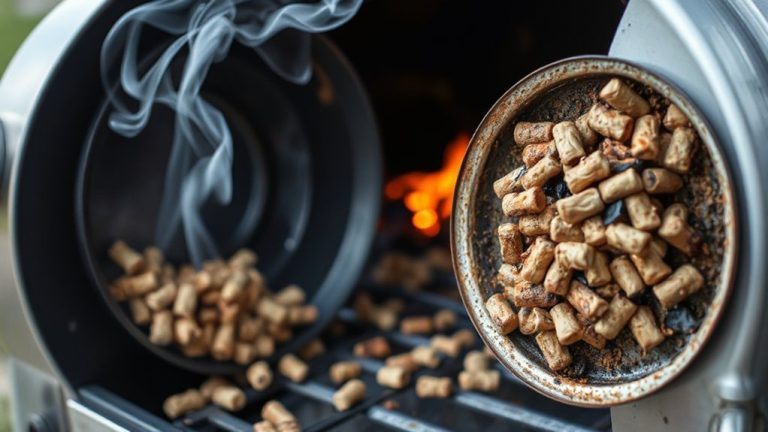
Because each fuel type leaves behind distinct residues and compounds, using separate grill brushes for charcoal, gas, and pellets isn’t just a recommendation-it’s a practical necessity for maintaining both performance and food safety. Charcoal leaves gritty soot and ash, gas produces sticky fuel residue from grease flare-ups, and pellets leave fine, aromatic sawdust buildup-each requiring specific cleaning approaches. Mixing brushes risks transferring contaminants, undermining grill hygiene and potentially affecting flavor. A stiff-bristled brush for charcoal grates may shed particles into gas burners, while a brush used on greasy gas grates can introduce harmful residues to pellet systems. Dedicating one brush per fuel type reduces cross-contamination and extends tool life. Properly labeled, durable brushes improve organization and guarantee you’re not compromising cleanliness. Maintaining this standard isn’t excessive-it’s fundamental to safe, efficient outdoor cooking and long-term grill performance. For optimal results, choose high-quality best grill brushes designed to handle the unique demands of each fuel type.
Clean Grates and Burners After Every Fuel Change
When switching between fuel types on a multi-fuel grill, giving the grates and burners a thorough cleaning isn’t just smart-it’s essential for both performance and food safety. Leftover fuel residue from charcoal, gas, or pellets can taint your next cook, altering flavors and creating flare-ups. More critically, residual buildup affects ignition timing, especially in gas and pellet systems, where clogged burners delay or unevenly distribute flames. You’ll notice inconsistent heat and frustrating hot spots if you skip this step. A stiff brush and scraper remove carbonized debris from grates, while checking burner ports guarantees gas flows freely. Ignition timing relies on clean, unobstructed pathways, so inspect ignition electrodes and fuel lines briefly. Cleaning after each fuel change maintains precision in temperature control and extends your grill’s lifespan. It’s a small effort that delivers reliable performance and prevents cross-contamination in every sense. For optimal results, use one of the best grill brushes recommended for heavy-duty cleaning.
Wipe Down Cooking and Fuel Areas to Stop Contamination
You’ve cleaned the grates and burners after switching fuels, but residual particles and grease aren’t limited to those components. To maintain proper grill hygiene, you also need to wipe down all accessible cooking and fuel areas. Grease splatter, ash, and lingering fuel residue can cling to drip trays, flavorizer bars, and the inner lid-places often overlooked. Using a damp microfiber cloth with a mild degreaser removes these contaminants effectively. This step isn’t just cosmetic; unchecked fuel residue can taint the flavor of your food and create flare-ups. Regular surface wiping guarantees performance consistency, especially when switching between charcoal, propane, or wood pellets. It’s a quick but critical habit that supports long-term grill hygiene. Neglecting it risks cross-contamination and diminishes cooking precision. A clean surface reflects a well-maintained system, improving safety, taste, and equipment lifespan. Don’t skip it-your meals and your grill will thank you. For tough buildup, consider using one of the best BBQ grill cleaners to ensure thorough cleaning without damaging surfaces.
Keep Fuels and Parts Stored Separately on Your Grill
Though your grill is built to handle multiple fuel types, storing them together on the unit invites risks you can’t afford. Proper fuel segregation isn’t just smart-it’s essential for safety and performance. Co-mingling propane tanks, charcoal, or wood pellets increases the chance of accidental ignition or contamination. Likewise, part isolation prevents grease and residue from compromising fuel systems or causing off-flavors. Always store fuels off the grill in designated, ventilated areas. Keep ignition components, grease trays, and fuel lines separated to avoid cross-contact. This disciplined approach guarantees cleaner burns and longer equipment life.
| Storage Area | Recommended Contents |
|---|---|
| Left Side Cabinet | Propane tanks, gas connectors |
| Right Side Cabinet | Cleaning tools, drip pans |
| Upper Shelf | Grill covers, thermometers |
| Fuel Bin (Outdoor) | Charcoal, wood chunks |
| Detached Locker | Spare burners, igniters |
Fuel segregation and part isolation reflect serious grilling hygiene.
Check Hoppers, Vents, and Burners for Hidden Buildup
Keeping your fuels and parts properly stored sets the foundation for a well-maintained grill, but even the cleanest storage won’t prevent what builds up during regular use. That’s where a thorough grill inspection becomes essential. You’ve got to check hoppers, vents, and burners-common spots for hidden buildup from grease, ash, or leftover fuel residue. Over time, this debris restricts airflow, impacts temperature control, and increases flare-up risks. For effective debris removal, use a stiff brush and a vacuum designed for grills to extract fine particulates. Pay close attention to burner ports; clogs here cause uneven heating or ignition failures. Performing regular maintenance not only guarantees better performance but also minimizes cross-contamination between cooking sessions. A clean hopper prevents fuel mixing, while clear vents promote consistent combustion. Ultimately, diligent inspection and cleaning reflect the difference between average and exceptional outdoor cooking results.
On a final note
You’ve got to treat each fuel type with care-charcoal ash, gas residue, and pellet debris all react differently and can compromise flavor or performance. Using dedicated tools and cleaning thoroughly between changes keeps your multi-fuel grill running safely. Storing components separately and inspecting hoppers and burners prevents cross-contamination. It’s not just about cleanliness-it’s about maintaining efficiency, taste, and longevity in every cook.