Designing Convertible Grates That Allow Half-Propane, Half-Charcoal Simultaneous Cooking
You’re designing a dual-fuel system that splits your grill into independent propane and charcoal zones, using convertible grates to isolate heat and fuel types. Precision engineering prevents flare-ups, maintains temperature control, and guarantees proper airflow where it’s needed. Carbon steel grates offer the best balance of responsiveness and durability under rapid shifts. You’ll get smoky sear on one side, steady gas heat on the other-ideal for advanced cooking techniques that demand both flavor and control. There’s more to optimizing this setup than meets the eye.
Notable Insights
- Use convertible grates to split the cooking surface into isolated propane and charcoal zones for simultaneous dual-fuel use.
- Ensure precise fuel isolation to prevent flare-ups and maintain independent temperature control in each zone.
- Design grate materials like carbon steel for optimal heat response, retention, and resistance to warping during rapid heating.
- Integrate targeted venting and burner port placement to manage airflow and flame distribution without cross-interference.
- Allow easy conversion between fuel modes while supporting consistent searing over charcoal and even cooking over propane.
What Is Hybrid Grilling: and How Do Convertible Grates Work?
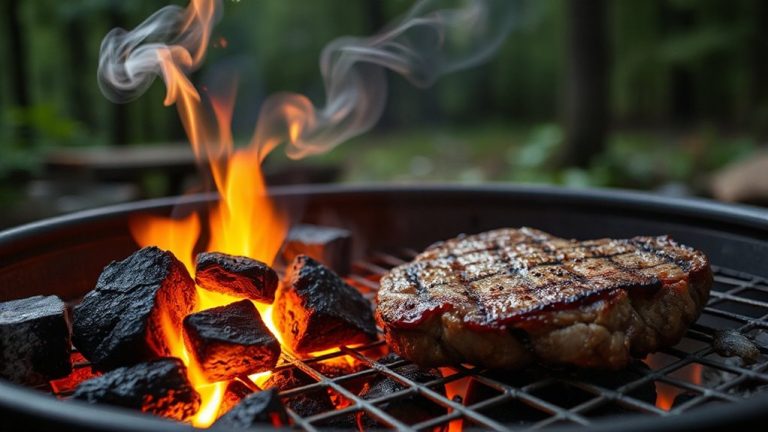
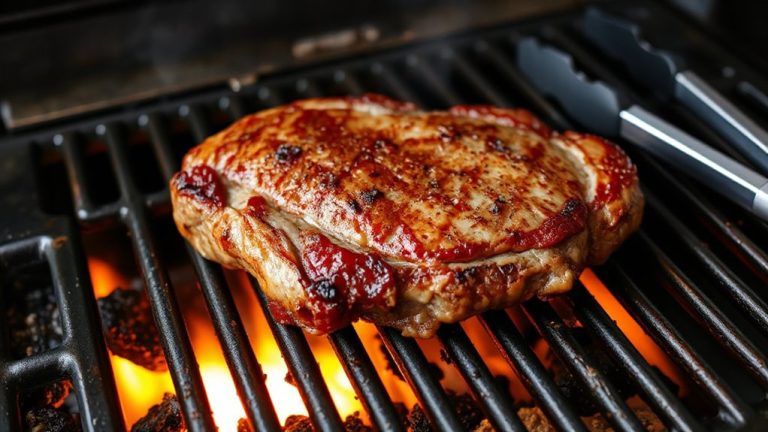
Ever wonder how you can get the smoky depth of charcoal while still enjoying the convenience of propane? Hybrid grilling lets you do both, thanks to convertible grates that split your cooking surface into two fuel zones. You fire up charcoal on one side for authentic flavor infusion, while the propane side gives you instant heat and precise control. This setup boosts your cooking versatility, letting you sear steaks over gas and smoke ribs over charcoal-simultaneously. Convertible grates are typically built with durable, heat-resistant materials that withstand constant fuel switching. They’re easy to clean and maintain, though alignment and airflow management require minor attention. Most models fit standard grill frames, so installation is straightforward. While hybrid cooking doesn’t replicate a full charcoal experience, it strikes a practical balance. For home chefs who value efficiency and flavor, this system offers a smart, flexible upgrade without sacrificing performance or convenience.
How Convertible Grate Designs Enable Dual-Fuel Functionality
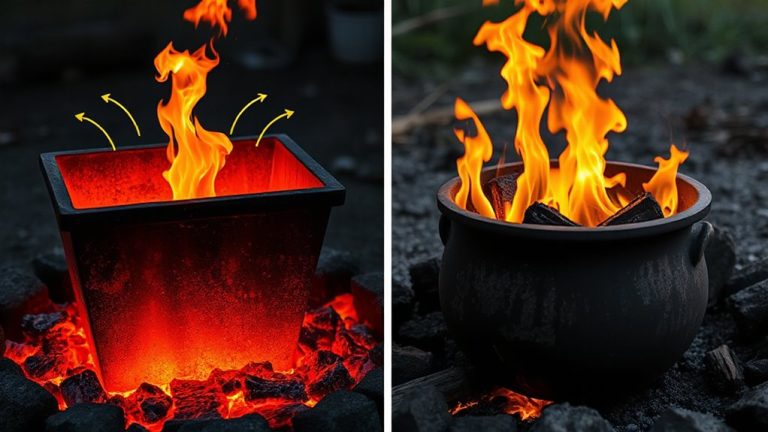
You can achieve dual-fuel functionality in your grill thanks to the thoughtful engineering behind convertible grate designs. These grates divide the cooking surface into independent zones, allowing you to run propane on one side and charcoal on the other without interference. The key lies in effective fuel isolation, which prevents heat and emissions from one side disrupting the other. This separation maintains consistent temperatures and lets you control each zone precisely. Meanwhile, flame distribution is optimized through strategically placed burner ports and venting, ensuring even heat across the propane side. On the charcoal side, the grate supports airflow while containing embers safely. Together, these features give you the flexibility to sear over gas and smoke over charcoal simultaneously. The design doesn’t just add convenience-it enhances cooking versatility with reliable, real-world performance. Maintenance remains straightforward, making dual-fuel grilling both practical and efficient.
Engineering Challenges in Half-Propane, Half-Charcoal Grills
While combining propane and charcoal into a single grill seems convenient, it introduces significant engineering hurdles that affect both performance and safety. You’ve got to guarantee flame management is precise-propane burners can ignite charcoal prematurely or create flare-ups if not properly isolated. Without effective heat zoning, one side can overpower the other, making it hard to cook different foods simultaneously. You need distinct thermal zones that won’t interfere, yet most dual-fuel designs struggle with temperature crossover. Also, ventilation must accommodate both fuel types without compromising efficiency. Poor airflow disrupts combustion, leading to uneven cooking and soot buildup. Even with convertible grates, achieving consistent results demands careful calibration. The reality is, balancing flame management and heat zoning in one unit tests engineering limits-many models cut corners, sacrificing control for novelty. Reliable performance means smarter integration, not just space-saving design.
Best Materials for Heat Control and Durability
A grill’s performance hinges on the materials chosen for its core components, and when it comes to convertible grates that handle both propane and charcoal, not all metals are created equal. You need materials that balance heat retention and material conductivity while resisting warping and corrosion. Cast iron offers excellent heat retention but reacts poorly to rapid temperature shifts. Stainless steel resists rust and conducts heat evenly, though it retains less warmth. Carbon steel strikes a middle ground-good conductivity, solid heat retention, and durability with proper care.
| Material | Heat Retention | Conductivity |
|---|---|---|
| Cast Iron | High | Moderate |
| Carbon Steel | Good | High |
| Stainless Steel | Moderate | High |
For dual-fuel grates, carbon steel often wins-responsive, strong, and steady under mixed-heat conditions.
Tips for Mastering Simultaneous Cooking on Dual-Fuel Grates
How do you balance the intense, radiant heat of charcoal with the steady, controllable output of propane on a single grate? Start by mastering fuel blending-ignite the charcoal side first, letting it ash over while using propane to preheat the adjacent zone. This setup enables precise temperature zoning, letting you sear over charcoal’s high heat and finish dishes with propane’s even warmth. Position food accordingly: direct, high-heat cooking over charcoal, gentler items over propane. Keep a two-zone fire on the charcoal side, too, for added control. Invest in a dual-probe thermometer so you can monitor both zones without guesswork. Clean grates after each use to prevent flare-ups and maintain heat consistency. With practice, fuel blending becomes intuitive, offering unmatched versatility. Dual-fuel grates aren’t just gimmicks-they’re powerful tools when you understand temperature zoning and how to leverage each fuel’s strengths effectively. For those exploring versatile options, consider models from the best grill smoker combos list to find a unit that supports seamless dual-fuel functionality.
On a final note
You’re getting the best of both worlds with convertible grates: propane’s convenience and charcoal’s rich flavor, split down the middle. These dual-fuel systems work well when engineered for precise heat zoning and airflow. Cast iron and stainless steel stand up to thermal stress and deliver even cooking. Though setup demands attention, the payoff is versatile, high-performance grilling. With smart materials and thoughtful design, hybrid grills offer a practical upgrade for serious outdoor cooks.