Molasses-Glazed Spare Ribs: 225–275°F Smoking Timing Guide
You should glaze your spare ribs in the final 30 minutes of hot smoking to prevent the sugar in molasses-based sauce from burning. High heat caramelizes the surface just right, giving you a glossy, sticky crust without bitterness. By now, the ribs have developed bark, rendered fat, and absorbed smoke, so the glaze adheres and enhances flavor. Keep your smoker steady around 275°F and apply thin, even layers. There’s more to mastering the finish than timing alone.
Notable Insights
- Apply molasses-based glaze only in the final 30 minutes to prevent sugar burn and achieve glossy caramelization.
- Ensure ribs have a dark bark and tender texture before glazing for optimal adhesion and flavor balance.
- Use a high-quality molasses glaze with vinegar or citrus to cut richness and enhance smoke complexity.
- Maintain smoker temperature between 225°F and 250°F, raising to 275°F during glazing for controlled browning.
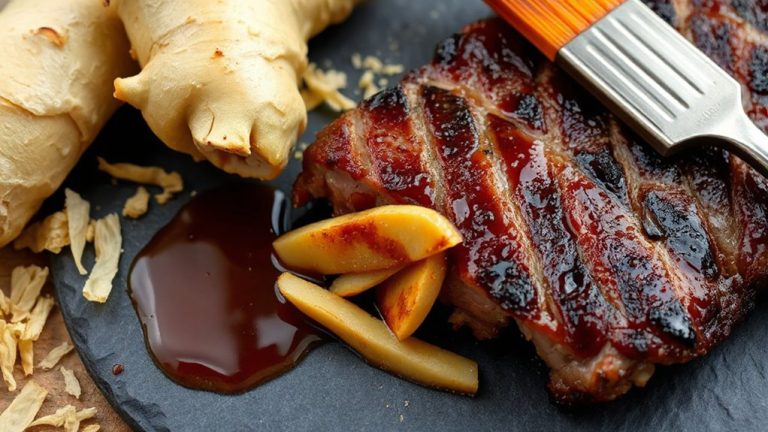
- Apply thin, even glaze layers every 10 minutes, letting each set to build a sticky, deep-brown crust.
Why Glaze Ribs in the Final 30 Minutes?
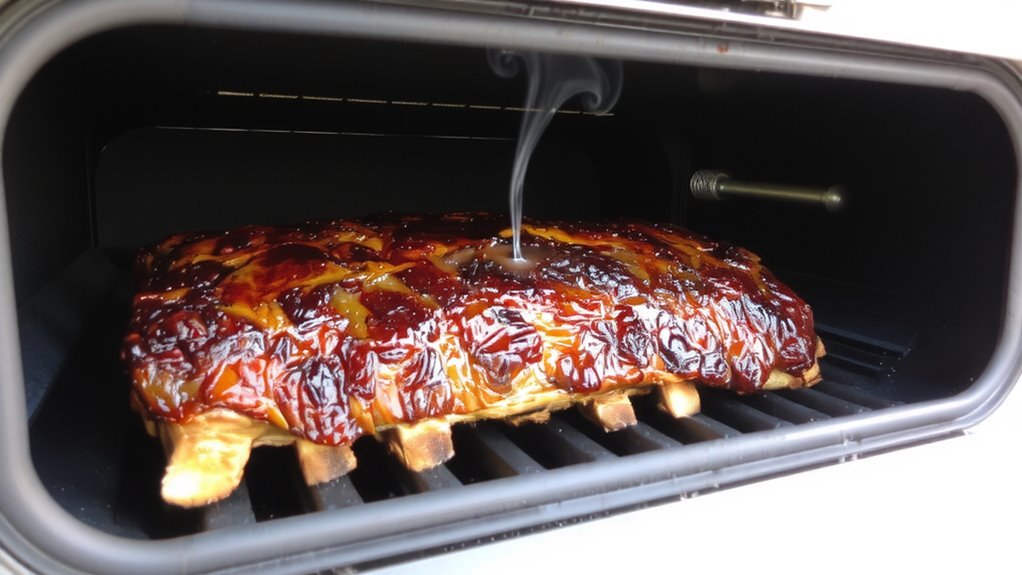
Even though you might be tempted to apply that rich molasses-based sauce early to infuse more flavor, doing so can backfire if you don’t account for its sugar content. Sugars in molasses burn quickly under prolonged heat, leading to bitter, blackened ribs instead of a glossy, flavorful crust. That’s why you glaze in the final 30 minutes-it gives you precise caramelization control while preserving texture. During this window, the sauce adheres well, and surface moisture has already cooked off, setting the stage for the Maillard reaction to enhance complexity. The brief exposure concentrates sweetness without scorching, allowing the sauce to glaze rather than char. You’re balancing flavor development with thermal management, a key skill in outdoor cooking. This timing isn’t arbitrary; it’s based on observed behavior of sugars and proteins under indirect smoke and heat. Proper execution delivers tender, deeply flavored ribs with a balanced, sticky finish.
Pick the Best Molasses Glaze for Ribs
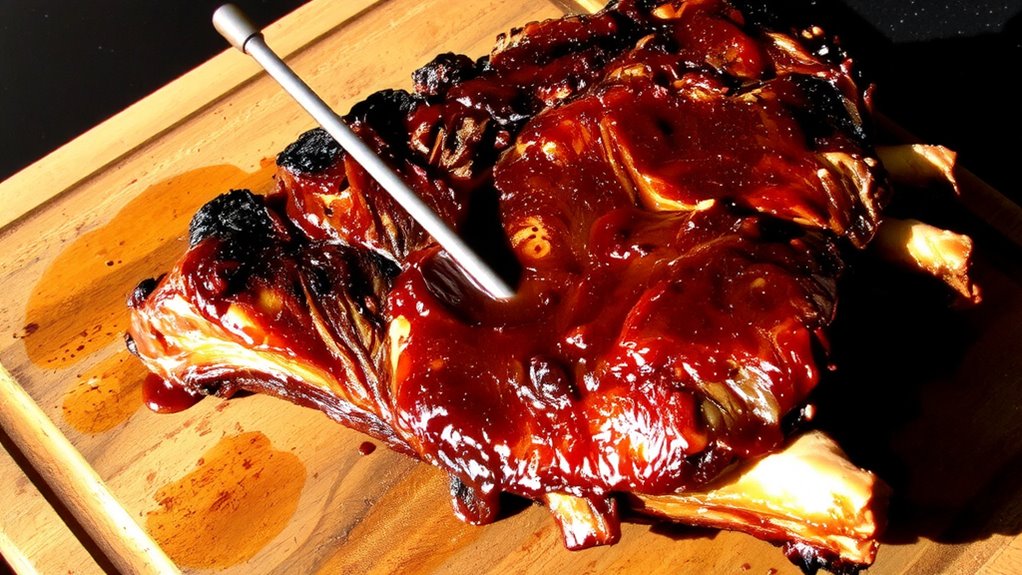
The best molasses glaze for ribs strikes a balance between deep sweetness, acidity, and spice to complement smoked meat without overwhelming it. You want a flavor balance that enhances the smoke and char, not masks it-so check the label for vinegar or citrus notes that cut through richness. A high-quality glaze uses real molasses, not corn syrup, for authentic depth. Sauce thickness matters too: too thin, and it runs off the ribs; too thick, and it burns before caramelizing. Aim for a consistency that coats the back of a spoon but still drips slowly. That ideal viscosity guarantees even coverage and a sticky, glossy finish during the final 30 minutes of smoking. Homemade versions let you tweak both flavor balance and sauce thickness, but trusted commercial options can deliver consistent results. Ultimately, the right glaze amplifies, not dominates.
Get Your Smoked Ribs Ready for Glazing
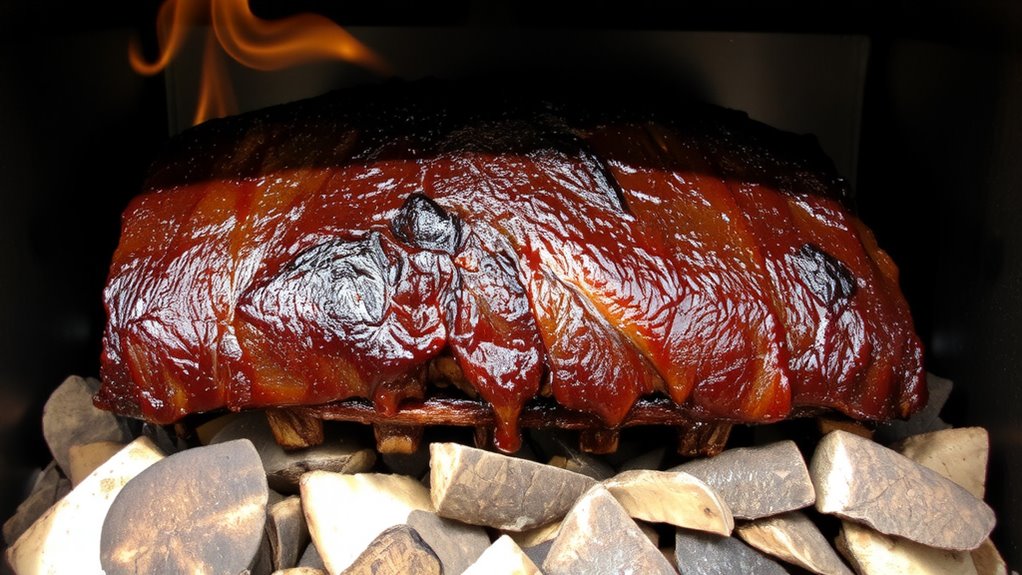
Patience pays off when it’s time to glaze smoked ribs-the moment hinges on proper prep and timing. You’ve built a solid foundation with steady heat and clean smoke, so now it’s essential to check your progress. Peek at the rib texture; it should feel firm yet yield slightly when pressed-tender but still structured, signaling collagen breakdown without overcooking. The bark, dark and rich, must have formed without becoming brittle. At this stage, the smoke balance is key: enough exposure to lend depth but not so much that it overwhelms. You want complexity, not bitterness. If the ribs smell sharply acrid or taste overly smoky, you’ve tipped the scale. Trust visual cues and touch over strict timelines. When the meat retracts slightly from the bones and the surface is tacky but not wet, you’re ready. These signs mean your ribs have absorbed flavor without sacrificing integrity-perfect for the glaze to adhere and shine.
Glaze Without Burning (Hot Smoker Tips)
While your smoker hums along at peak temperature, resist the urge to slather on that molasses-based glaze too soon-doing so risks scorching the sugars before they’ve had a chance to set. You need precise heat control during the final 30 minutes; aim to stabilize your smoker between 225°F and 250°F to allow caramelization without burning. Molasses is sugar-dense, so excessive heat turns it bitter fast. Apply the glaze in thin, even layers, letting each set before adding more-this approach manages sauce consistency and prevents pooling or dripping. A thicker sauce adheres better and reduces flare-ups, but if it’s too thick, it can crack; thin it slightly with apple juice or vinegar if needed. Monitor rib surface temp closely, and keep the smoker lid closed as much as possible to maintain steady airflow and avoid temperature spikes. For added flavor complexity, consider pairing your glaze with high-quality smoked sausages like those made with natural casings and hardwood smoke, as found in the best BBQ sausages options.
Timing and Temp for Sticky, Caramelized Ribs
Once your ribs have reached the stall phase and the internal meat temperature sits between 160°F and 170°F, it’s time to shift focus to caramelization-this is where timing and temperature converge to create that glossy, tacky finish molasses glaze is known for. At this stage, smoke penetration has already deeply flavored the meat, so further exposure could overpower the balance. You want to preserve that rich depth while enhancing ribs texture with a sticky-sweet crust. Move ribs to direct heat if possible, or raise smoker temp to 275°F. Glaze every 10 minutes for the final 30 minutes-this builds layers without scorching. A reliable smoker with precise temp control makes all the difference, especially when using a best smoker for fish, which often excels in maintaining consistent low-and-slow conditions ideal for both delicate seafood and caramelizing rib glazes.
| Time (min) | Temp (°F) | Glaze Effect |
|---|---|---|
| 0 | 275 | First coat, shiny |
| 10 | 275 | Begins to tackify |
| 20 | 275 | Deepening color |
| 30 | 275 | Glossy, slight pull-away |
| Final | – | Ideal ribs texture |
Sides That Complement Molasses-Glazed Ribs
You’ve nailed the sticky, deep-brown crust on your molasses-glazed ribs, pulling them off the heat just as the sauce pulls slightly away from the bone-now it’s time to think about what goes on the rest of the plate. A solid cornbread pairing cuts through the rib’s sweetness with its mild crumble and slight bitterness, balancing each bite. Opt for cast-iron-baked cornbread with a crisp exterior and moist center-it holds up without overpowering. Coleslaw varieties play a critical role: creamy vinegar-based slaws add tang and contrast, while shredded cabbage with carrot and a hint of celery seed refreshes the palate. Avoid overly sweet versions that compete with the glaze. Creamy Southern-style and spicy Alabama white are top performers, offering temperature and texture contrast. Together, these sides don’t just fill space-they refine the meal’s rhythm, enhancing smoke, sweetness, and savory depth without distraction.
On a final note
You’ve nailed the balance of smoke and sweetness by glazing your ribs in the final 30 minutes. A molasses-based sauce caramelizes beautifully at 225–250°F, adding depth without burning when applied in thin layers. This timing prevents scorching while building a glossy, flavorful crust. Paired with sturdy sides like cornbread or pickled veggies, your ribs deliver a rich, sticky finish that showcases control and technique-hallmarks of skilled outdoor cooking.